

How to Choose Snowshoes for Your Weight, Terrain, and Snow
Choosing snowshoes starts with one question: How much weight does the snowshoe have to float, counting you, your winter clothes, and your pack? We'll walk you through sizing by that number, then the frame that suits the terrain you walk, then the bindings, kids' sizes, and add-ons that make a snowshoe day easier.
TL;DR
- Sizing by your total loaded weight
- Why the smallest size that floats you is best
- Reading the weight rating on a snowshoe
- Matching the frame to your terrain
- Powder versus packed snow, and bindings you can use with gloves
- Kids' sizes and add-ons
- Where to try them on in Sault Ste. Marie
Who this article is for
- First-time snowshoers buying their first pair
- Hikers who carry a pack and need to size for the extra load
- Walkers unsure how terrain and snow depth change the snowshoe they need
- Parents shopping for kids' snowshoes
Mario Gionet
Sales
A note from the author
We wrote this guide around the snowshoes we sell at 162 Old Garden River Road in Sault Ste. Marie. Every snowshoe named here is one you can buy from us, priced as it was on our store the day this went up. If you land close to a size line or want to try a binding on with your boots, call us or come in and we'll help you sort it out.
Start With Your Weight and Your Gear, Not the Snowshoe
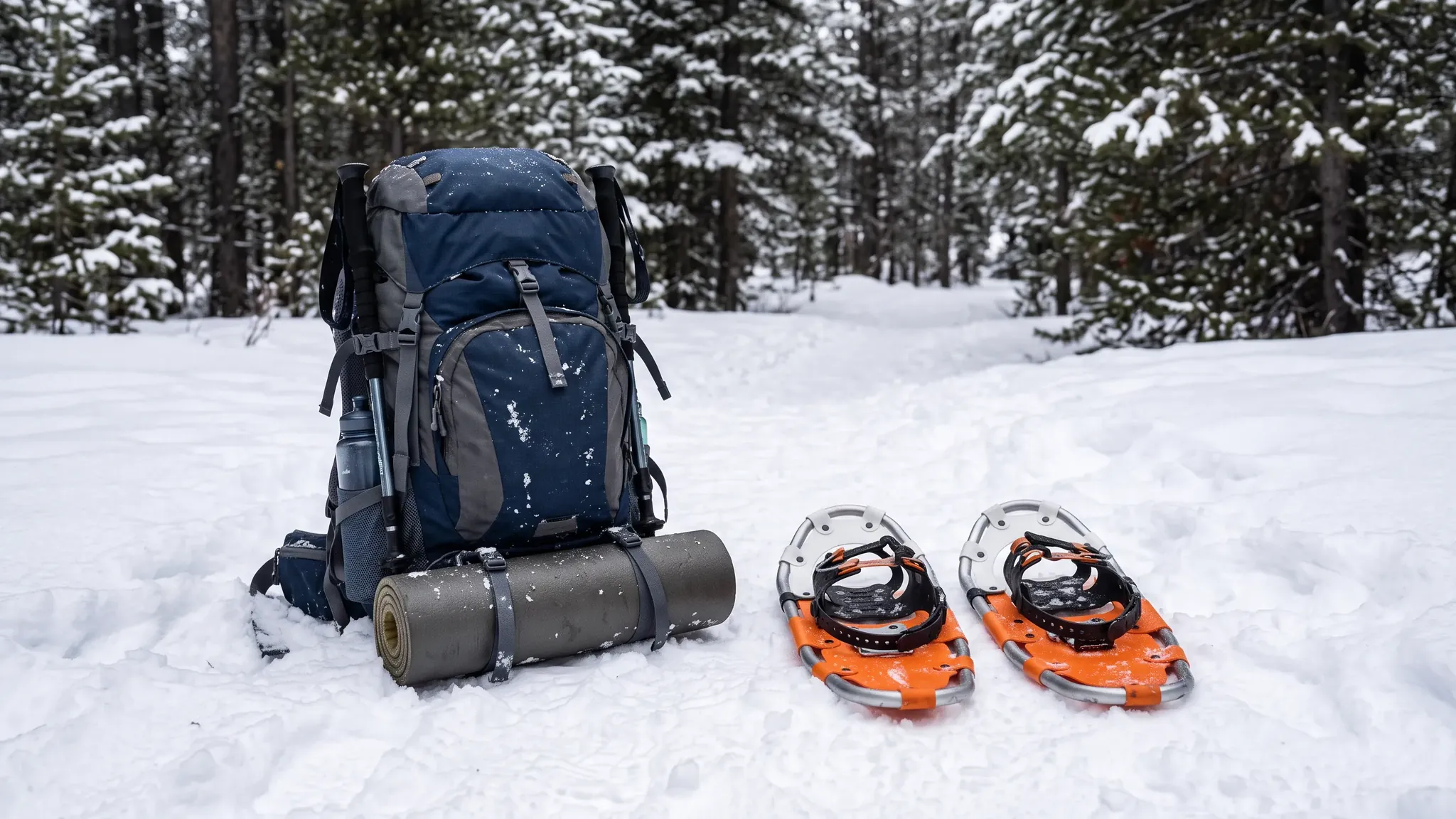
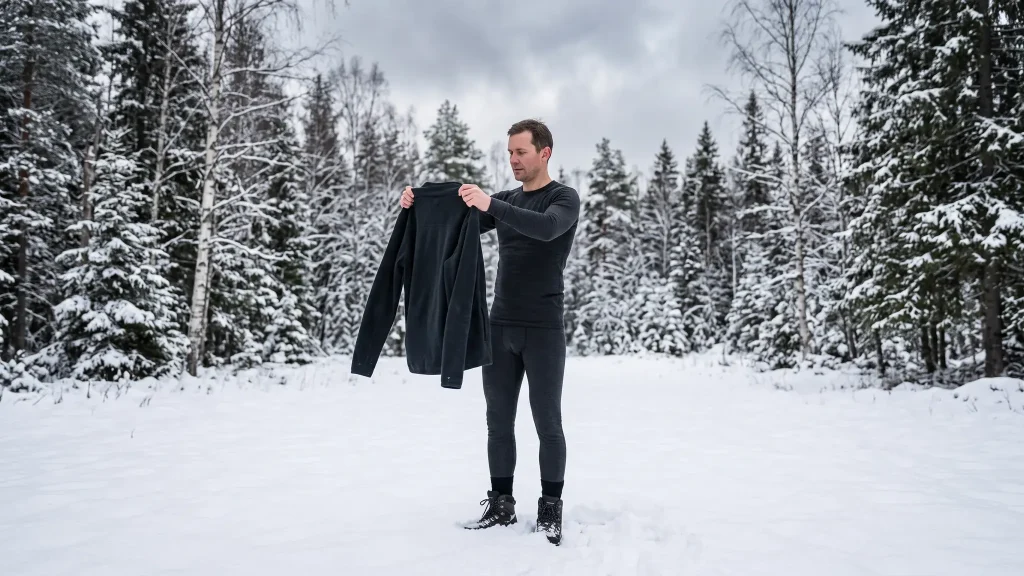
How to choose snowshoes comes down to one number: How much total weight the snowshoe has to float. That is you, plus your winter clothes, plus whatever is in your pack. MSR, a snowshoe maker that is part of Cascade Designs, tells buyers to start with "your body weight PLUS the gear and clothing you'll be wearing" on most of your trips, and to include an estimate of your pack contents. For a simple day on the trail, MSR suggests adding 10 to 15 lbs to your body weight.
Canadian snowshoe company Simard Sport says the same thing in metric. Its example is a 75 kg hiker carrying 10 kg of equipment, who should pick snowshoes rated for at least 85 kg. Two makers, one rule: The number on the box is compared against you dressed and loaded, never against the bathroom scale on a bare morning.
Here is the quick way to get your number. Put on the boots, jacket, and pack you would wear on a normal outing, stand on the scale, and write down the result. That total, not your body weight alone, is what you take into every size chart below.

Bigger Is Not Better: Pick the Smallest Size That Floats You
A larger snowshoe holds you higher in soft snow, but it is also heavier, longer to swing, and harder to turn between trees. Simard Sport puts the trade-off plainly: Smaller snowshoes are ideal for packed snow and trails because you get better control, while larger snowshoes work best in fresh, deep snow because they give more flotation. A Simard guide to the topic also says that if you carry a heavy backpack, you should move up to a model with a higher load capacity.
The MSR sizing chart shows how much the snow matters. These are the sizes MSR lists for each weight, with the weight including gear:
- 90 to 125 lbs: 22 inches on packed or soft snow, and 25 inches (or 22 inches with tails) in soft, deep snow.
- 125 to 175 lbs: 22 inches on packed snow, 25 inches or 22 inches in soft snow, and 25 inches or 22 inches with tails in soft, deep snow.
- 175 to 225 lbs: 22 inches on packed snow, 25 inches or 22 inches with tails in soft snow, and 30 inches with tails (or a combination) in soft, deep snow.
- 225 lbs and up: 22 to 25 inches on packed snow, 22 to 30 inches with tails in soft snow, and 30 inches with tails or 25 inches with tails in soft, deep snow.
Notice what the chart does not say. It never tells a heavier hiker to buy the biggest snowshoe made. For most people, MSR recommends a smaller base size, typically 22 to 25 inches, and then adding tail extensions for deeper snow or heavier loads, rather than buying oversized snowshoes for the occasional deep day.
Our take: Size for the snow you will meet most weeks, not the one big storm. If most of your outings are on packed trails, a mid-size snowshoe that you can move quickly will serve you better than a long one that you drag.

Read the Weight Rating on the Snowshoe You Are Considering
Brands publish their own load ratings, and they do not line up perfectly. Simard Sport warns that different brands have different weight-to-surface ratios and advises you to always check the manufacturer's recommendations. So treat any chart, including ours, as a starting point and the listing for the actual snowshoe as the final word.
GV Winter Trail and Active Winter: A Clear Size Ladder
The GV Winter Trail Men's Snowshoe ($199.95) is, in the words of its page, among GV's best sellers, and it is built for leisure hikers and casual users. It lists four sizes and the user weight each is meant for off trail:
- 8 x 21 in: 60 to 120 lb
- 8 x 24 in: 60 to 140 lb
- 8 x 27 in: 60 to 150 lb
- 9 x 29 in: 80 to 170 lb
- 10 x 36 in: 80 to 190 lb
That is the clearest example of why weight comes first. A 160 lb walker with a light daypack, around 175 lb all in, sits above the 9 x 29 rating and into the 10 x 36 range, even though a 29-inch snowshoe looks plenty big on the shelf. Check how a brand counts weight, and ask us if you land close to a line. The GV Active Winter Women's Snowshoe ($199.95) uses the same sizing, in the first four sizes of that list.
The lighter GV Snow AeroLite Men's Snowshoe ($284.95) is aimed at the advanced recreational user who wants a very light, durable shoe. It comes in 8 x 24, 8 x 27, 9 x 29, and 10 x 36, with the same off-trail weight ranges as above.
Chinook Trekker: Two Simple Lengths
If you want a plain trail snowshoe at a lower price, the Chinook Trekker Backcountry 25" is $139.95, and the 30" version is $149.95. Both have an aluminum frame, rotating crampons, a heel lift, and a one-step pull and release binding. Their pages describe them as made for packed snow and moderate terrain, which suits hiking trails and forest. The pages do not list a load rating, so if you are close to the line between the two lengths, ask us and we will go through it with you.
Match the Frame to the Terrain You Actually Walk
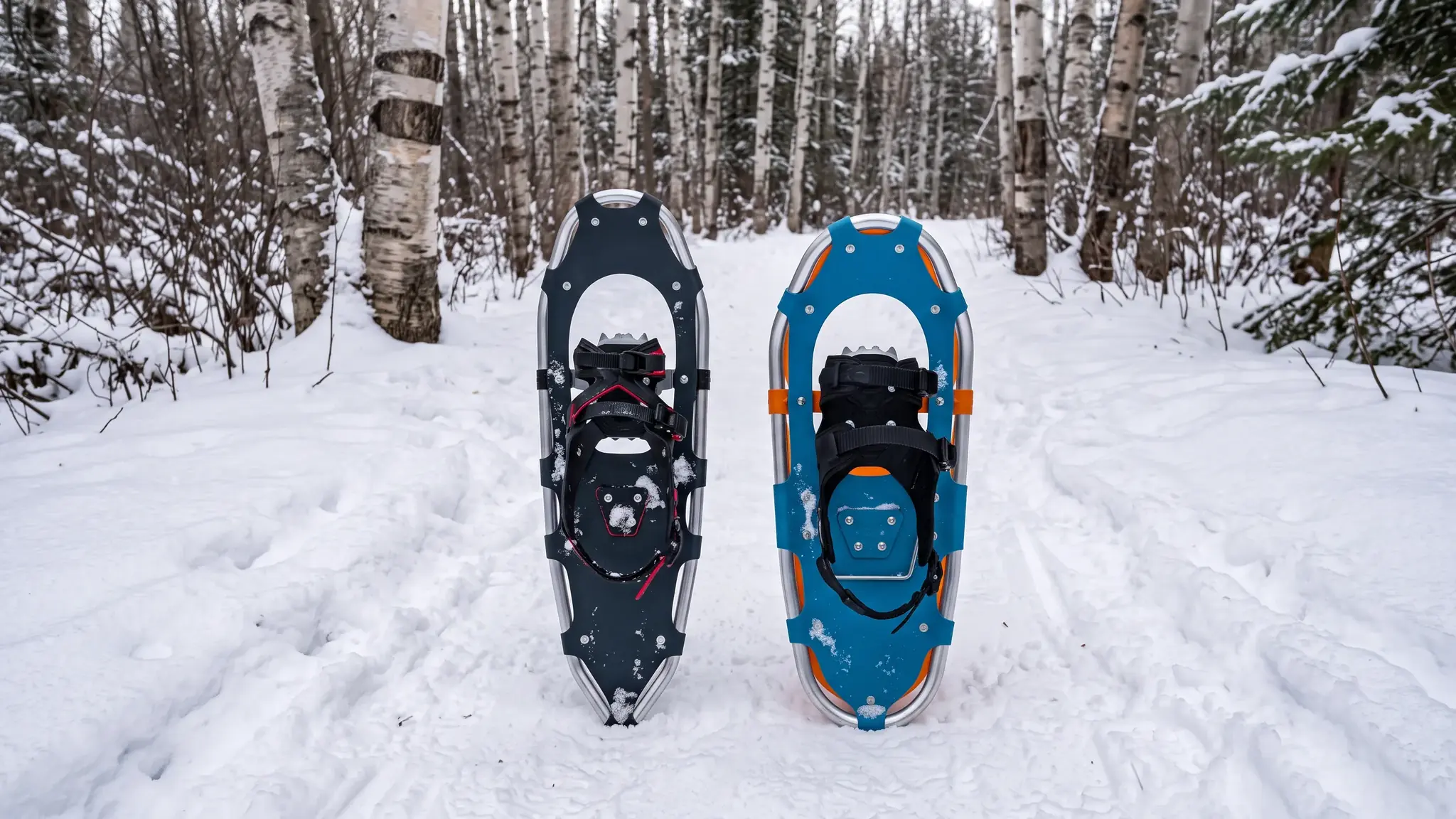
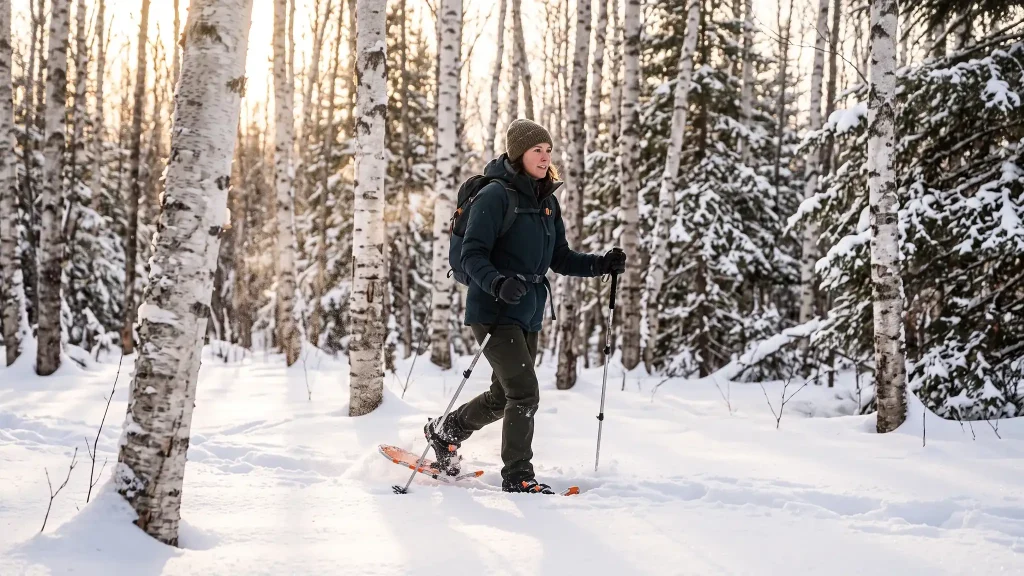
Weight picks the size. Terrain picks the type. Simard Sport notes that packed trails and groomed paths call for smaller sizes for agility, while powder and backcountry call for larger sizes for flotation. MSR sorts its own snowshoes the same way: its Trail series for flat or rolling ground, its Explore series for varied backcountry, and its Ascent series for steep or alpine terrain, with aluminum Lightning frames chosen for maximum traction at minimal weight.
Flat and Rolling Trails
For a walk on packed paths, you do not need aggressive teeth. You need something light that comes on quickly. The Chinook Trekker above is that kind of snowshoe. The GV Nyflex Expedition 8x24 ($209.95) goes a step further with a streamlined shape for good flotation and little snow drag, and its page calls it a good fit for mountain and hard snow conditions.
Hills, Bumps, and Steeper Ground
Once the trail tilts, traction and heel support matter more. The GV Mountain Extreme Men's Snowshoe 8x25 ($329.95) is described as high-performance and lightweight for difficult conditions, bumpy terrain, and steep hills, with an aluminum frame, crampons for a range of conditions, and a frame shape that prevents snow build-up.
For the steepest ground, look for a heel lift, sometimes called a televator, a lift under your heel. MSR says these let you walk with a more natural, flatter foot up steep inclines. Both the MSR Men's Lightning Explore ($459.95, in 25 and 30 inch) and the MSR Women's Lightning Explore ($459.95, in 22 and 25 inch) have them, along with edge-to-edge traction frames and optional 5-inch tails that add flotation when you need it.
Tight Forest and Old-School Travel
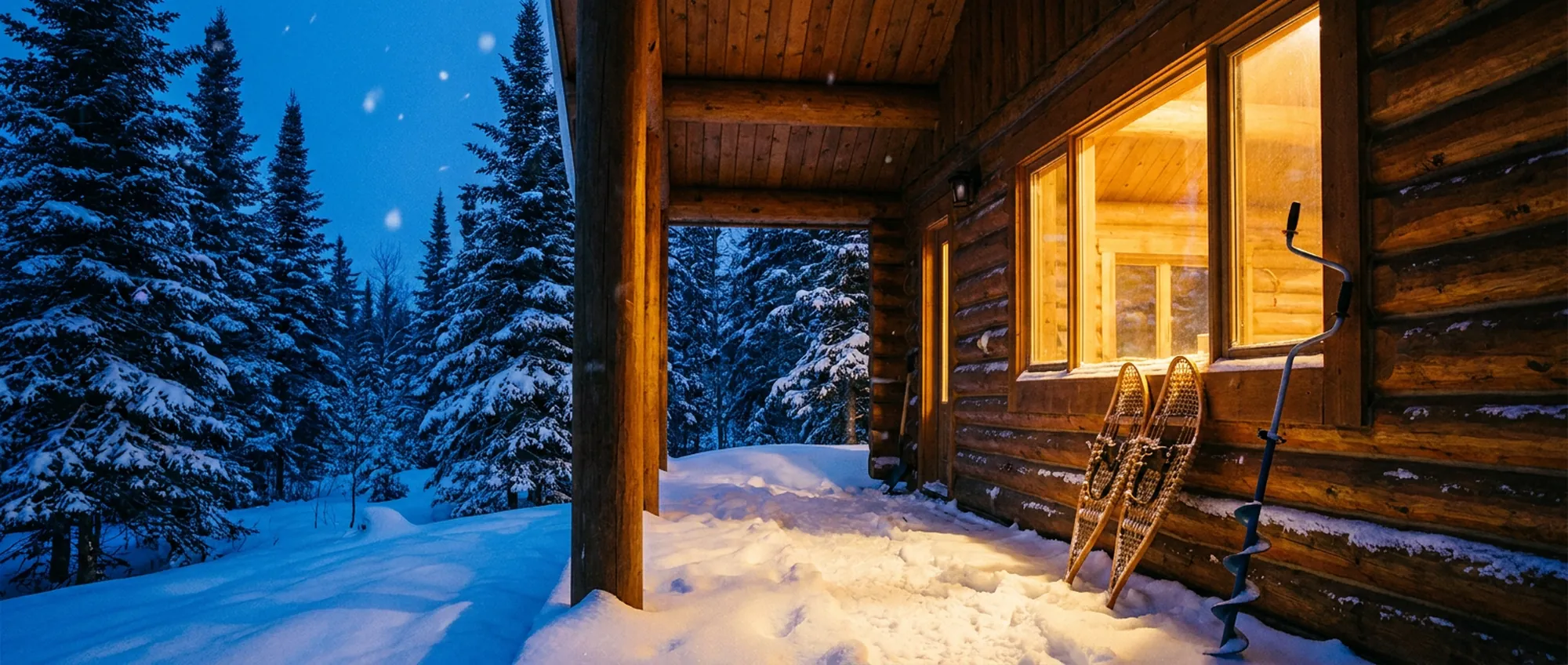
Traditional wooden frames still have a place. The GV Traditional Bear Paw 11x40 ($379.95) has a short, wide shape that its page ties to quiet, efficient movement in wooded areas and good flotation in deep snow, and it is made with an Appalachian white ash frame. Bindings are sold separately. The GV Traditional Huron 12x42 ($359.95) is the best-known shape and suits open forests and fields.
Soft Powder Needs More Float Than Packed Snow
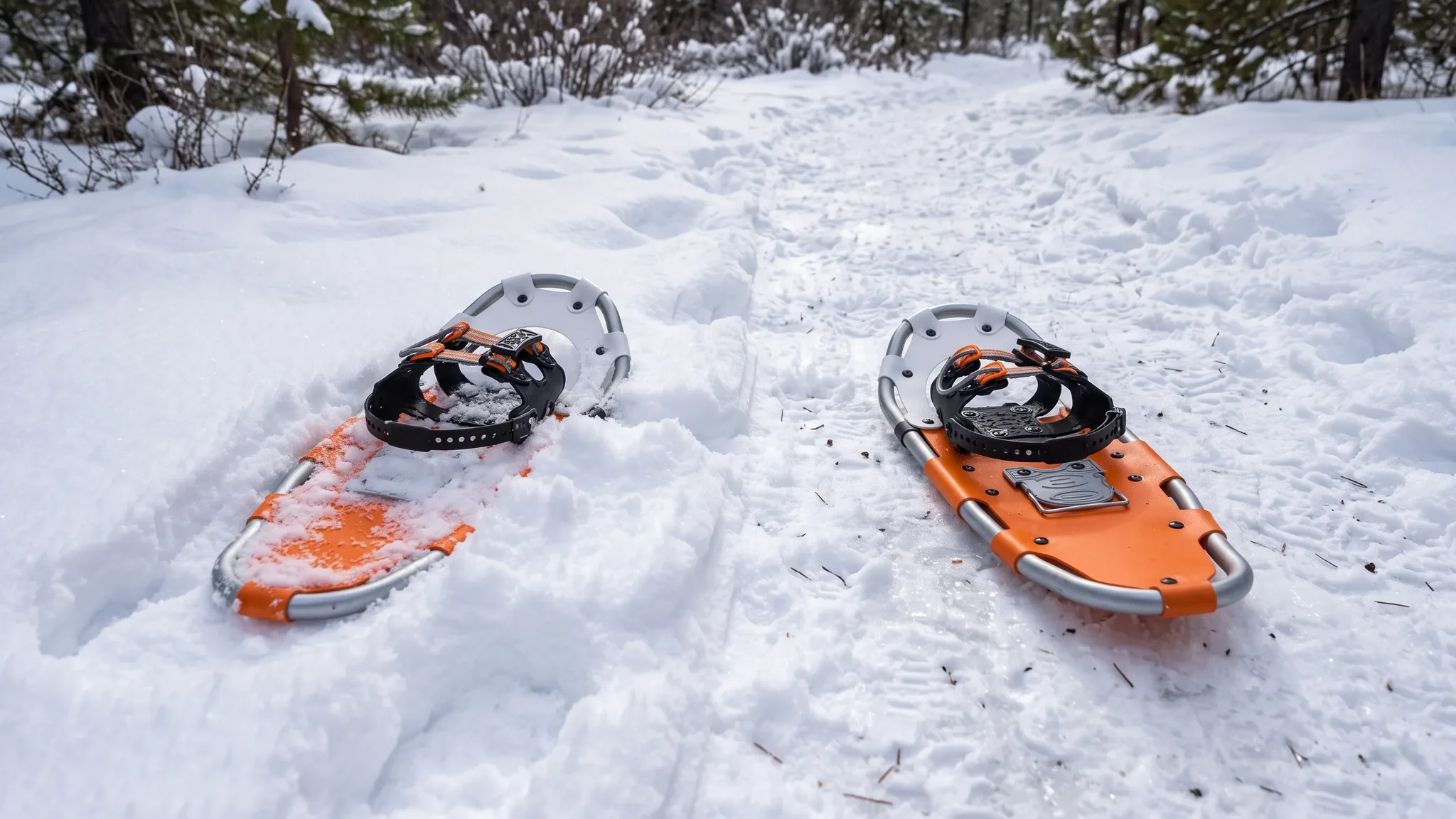
The same hiker needs different snowshoes in different snow. MSR's guidance is that a deep, powdery mid-winter snowpack calls for more flotation than dense, settled snow, and that unconsolidated snow off trail is a different job from an established, packed trail where traction matters more. Simard Sport says the same: Bigger shoes for fresh, deep snow, smaller ones for packed snow.
That is why tails are worth knowing about. MSR describes modular flotation tails as extensions of the deck that screw onto the snowshoe so you can adapt it to changing snow conditions or extra weight. If you mostly walk packed trails and head off the beaten path a few times a winter, a base size with optional tails is a smarter buy than the longest snowshoe in the shop.
Our take: If you will break trail in untouched snow often, size toward the top of your weight range. If you stay on packed ground, size toward the middle, and spend the difference on a good pair of poles.
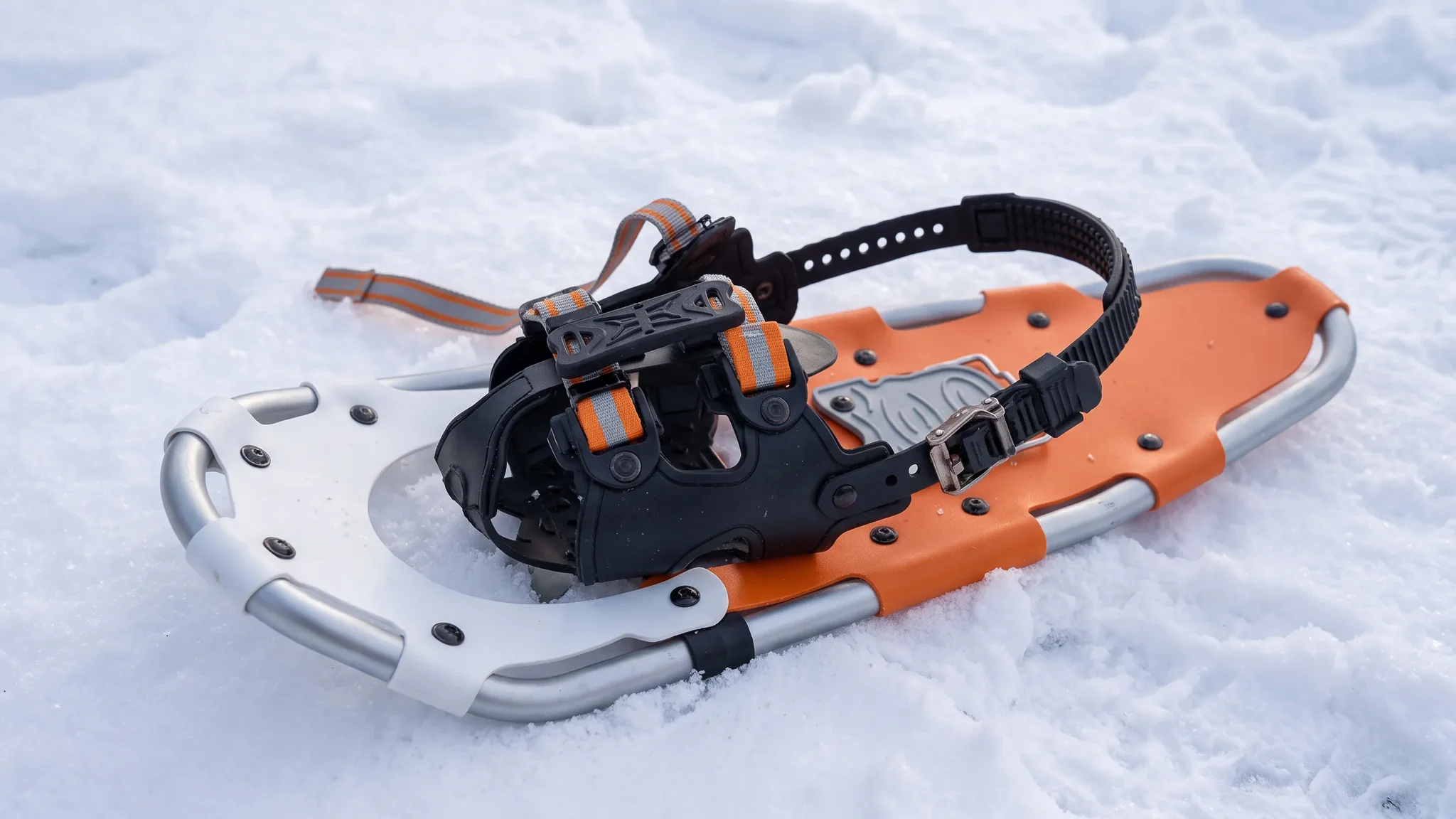
Bindings Should Be Easy to Work With Gloves On
A binding that is hard to close with cold fingers will ruin a good day. Our snowshoes use several systems, and the useful question is how each one feels when your hands are cold.
- The Chinook Trekker uses a one-step pull and release binding built for quick transitions.
- The GV Winter Trail, the GV Snow AeroLite ratchet version, and the GV Nyflex Expedition 8x28 ($209.95) use a ratchet binding.
- The MSR Lightning Explore has a HyperLink binding with a two-strap ratchet system, EVA foam cushions, and macro-adjustment straps for a wider range of boot sizes.
- The GV Men's Race Ultralight 7x21 ($269.95) is a racing shoe at 2.25 lb with SPIN bindings and a soft pivot bar. It is built for speed, not for a first pair.
Our take: Pick the binding you can close, open, and adjust without taking your gloves off, then check it with the boots you will wear. Come in wearing your winter boots and we will fit them in the store.
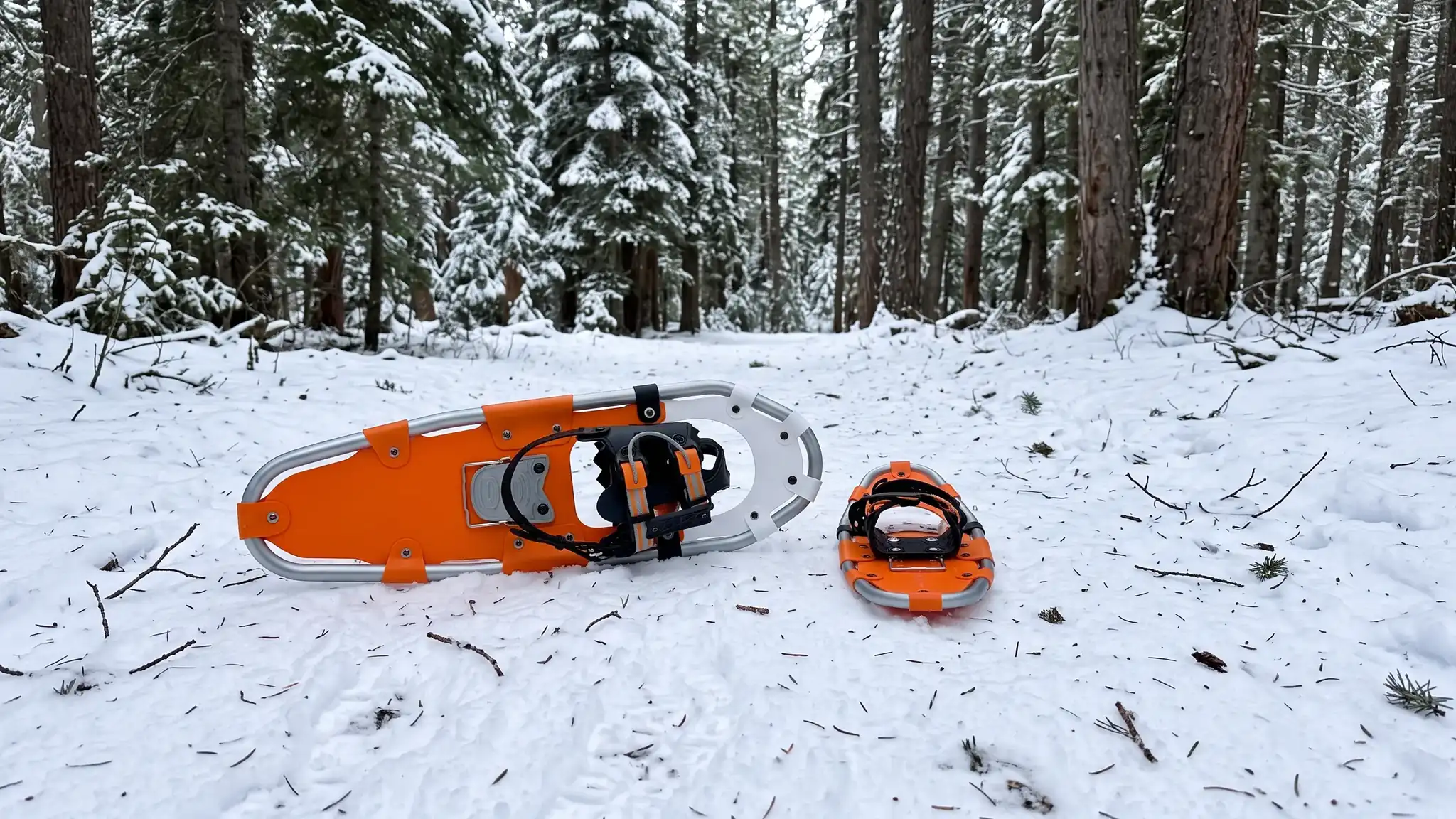
Kids Need Their Own Sizes
Children are lighter, so their snowshoes are smaller, and they have different harnesses. The GV Nyflex Youth Snowshoe in 6x16 ($84.95) has a kid harness, a Luxor buckle, and an energy saver mechanism that stops the harness from pivoting, so the shoe does not dig into the snow. The step up is the GV Kid Trail Performance 7x21 ($134.95), made on the same principle to help kids learn the sport. Bring your child in so we can size them against the weight ranges, and plan on buying again as they grow.
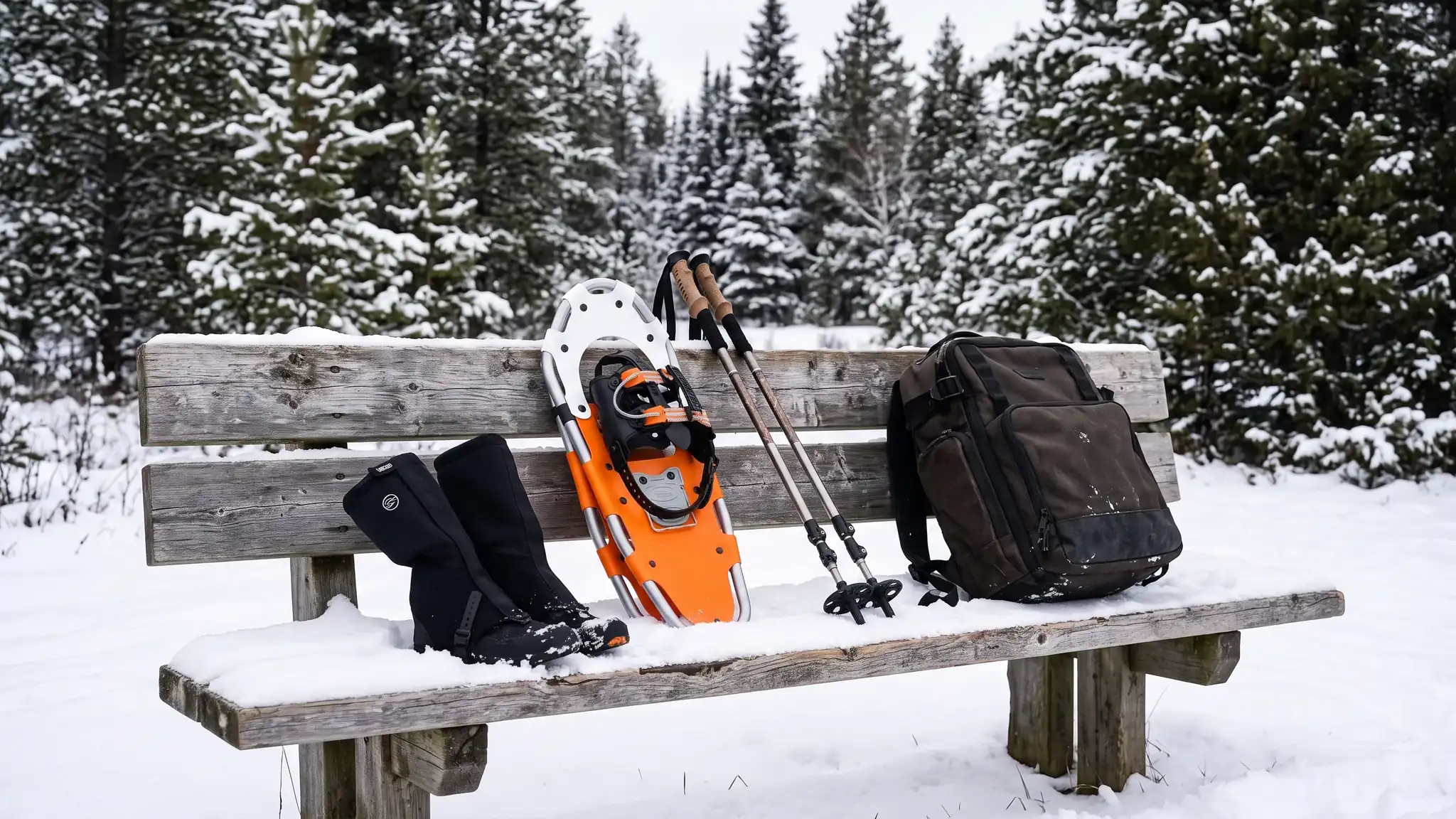
Add-Ons That Make a Snowshoe Day Easier
Poles
Poles help your balance and take load off your knees on climbs and descents. The Chinook Outback Hiking Pole ($29.95) is a single three-section aluminum pole. The GV Carbon Fiber Poles ($104.95) are sold as a pair, with three carbon fibre sections and a quick lock. At the top end, the Leki Makalu FX TA Trekking Pole ($269.95) adjusts from 110 to 130 cm and includes an extra basket for snowy terrain.
Bags and Spare Parts
The MSR Snowshoe Bag ($59.95) is a zippered bag with hand and shoulder straps that fits snowshoes up to 25 inches. The MSR Snowshoe Carry Pack ($64.95) is a 19 litre pack that carries a 22 inch snowshoe inside and larger snowshoes strapped to the outside. The MSR Standard Strap Keeper ($12.95) is a pack of eight replacement clips for MSR snowshoe straps, a cheap fix for a strap that will not stay put.
Questions
How do I measure for snowshoes?
You do not measure your foot. You work out your total load: Stand on a scale in the boots, jacket, and pack you will actually wear, then compare that number to the weight range listed for each snowshoe. MSR suggests adding 10 to 15 lbs to your body weight for a simple day trip. Then match the length to the snow you walk in most.
Fixed or adjustable bindings?
Choose the binding that fits your boots and that you can work with gloves on. The MSR Lightning Explore, for example, uses macro-adjustment straps to fit a wider range of boot sizes, while the Chinook Trekker uses a one-step pull and release binding. Try the binding with your winter boots on, and ask us to show you how each one adjusts before you buy.
What if I carry a pack?
Include it in your weight. MSR tells you to add the gear and clothing you wear plus an estimate of your pack contents, and Simard Sport says a heavier backpack calls for a model with a higher load capacity. If your pack changes from trip to trip, size for the heavier trip and add tails, or move up a size.

Come Try Snowshoes on at Our Store in Sault Ste. Marie
The easiest way to choose is to try a few pairs with your boots and your pack on. Visit Great Lakes Outfitters at 162 Old Garden River Rd, Sault Ste. Marie, ON P6B 5A6, or call us at (705) 253-2361. You can also browse the full snowshoe collection first, and bring your loaded-pack weight so we can match it to the right size.
Talk to us about it
- 162 Old Garden River Rd, Sault Ste. Marie, ON P6B 5A6
- (705) 253-2361
- Open today 10 a.m. to 6 p.m.
- Send us a message
References
About the author
Mario Gionet
Sales
I work in sales at Great Lakes Outfitters. I have been here four years, and before that I was in school.
More from Mario Gionet
 English (Canada)
 Français du Canada