

Winter Mitts or Gloves: Which Keeps Your Hands Warmer
Every cold season I get the same question at the counter: mitts or gloves? It comes down to how much you need your fingers to do while you wear them. In this guide I explain why mitts are usually warmer, what makes any pair warm, and which pair I would steer you toward for which kind of day.
TL;DR
- Why mitts are usually warmer
- Insulation, shell, and fit
- Mitts for warmth, gloves for dexterity
- Phones, zippers, and other jobs
- Pairing hands with your winter layers
- How I choose
- Trying pairs on in Sault Ste. Marie
Who this article is for
- Anyone choosing between mitts and gloves for a cold winter
- Skiers and snowshoers who hold poles
- Phone and camera users who need touchscreen fingertips
- Shoppers comparing warmth, dexterity, and price

Alan Lukala
Sales Representative
A note from the author
Mitts versus gloves looks like a style question, but I treat it as a question about the day ahead: what your hands will be doing, and for how long. I paddle Lake Superior a lot, and out there the hands are the first thing to tell you the day has turned. I wrote this around that idea, and around the three things I check on any pair, insulation, shell, and fit, before I think about looks. I would rather you pick the pair that matches your day than the one that looks warmest on the hanger.

Mitts Are Usually Warmer Than Gloves, and the Reason Is Simple
The question I hear most at the counter once the cold sets in is whether a mitt really is warmer than a glove, so here is the short answer first: for the same materials, a mitt keeps hands warmer than a glove. Wikipedia's article on mittens, a community-written reference, puts it this way: mittens provide greater thermal insulation than gloves because they have a smaller surface area exposed to the cold, with a trade-off in dexterity. The same article notes that mittens are recommended as part of extreme cold weather clothing, and that they are a common sight on ski slopes.
That one idea explains almost everything in this post. A glove gives every finger its own sleeve, so each finger has its own outer surface losing warmth to the air. A mitt puts four fingers into one shared pocket, with the thumb kept separate. There is less outside surface per finger, and the fingers sit together in the same space. Health Canada's extreme cold page says frostbite generally occurs in the body parts furthest from the heart, and it lists hands first, which is why I never treat this choice as a matter of style.
What you give up is precision. Tying a boot lace, working a zipper pull or threading a hook is easier with a glove. So the real question is not which one is warmer in a lab. It is how much you need your fingers to do while you wear them. The rest of this post sorts the choice by the kind of day you have in mind, with the pairs I steer people toward in Sault Ste. Marie.

What Makes Any Hand Covering Warm: Insulation, Shell, and Fit
Mitt or glove, three parts decide how a pair performs on a cold, wet day. I check all three before I look at the style.
Insulation Holds the Warmth
Insulation is the filling between the shell and the lining. On the pairs I work with you will see names such as 3M Thinsulate, PrimaLoft Gold, and EnduraLoft, and Outdoor Research's VerticalX. The product pages describe Auclair's Icecrusher as warmth level 4, a rating that is useful for comparing within one brand. More loft generally means more warmth and more bulk.
The Shell Keeps Wind and Water Out
Wet hands lose warmth fast, so the shell matters as much as the filling. I spend a lot of time upside down in my kayak practising Greenlandic rolls, so I know how quickly wet hands lose their warmth. Many of the pairs on the shelf use a waterproof, breathable membrane. Wikipedia's Gore-Tex article explains that Gore-Tex is W. L. Gore and Associates' trade name for a waterproof, breathable fabric membrane that blocks liquid water while allowing water vapour to pass through. In plain terms, rain and melting snow stay out, and the moisture from your own hands can still escape. Auclair uses its own Auclair-Dry membrane on some models, described on its product pages as waterproof and windproof.
Fit Decides Whether the Insulation Works
A pair that is too tight squeezes the insulation flat, and a pair that is far too loose lets warm air move around. You want room to wiggle your fingers without the fabric pulling across your knuckles. Try both sizes on in the store if you are between two, and wear the thin liner or glove you plan to use underneath.

Choose Mitts When Warmth Matters More Than Dexterity
Mitts are for standing still, riding, skiing, and any job where your hands mostly hold on rather than pinch. There are several on the shelf, and I match each one to a slightly different day.
- The warmest mitts on the shelf are Auclair Icecrusher GTX Warm Mitts ($174.95). They pair a goat leather and stretch polyester shell with a GORE-TEX membrane and 3M Thinsulate insulation, rated warmth level 4 on the product page. The cuff is neoprene with a Velcro closure, and a carabiner loop and removable leash come with them. I would pick these for the coldest days, in sizes S to XL.
- Outdoor Research Revolution GORE-TEX Mitts ($119.95) suit riding and skiing, with EnduraLoft insulation for warmth without the bulk. They have a heat pack pocket, a grippy diamond palm for holding poles and tools, a cinchable gauntlet, and a touchscreen-compatible design. They come in Black, Harbor, and White, sizes XS to XL.
- Auclair Twister GORE-TEX Mitt with Primaloft ($114.95) uses PrimaLoft Gold insulation under a GORE-TEX membrane, with a powder cuff, a pull-cord adjustable cuff, and a nose wipe. It is a good middle choice between price and warmth.
- Auclair Powder King 2.0 Mitts ($94.95) are the lowest-priced insulated, waterproof mitts in this group. They have 3M Thinsulate insulation, a full goatskin palm with digital grip, and storm-proof overcuffs.
My take: If you rarely need your fingers on a cold day, buy the mitt. You get the extra warmth, and you keep a better chance of arriving with warm hands.

Choose Gloves When Your Fingers Have Work to Do
Gloves earn their place when you handle things: a camera, a rope, a zipper, a phone. Because every finger is separate, they feel closer to bare hands. That is the trade the Wikipedia article describes, and it is the main reason people end up owning both.
- Auclair Icecrusher GTX Warm Gloves ($174.95) use the same warmth-level-4 build as the mitts above, so you can pick the style and keep the insulation. They come in sizes M, L, and XL.
- Outdoor Research Men's Highcamp Gloves ($119.95) add VerticalX synthetic insulation to a waterproof, windproof shell. The removable liner is touchscreen compatible and has an anti-slip silicone palm print, and the palm is water resistant leather. They come in Black, sizes M, L, and XL.
- Auclair Twister GORE-TEX 2.0 Glove with Primaloft ($94.95) puts the same PrimaLoft Gold insulation and GORE-TEX 2.0 membrane in a glove, with a removable leash and a nose wipe.
- Auclair Powder King 2.0 Glove ($94.95) is a men's glove with a waterproof, windproof Auclair-Dry Gold membrane, Thinsulate Type EC insulation, and touchscreen-compatible fingers. A zippered utility pocket on the back of the hand holds small items.
- Outdoor Research Men's Stormtracker Sensor Windbloc Gloves ($99.95) have the lightest insulation of the gloves here. They use Polartec Windbloc fabric with a water-resistant goat leather palm, and the thumb and index finger are touchscreen compatible. I treat them as a cool-weather or active glove rather than a deep-winter one.

Phones, Zippers, and Other Jobs: Where Each One Wins
A quick way to decide is to list what your hands will do. Here is how I sort it.
- Standing around, riding, or watching a game: Mitts, because hands rest and warmth is the whole job.
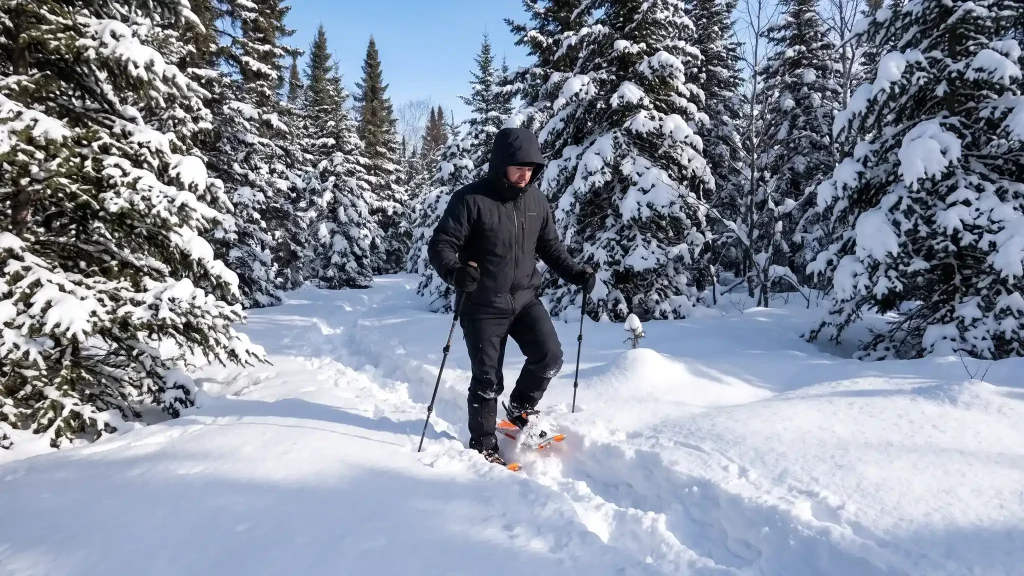
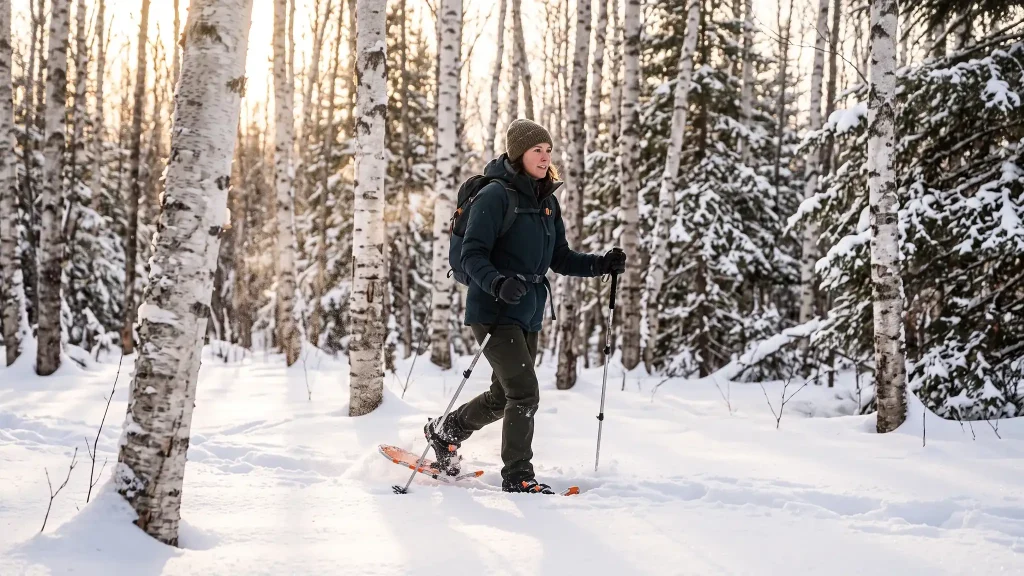
- Skiing and snowshoeing with poles: Either one works. The Revolution mitts and their grippy palm are built for holding poles, and gloves give you more feel at the strap.
- Using a phone: Gloves with touchscreen fingertips, or a mitt that lists touchscreen compatibility such as the Revolution.
- Working with tools, a camera, or fishing gear: Gloves.
- Very cold days with a lot of waiting: Mitts, with a thin glove underneath for quick jobs.
The Two-Layer Approach
You do not have to pick a side. Many people wear a thin glove inside a roomy mitt, then slip the mitt off for a few seconds to do a fiddly task while the glove keeps some cover on the hand. The Highcamp gloves already work this way, with a removable touchscreen liner inside the shell.
Overmitts Add Waterproofing
If you already own gloves you like, the Auclair Gecko Adult Over-Mitt ($45.95) is a waterproof nylon overmitt with sealed seams, an adjustable wrist strap, and silicone lines on the palm for pole grip. It goes over your mittens or gloves when the weather turns.
A Convertible for Running
The Auclair Run For Cover II Mitts ($49.95) are a light running glove with a reflective, retractable cover that turns them into a mitt when the temperature drops. The product page is clear that they have no insulation or membrane and are made for mild weather and running, so I would not pick them for deep cold.

Pairing Hands With the Rest of Your Winter Layers
Hands are one part of a system. Warm hands on a day when your core is cold will not stay warm for long, so check the layers underneath too. The guide to choosing thermal underwear for cold weather days covers the base of that system, and the post on merino wool socks covers your feet. If you are shopping for the whole winter kit, the winter boots buyer's guide is a good next read.
You can browse every pair in the men's gloves and mitts department, or look through all the winterwear.

My Take: How I Choose
Here is the plain version, the way I would put it across the counter.
- Coldest days, long waits, or riding: A warm mitt such as the Icecrusher or the Revolution.
- Active days with a phone and small tasks: A touchscreen glove such as the Highcamp or the Powder King.
- A tight budget: The Powder King pair, mitt or glove, at $94.95.
- You want both: A glove with a mitt or overmitt over top.
If you are still unsure, bring the gloves you wear now and compare them with the mitts on the shelf. A pair that feels slightly roomy in the store will feel right on the trail.
Questions
Are Mitts Warmer Than Gloves?
In general, yes. Mittens expose less surface area to the cold than gloves do, which is why a mitt tends to hold heat better when the materials are the same. The price is dexterity, since your fingers share one space. Insulation, a waterproof shell, and the right fit still matter just as much as the style.
Can I Use My Phone in Mitts?
Some mitts can work with a touchscreen. The Outdoor Research Revolution GORE-TEX Mitts list touchscreen compatibility on the product page. Gloves are the easier choice, since many have touchscreen fingertips, such as the Powder King 2.0 Glove and the Stormtracker. A thin liner glove inside a mitt also lets you use the screen quickly.
How Do I Dry Mitts Quickly?
Take out any removable liners, loosen the cuffs, and let the pair air dry at room temperature with the opening facing down or open to the air. I keep them away from direct heat, which can harm leather and the waterproof membrane. Check the care label for your pair, because instructions vary by model.

Come Try Mitts and Gloves On Before You Buy
The best way to settle the question is to put both on. Stop by Great Lakes Outfitters in Sault Ste. Marie, tell me what your hands do on a cold day, and I will help you find the pair that fits.
Talk to us about it
- 162 Old Garden River Rd, Sault Ste. Marie, ON P6B 5A6
- (705) 253-2361
- Open today 10 a.m. to 6 p.m.
- Send us a message
References
About the author
Alan Lukala
Sales Representative
I am a sales representative at Great Lakes Outfitters. I have been here four years. Before that, I was a computer technician, a museum archivist, and an instructor in nature education.
More from Alan Lukala


 English (Canada)
 Français du Canada