

Merino Wool Socks: Why They Work and How to Choose a Pair
Picking merino wool socks starts with one question: What do your feet need to do all day, stay dry on the trail, stay warm in a hunting blind, or just feel good in a boot? We'll walk you through how the fibre works, how to read the blend on the tag, and how cushion and height sort socks into jobs, then how to wash them so a good pair lasts.
TL;DR
- How merino fibre keeps feet dry and warm
- Why warm and dry beats cold and wet
- Reading the merino, nylon, and elastane blend
- Cushion and height for hiking, hunting, and skiing
- Merino socks in a layering system
- Washing and caring for merino socks
- Trying socks on in Sault Ste. Marie
Who this article is for
- Hikers and trail walkers choosing a lighter sock
- Hunters and ice anglers who spend long, cold days in boots
- Skiers and snowboarders who want a sock that stays put
- Shoppers who want an everyday merino sock or a gift
Shannon Prosser
Store Manager
A note from the author
We wrote this guide around the socks and base layers we sell at 162 Old Garden River Road, so every product named here is one you can buy from us. Each one is priced as it was on our store the day this went up. If you have questions about fit or blends, call us or come in and bring your boots.
Merino Wool Socks Keep Your Feet Dry and Warm Because of How the Fibre Is Built
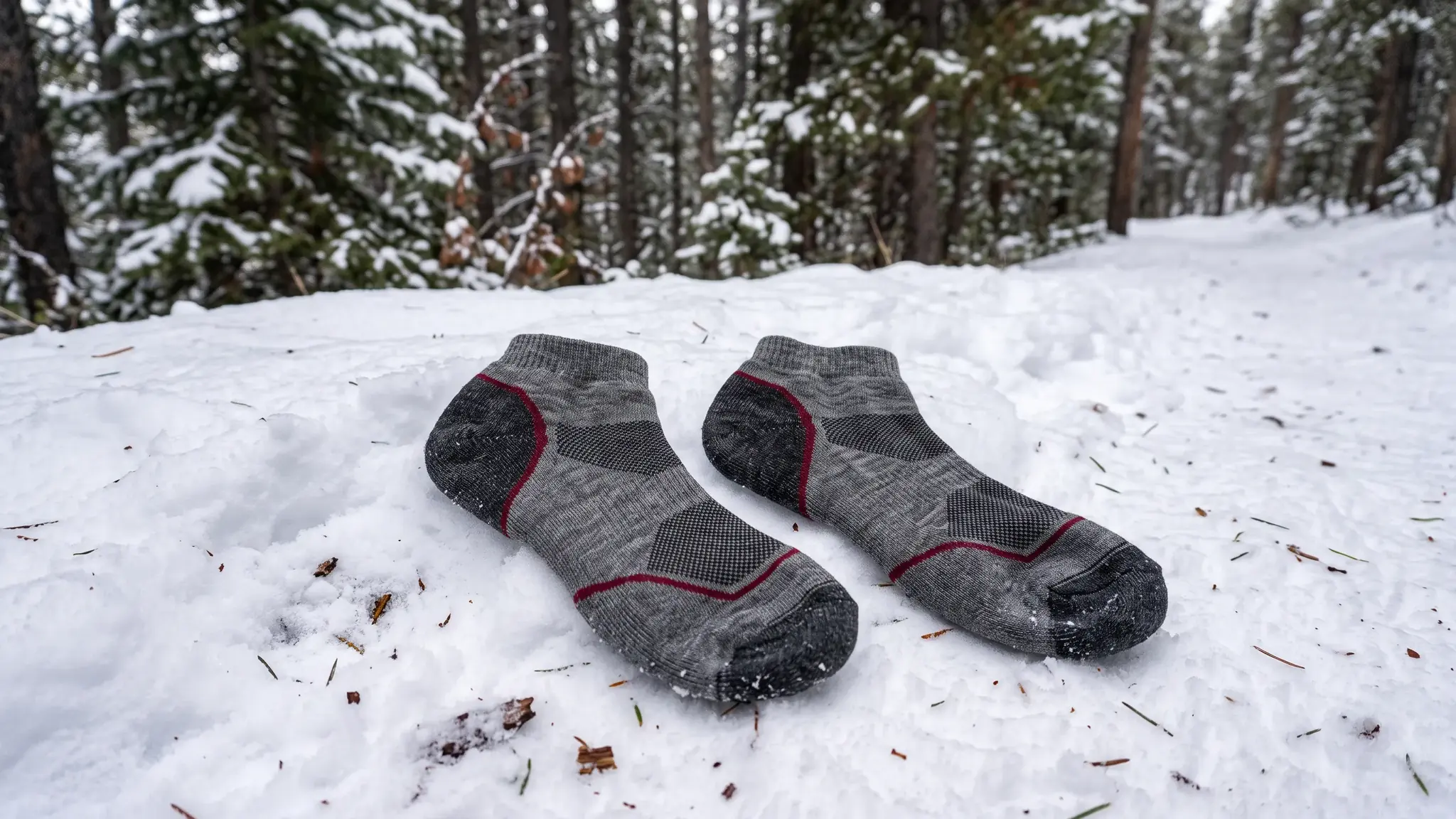
Cold feet often start as wet feet. Sweat has nowhere to go inside a boot, the sock goes damp, and a damp sock pulls heat away from your skin. Merino wool socks solve the problem at the fibre, which is why they have become the default for hiking, hunting, skiing, and long days on the ice around Sault Ste. Marie.
Merino comes from the Merino sheep, a breed raised for very fine wool. Wikipedia's Merino entry, a volunteer-edited encyclopedia, says that "Merino wool is generally less than 24 micron (μm) in diameter" and describes it as fine and soft. A micron is one thousandth of a millimetre, so these fibres are thin enough to bend against your skin instead of poking it. That is the difference between merino and the itchy coarse wool many people remember from childhood sweaters.
Finer fibre is one half of the story. The other half is that wool is a natural fibre with a crimp, a wavy shape that traps tiny pockets of air. Trapped air is what insulates. Woolx, a US merino clothing retailer, says merino "can absorb up to 30% of its weight in water and still feel dry to the touch." That is the company's own claim, but it matches why wool socks feel less clammy than most. Below we cover what to look for on the label.

The Health Case for a Good Sock Is Simple: Warm and Dry Beats Cold and Wet
Health Canada's extreme cold guidance is the federal health department's public advice on staying safe in winter. It says to "wear warm socks, gloves, a hat and scarf in cold weather," and to "dress in layers with a wind resistant outer layer," removing a layer if you get too warm before you start sweating, or adding one if you get cold.
The same page makes the point that explains why socks matter so much: "If you get wet, change into dry clothing as soon as possible. You lose heat faster when you're wet." Feet are the part of you that sits closest to snow, slush, and cold ground, and the part you can least easily check. A sock that handles moisture well gives you a longer margin before that heat loss starts.
Our take: Merino does not make a wet boot warm, but it gives you a better start than a cotton sock does. Pair it with a boot that fits and a spare pair in the pack, and you have covered most of what keeps feet comfortable.
Merino Is a Blend, so Read the Fibre Content Before You Buy
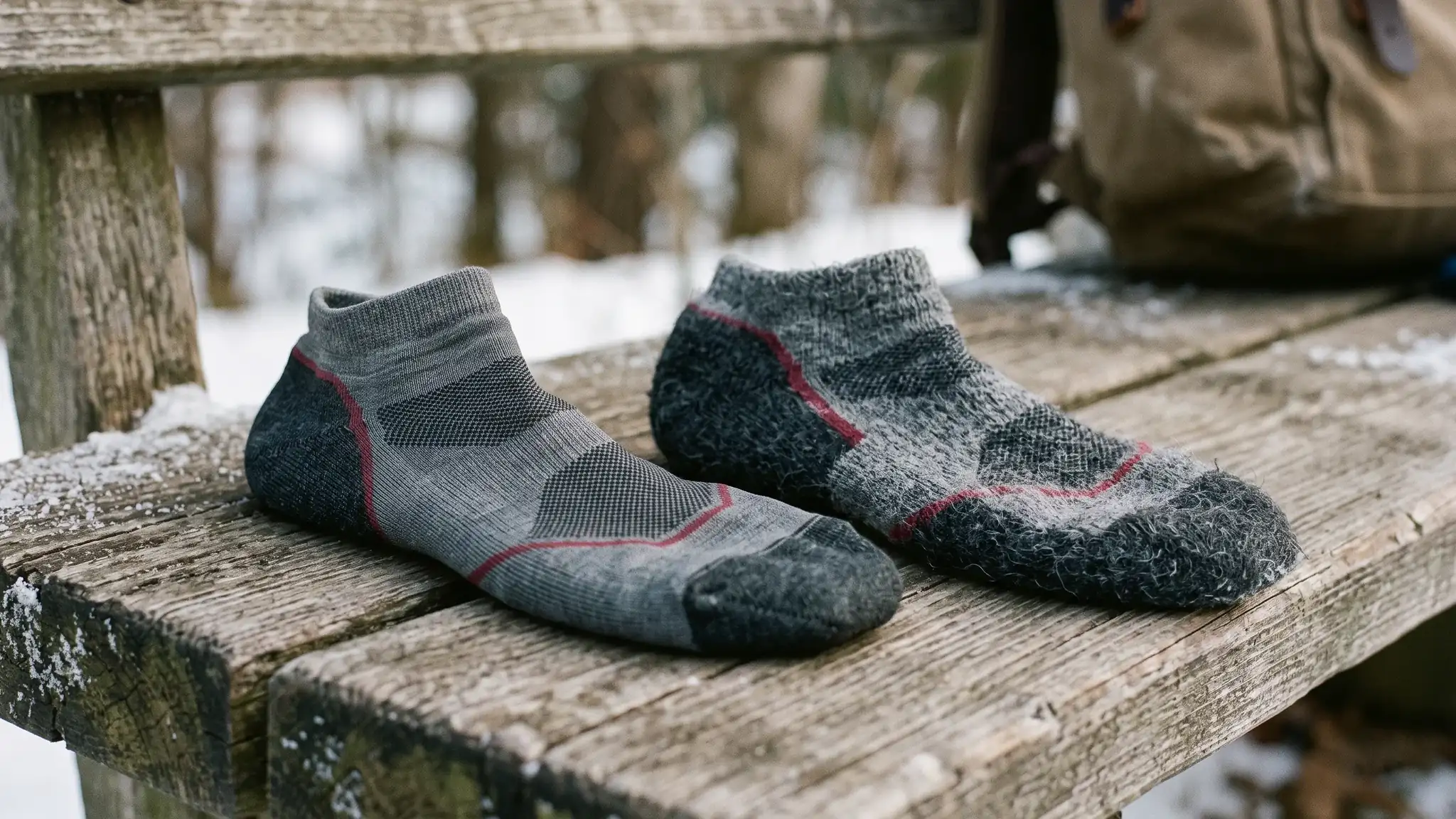
Almost no sock is 100% merino. A pure wool sock would stretch out and wear through at the heel and toe, so makers add nylon for strength and elastane (sold as Lycra or spandex) for stretch and recovery. That is normal and it is a good thing. The question is how much merino is in the mix, and the labels on the pairs we carry show a real range:
- Lighter hiking socks use about 43% merino with a larger share of nylon, which dries faster and wears hard.
- Midweight socks sit in the 60% to 63% range, which is where most all-round pairs land.
- Heavyweight cold-weather socks go as high as 77% merino, because warmth is the whole job.
Read the percentage on the tag, not just the word "merino" on the front. A sock that is mostly nylon with a little merino will not feel or perform like a sock that is mostly merino, and the price usually shows it.
Cushion and Height Decide Where a Sock Belongs
Once you know the blend, two features sort the socks into jobs: how much padding sits under the foot, and how high the cuff goes.
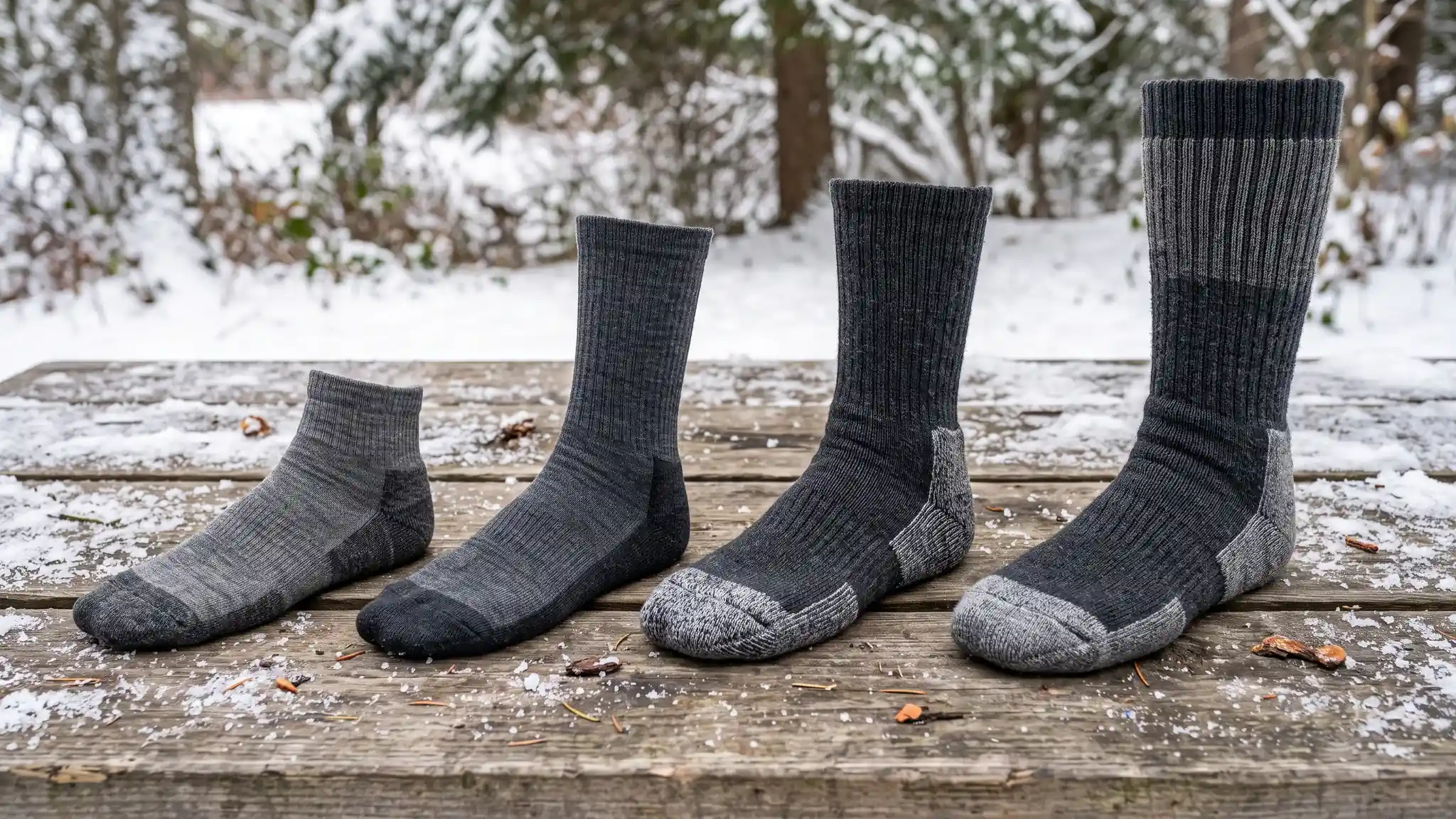
Light cushion is a thin layer under the foot. It suits warm days, trail shoes, and anyone who runs hot. Midweight cushion adds terry loops, the small uncut loops of yarn that feel like a towel inside, which pad the foot and add warmth. Heavyweight cushion is for brutally cold days and big boots.
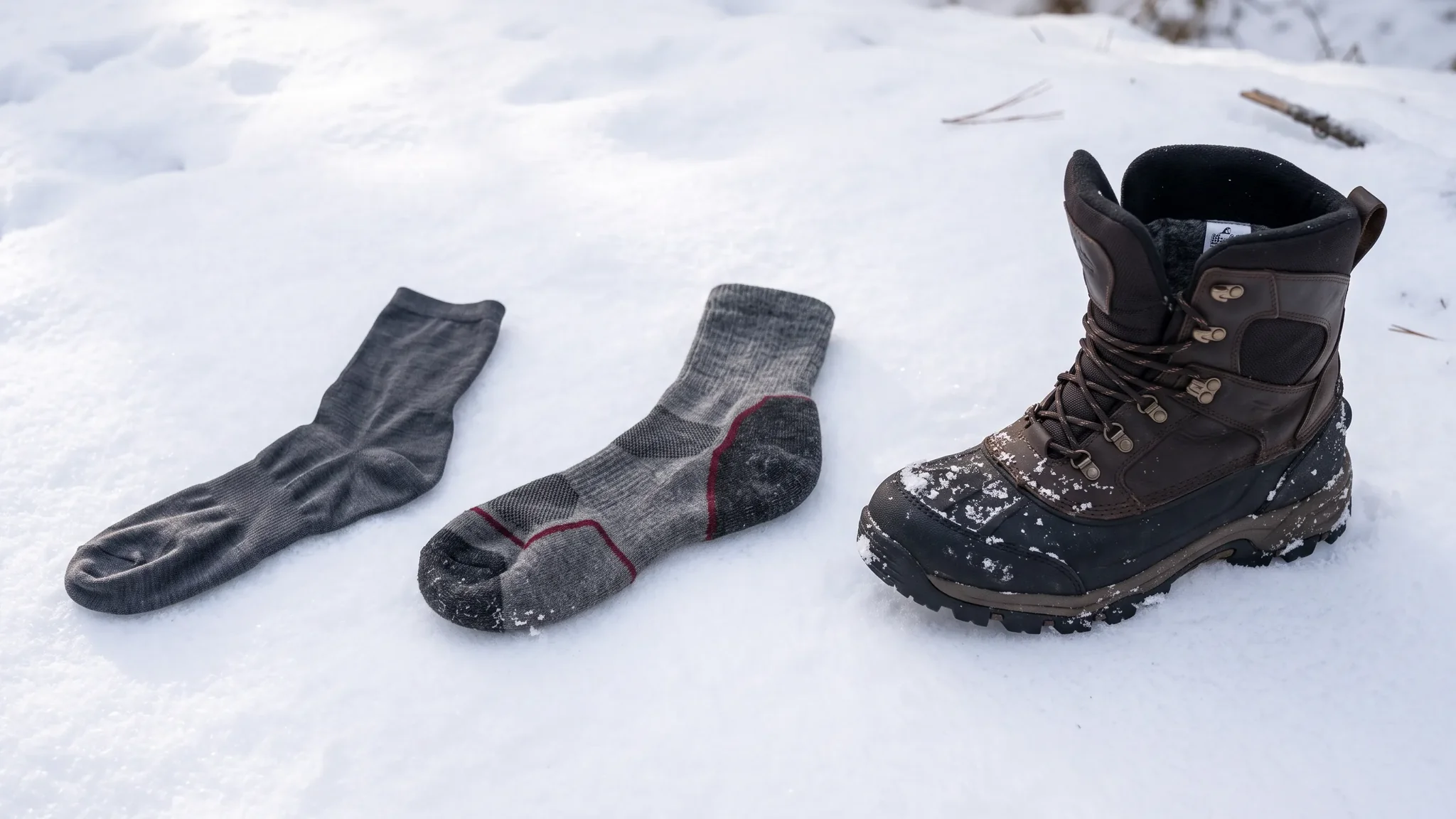
Height matters just as much. A quarter-height sock covers the ankle and works in low shoes. A micro crew sits just above a standard hiking boot. A boot-height or over-the-calf sock keeps your boot cuff from rubbing and holds heat in higher up, which suits rubber boots, ski boots, and tall hunting boots. Match the height to your footwear so the cuff does not rub bare skin.
Light Cushion for Trail Shoes and Warm Days
The Darn Tough Light Hiker Quarter Sock ($31.95) is an ankle-covering lightweight hiking sock with a smooth cuff and cushion that extends up the Achilles. It comes in Black, Denim, Space Grey, and Taupe, in sizes M to XL.
A step up in padding, the Darn Tough Micro Crew Light Cushion Sock ($35.95) is listed at 54% nylon, 43% merino wool, and 3% Lycra spandex. It has mesh panels over the top of the foot and a thin layer of cushioning along the base. Darn Tough guarantees it for life.
Midweight Cushion for All-Round Hiking and Cool Days
If you want one pair to start with, we'd point you to the Darn Tough Number 2 Micro Crew Midweight Cushion Sock ($36.95). The listing gives 63% merino wool, 35% nylon, and 2% Lycra spandex, with cushion terry loops under the foot reaching above the ankle and a true seamless construction.
The Darn Tough Hike Hike Hut Micro Crew Midweight Hiking Socks ($34.95) are 60% merino wool, 38% nylon, and 2% Lycra spandex. They are made for hiking boots, hiking shoes, and trail runners, and they show about 6 inches above a low hiking shoe.
Heavyweight and Tall Socks for the Cold
For the coldest days, the Darn Tough Hunter Over-the-Calf Extra Cushion Heavyweight Sock ($48.95) is the brand's heaviest hunting sock, at 77% merino wool, 19% nylon, and 4% Lycra spandex. It has a Zero Friction Heel to reduce blisters, and it comes in Charcoal and Forest.
For resort days, the Darn Tough Heady Yeti Over-the-Calf Midweight Ski and Snowboard Sock ($38.95) is a midweight merino sock with a performance fit to stop slipping and bunching in the boot. It runs about 17 inches from heel to cuff and is made in Vermont.
An Everyday Merino Crew at a Lower Price
Not every pair has to be a technical sock. The Socksmith Compass Merino Wool Men's Sock ($29.95) is a crew-height sock in men's size 10 to 13 with dynamic arch support, a cushioned footbed with padding at the heel, arch, and toe, and breathable mesh panels. It comes in patterns such as Kayak at Sunrise, Moose Lake, and Sasquatch Out, so it also works as a gift. Browse the full men's sock selection or the Socksmith range.
Fit Matters as Much as Fibre
A merino sock only works as well as it fits. Pick the size that matches your shoe size, then check that the heel pocket sits under your heel and the toe seam is not pressing on your toes. A sock that is too loose bunches inside the boot and rubs, and one that is too tight can slip down or squeeze the foot. If you are between sizes, try both with the shoes you will wear, ideally late in the day when feet are at their largest, and pull the sock up straight before you judge the fit.
Merino Socks Work Best as Part of a Layering System
Health Canada's advice is to dress in layers, and the sock is the bottom layer of the same system. If you wear a merino base layer on your body, a merino sock on your feet keeps the whole system in one family, so moisture moves the same way from head to toe.
The Stanfield's Men's Merino Wool Base Layer Top ($119.95) is 100% merino wool jersey made with yarns from New Zealand and made in Canada. It is warm as a base layer or worn as a casual shirt. Browse all of our men's base layers and socks to build the set.
How to Wash and Look After Merino Socks
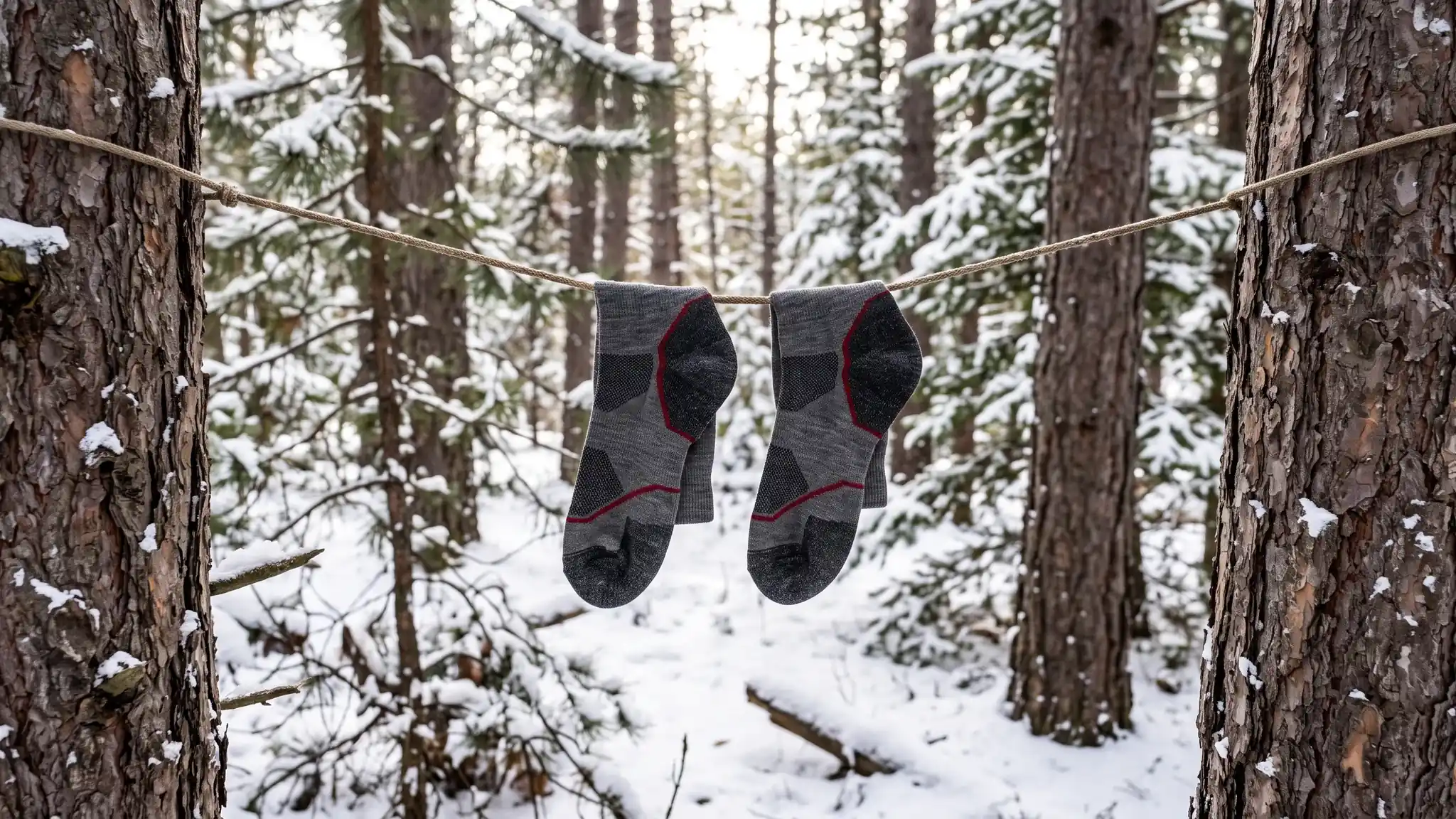
Good socks last when you treat them well. The care label on the Darn Tough hunting sock we carry says to machine wash cold on gentle, inside out, then tumble dry low or hang dry. That is a good rule for most merino socks, but always check the tag on your own pair. Heat is the enemy of wool, and a hot dryer is the quickest way to shrink a sock and wear down its cushion.
Wash them after a hard day instead of letting sweat dry in the fibre, and turn them inside out so the cushioned loops get cleaned. Darn Tough backs its socks with a lifetime guarantee, so keep your receipt and the tag details handy.
Rotate Pairs so Each One Rests
Wool springs back between wears. Having two or three pairs in rotation, instead of wearing one pair daily, lets each pair dry fully and keeps the cushioning from flattening out.
Questions
How many pairs do I need for a trip?
For a weekend trip, we'd pack two pairs of your main sock plus one spare pair for sleeping or an emergency swap. For a week or longer, three pairs is usually enough if you rinse and dry them as you go. A rinse and a night to dry between days often does the job, so you do not need a fresh pair for every day.
What blend lasts longest?
Durability comes mostly from the nylon in the blend and the knit, not from higher merino content. A midweight sock around 60% merino with nylon and a little elastane is a strong all-round choice. Heavily padded pairs wear out in the heel and toe first, so rotate pairs, wash gently, and skip the hot dryer.
Are merino socks good for sweaty feet?
Yes, they are a good choice. Merino can absorb a good deal of moisture and still feel dry to the touch, according to Woolx, and pairs with mesh panels over the top of the foot add airflow. Sweaty feet also need a boot that fits and a spare pair on long days, since no sock can keep up with a boot that is too tight.
Come Try Merino Socks on at Our Store in Sault Ste. Marie
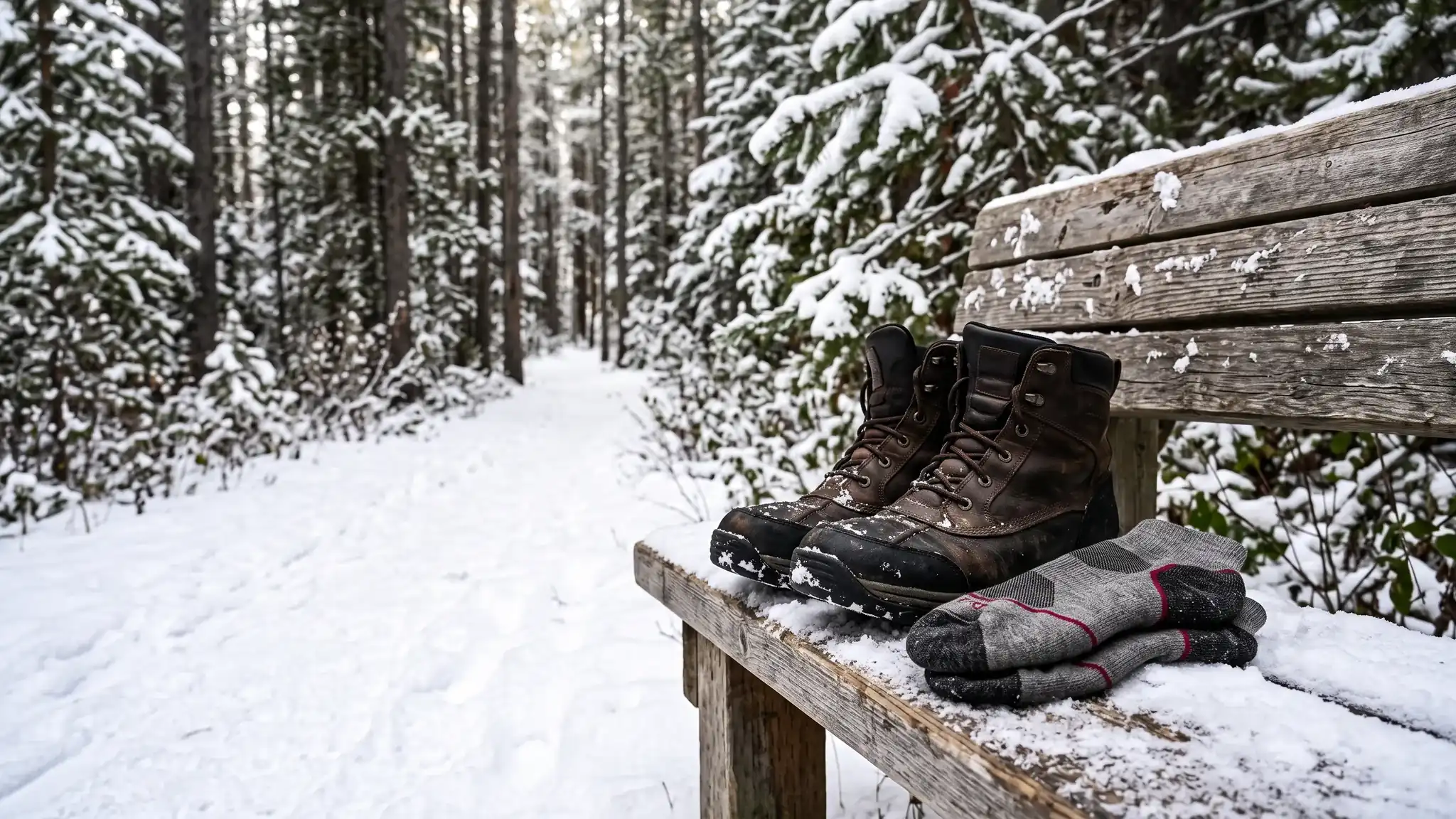
Fit matters more than any label, and sock thickness changes how a boot feels. Visit Great Lakes Outfitters at 162 Old Garden River Rd, Sault Ste. Marie, ON P6B 5A6, or call us at (705) 253-2361, and bring the boots you plan to wear so we can match the sock to them.
Talk to us about it
- 162 Old Garden River Rd, Sault Ste. Marie, ON P6B 5A6
- (705) 253-2361
- Open today 10 a.m. to 6 p.m.
- Send us a message
References
About the author
Shannon Prosser
Store Manager
I have been here three years. Before that, I worked for Moore's Clothing and Charm Diamond. I manage the store. Come to me for clothing and footwear: Outdoor Research, The North Face, Columbia, Kuhl, and all of our footwear.
More from Shannon Prosser

 English (Canada)
 Français du Canada