

What to Wear on Snowshoes: A Boot Checklist for Men
When men ask me about snowshoeing boots, I start with one question: which job does your boot have to do best, keep you warm, keep water out, grip on ice, or fit the binding? In this guide I walk through four boots for men, then the socks, gaiters, and poles that go with them, and a short checklist to take to your boot fitting.
TL;DR
- Four jobs your boots do at once
- Insulated and waterproof first
- Winter soles and heel shape
- Four Men's Winter Boots I Would Wear Snowshoeing
- Socks, gaiters, and poles
- The checklist to bring to your fitting
- Trying boots on in Sault Ste. Marie
Who this article is for
- Men buying their first snowshoeing boots
- Snowshoers replacing a worn-out pair of boots
- Walkers whose feet run cold on slow winter outings
- Anyone unsure whether their current winter boots will work in a snowshoe binding
Steve Meating
Owner
A note from the author
I buy and sell a lot of gear, but the questions I enjoy most are the plain ones, like what a man should have on his feet before he heads out on snowshoes. I wrote this around the one idea I keep coming back to: a boot has four jobs, and a pair that misses any one of them ends the afternoon early. I would rather you leave knowing what to check than leave with a model name.
On Snowshoes, Your Boots Do Four Jobs at Once
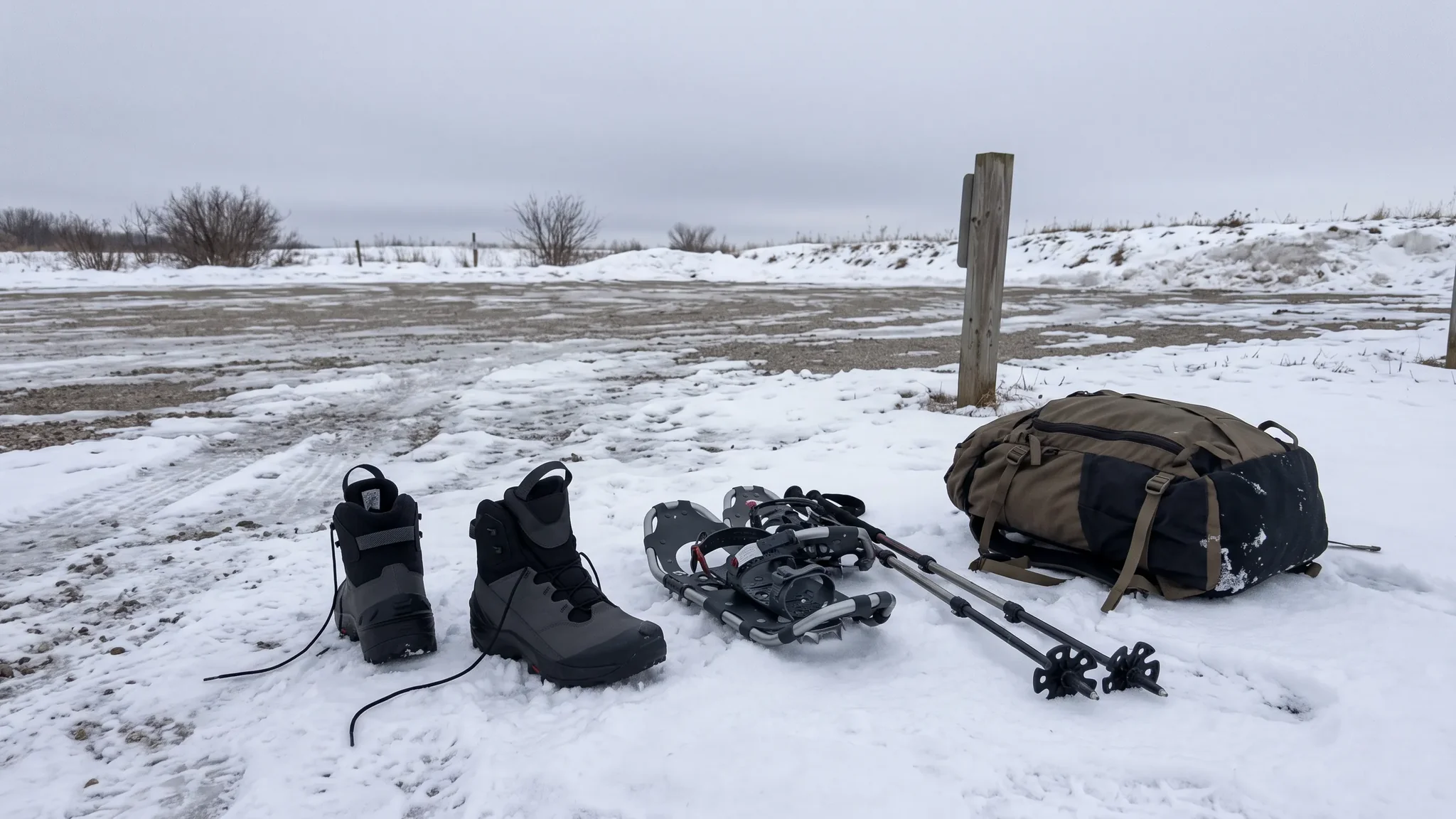
A snowshoe carries your weight over the snow, but your boot is the part that keeps you going. It has to keep your feet warm while you move, keep water out, grip when the trail turns icy, and fit the binding without pinching. A pair that misses on any one of those jobs ends a good afternoon early, which is why I always tell people starting from scratch to choose the boots before the snowshoes.
This is the checklist I go through with men who are new to snowshoeing or who are replacing a worn-out pair. It covers four boots, the socks and gaiters that go with them, and what each costs today. If you want the wider picture first, the guides to winter boots and men's winter boots go deeper on warmth ratings and soles, and the snowshoe buyer's guide covers the snowshoes themselves.
One thing I say up front: You do not need a special "snowshoe boot." Most men snowshoe in an insulated, waterproof winter hiking boot with a good sole, and the models below are all of that type. What matters is the checklist, not the label on the box.

Insulated and Waterproof Comes Before Everything Else
Snowshoeing is a moving activity, and your feet warm up as you walk, but you stop often to adjust a binding, drink some water, or look at the view. Boots that suit a brisk pace and also hold up through those standing breaks are the target. Manufacturers publish warmth ratings for exactly this reason, and some give two numbers, one for moving and one for standing still. The men who tell me about a cold afternoon almost always point to those stops, not the walking.
The Salomon Men's Crosstrak Powder is a good example. Salomon lists its comfort temperature at -35°C in motion and -15°C stationary. The gap between those two numbers is why I read warmth ratings as a range rather than a promise. Ratings are the maker's own figures, and how warm a boot feels still depends on your socks, your pace, and how long you stand around.
Waterproofing is the other half. Wet snow clings to boots and melts as you stop, so the membrane matters more than the thickness of the lining. Each boot I list below has a waterproof build: the Crosstrak Powder has a waterproof membrane, the Toundra Pro uses full ClimaSalomon waterproof bootie construction, the Keen Revel IV Mid Polar uses a KEEN.DRY membrane, and the Baffin Bruce Mid uses B-Tek Dry. I would not buy a snowshoe boot that is only water-resistant.
A Real Winter Sole Matters More Than a Tall Shaft
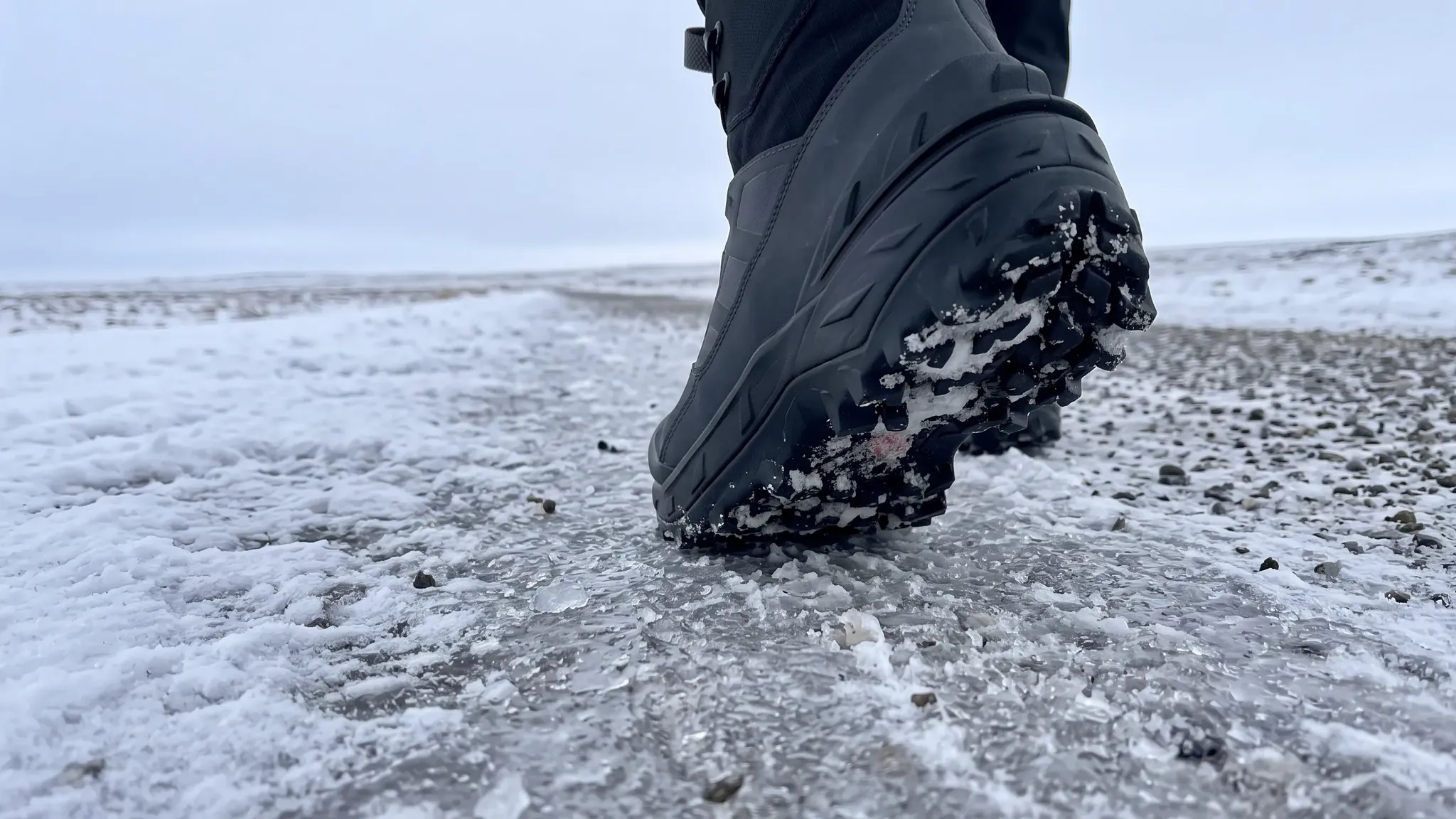
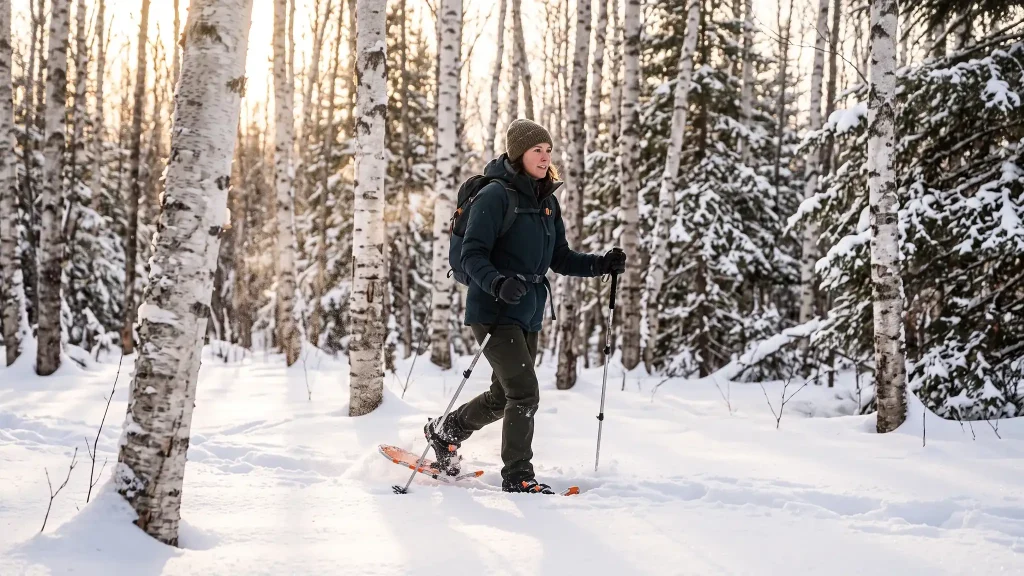
Snowshoe trails are rarely just soft snow. Packed sections, icy side-hills, and the walk from the parking lot all put your boot sole to work. The Parks Canada snowshoeing page for Banff National Park is written for a mountain park, but its advice applies on any icy trail: "When trails are icy, hiking poles can make snowshoeing much more safe and enjoyable." Parks Canada is the federal agency that manages Canada's national parks, and its packing list for snowshoers also names hiking poles, a toque or winter hat and gloves, hand and toe warmers, and extra warm clothing.
That list is a useful reminder that boots are one item among several. For the boot itself, look for a sole that is made for snow and ice rather than a flat summer tread. Two examples: Keen builds the Revel IV Mid Polar on its Polar Traction outsole with 5 mm multi-directional lugs, and Baffin's Bruce Mid has IceBite grip for better slip resistance on ice than conventional rubber. Salomon's Toundra Pro uses a Contagrip W sole made for snow and ice.
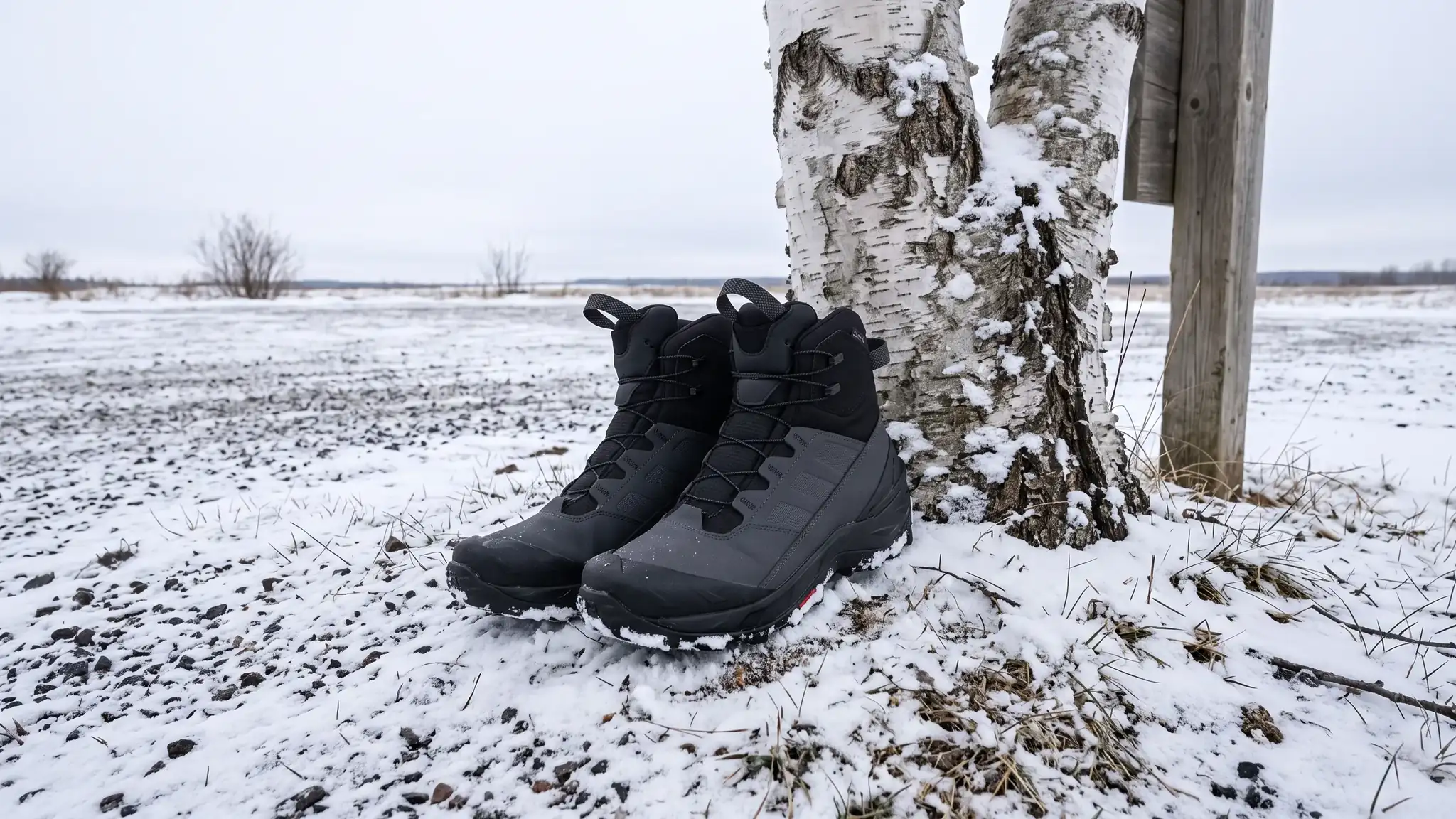
The Bruce Mid has one more feature that snowshoers will appreciate: its external heel counter is listed with a snowshoe ledge. I always check the back of the boot where the binding's heel strap sits, because in my experience a boot with a defined heel shape holds the strap in place better than a rounded one.

Four Men's Winter Boots I Would Wear Snowshoeing
These four cover the range from a light, active boot to a very warm one. All four come in men's sizes, and the prices are what the product pages show today.
Keen Men's Revel IV Mid Polar
The Keen Men's Revel IV Mid Polar is for the snowshoer who wants a boot that feels like a light hiker. It has 200 g of KEEN.WARM recycled insulation rated to -32°C, a waterproof and breathable KEEN.DRY membrane, a stability shank for support, and a leather and mesh upper. It's $229.95 and comes in sizes 8 to 14, which is the widest size range of the four. It's the one I suggest to most first-time snowshoers who want an everyday trail boot.
Salomon Men's Crosstrak Powder
The Salomon Men's Crosstrak Powder is a high-cut winter hiking boot with lugs that cover the bottom and sides of the midsole to grip packed or deep snow. Salomon lists it at 575 g per boot, with a 10 mm drop and a wide fit, which suits men who find narrow hiking boots tight across the forefoot. The price is $239.95. A wide fit is what I hear men ask for most when hiking boots feel tight across the forefoot.
Baffin Men's Bruce Mid Hiking Boot
The Baffin Men's Bruce Mid is the one to try if you plan to spend your time on icy trails. Beyond the IceBite grip and the snowshoe ledge, it has a speed-lace front with a heel-lock system, a pull loop at the back, and a fixed-fit multi-layer liner. It's $249.95.
Salomon Men's Toundra Pro ClimaSalomon
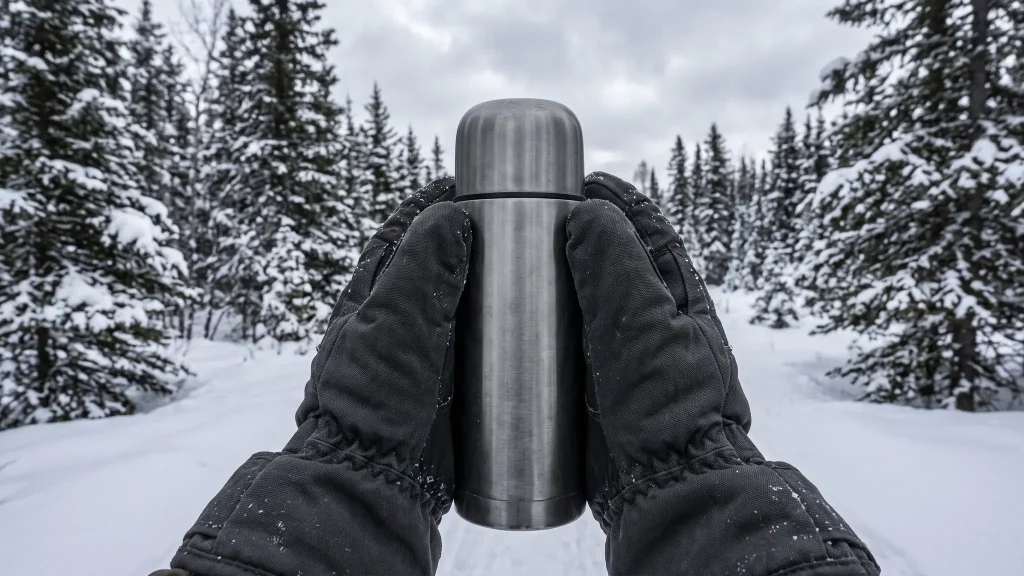
The Salomon Men's Toundra Pro is the warmest boot of the four, rated by Salomon to -40°C with Aerotherm Aerogel insulation and a faux fur lining. A gusseted tongue keeps snow and debris out of the boot. I would choose it for slow outings, such as photography, birding, or long breaks with a thermos, and for anyone whose feet run cold. It's $279.95, and sizes run 9 to 12.
Not sure which to try first? My take: If you walk fast and your feet run warm, start with the Revel IV Mid Polar or the Crosstrak Powder. If you stand around a lot or your feet get cold, try the Toundra Pro. The wider footwear section has more models if none of these fit.
Socks Are Part of the Boot Checklist
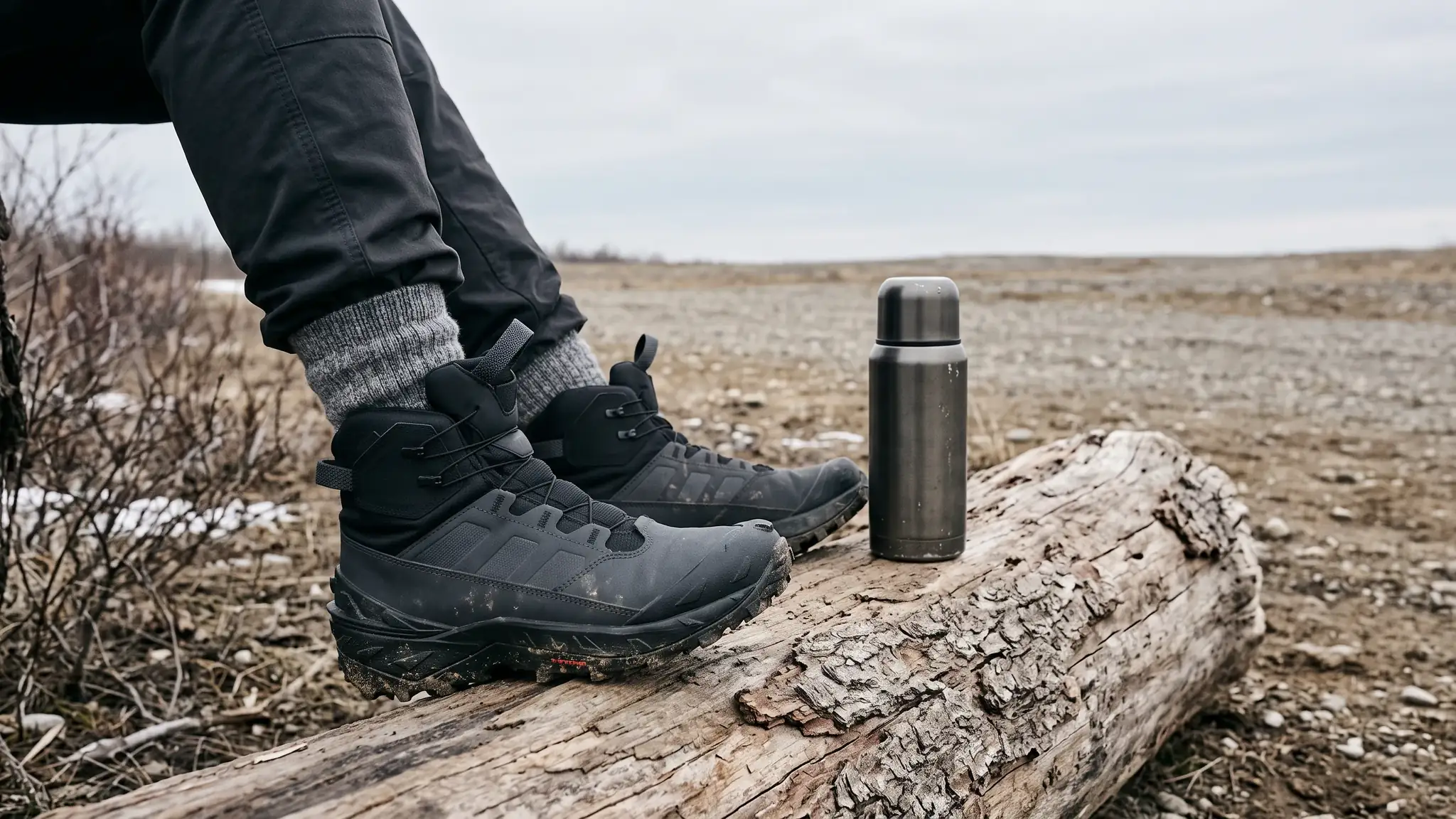
A good boot in the wrong sock still gives you a cold, damp, or blistered foot. I look for a wool or wool-blend sock that wicks moisture and has cushioning under the foot, and I skip cotton, which holds moisture. For more detail, the guide to merino wool socks covers the weights and how they differ.
Two I like for snowshoeing. The Darn Tough Men's Hike / Trek Boot Cushion Sock is a medium-weight, crew-height sock in 67% merino wool with high-density cushioning under the foot and a reinforced heel and toe. It's $39.95. The Darn Tough Men's Heady Yeti is a midweight over-the-calf sock, about 17 inches from heel to cuff, and Darn Tough built it with a performance fit to stop slipping and bunching in the boot. It's $38.95. Both are made in Vermont and come with Darn Tough's lifetime warranty.
Whichever you choose, I always say to wear the same sock when you try on boots. A boot that feels right over a thin dress sock can feel tight with a cushioned one.

Gaiters and Poles Round Out the Boot Setup
Snow finds its way into the top of a boot when you step into a drift or kick up powder with a snowshoe. A gaiter, a cover that wraps your lower leg and the top of the boot, keeps it out. The Outdoor Research Men's Rocky Mountain High Gaiters II are made for "chilly snowshoeing," according to the product page, in abrasion-resistant nylon with boot lace hooks, an instep strap, and a hook-and-loop front. They're $69.95 and come in sizes L and XL. For deeper snow or wetter days, the Outdoor Research Men's Crocodiles Expedition Gore-Tex Gaiters are $109.95.
Parks Canada's tip about poles is worth taking seriously on icy ground. The Leki Makalu FX TA Trekking Pole, adjustable from 110 to 130 cm, is $269.95, and the snowshoe section has the snowshoes, bags, and strap keepers to go with it.

Take This Checklist to Your Boot Fitting
Here is the short version, in the order I check at the counter.
- Insulation: Check the warmth rating, and read whether it is for moving or standing still.
- Waterproofing: Look for a real membrane or bootie, not just a water-resistant finish.
- Sole: Choose a winter tread with deep lugs, or an ice-grip rubber.
- Heel shape: Confirm that the binding's heel strap sits securely behind a defined heel.
- Fit: Try boots on with the socks you'll wear, and walk around the store.
- Extras: Add socks, gaiters, and poles to the list before you leave.
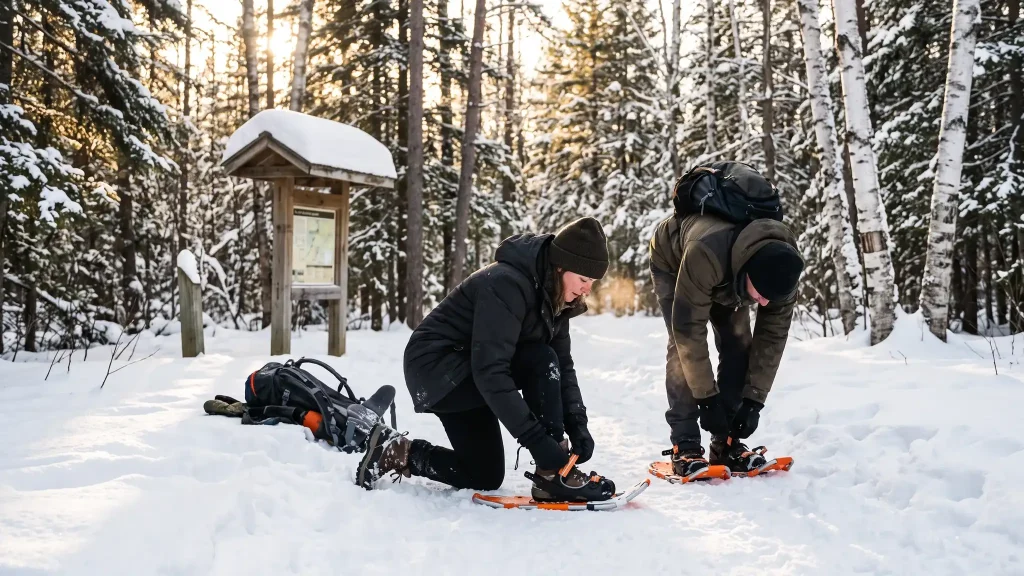
If you already own snowshoes, bring them, or tell me the model. Checking the boot in the binding is the quickest way to find out whether the pair works together. For help with the snowshoes themselves, see how to choose snowshoes.
Questions
Do I need insulated boots for snowshoeing?
In a Northern Ontario winter, I say yes for most outings. You warm up while you move, but you also stop, and insulation covers those stops. Choose a rating that matches how you use them. A light insulated hiker such as the Revel IV Mid Polar suits a brisk pace, while the Toundra Pro, rated to -40°C by Salomon, suits slow days and long breaks.
What sock combination works?
I keep it to one good wool or wool-blend sock that fits snugly, rather than two thin pairs that bunch up. A midweight, cushioned merino sock such as the Darn Tough Hike / Trek Boot Cushion is a sound start. Avoid cotton, which holds moisture, and bring a dry spare pair in your pack for the drive home or a long break.
Can I snowshoe in my winter boots?
Often, yes. A waterproof, insulated winter boot with a good sole and a defined heel is what most men wear. Very bulky pac-style boots and soft, shapeless ones can be awkward in a binding, so check the fit with your snowshoes. Bring your boots and snowshoes to the store, and I will look at the pair with you.
Come Try Boots on in Sault Ste. Marie
The fastest way to pick a snowshoe boot is to wear it, with your socks, in the binding. Stop by Great Lakes Outfitters in Sault Ste. Marie and bring your snowshoes, and I will help you match the boot to the binding.
Talk to us about it
- 162 Old Garden River Rd, Sault Ste. Marie, ON P6B 5A6
- (705) 253-2361
- Open today 10 a.m. to 6 p.m.
- Send us a message
References
About the author
Steve Meating
Owner
I take care of the entire fishing category and some of our other categories. I also look after our online store.
More from Steve Meating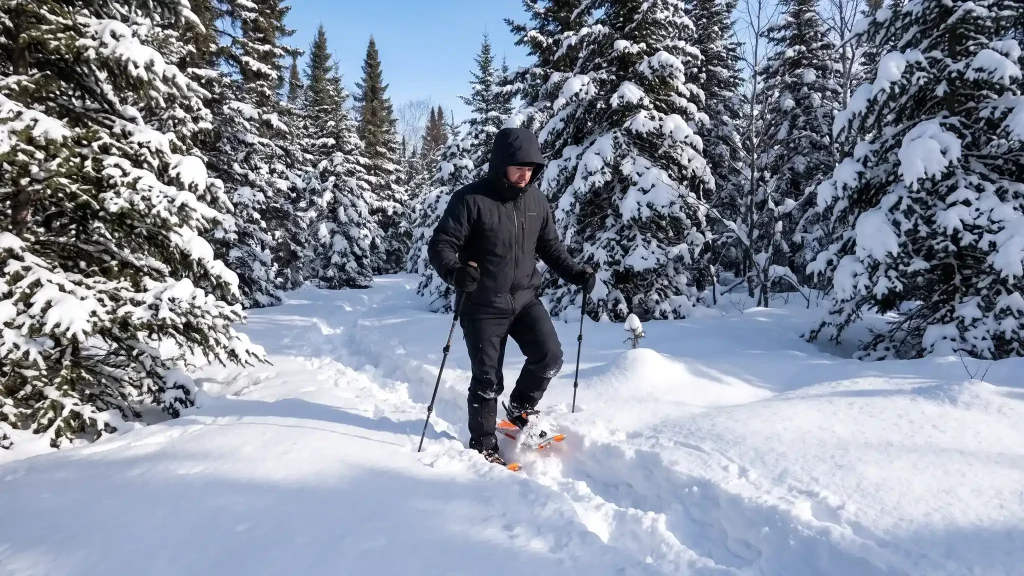

 English (Canada)
 Français du Canada