

Ontario Fishing Licence: The Complete Guide
Buying an Ontario fishing licence starts with one question: Which kind of angler are you in the province's eyes, an Ontario resident, a Canadian resident, or a visitor from abroad? We'll walk through the Outdoors Card, who can skip buying a licence, sport versus conservation, the 2026 fees, and where to buy, then the free fishing weekends, the zone rules, and a first-season gear budget.
TL;DR
- What an Outdoors Card is, and what you carry while you fish
- Who does not need to buy a licence
- Sport versus conservation, with Zone 10 limits
- The 2026 fees for residents, Canadian residents, and visitors
- Where to buy, and the scheduled FishHuntON switch
- Free fishing weekends, zone rules, and gear rules
- A first-season gear budget, and where to see it in Sault Ste. Marie
Who this article is for
- First-time anglers working out which licence to buy
- Ontario residents deciding between sport and conservation
- Visitors from elsewhere in Canada or abroad planning a trip to the Sault
- Parents and newcomers wondering what the free fishing weekends allow
Shannon Prosser
Store Manager
A note from the author
We wrote this guide around the licence rules the Government of Ontario publishes and the rods, reels, and line we sell at 162 Old Garden River Road, so every product named in it is one you can buy from us. Prices are shown as they were on our store the day this went up. If you have questions about gear, call us or come in, and for licence questions, confirm with the province.
Most adults need an Outdoors Card and a fishing licence before the first cast
If you are 18 or older and you plan to fish in Ontario, you almost certainly need a licence. The Government of Ontario's page for Ontario and Canadian residents says an angler aged 18 to 64 needs a valid Outdoors Card and a fishing licence before they can start fishing. That is the short answer, and it holds for a Saturday on a small inland lake, a morning on a Lake Superior tributary, and a first-ice weekend alike.
There are real exceptions, and we will go through every one of them below. Anglers under 18 and anglers 65 and older who live in Canada do not buy a licence, but they do carry identification. Veterans and active members of the Canadian Armed Forces who live in Ontario have their own arrangement. Some people with disabilities, and many Indigenous anglers fishing within their traditional or treaty area, also have different rules. Outside those groups, assume you need to buy one.
Here is what we cover, in the order most people ask:
- What an Outdoors Card is, and how it differs from the licence itself.
- Who does not need to buy a licence, and what they carry instead.
- The difference between a sport licence and a conservation licence.
- The 2026 fees for Ontario residents, Canadian residents, and visitors from outside Canada.
- Where and how to buy, and what is scheduled to change in December 2026.
- The free fishing days, the rules that still apply on them, and what a licence does not cover.
- Gear for a first season, with the arithmetic shown.
We are a gear store in Sault Ste. Marie, not the licensing office, so everything on this page comes from the Government of Ontario's own pages, which we name as we use them. Every fee in this guide is a 2026 fee. Fees and dates are set by the province and can change on January 1, so check the current figure on the linked page before you pay. We will refresh this page for 2027.

The Outdoors Card is the plastic ID, and the licence is the permission printed on it
People often ask about "the licence" as if it were one thing. In Ontario it is two. The first is the Outdoors Card, which the Ontario Fishing Regulations Summary describes as a plastic, wallet-sized card valid for three calendar years and used for administration purposes. The second is the fishing licence itself, which is valid for either one or three calendar years. The licence is what gives you the right to fish, and the card is what carries your identity and, usually, your licence details on its back.
The Ontario Fishing Regulations Summary is the province's published rulebook for anglers. It is the document a conservation officer expects you to know, and its licence chapter is the source for most of what follows. It lays out the order of operations clearly: you must buy an Outdoors Card before you can buy a fishing licence, with one exception. A one-day sport fishing licence can be bought without an Outdoors Card.
What you carry while you fish
When you buy or renew your Outdoors Card, a plastic card is mailed to you with your fishing licence printed on the back. The Regulations Summary says delivery takes approximately 20 days. You do not have to wait, because the Licence Summary you receive at the time of purchase lets you go fishing right away. The Licence Summary is a document that lists all of your valid fishing and hunting licences.
The rule on what to carry is specific. If you bought anything other than a one-day licence, you must carry your Outdoors Card while fishing. You must also carry your Licence Summary if your current fishing licence is not listed on the Outdoors Card, or if your card has not arrived yet. If a conservation officer asks, you must present them.
The digital copy has a rule that catches people
The Licence Summary can be a printed copy or a digital one on your phone. The Regulations Summary is direct about the digital version: it must be the PDF issued by the Fish and Wildlife Licensing Service, and a photograph or screenshot of it is not valid. You are also responsible for having enough battery to show it, and for protecting the device from the elements. The province lets you have a copy sent to your email address from your account, which is the easiest way to get the real PDF onto your phone.
This matters more than it sounds. Many anglers fish where there is little or no cell service, and a phone in a cold pocket on the ice loses charge faster than one on a kitchen counter. If you rely on the digital copy, save the PDF to the phone itself rather than depending on a download in the field. If you would rather not rely on a battery at all, print a copy and keep it in a zip bag in your tackle box. The Regulations Summary allows a paper copy and treats it as equivalent.
Your card and licence belong to you alone
The Regulations Summary lists a few rules that apply to every angler:
- All fishing licence products are issued on a calendar year basis, from January 1 to December 31.
- A one-year licence expires on December 31 of the year printed on it, regardless of the date you bought it, and a three-year licence expires on December 31 of its third year.
- Your Outdoors Card, fishing licence, and Licence Summary are not transferable. They give privileges to you alone.
- You must notify the province within 10 days of any change to your name, contact information, address, or residency.
- It is against the law to try to obtain more than one Outdoors Card, or to give false information when you apply.
The calendar-year rule is the one that surprises new anglers. A one-year licence bought in October of 2026 still expires on December 31, 2026. If you buy late in the year for a trip in the same year, that is fine. If you buy it expecting a full twelve months, you will be disappointed. That is one reason the three-year option, discussed in the fees section below, is worth a look.
If your card or licence is lost or stolen, the Regulations Summary says you can reprint your Licence Summary online at no charge, and you can order a replacement plastic card for a fee. You can also go in person to a licence issuer or a participating ServiceOntario location.

Four groups of anglers do not need to buy a licence, but most must carry identification
Ontario calls these "deemed licences." The idea is simple: instead of buying and carrying an Outdoors Card and a recreational fishing licence, certain people carry a specified document and that document counts as their licence. The Regulations Summary adds one condition that applies to all of them, which is that the catch and possession limits for a sport fishing licence apply. Not buying a licence does not mean reduced limits, and it does not mean unlimited ones.
Young anglers and anglers 65 and older who live in Canada
The Government of Ontario's page for residents states that if you are under 18 or 65 and older, you do not need to purchase an Outdoors Card or a licence to fish. You need to carry government-issued identification that includes your name and date of birth at all times while fishing, and that identification acts as your licence. The Regulations Summary words it as a licence, permit, certificate, or identification card issued by a federal, provincial, or territorial government of Canada.
The exemption is for Ontario residents and Canadian residents. The Regulations Summary is explicit that most non-Canadian residents need an Outdoors Card and licence, including those 65 and older. For non-Canadian visitors under 18, the rule is different again, and we cover it in the visitors section.
Ontario also offers a free young angler's licence for kids, with the young angler's pledge printed on the back. The family and youth fishing page says these optional cards are available from early February each year, while supplies last, from places like the Toronto Sportsmen's Show and Learn to Fish sessions in selected provincial parks and conservation areas. They are a keepsake rather than a requirement, since the page also states that you do not need to buy a licence for anyone 17 years and under.
Veterans and active Canadian Armed Forces members who live in Ontario
Starting January 1, 2019, the province lets veterans and active members of the Canadian Armed Forces who reside in Ontario fish across the province without an Outdoors Card and recreational fishing licence. In their place, they must carry one of three documents: a Canadian Forces Identification Card (NDI 20), a Record of Service Card (NDI 75), or a Canadian Armed Forces Veteran's Service Card (NDI 75). The sport licence limits apply. For questions, the page lists the Natural Resources Information and Support Centre at 1-800-387-7011.
Anglers with a disability
The Regulations Summary describes two situations, and they apply regardless of where you live. A person who has been issued an accessible parking permit under Ontario's Highway Traffic Act, or a national identity card from the Canadian National Institute for the Blind, may fish without an Outdoors Card or licence if they carry the permit or card while fishing. If they carry only a black-and-white photocopy or printed version of the parking permit, they must also carry government-issued identification showing their name and date of birth.
The second situation covers a person who needs the direct assistance of another person to fish and to follow the applicable laws because of a disability as defined in the Accessibility for Ontarians with Disabilities Act. That person can fish with government-issued identification showing their name and date of birth. The helper does not need a licence if they are only assisting, but they do need one if they want to fish themselves.
Indigenous anglers exercising Aboriginal or treaty rights
The Regulations Summary says many Indigenous communities in Ontario hold Aboriginal or treaty rights to fish, and that these rights are constitutionally protected. Members of those communities who are exercising an Aboriginal or treaty right generally do not need an Outdoors Card and Ontario fishing licence when they fish for food, social, or ceremonial purposes within their traditional or treaty territory. They should be ready to show identification showing community membership if a conservation officer asks.
The same document is clear about the edges. Members fishing outside their traditional or treaty area must hold a valid licence and follow the seasons, limits, slot sizes, and gear restrictions, or have permission from a First Nation to fish within that First Nation's traditional or treaty territory. The licensing requirements also apply to members of Indigenous communities from the United States who do not have Aboriginal or treaty rights in Ontario. And non-Indigenous people fishing with Indigenous people need their own licence and must follow the regulations when fishing on their own behalf.
This is a legal area where we are a gear store and not an authority. If your situation involves treaty territory around the Sault, the Regulations Summary itself, or the Natural Resources Information and Support Centre at 1-800-387-7011, is the right place to confirm the detail.
A sport licence and a conservation licence differ in how many fish you may keep
Ontario sells two kinds of recreational fishing licence, and the Regulations Summary defines them in one line each. A sport fishing licence is for anglers who want full catch and possession privileges. A conservation fishing licence carries reduced catch and possession limits and is described as ideal for anglers who want to live-release the majority of the fish they catch. Everything else about the two licences is the same: the same Outdoors Card, the same open seasons, the same size rules, and the same gear rules. What changes is the number of fish you may keep.
The summary shorthand takes a minute to learn and then makes every regulation page easy to read. An "S" is a limit under a sport licence, and a "C" is a limit under a conservation licence. So "S-4" means a catch and possession limit of four, and "C-2" means a limit of two.
What the difference looks like on the water around the Sault
Ontario is divided into 20 Fisheries Management Zones, and each one has its own seasons and limits. The Zone 10 section of the Regulations Summary covers Manitoulin Island and a large part of northeastern Ontario, including some Lake Superior tributaries, and its list of waterbody exceptions names Whitefish Channel in the City of Sault Ste. Marie, the Goulais River, and the Garden River. We read that as Zone 10 being the zone for our area. Confirm your exact waterbody on the ministry's Fish ON-Line map before you rely on it, because individual waters can have their own entries.
Here are a few of the Zone 10 zone-wide limits, copied from that page, to show how the two licences compare. These are the general limits for the zone. Individual lakes and rivers can have exceptions that override them.
| Species | Zone 10 season | Sport licence | Conservation licence |
|---|---|---|---|
| Walleye and sauger combined | January 1 to the third Sunday in March, and third Saturday in May to December 31 | 4 (none greater than 46 cm) | 2 (none greater than 46 cm) |
| Yellow perch | Open all year | 50 | 25 |
| Northern pike | Open all year | 6 (not more than 1 greater than 61 cm, none greater than 86 cm) | 2 (none greater than 61 cm) |
| Largemouth and smallmouth bass combined | Third Saturday in June to November 30 | 6 | 3 |
| Brook trout | January 1 to September 30 | 5 | 2 |
| Lake trout | January 1 to Labour Day | 2 (not more than 1 greater than 40 cm) | 1 |
| Rainbow trout | Open all year | 2 | 1 |
| Muskellunge | Third Saturday in June to December 15 | 1 (must be greater than 122 cm) | 0 |
Two things stand out. The first is how large the gap is: a sport licence keeps twice as many walleye as a conservation licence, and for muskellunge the conservation limit is zero, which means catch and release only. The second is that Zone 10 has an aggregate limit for trout and salmon, including splake: S-5 and C-2 in total across all those species combined. You cannot keep five brook trout and also two lake trout on a sport licence, because the combined total is five.
Which one should you buy
This is a values question more than a technical one, and the province says as much in its own wording. If you fish to eat, to fill a freezer, or to bring a limit home from a trip, buy the sport licence. If you almost always release what you catch, or you fish mostly for pleasure and keep a meal at most, the conservation licence is cheaper and its lower limits will not matter to you.
The decision is not permanent in the way it might feel. A conservation licence is cheaper, and the fee tables below show by how much. If you buy a conservation licence and find in July that you want to keep more fish, you would have to buy a sport licence. We could not find a provincial rule that lets you upgrade for the difference, so we would not count on one. Read the current licence page or call 1-800-387-7011 if you are weighing it.
One more point for the careful angler. A conservation licence's limits are lower than a sport licence's, but they are not the same everywhere either. A single lake can have its own exception that lowers a limit to zero for one species. The limit printed for your lake is the one that counts, for whichever licence you hold.

Ontario residents pay $26.57 for a one-year sport licence in 2026, plus an $8.57 Outdoors Card
These are the 2026 figures from the fees section of the Ontario Fishing Regulations Summary, which states that the 2026 annual licence fees are in effect until December 31, 2026. The page was last updated August 4, 2026. It also says all products with a fee are subject to 13% HST, so check the total at checkout before you assume the figure on the page is the figure on your card statement.
Ontario residents
An Ontario resident is a person whose primary residence is in Ontario and who has lived in the province for at least six consecutive months during the 12 months immediately before applying for a licence. The same definition covers a member or civilian employee of the RCMP or Canadian Armed Forces, or their immediate family, who is stationed and resides in Ontario for at least one month.
| Product (Ontario residents) | 2026 fee |
|---|---|
| Outdoors Card (valid three calendar years) | $8.57 |
| Three-year sport fishing licence | $79.71 |
| One-year sport fishing licence | $26.57 |
| One-day sport fishing licence (no Outdoors Card needed) | $12.21 |
| Three-year conservation fishing licence | $45.21 |
| One-year conservation fishing licence | $15.07 |
The one-day licence is valid for one calendar day starting at 12:00 a.m., which means a day licence bought on the morning of a trip does not stretch into the next morning. It is the cheapest way to try fishing once, and it is the only product you can buy without an Outdoors Card.
What a first purchase actually costs
The tables list the card and the licence separately, so here is the arithmetic for an Ontario resident buying both for the first time. These sums add the listed fees before any HST that is applied at checkout.
- Outdoors Card plus a one-year sport licence: $8.57 + $26.57 = $35.14.
- Outdoors Card plus a three-year sport licence: $8.57 + $79.71 = $88.28.
- Outdoors Card plus a one-year conservation licence: $8.57 + $15.07 = $23.64.
- Outdoors Card plus a three-year conservation licence: $8.57 + $45.21 = $53.78.
- A one-day sport licence on its own: $12.21.
The card is valid for three calendar years, so you pay the $8.57 once for that whole period, and only the licence needs renewing each year if you choose the one-year product.
Does the three-year licence save money?
We checked, because it is the question people ask at the counter. Three one-year sport licences cost 3 × $26.57 = $79.71, and the three-year sport licence also costs $79.71. Three one-year conservation licences cost 3 × $15.07 = $45.21, and the three-year conservation licence is also $45.21. On the 2026 price list the three-year licence costs the same as three one-year licences, so it does not save money. What it saves is the yearly chore of renewing, and the risk of finding out on the opening weekend that you forgot.
What it does not do is protect you from a fee change. We cannot tell you what a price list we have not seen will say, and the province does not promise that the three-year fee will match three future one-year fees. What we can say is that you are paying for all three years up front, so if you stop fishing after the first year, you have paid for years you did not use. If you are new, a one-year licence is a low-risk way to find out whether you will fish enough to justify the longer one.
Why the calendar-year rule affects the choice
Because every licence expires on December 31, the cheapest-looking option depends on when you buy. A one-year licence bought in December covers only the days left in that December. If you are buying near the end of a year for use in the new year, look for the new year's product rather than the one that is about to expire. The Government of Ontario's FishHuntON page says that starting December 10, 2026, 2027 Outdoors Card renewals and fishing licences are scheduled to become available in the new system. We cover that change in the buying section.
Visitors from elsewhere in Canada or abroad pay more, and the rules differ for children
Not everyone who fishes the Sault area lives in Ontario, and the licence rules treat visitors differently from Ontario residents. If you have a cottage guest or a friend visiting from out of town, this section is the one to send them.
Canadian residents who do not live in Ontario
The Regulations Summary defines a Canadian resident as a person who is not an Ontario resident, whose primary residence is in any part of Canada, and who has lived in Canada for at least six consecutive months during the 12 months immediately before applying. A Canadian resident aged 18 to 64 needs an Outdoors Card and a licence, the same as an Ontario resident. Canadian residents under 18 and 65 and older carry identification instead, just as Ontario residents do. Here are the 2026 fees from the same fees section:
| Product (Canadian residents) | 2026 fee |
|---|---|
| Outdoors Card | $8.57 |
| Three-year sport fishing licence | $167.43 |
| One-year sport fishing licence | $55.81 |
| One-day sport fishing licence | $15.21 |
| Three-year conservation fishing licence | $100.29 |
| One-year conservation fishing licence | $33.43 |
One warning about web searches. The Canadian-resident fees page on ontario.ca still carries a heading for 2024 fees and was last updated on January 2, 2024. Its numbers happen to match the 2026 figures above for Canadian residents, but a page with that heading is not the one to quote. Use the fees section of the Regulations Summary, which is dated 2026.
Non-Canadian residents
Anyone who is neither an Ontario resident nor a Canadian resident is a non-Canadian resident for licensing purposes. The Regulations Summary says most of them need an Outdoors Card and licence, including those 65 years of age or older. The age exemption that Ontario and Canadian residents enjoy does not apply to them.
| Product (non-Canadian residents) | 2026 fee |
|---|---|
| Outdoors Card | $8.57 |
| Three-year sport fishing licence | $249.57 |
| One-year sport fishing licence | $83.19 |
| Eight-day sport fishing licence | $54.38 |
| One-day sport fishing licence | $24.86 |
| Three-year conservation fishing licence | $158.13 |
| One-year conservation fishing licence | $52.71 |
| Eight-day conservation fishing licence | $31.52 |
The eight-day licence exists only for non-Canadian residents, and it is the one most visitors on a week-long trip should look at first. The province's page for non-residents of Canada says a visitor aged 18 or older can buy an eight-day licence online, and it can be saved in a digital format such as on a smartphone, printed at home, or printed at a participating ServiceOntario or licence issuer location. For a two-day trip, compare the one-day figure with the eight-day figure. Two one-day licences cost 2 × $24.86 = $49.72, which is only $4.66 less than the eight-day sport licence at $54.38. For a three-day visit, three one-day licences cost $74.58, and the eight-day licence is cheaper.
Children who visit from outside Canada
The Regulations Summary lets a non-Canadian resident under 18 fish without an Outdoors Card and licence if they are accompanied by a person who holds a valid Ontario recreational fishing licence. Any fish the child keeps count toward the catch and possession limit of the adult who holds the licence. A young visitor who wants their own limits can buy their own card and licence. Youth under 18 attending an organized camp may use government-issued photo identification together with a camp identification card as a deemed licence, and they follow conservation licence limits.
One more rule applies to visitors who camp. The Regulations Summary says non-Canadian residents camping on Crown land in certain areas of Northwestern Ontario are subject to conservation fishing licence limits, and it points to its Crown land camping section for details. If your visitors plan a backcountry trip, have them read that section before they pack the cooler.
You can buy online, in person, or by phone, and the system is due to change on December 10, 2026
The licensing system itself is scheduled to be replaced in December, so it is worth reading this section even if you have bought a licence before. The Government of Ontario's FishHuntON page is the source for everything in this section, and it is the page to check for the latest.
What the province has announced
The province plans to switch from the current fishing and hunting licensing system to FishHuntON on December 10, 2026. The page describes a free mobile app, a new website, and the same in-person options at private licence issuers and participating ServiceOntario locations. The app is meant to let you buy, carry, and display your Outdoors Card and licences digitally.
There are four dates and details we would put on a calendar:
- December 7 to 9, 2026: The current system is scheduled to be unavailable. Products and services will not be available online, in person at an issuer or ServiceOntario location, or through the automated phone line.
- December 10, 2026: FishHuntON is scheduled to launch. The page says Outdoors Card renewals and fishing licences for 2027 will become available there starting that day.
- New sign-in: FishHuntON uses Ontario.ca Login, and your username and password from the current system will not work there.
- Phone purchases end: Starting with the launch, you will no longer be able to buy products through the automated phone line. Purchases move to the website, the app, or an in-person issuer. The phone line is to keep self-service options such as hunter reports and draw results.
The province also suggests a few steps ahead of the switch: update your email and phone number, buy any remaining 2026 products before the shutdown, and have your Outdoors Card number handy, because it simplifies setting up your FishHuntON account. The card number is on your Outdoors Card, your Licence Summary, your tag, or your sales receipt. If you have bought a licence before, the page says your account information transfers to the new system.
These details are the plan the province last updated on October 30, 2026, and plans can change, so confirm the current process on ontario.ca before the switch. The province's fishing page also links to HuntAndFishOntario.com, which the FishHuntON page names as the place to finish current-system transactions by December 6.
Where to buy, by method
The province's pages for residents and for non-residents list the same three routes, and we list them as the province does:
- Online: You pay with Visa or Mastercard and save your Licence Summary in a digital format or print it at home.
- In person: Visit a participating ServiceOntario location or a licence issuer. The province publishes a locator on its Outdoors Card and Licence Summary page, and the Regulations Summary gives the Natural Resources Information and Support Centre at 1-800-387-7011 for the location of your nearest issuer.
- By phone, until the switch: The automated line at 1-800-288-1155 is for renewing an Outdoors Card and a three-year licence. The province has said that this will stop being a purchase option when FishHuntON launches.
We are a gear store, and we do not want to guess whether any particular local business issues licences. Use the province's locator, or call the number above, rather than assuming. If you are unsure whether a shop can sell you a licence, the quickest check is to ask them before you drive over.
What the application asks for
For your first Outdoors Card, the province lists what to have on hand: your first and last name, your date of birth, your mailing and residential address including postal code, and your height and eye colour. If you are buying online, have a Visa or Mastercard ready. Check the spelling of your name and address before you submit, because the Outdoors Card is mailed to the address you give.
A sensible order of operations for a first-time buyer
- Decide whether you are an Ontario resident, a Canadian resident, or a non-Canadian resident, using the definitions above.
- Decide between sport and conservation, then between one year and three years.
- Buy the Outdoors Card and the licence in one session, since you need the card first.
- Save the official Licence Summary PDF to your phone, email it to yourself, and print one copy.
- Put the printed copy in your tackle box, and wait for the plastic card to arrive in the mail.
- Read the zone page for the water you plan to fish, and note the limits for your licence type.
Four weekends a year, Canadian residents can fish without a licence, but the rules still apply
Ontario sets aside four free fishing periods every year for Canadian residents. The province's free family fishing page lists the 2026 dates, and it was last updated on January 21, 2026:
- Family Fishing Weekend: February 14 to 16, 2026.
- Mother's Day Weekend: May 9 and 10, 2026.
- Father's Day Weekend: June 20 and 21, 2026.
- Family Fishing Week: June 27 to July 5, 2026.
Those are 2026 dates. The same page does not tell us the 2027 dates, so check it again in January before you plan a trip around one. The Regulations Summary says Ontario and Canadian residents are given these four opportunities, which suggests that a visitor from outside Canada does not get a free weekend.
What "free" does and does not mean
The free fishing page is specific about the conditions. While you fish for free, you must:
- Follow the catch limits of a conservation licence, not a sport licence.
- Obey size limits and sanctuaries.
- Follow the fishing regulations that apply to the water.
- Carry a permit or identification card issued by the provincial or federal government, showing your name and date of birth.
The practical lesson is that a free weekend is the cheapest possible way to find out whether fishing suits you, and the worst possible way to bring home a limit of fish. If you are a first-timer, use a free weekend to try it, then buy your licence once you know you will keep going. The page also notes that TackleShare lends rods and reels for free at locations across the province, including Ontario provincial parks, conservation authorities, and libraries.
A free weekend is a poor reason to skip the card if you plan to fish more than once
Do the arithmetic. A one-day sport licence for an Ontario resident is $12.21 in 2026. A one-year conservation licence is $15.07, plus the $8.57 Outdoors Card, for $23.64 in all. Two paid days of fishing cost $24.42 in day licences, which is more than the first year of a conservation licence with the card included. If you expect to fish two or more days outside the free weekends, the annual product is the cheaper choice, and the card is valid for three years, so the next year costs only the licence.

A licence only opens the door, and the zone rules decide what you can do on the water
Buying a licence does not answer the questions most anglers care about most: when a species is open, how many you can keep, and how big they must be. The Government of Ontario's page on limits, size restrictions, and catch and release explains that seasons and limits differ for each of the 20 Fisheries Management Zones, and that each species has its own restrictions depending on the zone and waterbody, the time of year, the size of the fish, and the type of licence you bought.
Catch limit versus possession limit
These two terms get mixed up, and the province defines them separately.
- The catch limit is the number of fish you can catch and keep in a day. It includes fish you do not release right away, fish you eat, and fish you give away.
- The possession limit is the total number of a species you can have at any time. It includes fish caught today and in the past, whether they are freshly landed, in your car or boat, in your cooler, or at home in your fridge or freezer.
Your possession limit does not include fish you have already eaten or given away. Unless the Regulations Summary says otherwise, the catch limit and possession limit are the same number. That is why the limits in our Zone 10 table are written as one number. If you freeze a limit of fish on Saturday, you cannot keep fishing for that species on Sunday and add to the freezer, because the fish at home still count.
Reading a limit line
The province gives two examples that show how the shorthand works. "S-4; none between 70-90 cm, not more than 1 greater than 90 cm" means that for a sport licence, the catch and possession limit is four, only one fish can be longer than 90 cm, and any fish between 70 and 90 cm must be released immediately. "C-1; any size" means the conservation limit is one, with no size restriction. If the limit is zero, you can only practise catch and release.
Measuring and releasing
The page says to measure a fish from the tip of the mouth with the jaws closed to the tip of the tail, compressing the tail fin lobes to get the maximum possible length. It also says fish that exceed the size restrictions and catch and possession limits must be released immediately, and that you can only release fish that will survive. It is against the law to destroy or allow fish suitable for food to spoil. The province lists the fish you must release in the way that causes the least harm: those caught during a closed season, fish over your limit, fish restricted in size, and protected species.
A cloth tape or a measuring board is cheap insurance. We would not guess at the length of a walleye near the 46 cm line in the Zone 10 table. The difference between a keeper and a ticket is a few centimetres, and a measurement takes ten seconds.
Where the seasons land in Zone 10
If you plan your year around the opener, the Zone 10 table above gives you the main dates. Walleye and sauger are open from January 1 to the third Sunday in March, then closed until the third Saturday in May. Bass opens on the third Saturday in June. Brook trout and lake trout are open from January 1, to September 30 and to Labour Day respectively. Pike and perch are open all year. These are zone-wide seasons, and the province's rule is that they apply to all waters in the zone except the specific waters and species listed in the exceptions. Some Zone 10 waters in the exceptions list are fish sanctuaries with their own no-fishing dates, and some have their own limits.
The simplest habit is to look up the exact lake or river in the Regulations Summary every season, even if you fished it last year. The province notes that rules change, and its fishing notices and updates page lists the changes that took effect on January 1, 2026, such as a new minimum size for muskellunge in Zone 9. That page is worth a glance each winter, before you assume last year's rules still hold.
Fish ON-Line for planning
The province's Fish ON-Line tool is described on its fishing page as an online tool to help you plan a fishing trip, check fishing rules, and catch and identify Ontario fish. The mobile version is part of what the province says its fees support. If you are standing at a boat launch wondering which zone you are in, the zone map is the quick answer.

The gear rules are separate from the licence rules, and some of them apply to waters near the Sault
The province's page on using fishing tackle says gear restrictions can apply across the province, throughout a fishing zone, only in certain lakes or rivers, or only at certain times of year. The complete rules are in the Regulations Summary. These are the ones that catch new anglers.
Hooks and lines
Across the province, you can attach up to four hooks to your fishing line, and you can use only one line, with exceptions depending on where and how you are fishing. The page defines a hook as a single-pointed or multiple-pointed hook on the same shaft, and it says lures can have multiple hooks, with each hook on a lure counting toward the four-hook limit. Count the hooks on a lure before you add a trailer hook.
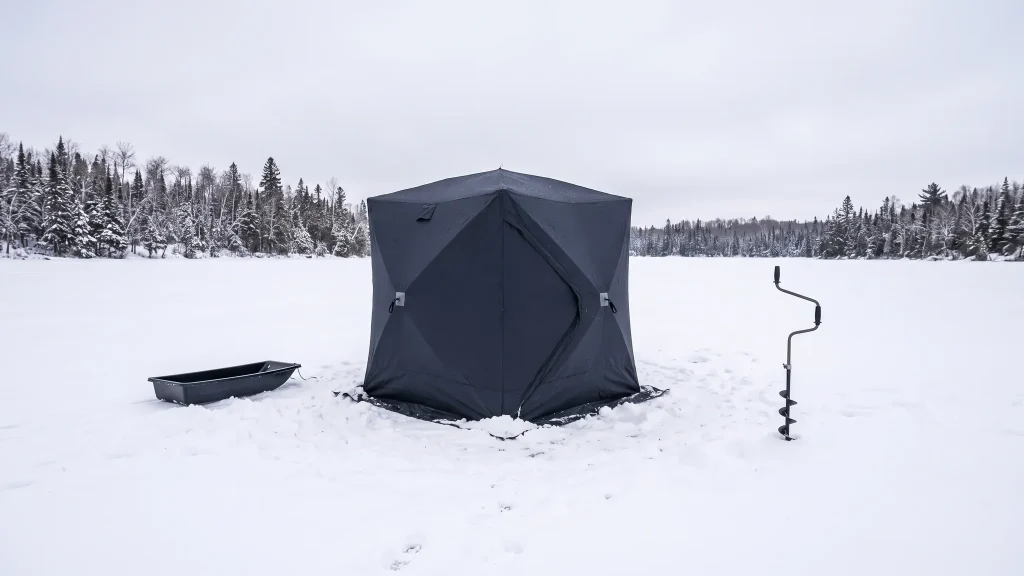
On the Great Lakes, you can use two lines when fishing from a boat, though exceptions and restrictions apply. For ice fishing, the page says that in most waters you can ice fish with two lines as long as you stay within 60 metres of any line or tip-up at all times and have a clear and unobstructed view of your lines. If you are building an ice kit, our ice fishing gear guide for Northern Ontario covers tip-ups and rods in detail, and the guide to ice fishing rods explains length, power, and action.
Lead and artificial-fly-only waters
The page says you cannot use lead fishing sinkers or jigs in Canada's national parks and wildlife areas, because birds and other wildlife that swallow them can get lead poisoning. It also lists waters where you may fish with only artificial flies. Two of them are in Zone 10 and are close to home: the East Goulais River from Laughing Lake in Menard Township to the Goulais River, and the Garden River from Ranger Lake to Garden Lake. A third, the Arrow River, is in Zone 6.
Bait travels under its own rules
The Zone 10 page notes that the zone, with the exception of Cockburn Island, Michipicoten Island, St. Joseph Island, and Manitoulin Island, is part of the Northeast Bait Management Zone. Live or dead baitfish or leeches may not be transported into or out of a bait management zone, with the exception of baitfish and leeches that are both dead and preserved. The rule applies to what you carry across the zone boundary, so if you buy bait at home and drive north, read the bait section of the Regulations Summary first. The province's rules treat bait movement as an ecological risk.

Your licence fee goes back into stocking, enforcement, and habitat
Anglers often ask where the licence money goes, and the province has a page that answers it. The Government of Ontario's page on how fishing and hunting fees are used says the province spends 100% of hunting and fishing revenue on fish and wildlife management, and that the revenue comes from commercial and recreational licence fees, royalties, and fines and penalties.
The same page lists what the money supports. In the province's words, it is used to stock almost 8 million fish a year in lakes across Ontario, to maintain and improve Fish ON-Line, to keep conservation officers on duty, to promote fishing and inform the public, and to conduct research and monitoring. It also names the work that protects native fish from invasive species such as invasive carp and round goby, the work that improves habitat, and the operation of nine fish culture stations. The page says conservation officers work over 90,000 hours a year.
That is the province's description of its own spending, and we are repeating it, not auditing it. For an angler, the practical point is that a licence is the one cost of fishing that goes directly to the fish.

A first season of fishing costs about $214 for an Ontario resident who buys a basic rod, reel, and line
Once the licence is sorted, the next question is what to fish with. We are a store, so we have an interest here, and we will tell you where we would spend and where we would not. The prices below are the ones on our site as we write, and stock moves, so confirm on the product page. Every price is in Canadian dollars.
A starter outfit, with the arithmetic
For a new angler going after perch, walleye, or pike from shore or a small boat, a spinning rod and a spinning reel are the workhorse. We would start with these:
- The Abu Garcia Max Spinning Rod ($88.95) has a 24-ton graphite blank, stainless steel guides, and EVA split-grip handles, according to its product page.
- The Abu Garcia Max X Spinning Reel ($64.95) has a 4+1 bearing system, a compact asymmetric graphite body, and Rocket Line Management.
- The Berkley GinClear Fluorocarbon Line, 200 yards ($24.95) is described as smooth, flexible, and low memory, and it comes in strengths from 4 lb to 25 lb.
The arithmetic: $88.95 + $64.95 + $24.95 = $178.85 for rod, reel, and line. Add the $35.14 for an Ontario resident's Outdoors Card and one-year sport licence from the fee section, and the total is $213.99 before HST on the licence and tax on the gear. That is our "about $214" in the heading, and it is a sum of listed prices, so treat it as a budget line, not a quote.
Two cautions. The rod and reel are sold separately and we are not claiming they are a matched set, so check the rod's rating and the reel's size on the product pages, or ask us, before you buy both. And a fluorocarbon line is a choice, not a requirement: you can spool a reel with other line, so pick the strength for the fish you chase rather than for the brand.
If you fish for trout and panfish
If your water is small and your target is brook trout, perch, or sunfish, a lighter rod is easier to enjoy. The Fenwick Eagle Trout & Panfish Spinning Rod ($129.95) is built in 24 and 30 ton graphite in light and ultra-light actions, per its product page. With the Abu Garcia Max X reel and the GinClear line, the sum is $129.95 + $64.95 + $24.95 = $219.85. Light and ultra-light rods feel more sensitive on small fish, and they can be a poor fit for a big pike. Pick for the fish you expect most often.
The Regulations Summary's Zone 10 numbers show why: brook trout, perch, and sunfish have generous limits, and walleye and pike have size rules. If you do not know what you will fish for yet, the all-rounder rod above is the safer first purchase.
Organizing and maintaining your tackle
Tackle accumulates fast. The Daiwa D-Vec Prymal Front Load Tackle Pack ($199.95) has three 3600 tackle boxes, a padded shoulder strap, and zippered side pockets, which is a big commitment for a first season. We would wait on it until you know which lures you keep reaching for. A smaller win is the Berkley Line Stripper ($29.95), which strips old line from a reel at up to 300 yards per minute and includes a hook-sharpening stone, and it saves a long evening if you respool every spring.
For something to wear while you wait for a bite, the Simms Single Haul Icon Trucker Hat ($49.95) is a cotton twill hat with a low crown fit. It is not essential, and we would put it at the bottom of a first-season list, but it keeps the sun out of your eyes on open water. Browse the rest of our rods, reels, line, tackle, and hats categories, or start at the main fishing page.
Our honest take on where to put the money
Spend on the licence first, because it is the only item that can cost you a fine. Spend on a decent line second, because line is the part of the outfit that fails on a big fish. Spend on the rod and reel third, and keep them modest until you have fished a season and know what you want. A tackle bag, a hat, and a dozen extra lures can wait.
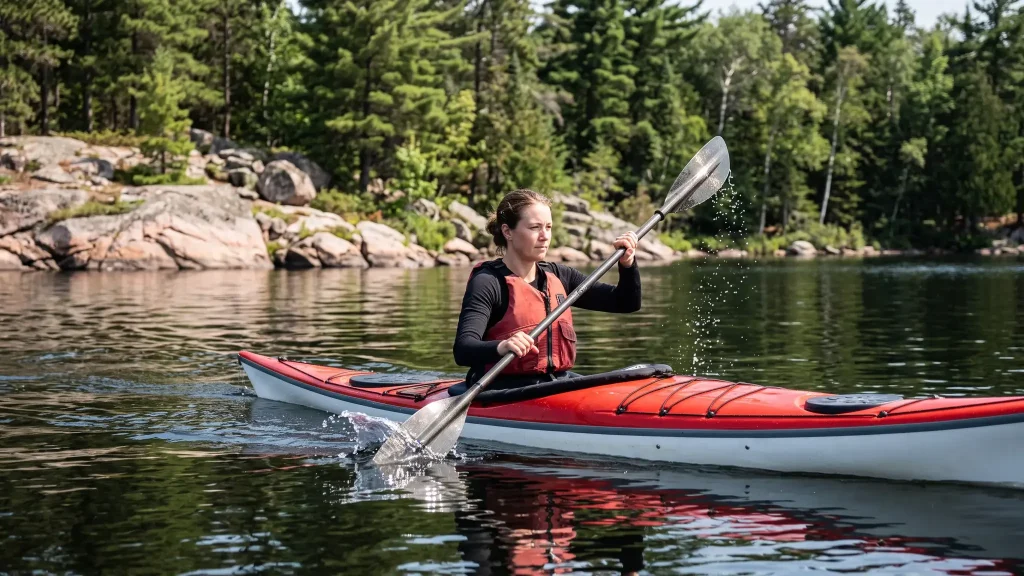
If you want to fish from a kayak, the licence rules are the same as for any other angler. We cover the boat side of that in our guides to fishing kayaks and kayaks in Canada, and for the ice season, start with how to choose an ice auger.

New anglers can borrow gear and learn the basics before buying anything
The province runs programs aimed at people who are not sure they will like fishing, and they are worth knowing about before you spend on gear. The family and youth fishing page describes three of them.
- The Learn to Fish Guide: A free 40-page primer published by the ministry, covering how to choose a rod and reel, hooks and line, lures and bait, how to find a good spot, how to bait a hook, cast, and land a fish, and how to identify, clean, and cook your catch. It also covers ice fishing.
- The Learn to Fish program: A two-hour session that combines a one-hour practical teaching session with one hour of supervised, hands-on fishing.
- TackleShare: A program that lends basic fishing gear to children and novice anglers, with locations that include many Ontario provincial parks, conservation authorities, libraries, and Big Brothers and Sisters. It is a joint initiative between the ministry and the Ontario Federation of Anglers and Hunters, supported by Ontario Power Generation.
The page's advice for fishing with kids is a good checklist for anyone starting out: keep it simple, fish from shore, fish for the small fish that are plentiful, and do not stay too long. It also tells parents to put a personal flotation device on a child, and says many Ontario provincial parks lend PFDs for free. Borrowing a rod from TackleShare for a free fishing weekend, and then buying your own gear once you know you want it, is a sound way to spend less.

Seven mistakes cost anglers a fine or a trip, and all of them are avoidable
Nothing here is a secret. Each one comes straight from the rules above.
- Fishing before you have an Outdoors Card. The card comes first, except for a one-day licence. Buy both in the same session.
- Carrying a screenshot of your Licence Summary. The province says a photograph or screenshot is not valid. Save the official PDF, or print it.
- Assuming a free weekend means a full limit. Conservation licence limits apply on the free days.
- Assuming an under-18 or 65-and-over exemption works for visitors. It is for Ontario and Canadian residents, and most non-Canadian residents need to buy, including those 65 and older.
- Buying a one-year licence in December and expecting twelve months. Every licence expires on December 31.
- Using last year's limits. Seasons, limits, and sanctuaries change, so read the current zone page for the exact water.
- Forgetting to update your address. You must notify the province within 10 days of a change of name, contact information, address, or residency.
If you remember only one, make it the first and the last: have the card in hand, and keep your details current. The rest are on the page you are reading.

These 2026 fees need a refresh for 2027
We wrote this guide in November 2026 from the province's published 2026 fees and dates. The Regulations Summary says the 2026 annual licence fees are in effect until December 31, 2026, so the figures in our tables are for this year only. The province may publish new fees for 2027 when FishHuntON opens, which is scheduled for December 10, 2026, or on January 1. Before you pay, check the linked licences and fees page. We will update this page once the 2027 figures are published, and the free fishing weekend dates for 2027 will need the same check.
Questions
Who needs an Ontario fishing licence?
Most adults aged 18 to 64 need an Outdoors Card and a fishing licence. Ontario and Canadian residents under 18 or 65 and older carry government identification instead of buying one. Veterans and active Canadian Armed Forces members who live in Ontario, some anglers with disabilities, and many Indigenous anglers fishing in their traditional or treaty territory also have exceptions. Most visitors from outside Canada need a licence at any age, with limited rules for children.
Where can I buy one?
You can buy online with Visa or Mastercard, in person at a participating ServiceOntario location or a licence issuer, or by the automated phone line for renewals, which is planned to end when FishHuntON launches on December 10, 2026. The current system is scheduled to be down from December 7 to 9. Use the province's locator or call 1-800-387-7011 to find the nearest issuer, and save your Licence Summary as the official PDF.
What is the difference between a conservation licence and a sport licence?
The only difference is the catch and possession limit. A sport licence gives full limits, and a conservation licence gives reduced limits and suits anglers who release most of their fish. For example, the Zone 10 walleye and sauger limit is four on a sport licence and two on a conservation licence. A conservation licence costs less: in 2026, an Ontario resident pays $15.07 for one year, against $26.57 for sport.

Gear up for your licence at our store in Sault Ste. Marie
Once your Outdoors Card and licence are in hand, come and see the rods, reels, line, and tackle in person. We are at 162 Old Garden River Rd, Sault Ste. Marie, ON P6B 5A6, or you can call us at (705) 253-2361. Tell us which water you plan to fish and which licence you bought, and we will help you match a rod, reel, and line to it. The licence and your zone's rules come from the province, so keep the Regulations Summary handy on your phone while you shop.
Talk to us about it
- 162 Old Garden River Rd, Sault Ste. Marie, ON P6B 5A6
- (705) 253-2361
- Open today 10 a.m. to 6 p.m.
- Send us a message
References
- Ontario Fishing Regulations Summary: Recreational fishing licences and fees (Government of Ontario, updated August 4, 2026).
- Ontario Fishing Regulations Summary: Fisheries Management Zone 10 (Government of Ontario).
- Fishing licence for Ontario and Canadian residents (Government of Ontario, updated December 31, 2025).
- Fishing licence (non-residents of Canada) (Government of Ontario, updated December 31, 2025).
- Fishing licence fees: Canadian residents (Government of Ontario, page dated 2024, used only to compare against the 2026 table).
- FishHuntON: modernizing Ontario's fishing and hunting licensing system (Government of Ontario, updated October 30, 2026).
- Free family fishing (Government of Ontario, updated January 21, 2026).
- Family and youth fishing (Government of Ontario, updated June 10, 2026).
- Fishing limits, size restrictions and catch and release (Government of Ontario).
- Rules on using fishing tackle (Government of Ontario).
- Fishing notices and updates (Government of Ontario).
- How fishing and hunting fees are used (Government of Ontario, updated May 15, 2025).
- Get an Outdoors Card and Licence Summary (Government of Ontario).
- HuntAndFishOntario.com (Government of Ontario licensing site).
About the author
Shannon Prosser
Store Manager
I have been here three years. Before that, I worked for Moore's Clothing and Charm Diamond. I manage the store. Come to me for clothing and footwear: Outdoor Research, The North Face, Columbia, Kuhl, and all of our footwear.
More from Shannon Prosser
 English (Canada)
 Français du Canada