

Ice Fishing Rods: Length, Power, and Action Explained
Choosing an ice fishing rod comes down to three numbers on the blank: length, power, and action. We'll explain what each one does on the ice, then match rods to the fish you're after, the line that goes with them, and the care that keeps a rod working all winter. Every rod named here is one we carry in Sault Ste. Marie.
TL;DR
- Why ice rods are short
- Length: where you stand and how you fish
- Power: how much weight the rod handles
- Action: how a rod springs back and shows a bite
- Matching the rod to the fish
- Choosing line and protecting your rod
- See the rods at our Sault Ste. Marie store
Who this article is for
- First-time ice anglers buying their first rod
- Perch and panfish anglers choosing a light, sensitive rod
- Walleye and lake trout anglers who need the right length and backbone
- Anglers who fish from a shelter or a bucket and want one rod that does it all
Kevin Coombs
Sales Representative
A note from the author
We built this guide around the rods and combos we sell at 162 Old Garden River Road, so every product named in it is one you can buy from us. Each one was priced as it was on our store the day this went up. Browse the full ice fishing section, then call or come in with any questions, and we'll put the rods in your hands.
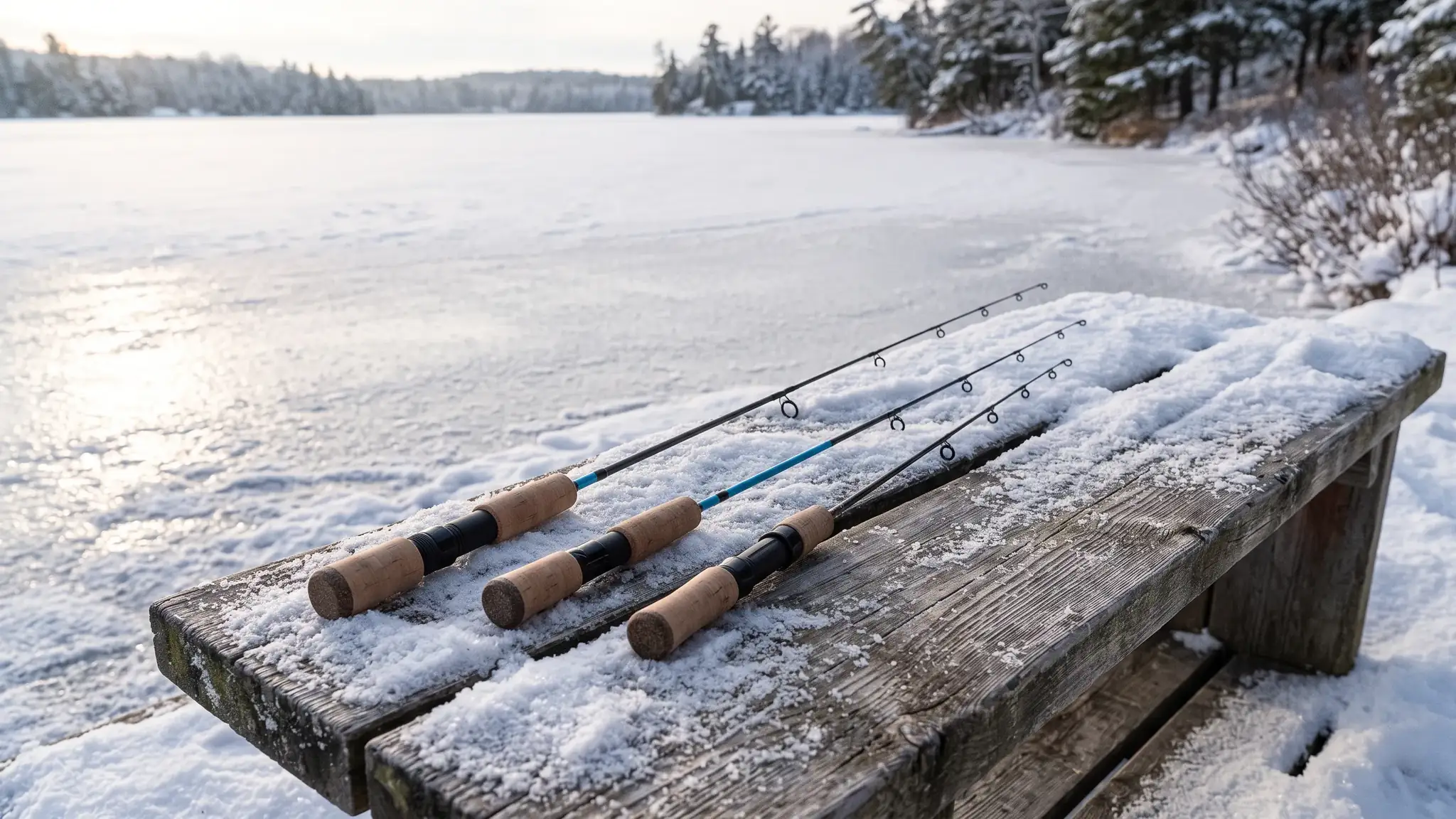
An Ice Fishing Rod Is Short on Purpose, and the Three Numbers on the Blank Tell You the Rest
Walk into the rod aisle in November and every ice rod looks like a miniature of something. That is the point. You fish through a hole in the ice, often from a shelter or a bucket, with no room to swing a long rod. Wikipedia's fishing rod article (a community-edited encyclopedia, so we treat it as a reference and not the last word) describes modern ice rods as typically very short spinning rods, between 24 and 36 inches long. Our shelves match that range, from 24-inch combos up to 42-inch jigging sticks.
Every rod we sell carries a label that reads something like 28" M or 26" ML. Those marks give you the length in inches and the power. A third trait, the action, rarely gets printed on an ice rod at all. Sorting out what each one does is most of the work of choosing well, and the rest of this guide takes them in order.
Our take: Decide the fish and the way you will fish first, then pick the length, and only then compare power and action. Brand and colour can wait. If you want to see the whole range before you read on, the ice fishing department lists every rod, combo, and line we carry for the season.

Length Decides Where You Stand, How You Hold the Rod, and How Much of the Hole You Can See
Length is the one number that changes how fishing feels in your hands. A short rod suits a small shelter or a cramped bucket, because the tip stays inside the space you have. A longer rod gives you more leverage and a longer stroke when you work a lure, and it lets you stand and fish without bending over a hole.
Here is how we sort the lengths we carry.
Twenty-Four to Twenty-Eight Inches: Small Shelters and Finesse Fishing
This is the length most anglers think of first. It fits the cabin of a portable shelter without hitting the walls, and the short tip is easy to watch when a fish takes a light bait. The 13 Fishing Force Ice Combo ($49.95) comes in 24-inch Light, 26-inch Medium Light, and 28-inch Medium, with a solid fibreglass rod and a reel in the same package. The Shimano Convergence Ice Rod ($59.95) is a 28-inch Medium spinning rod, with Zirconia guides and a hook keeper set back from the reel seat so you have a place to rest a finger on the blank.
Thirty to Thirty-Six Inches: Standing, Deeper Water, and a Longer Stroke
A 30-inch rod or longer lets you work a lure with a bigger sweep of the wrist, and it helps if you fish standing over a hole in a larger shelter or from an open spot on the ice. The Shakespeare Ugly Stik GX2 Ice Fishing Rod ($38.95) tops out at a 30-inch Medium Heavy, and the Fenwick Eagle Ice Rod ($54.95) comes as a 32-inch Medium Heavy. At 36 inches the 13 Fishing Capture Walleye Ice Combo ($79.95) is a good example of a rod made for a purpose, because a long blank gives the built-in spring bobber room to work.
Forty Inches and Up: Jigging for Big Fish
The longest rod in this guide is the 42-inch Medium in the Fenwick Elite Tech Ice Rod ($79.95). Fenwick designed the series for techniques that range from ultra lightweight finesse fishing for bluegill to heavy jigging for lake trout, so the long version is the one to look at if you stand over a hole and jig deep.
A practical way to choose is to picture where you will sit. In a small pop-up with two people, a 24 or 26-inch rod keeps lines from crossing. Standing on open ice with room around you, a 32-inch rod or longer gives you more to work with. If you split your time between both, a 28-inch rod is the safest single choice.
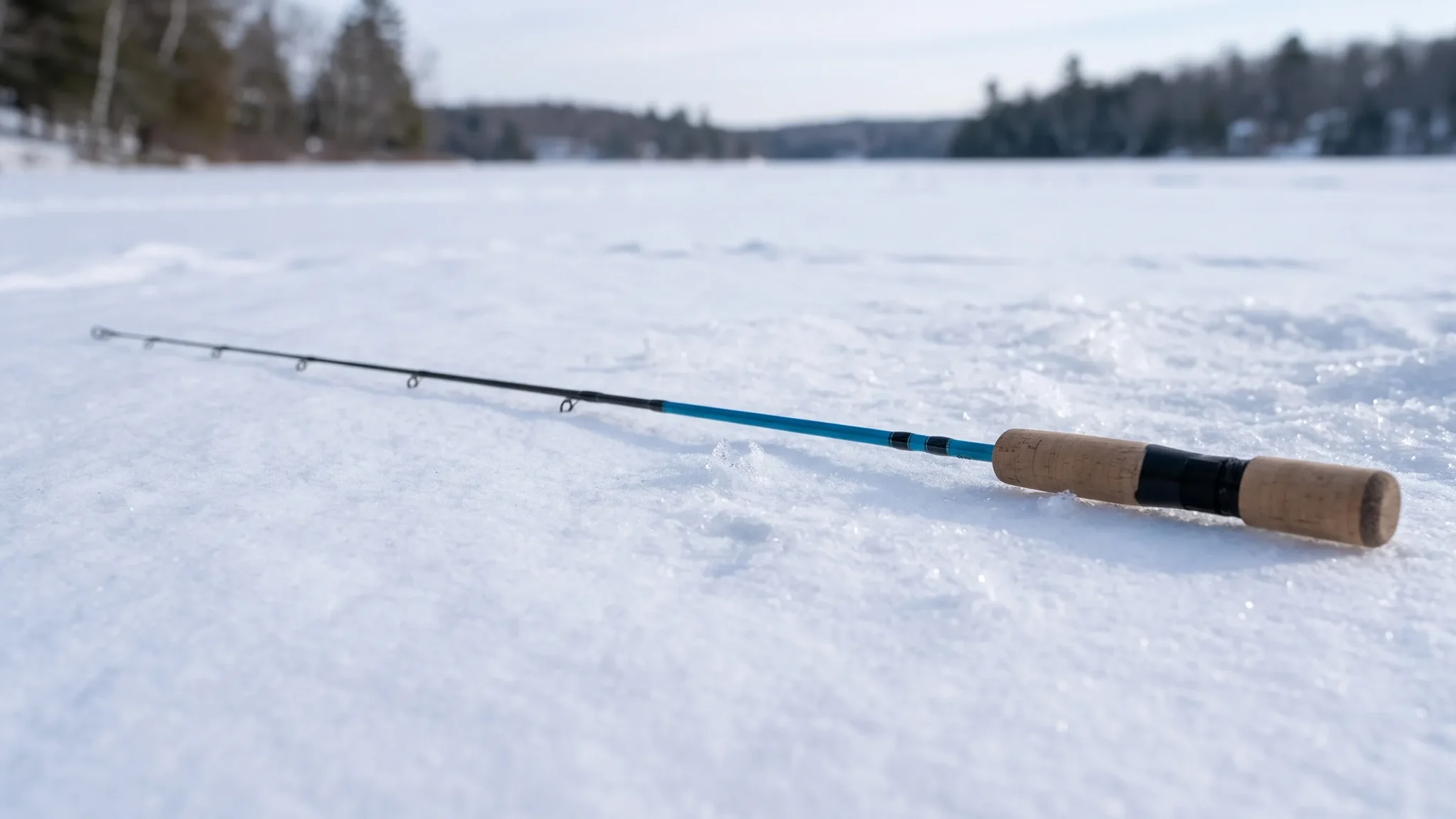
Power Tells You How Much Weight the Rod Can Handle, Not How Big a Fish It Can Land
Power is the stiffness of the blank. Wikipedia explains it as the force needed to bend the rod by a certain amount, and lists the usual marks: ultra-light (UL), light (L), medium-light (ML), medium (M), medium-heavy (MH), and heavy (H). The page adds an important caution: there is no industry standard for these labels, so one maker's Medium can feel different from another's. Treat the letters as a guide, then hold the rod.
The same article describes the trade-off every ice angler lives with. A heavier rod lifts more weight without snapping, but a stiffer blank is also less sensitive, because light forces such as a fish nudging the hook do not travel well through it. A lighter rod shows you every nibble, and it asks more of you when something big takes the line.
That is why the right power depends on the lure and the fish, in roughly this order.
- Ultra-light and light suit small jigs and light line for small fish. The Force combo's 24-inch Light version and the Ugly Stik GX2's 26-inch Light are in this group.
- Medium-light and medium are the all-rounders. A 26-inch Medium Light or a 28-inch Medium covers most day-to-day jigging, and most of the rods we sell come in one of those two.
- Medium-heavy is for heavier jigs and larger fish. The 30-inch Ugly Stik GX2, the 32-inch Fenwick Eagle, and the 36-inch Capture Walleye all come in Medium Heavy.
Our take: If you are buying one rod and cannot decide, choose a 28-inch Medium. It is the setup the broadest set of ice anglers can use without regret, and most of the rods in this guide come in that size.
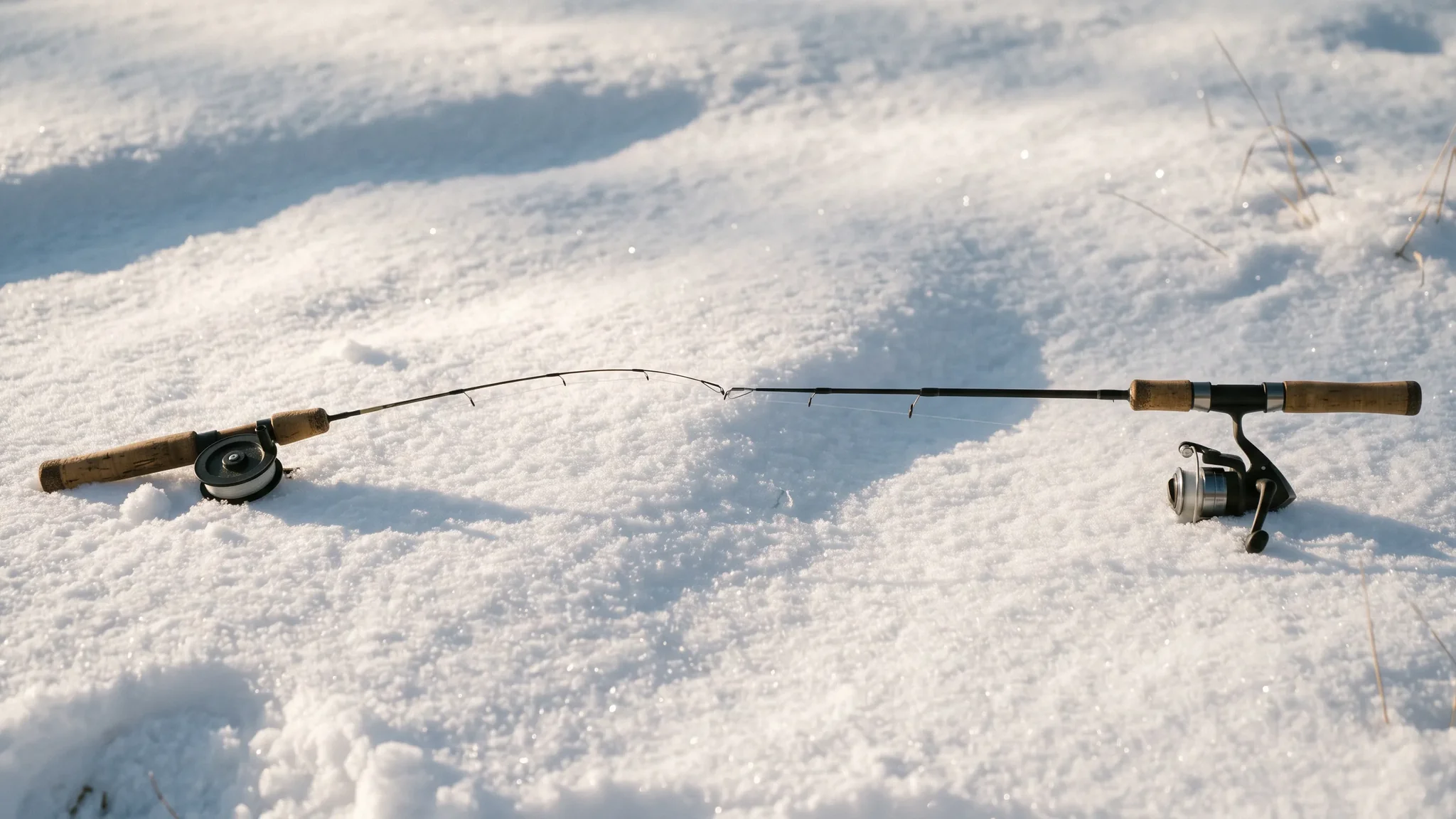
Action Is the Speed at Which the Rod Springs Back, and It Changes How You Feel a Bite
Action is the trait people mix up with power. Wikipedia defines it as the speed with which a rod returns to its neutral position after a load is removed, and it is described as slow, medium, or fast. A fast-action rod bends mainly near the tip and snaps back quickly. A slower rod bends further down the blank.
On the ice, that matters in two ways. A fast tip tends to show you a light bite and lets you set the hook with a short flick of the wrist, which suits jigging a small lure. A slower, softer tip tends to cushion the surge of a larger fish, which is kinder to a thin line. The article also points out that the blank material shapes the action: a fibreglass rod typically has a slower action than a carbon fibre one.
The article adds a warning that applies to every rod rack in the country: action is often a manufacturer's subjective label, and the word is sometimes used to mean power. We would not trust the word alone. Bend the rod against the floor in the shop and watch where it flexes.
Fibreglass or Carbon: A Practical Split
Wikipedia notes that graphite is more sensitive than fibreglass, and that fibreglass is often chosen for lower cost and durability. That fits what we see on our own shelves.
The Fenwick rods use a solid carbon blank. The Eagle's product page credits it with sensitivity and durability, and the Elite Tech adds a Fuji reel seat. The 13 Fishing Force and Capture Walleye combos use solid fibreglass blanks, and the Force adds a Hi-Vis tip. The Ugly Stik GX2 is built on the Ugly Stik blank with a Clear Tip design.
If you want to feel every tap, look at carbon. If you want a rod that takes knocks in a truck bed or a sled, fibreglass is a sensible choice.
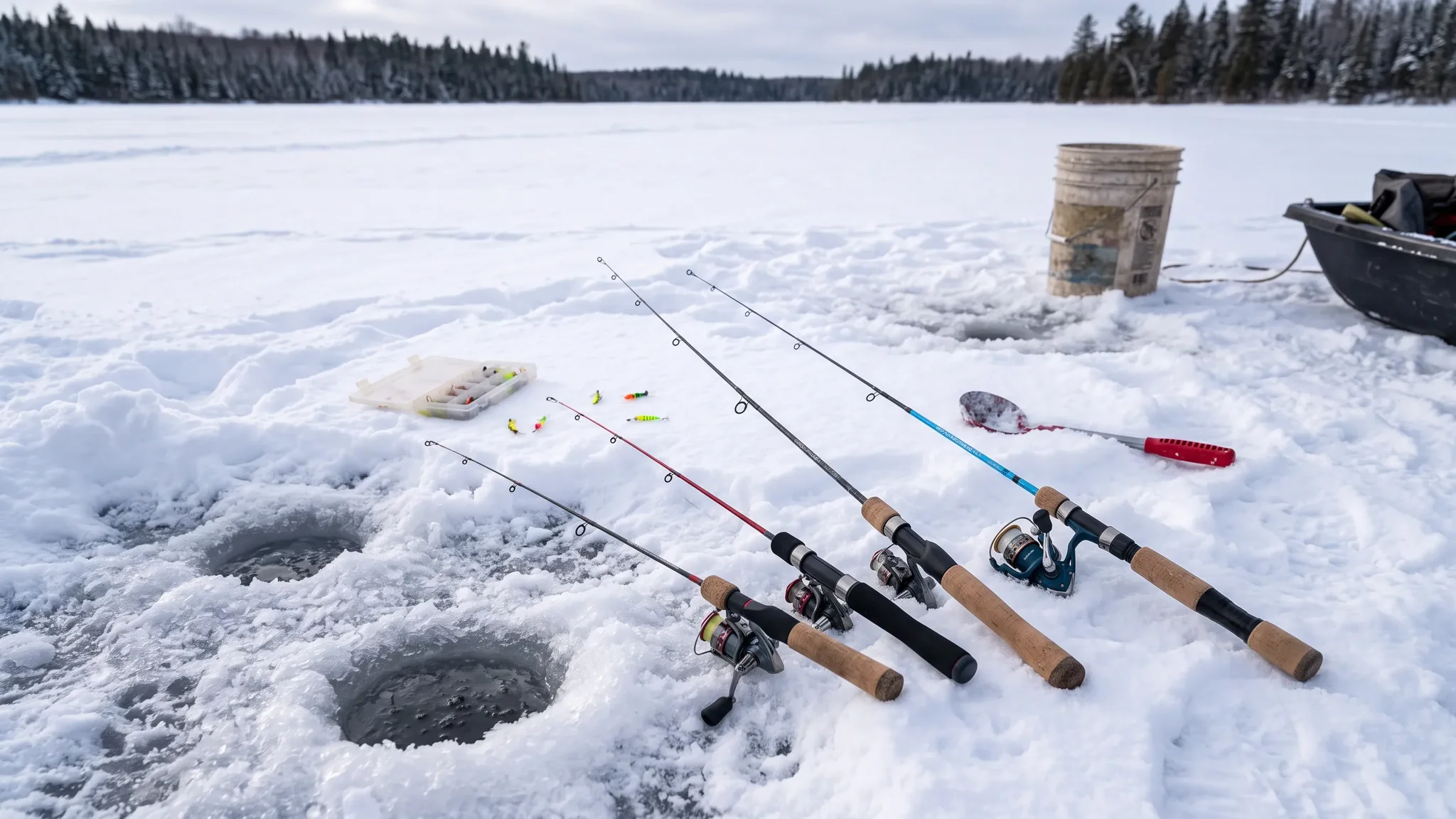
Match the Rod to the Fish You Are After, and the Way You Fish for Them
Specific sizes for each species can vary from lake to lake, so we keep this part to the principles we can stand behind and leave the finer details to a conversation in the store.
Small Fish on Light Jigs: Perch and Panfish
Here you want sensitivity first. A light or medium-light rod in the 24 to 28-inch range gives you a tip that shows every nibble. The Force combo is where we start people, since the rod and reel arrive together for $49.95.
Walleye: Something That Shows the Tip
Many anglers find walleye bites light, and a visible tip helps. The Capture Walleye combo is built for the job, with a titanium spring bobber built into the rod, and it comes in 26-inch Medium Light through 36-inch Medium Heavy. At $79.95 it is a combo, so the reel is included.
If you fish by deadsticking, the 13 Fishing Baitstriker Ice Combo ($169.95) is made for it. Its 36-inch Dead Stick rod is paired with a reel that has the BaitStriker Switch for hands-free fishing, so you can fish without holding the rod.
Lake Trout and Bigger Fish: Length and Backbone
This is where the 42-inch Fenwick Elite Tech is worth a look, since Fenwick lists heavy jigging for lake trout among its intended uses. You need a rod with the backbone to work a heavier lure and the length to stand and fish it.
One Rod for Everything: The Honest Compromise
No single rod is best at everything. If you must buy one, the Fenwick Elite Tech in 28-inch Medium, the Shimano Convergence in 28-inch Medium, and the Ugly Stik GX2 in 28-inch Medium are our usual suggestions, and they cover a wide spread of prices, from $38.95 to $79.95. Then add a second rod when you know what you fish for most.
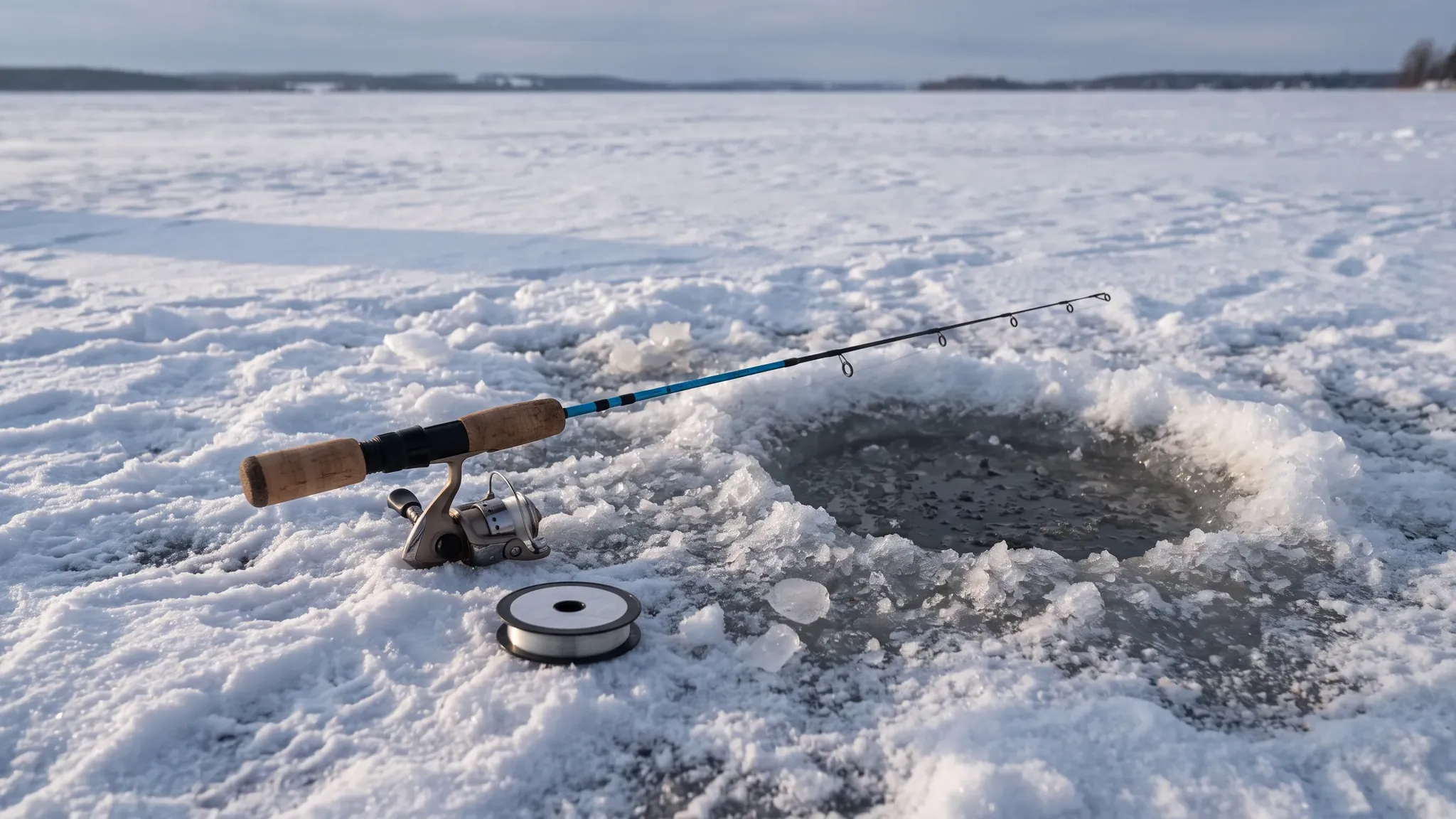
Your Line Decides What You Feel at the Tip, so Choose It With the Rod
A rod can only pass along what the line carries. Ice line is different from open-water line, because it has to stay supple and resist freezing in the cold. We carry three Sufix lines made for the ice.
- Sufix 832 Ice Braid (from $14.49) is a small diameter braid made from seven HMPE fibres plus one GORE Performance Fiber, with a hydrophobic finish to resist freezing.
- Sufix Advance Ice Monofilament (from $9.49) is a supple, sensitive mono with lower stretch and low memory.
- Sufix Advance Ice Fluorocarbon (from $13.95) is a 100 percent fluorocarbon line that is nearly invisible under the water, with a coating that reduces line freeze.
Prices here are the lowest listed, since each line comes in several sizes and colours. Call us with your rod and the fish you are after, and we will help you match a line to it.
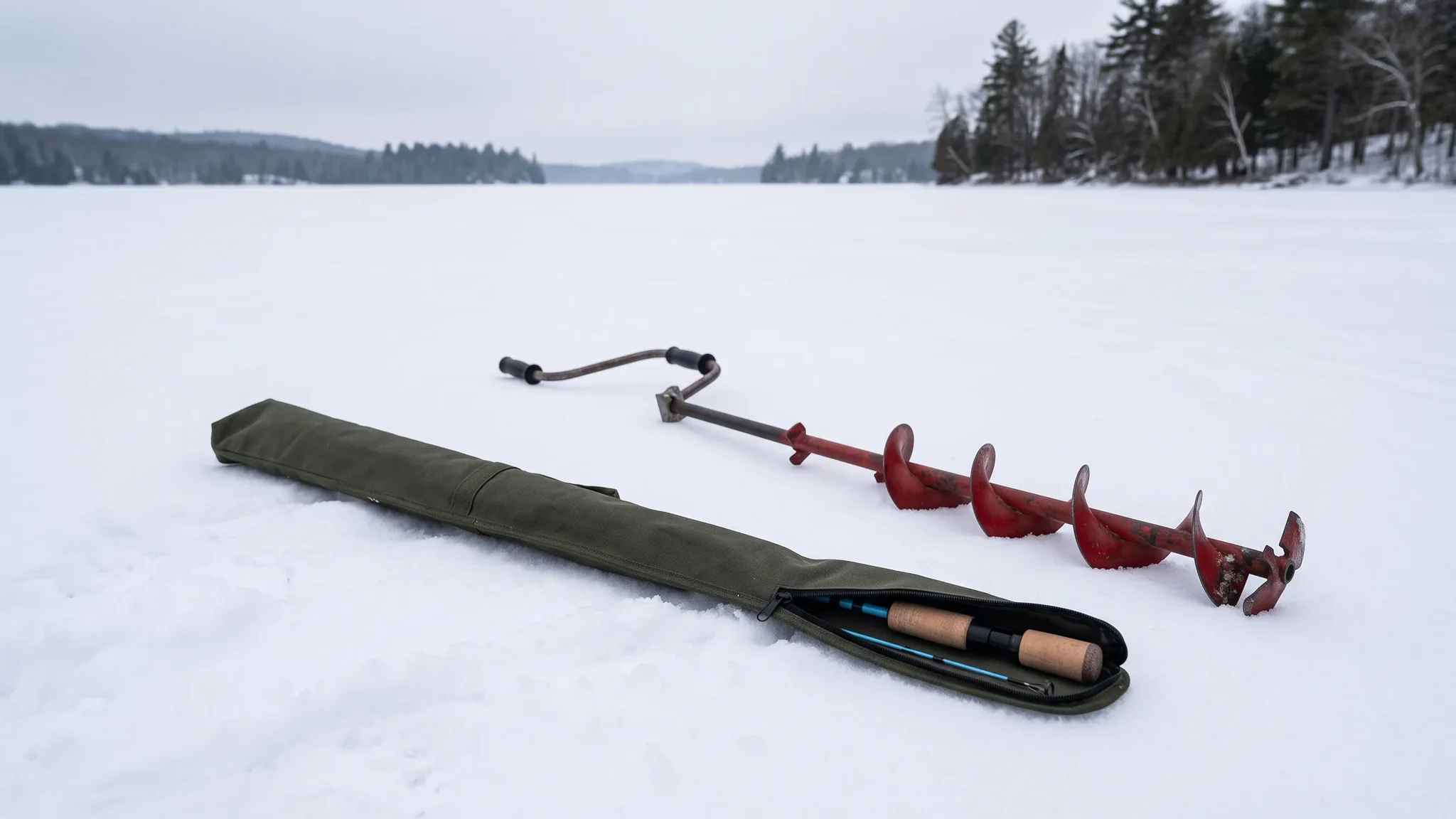
Protect the Rod and Check the Rules Before You Drill the First Hole
Short rods travel in bundles, and the tips are the first part to break. The Rod Glove for 23-inch ice rods ($6.95) and the Rod Glove for 30-inch rods ($7.95) slip over the rod to protect it and keep it organized. Both come in Black, Blue Spyder, and Red Spyder, and the sizes are made to fit the rod properly. Pick the one that matches your rod's length.
Before you head out, read the Government of Ontario's ice fishing page, the province's own summary of what anglers need to follow on the ice. It says you need a valid fishing licence and you must follow the open and closed seasons, possession limits, and size restrictions in the Recreational Fishing Regulations Summary. In most waters you may ice fish with two lines, as long as you stay within 60 metres of any line or tip-up and keep a clear and unobstructed view of your lines at all times. Rules can change, so confirm them on the page before each trip.
Questions
How long should an ice fishing rod be?
For most anglers, 24 to 32 inches is the working range. Short rods of 24 to 28 inches fit small shelters and finesse fishing, while 30 to 36 inches gives you more leverage when you stand. If you are buying one rod, a 28-inch Medium is the safest all-round pick. Longer rods of 40 inches or more suit deep jigging for bigger fish like lake trout.
Do I need a different rod for walleye and perch?
You can fish both with one rod, but two suit them better. Perch and panfish reward a light, sensitive 24 to 28-inch rod. Walleye bites can be light, so a medium-light or medium rod with a visible tip or a spring bobber helps. A 28-inch Medium covers both if you are only buying one, and you can add a second rod later.
Can I use my open-water rod on the ice?
You can, but it is not ideal. Open-water rods are built for casting and are much longer, so in a shelter or at a hole the tip is likely to hit the walls or the roof. Ice rods are short, around 24 to 36 inches, which is easier to manage and gives you closer control of a lure under the ice.
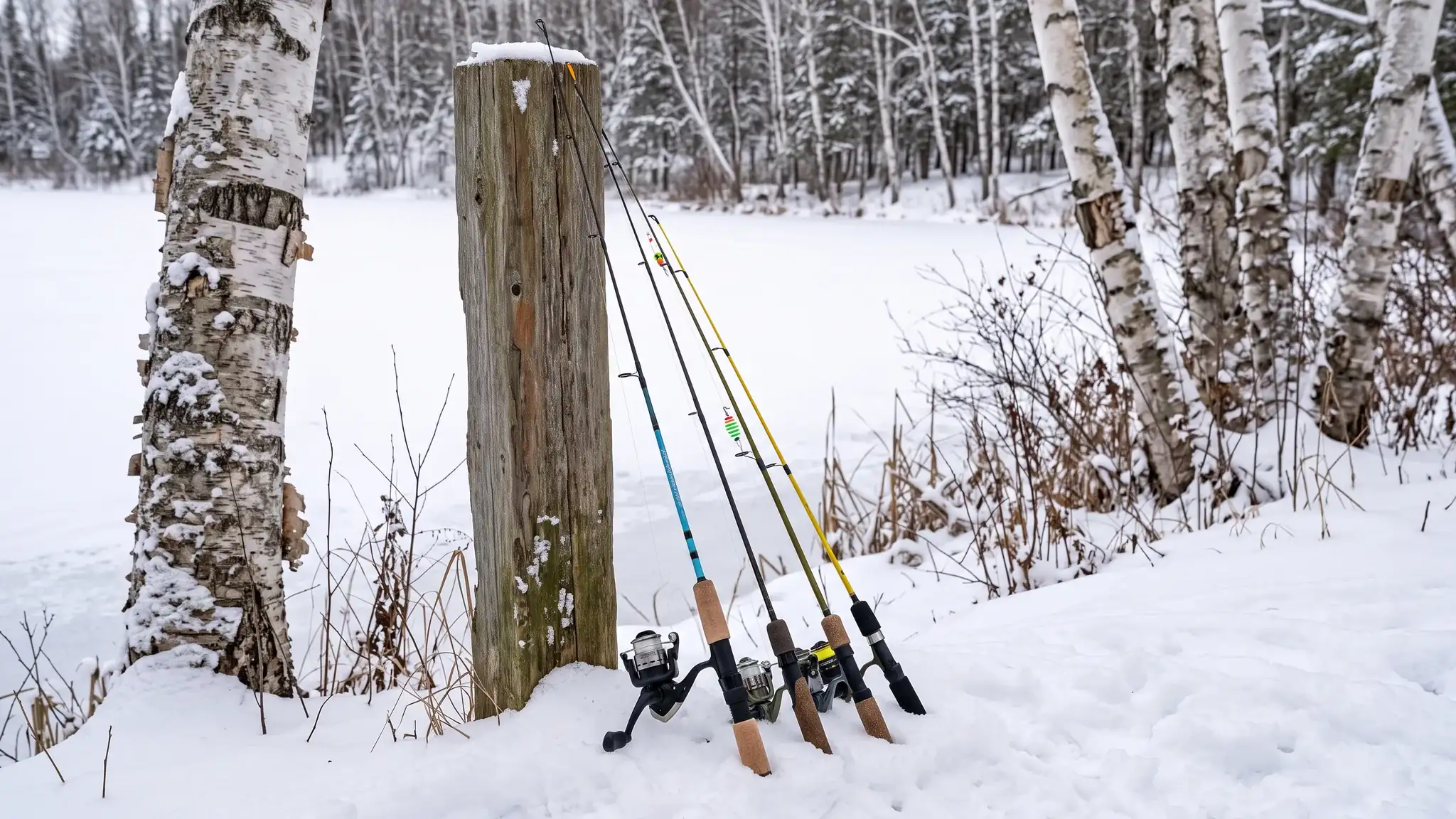
See the Rods in Your Hands at Our Store in Sault Ste. Marie
The best way to choose a rod is to hold it. Come into Great Lakes Outfitters at 162 Old Garden River Rd, Sault Ste. Marie, ON P6B 5A6, or call us at (705) 253-2361. Tell us the fish you chase and the shelter you fish from, and we will put the right length, power, and action in your hands. If you are new to the ice, our guide to choosing an ice auger is a good next read.
Talk to us about it
- 162 Old Garden River Rd, Sault Ste. Marie, ON P6B 5A6
- (705) 253-2361
- Open today 10 a.m. to 6 p.m.
- Send us a message
References
About the author
Kevin Coombs
Sales Representative
I am a sales representative at Great Lakes Outfitters. I have been here five years, since I retired after more than 33 years as a forester.
More from Kevin Coombs
 English (Canada)
 Français du Canada