

Rain Jackets and Outerwear: The Complete Guide
Choosing a rain jacket starts with one question: How wet, how long, and doing what? We'll walk you through what waterproof really means, the seams, hood, and zips that matter, hardshell versus softshell, and the men's, women's, and fishing jackets, rain pants, and 3-in-1 systems we carry, then fit and care.
TL;DR
- What waterproof means and what the numbers measure
- Breathability, venting, and fabric construction
- Seams, hoods, zips, and cuffs
- Hardshell or softshell
- Men's, women's, and fishing rain jackets
- Rain pants and 3-in-1 jackets
- Layering, fit, washing, and re-waterproofing
- Where to try one on in Sault Ste. Marie
Who this article is for
- Hikers and paddlers choosing a shell for wet trails
- Anglers and boaters who need a jacket built for spray and rain
- Parents, commuters, and hunters who just need to stay dry
- Shoppers deciding between a hardshell, a softshell, and a 3-in-1
Steve Meating
Owner
A note from the author
We wrote this guide around the rain jackets and pants we sell at 162 Old Garden River Road, so every product named in it is one you can buy from us. Prices are as they were on our store the day this went up. If you have questions about a size, a fit, or which shell suits the way you spend your days, call us or come in and we will help you sort it out.
A Rain Jacket Is a System, Not Just a Waterproof Layer
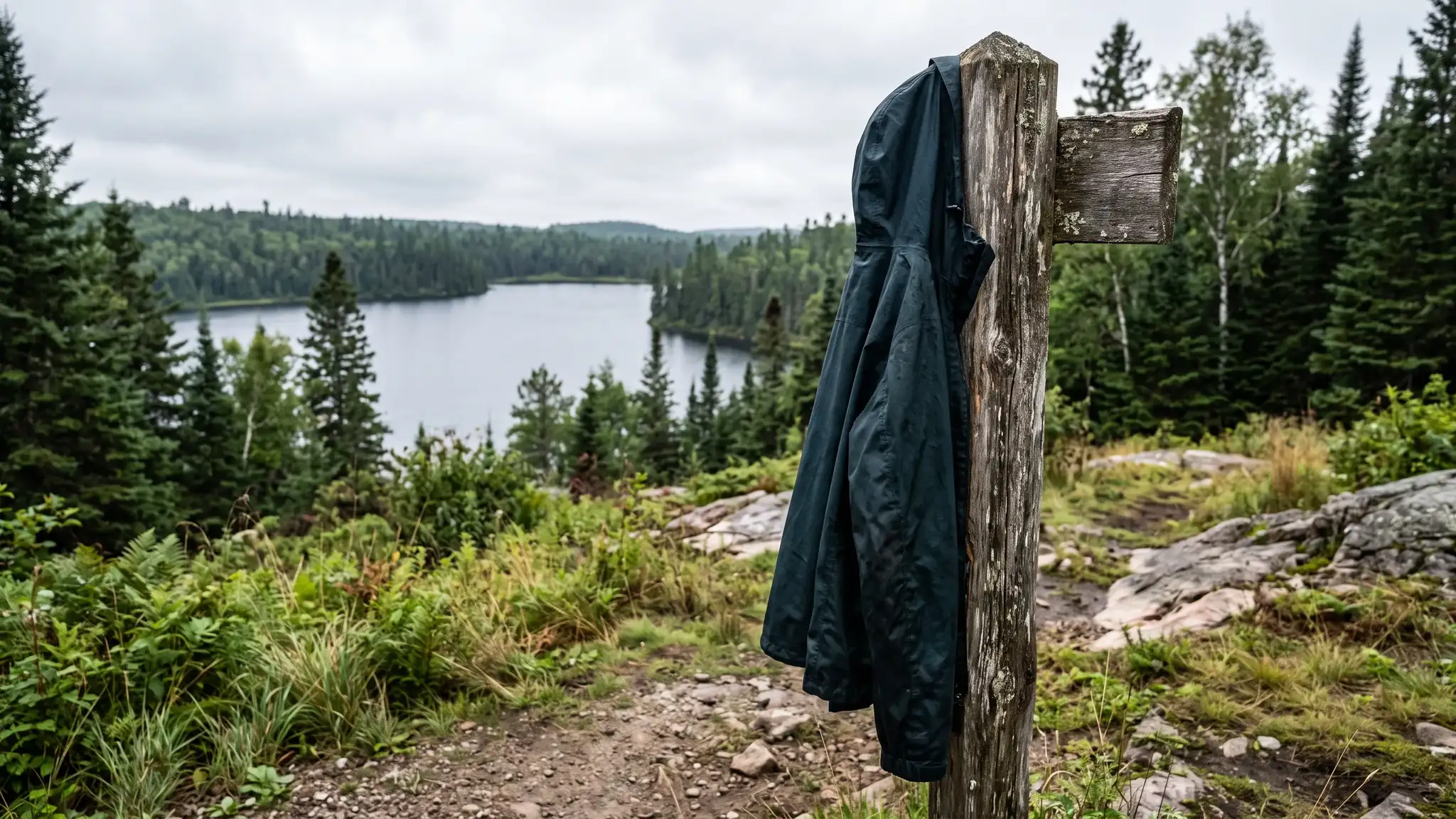
Most people shop for a rain jacket by looking at the price tag and the colour, and then discover on the first wet walk that the jacket they bought does not suit the way they actually spend their days. A shell that is perfect for a half-hour dog walk can feel like a plastic bag on a four-hour hike. A feather-light packable that disappears into a daypack may not hold up to a day of casting from a boat in a steady downpour. The jacket is only one part of a system that also includes what you wear under it, how it fits, how you vent it, and how you look after it.
That is why this guide exists. At the store on Old Garden River Road in Sault Ste. Marie, the rain jacket conversation almost always starts with a rating or a brand and ends with a question about use: where are you going, how long will you be out, what will you be doing, and how cold will it be? Once those answers are on the table, the choice gets much easier. This guide walks through the same questions in the order we usually ask them.
We will explain what waterproof actually means, what the numbers on a hang tag are measuring, why breathability matters as much as keeping rain out, and how the common fabric constructions differ. We will cover the features that separate a good jacket from a merely adequate one, the difference between a hardshell and a softshell, and how to fit a shell over the layers you will really wear. Then we will go through the rain jackets, rain pants, fishing shells, and 3-in-1 systems we carry, with prices checked against the live site on the day of writing, and finish with care, re-waterproofing, and a short set of answers to the questions we hear most.
Where a claim comes from outside our own shop, we name the source and link to it so you can read it yourself. Where something is our own opinion from handling the gear, we say so. We do not claim any garment is "bombproof" or "guaranteed" to keep you dry in every condition, because no shell is, and a jacket that is honest about its limits is a better buy than one that is not.
Who This Guide Is For
This guide is written for people who spend time outside in wet weather in Northern Ontario and want one clear explanation instead of a dozen marketing pages. That includes hikers and paddlers, anglers on boats and shorelines, hunters waiting out a drizzle, parents standing at a soccer field, and people who just need to get to work and back without arriving soaked. If you also want to dress for the cold, the sections on layering and 3-in-1 systems are the ones to read closely, and our merino wool base layers guide and our thermal underwear guide cover what goes underneath.
How the Store Is Set Up for Rainwear
Our rainwear is grouped by gender and by type. You can browse the full men's rainwear and women's rainwear departments, or go straight to the men's rain jackets, the women's rain jackets, and the matching men's rain pants and women's rain pants. Anglers will also find shells built for boats in our fishing rain gear section. Stock changes through the season, so treat the sizes and colours mentioned below as a snapshot and call us at (705) 253-2361 if you want to confirm a size before you drive in.

Waterproof Means a Fabric Can Hold Back a Column of Water, and the Number Is Only Part of the Story
The word "waterproof" on a jacket sounds absolute, but in the outdoor trade it refers to a test result. As the encyclopedia entry on waterproof fabric puts it, the term "refers to conformance to a governing specification and specific conditions of a laboratory test method." Wikipedia is a volunteer-written reference work, and the page is flagged by its own editors as needing more citations, so we treat it as a plain-language overview rather than a final authority. On this point, though, it matches what we see on manufacturer hang tags.
The most common test is hydrostatic head. The hydrostatic head entry explains that it is measured as a length, typically in millimetres, "representing the maximum height of a vertical column of water that could be placed on top of the fabric before water started seeping through the weave." It gives a simple example: a fabric rated at 5,000 mm "could hold back a column of water five metres high, but no more."
What the Numbers Look Like in Practice
The waterproof fabric page also describes the range you are likely to see. It says that "typical mid-range fabrics tend to have values of 5,000 mm of water resistance and 5,000 g of breathability; the best materials have 20,000 mm and 20,000 g." It also notes that one common definition of waterproof-breathable requires a fabric to withstand more than 1,000 millimetres of water pressure without leaking.
We see this reflected in the jackets on our racks, with one caution. Many manufacturers do not publish a hydrostatic head figure at all, and instead describe the fabric by its name and construction: DryVent, Omni-Tech, AscentShell, GORE-TEX, and so on. When a number is published, it is worth reading. The Rapala Pro Rain Jacket ($329.95) lists its nylon ripstop Taslan shell as waterproof and breathable at 8000 mm, and The Whitewater Great Lakes Pro Fishing Rain Jacket ($629.95) lists a waterproof and windproof breathable laminate at 20k/30k with taped seams. When no number is printed, you are comparing on construction, seam treatment, and the reputation of the fabric, which is a perfectly reasonable way to shop.
Why a High Number Does Not Guarantee a Dry Day
The same page makes a point that every honest rain jacket salesperson ends up repeating. It says that "fabric head ratings do not totally specify water resistance of a garment, as it does not test closures such as zips," and that "some garments made from fabrics that exceed 20 000 mm have leaked through zips, hoods, and seams." In other words, the number describes a swatch of cloth under lab conditions. Rain does not fall on a swatch. It runs down your hood, collects at your cuffs, finds the zipper, and sits on your shoulders under a pack strap.
That is why we pay as much attention to the seams, the zip type, the storm flap, and the hood as we do to the fabric rating. A jacket with a modest fabric rating and well-taped seams, a good hood, and a storm flap will often keep you drier than a jacket with a headline number and a flimsy hood. The page also notes that some fabrics with less than 1,000 mm of water resistance kept water out well enough for practical purposes in rain-room testing. The takeaway is not that the numbers are meaningless. It is that they are one input among several.
How Long Will It Rain, and How Hard?
The honest way to use a rating is to match it to your exposure. For a short walk from the car to the office, almost any waterproof shell will do. For a day on the trail or on the water, you want fully taped seams, a proper hood, and a fabric that is clearly in the upper half of what is available. For a multi-day trip in cold rain, you want the best shell you can reasonably afford, because the cost of being wrong is not just discomfort. Health Canada's extreme cold guidance is published by the federal department responsible for public health, and it says plainly: "If you get wet, change into dry clothing as soon as possible. You lose heat faster when you're wet." A shell is the first line of defence against that, and a dry change of clothes is the second.
Water-Resistant, Water-Repellent, and Waterproof Are Three Different Things
These words get used as if they were interchangeable on hang tags and in advertising, and they are not. Knowing the difference saves you from buying a jacket that is fine for a drizzle and then asking it to handle an all-day rain.
Water-Resistant: Sheds Light Moisture
A water-resistant fabric slows water down but does not stop it. Many softshells and windbreakers fall here. The Columbia Men's Ascender Softshell Jacket ($119.95) is a good example: its bonded polyester fabric is described as water-and-wind-resistant, so it sheds moisture and blocks wind for light rain, but it is not sold as a rain shell. That is exactly the right product for a cool, breezy, occasionally damp day, and exactly the wrong one for a downpour.
Water-Repellent: A Surface Finish, Not a Membrane
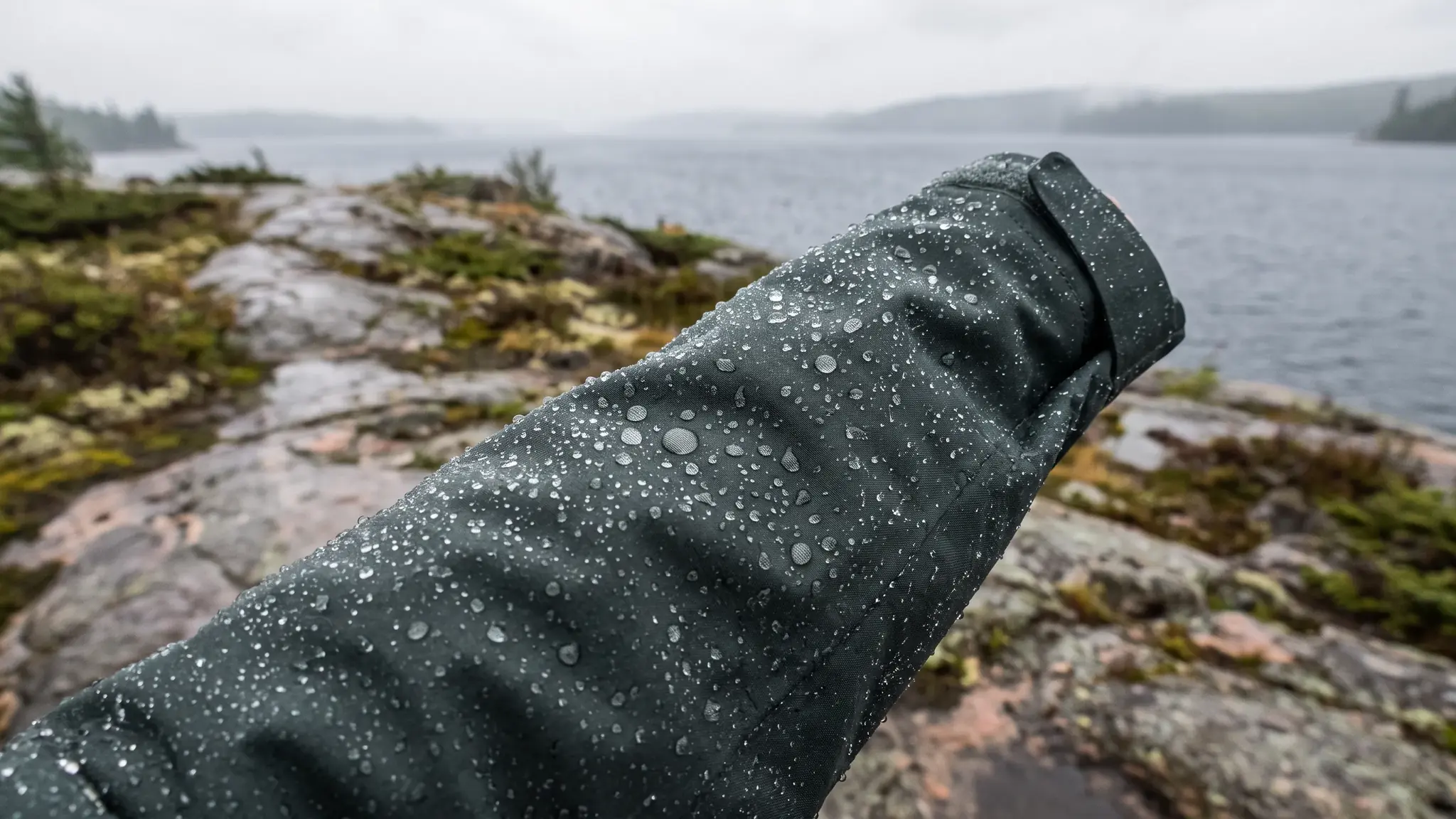
A water-repellent finish is a treatment on the outside of the fabric that makes water bead up and roll off. Most rain jackets have one, called a durable water repellent, or DWR. The durable water repellent entry describes it as "a coating or finish added to fabrics at the factory to make them water-resistant (hydrophobic)," and says it is "commonly used in conjunction with waterproof breathable fabrics such as Gore-Tex to prevent the outer layer of fabric from becoming saturated with water."
That last part matters. When the outer fabric soaks through, the page says this saturation is called "wetting out," and it "can reduce the garment's breathability (moisture transport through the breathable membrane) and let water through." A jacket that has wetted out can feel like it is leaking even when the membrane underneath is fine. It is the most common complaint we hear about an older jacket, and it is usually fixable, which we cover in the care section below.
Waterproof: A Membrane or Coating Plus Sealed Seams
A waterproof jacket pairs a waterproof fabric with seams that are taped or sealed so water cannot come through the needle holes. The waterproof fabric page describes how these fabrics are usually "laminated or coated with a waterproofing material" and explains that waterproof-breathable versions "allow water vapor to move across the fabric while still resisting liquid water and wetting." When a product description on our site says "fully seam taped" or "fully seam sealed," this is what it refers to. It is the single most useful phrase to look for when you are comparing jackets.
| Term | What it means | Good for |
|---|---|---|
| Water-resistant | Slows light moisture; not sealed | Mist, light drizzle, wind |
| Water-repellent (DWR) | Surface finish that beads water | Helping a waterproof shell shed water |
| Waterproof, seams not sealed | Fabric blocks water; seams may leak | Short, light rain |
| Waterproof, fully seam taped or sealed | Fabric and seams both block water | Sustained rain on trail or water |
Breathability Decides Whether a Waterproof Jacket Is Comfortable or Just Dry on the Outside
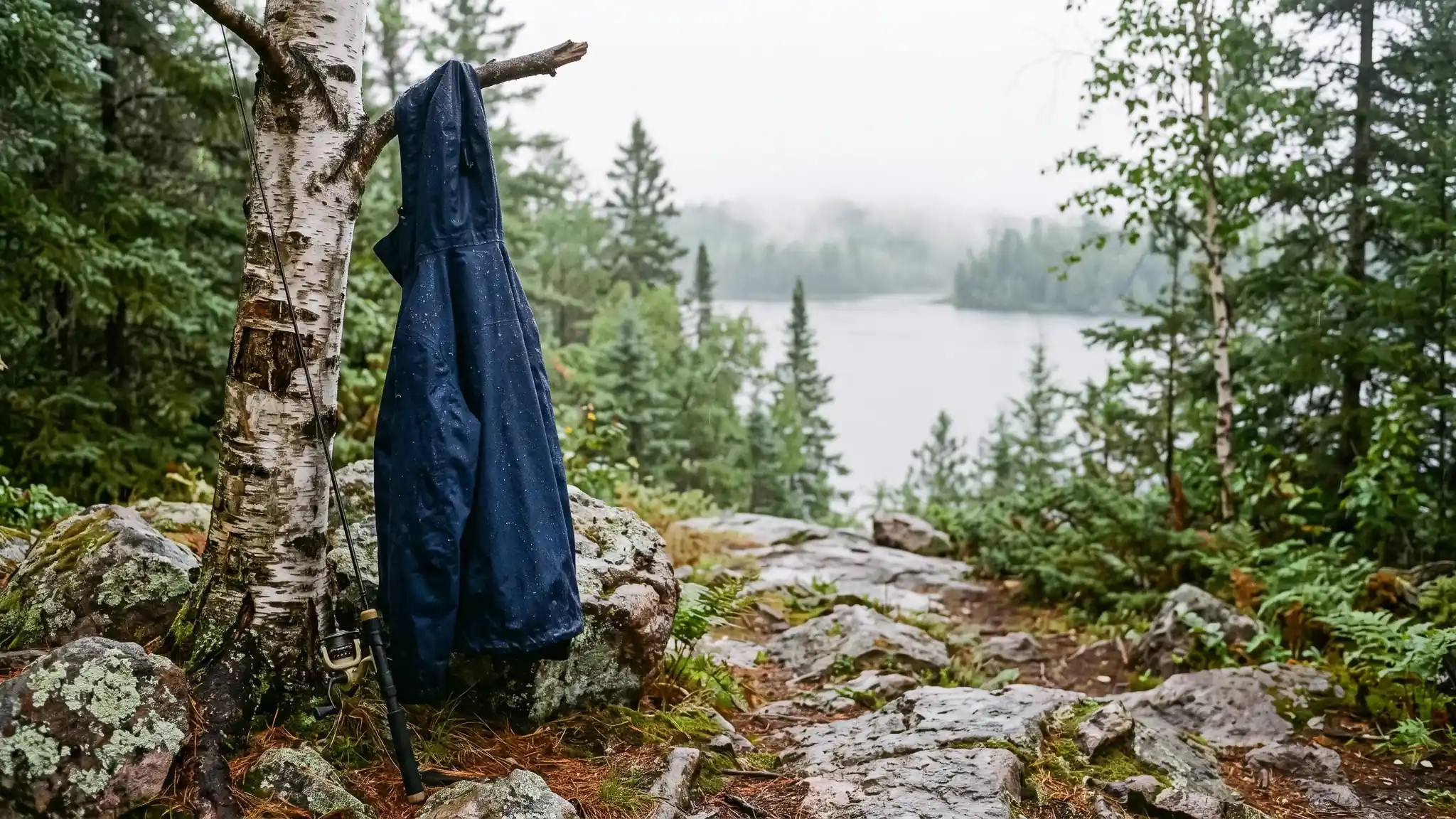
A jacket that keeps rain out but traps your sweat in is only half a solution. You can end up just as wet from the inside, and in cold weather that dampness is a real problem. Health Canada's extreme cold page says to "dress in layers with a wind resistant outer layer," and adds that you can "remove layers if you get too warm (before you start sweating) or add a layer if you get cold." The advice about not sweating is the whole case for breathability in one sentence.
The waterproof fabric page defines breathability as the rate at which water vapour passes through, measured in grams of water vapour per square metre of fabric per 24 hours. It also adds a caveat that we agree with from experience: it says "the breathability of nearly all waterproof/breathable fabrics is very dependent upon weather conditions, especially temperature, humidity, and wind." A jacket that feels fine on a cool, dry-ish day can feel clammy in warm, humid rain no matter what the label says. Do not expect any shell to be perfectly comfortable under hard effort in warm rain.
Venting Is the Practical Answer
Because no membrane can keep up with a hard climb in warm weather, good rain jackets add mechanical venting. The most common forms are pit zips, which open under the arms, and longer vents that run along the torso. The Outdoor Research Men's Stratoburst Stretch Rain Jacket ($214.95) has large pit zips, and The North Face Women's Alta Vista Jacket ($199.95) lists pit-zip venting as well. The Outdoor Research Men's Foray 3L Jacket ($349.95) and The Women's Aspire 3L ($349.95) use what Outdoor Research calls TorsoFlo venting, which runs from the hem to the bicep. The Aspire II description adds that this venting can be unzipped for "poncho-style wear over a pack waist strap or extra airflow."
In our experience, pit zips are one of the first features worth paying for if you hike or paddle. They cost little in weight, and being able to dump heat without taking the jacket off is the difference between wearing it all day and stuffing it in the pack at the first sign of effort.
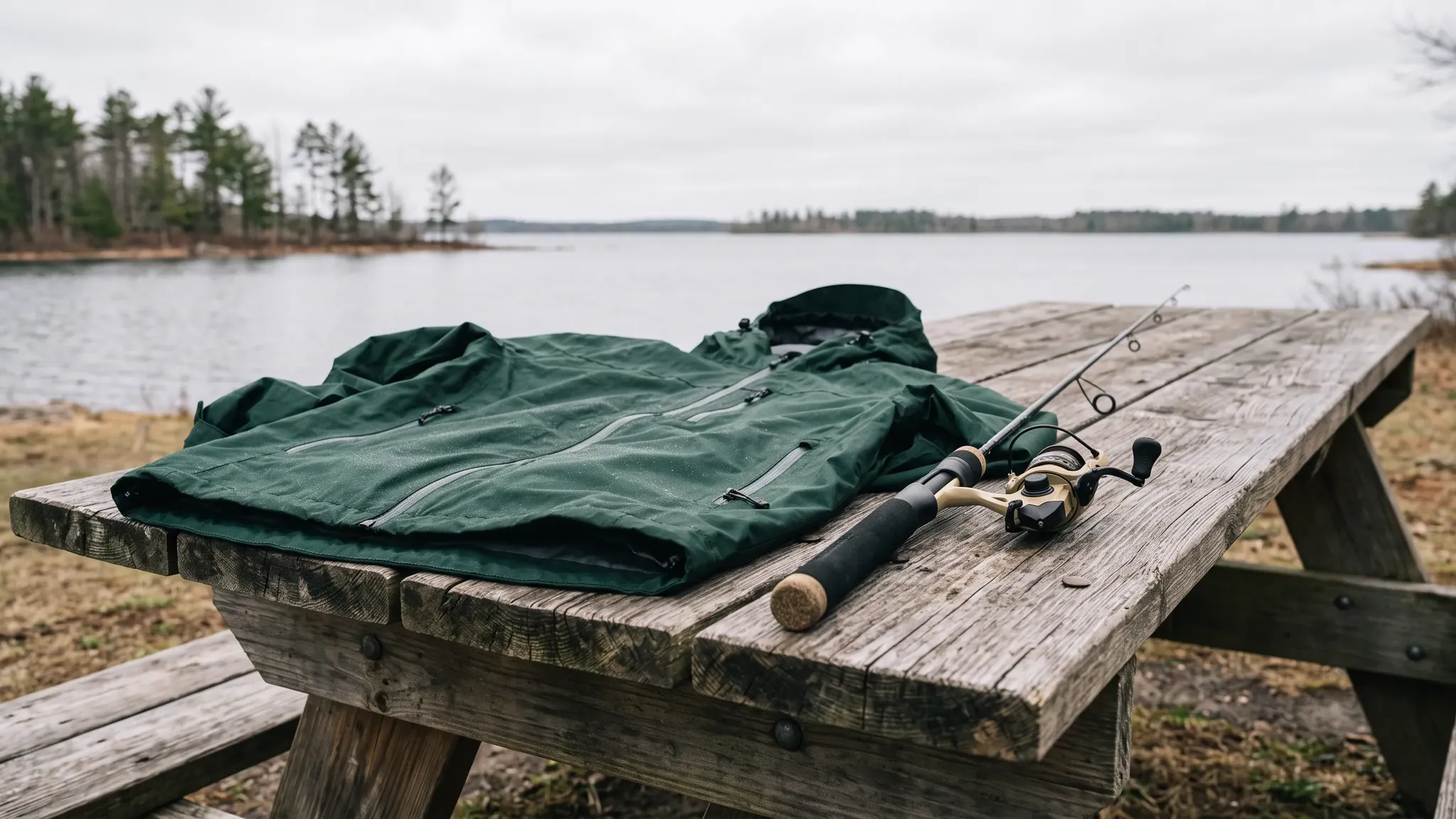
The Fabric Construction Tells You How the Jacket Will Feel and How Long It Will Last
When you read the specification of a rain jacket, you will see terms such as 2L, 2.5L, and 3L. They describe how many layers the waterproof system is built from, and they affect weight, feel, durability, and price. We describe them below from the product descriptions on our site, so you can see where each construction shows up in real jackets.
2L: A Shell Fabric With a Separate Liner
In a two-layer jacket, the waterproof membrane is bonded to the outer fabric, and the inside is protected by a separate loose liner, often a mesh or a soft knit. This tends to feel softer and a little roomier, and it is common in value-priced shells. The North Face Men's Antora Jacket ($139.95) and The Women's Antora Jacket ($139.95) are listed with a seam-sealed DryVent 2L shell and a non-PFC DWR finish. The Women's version lists a recycled polyester mesh lining. The trade-off with a loose liner is a little more bulk when you pack it.
2.5L: A Light Coating Instead of a Liner
A 2.5-layer jacket replaces the loose liner with a thin printed or sprayed protective layer. It is lighter and packs smaller, which is why it is common on hiking shells. The Women's Alta Vista is listed with a seam-sealed DryVent 2.5L shell and a non-PFC DWR finish, and the Stratoburst jackets use a breathable bluesign approved 2.5-layer Ventia fabric with fully taped seams that stretches with the body. The trade-off is that the lightest coatings can feel a bit less durable against repeated abrasion than a heavier laminate, so we would rather see a 2.5L jacket used on trails than as a work shell.
3L: Three Layers Bonded Into One Fabric
A three-layer jacket bonds the outer fabric, the membrane, and the inner lining into a single fabric. It is generally the most durable and the quietest, and it usually costs the most. The Foray 3L and Aspire 3L are described as using recycled AscentShell Dry 3L waterproof stretch fabric, a bluesign approved 100% recycled nylon 40D with mechanical stretch. The Rapala Pro Rain Jacket and the Whitewater Great Lakes Pro are both described as three-layer builds, and the Whitewater explicitly moves its original Great Lakes Jacket "from a two-layer to a three-layer build." Three-layer shells are where you will find the longest service life for hard daily use.
GORE-TEX: A Branded Membrane With a Long History
The Outdoor Research Women's Aspire II Gore-Tex Jacket ($299.95) uses the best known waterproof-breathable brand. The Gore-Tex entry says it is W. L. Gore and Associates' trade name for a waterproof, breathable fabric membrane, that it was invented in 1969, and that it "blocks liquid water while allowing water vapor to pass through." The entry also notes that the original material is expanded PTFE and that, starting in 2022, new versions for apparel use expanded polyethylene. The page carries an editors' note that it needs updating, so check the manufacturer's current description if the material matters to you.
A Quick Comparison of the Constructions
| Construction | Feel | Packs | Durability | Example we carry |
|---|---|---|---|---|
| 2L | Softer, a little roomier | Bulkier | Good for everyday use | The North Face Antora |
| 2.5L | Light and stretchy | Small | Fine for trails, lighter use | Outdoor Research Stratoburst |
| 3L | Quiet and smooth | Moderate | Best for hard, frequent use | Outdoor Research Foray 3L |
| GORE-TEX membrane | Depends on the face fabric | Moderate | Long-standing reputation | Outdoor Research Aspire II |
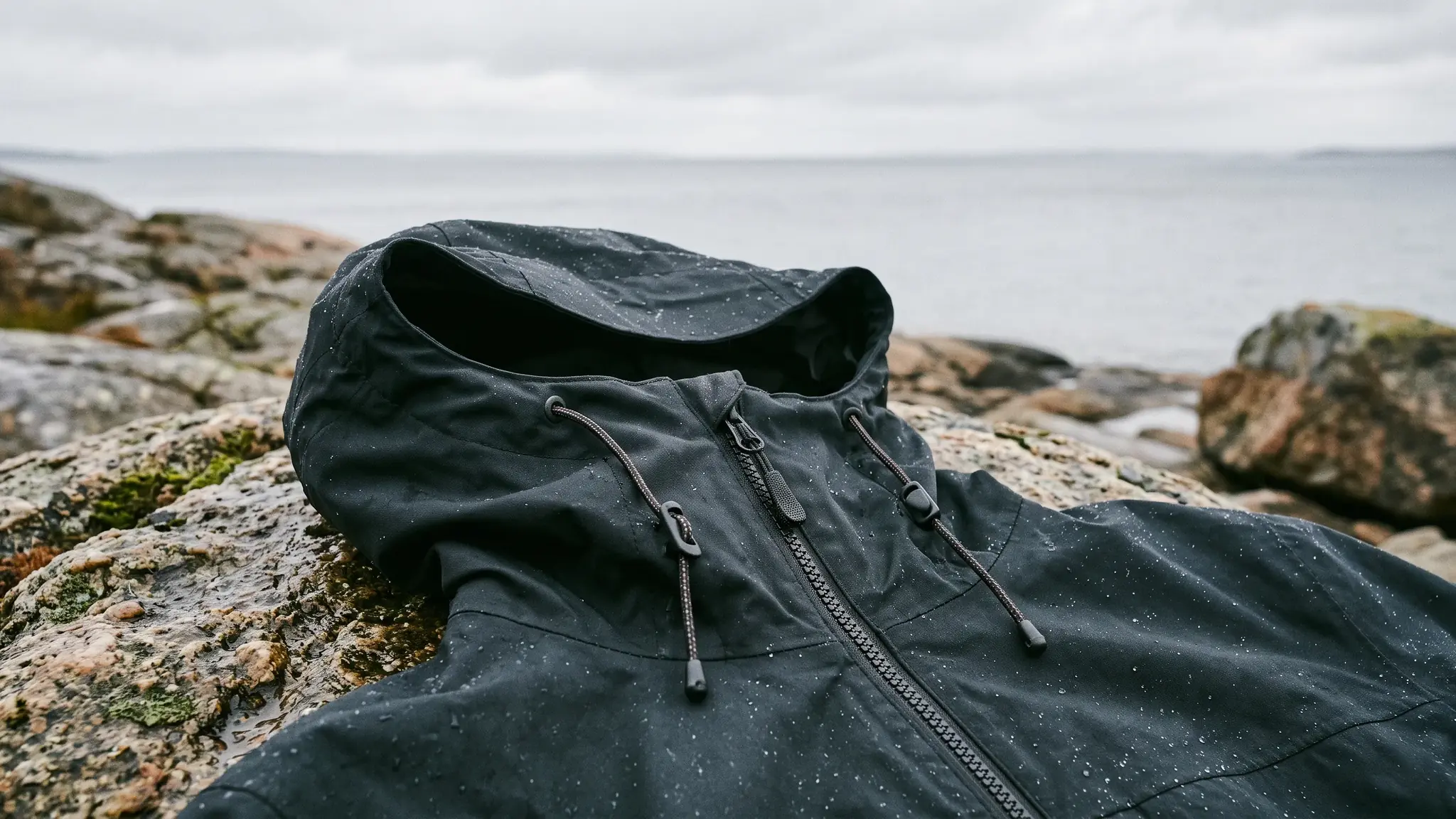
Seams, Hood, Zips, and Cuffs Matter as Much as the Fabric
If the fabric is the engine of a rain jacket, the details are the chassis. The following features are the ones we look at first when someone hands us a jacket and asks whether it is any good. None of them is exotic, and all of them show up on the spec sheets of the jackets we carry.
Fully Taped or Sealed Seams
Every stitch is a hole. A jacket described as "fully seam taped" or "fully seam sealed" has a waterproof tape bonded over the stitching on the inside. A jacket described as "critically seam sealed" is taped only in the areas most exposed to rain, such as the shoulders and the hood. The Columbia Men's Watertight II Rain Jacket ($119.95) and The Columbia Women's Arcadia II Jacket ($119.95) are both listed as fully seam sealed with Omni-Tech waterproof-breathable fabric, which is a lot of shell for the money. That is the one feature we would not give up even on a budget jacket.
A Hood You Can Actually Adjust
A hood is where a lot of jackets fail. Look for a hood that cinches around the face, has a brim or a stiffened edge so it keeps rain out of your eyes, and can be tightened at the back so it turns with your head. The Foray 3L and the Aspire 3L list a fully adjustable hood with a bonded brim. The Antora jackets list an attached three-piece hood with an adjustable cord lock, and the Watertight II lists an attached, adjustable storm hood. If you wear a ball cap or a toque under your hood, put one on at the store when you try a jacket, because a hood that works over bare hair can be too tight over a hat.
Zips and Storm Flaps
The front zip is a weak point because it is a long seam that opens. Many better jackets use a water-resistant zip and cover it with a flap. The Foray 3L, Aspire 3L, and Stratoburst jackets list YKK Aquaguard zippers with an internal front storm flap, and the Antora jackets list a stormflap with a hook-and-loop closure over the centre front zip. A zip on its own can leak through its teeth under driving rain, so the flap is a worthwhile extra.
Cuffs, Hem, and Pockets
Adjustable cuffs let you close the gap between a sleeve and a glove, and a drawcord hem keeps wind and rain from riding up the back. Pockets should be placed so a pack hip belt does not cover them, and should have zips or storm flaps. The Antora lists secure-zip hand pockets, and the Whitewater and Rapala fishing jackets add sewn-in D-rings for the kill switch cord and other accessories, which anglers and boaters will appreciate. A pocket that doubles as a stuff sack is a thoughtful addition if you plan to carry the jacket in a pack. The Aspire II and Stratoburst women's jackets are listed with that feature.
Packability and Weight
If the jacket lives in a pack for most of the year, packability matters. The Columbia Watertight II, Arcadia II, and PFG Storm all list a pack-into-hand-pocket design. If instead you will wear it daily, weight matters less than comfort, and a 3L jacket with a quiet fabric may be the better choice. We cannot give you reliable weights for each jacket, because many of the product listings do not publish them. Ask us at the counter and we will pick one up and let you feel the difference.
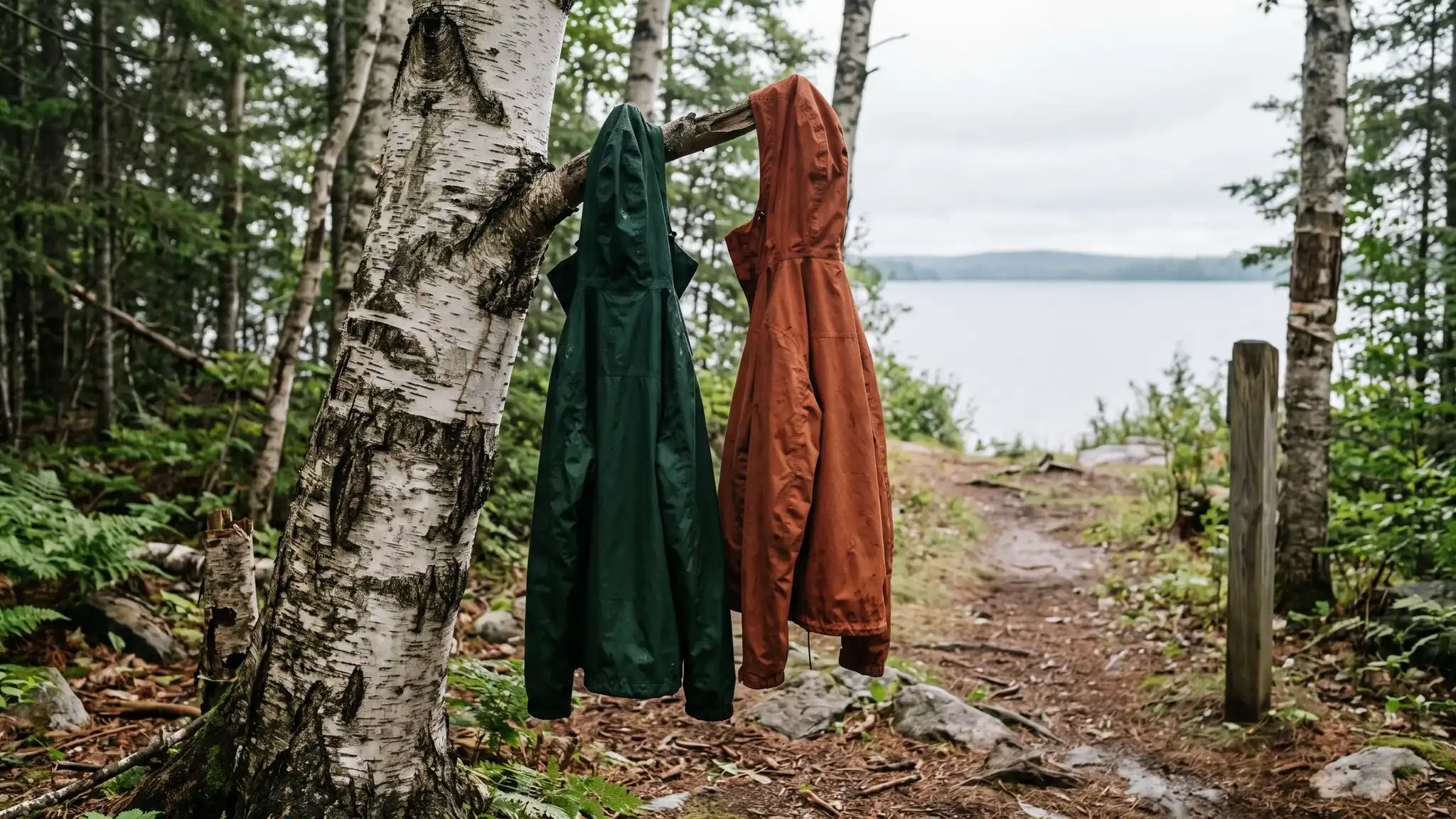
Hardshell or Softshell Depends on Whether You Need to Stop Rain or Just Handle It
The question "hardshell or softshell?" is one of the most common from our customers, and it is also one of the easiest to answer once you know what each is for. A hardshell is built to be waterproof, windproof, and sealed at the seams, and it tends to be stiffer and less breathable. A softshell is built to be stretchy, breathable, and comfortable, and it is water-resistant rather than waterproof. Most of the time you do not have to pick one for good. Many people who spend a lot of time outdoors end up owning both.
Choose a Hardshell When Rain Is the Main Problem
Choose a hardshell when you expect sustained or heavy rain, when you will be exposed to wind and wet at the same time, or when staying dry is a safety matter and not a comfort matter. That covers a day on the water, a wet hike, a hunting trip in cold rain, or a work shift outside. Every jacket in our men's rain jackets and women's rain jackets departments is a hardshell in this sense.
Choose a Softshell When You Are Moving, the Weather Is Marginal, or You Want Stretch
Choose a softshell when you will be active, when the air is cool but the sky is only threatening, or when you want a jacket you can wear all day without noticing it. The Columbia Men's Ascender Softshell is described as bonded Contour Softshell, regular fit, with water-and-wind-resistant fabric that sheds moisture "so you stay comfortable in light rain." It also lists zippered chest and hand pockets and machine-wash-cold care. The Columbia Women's Trailborne Softshell Jacket ($179.95) fills the same role on the women's side. You can browse more in our men's softshell and women's softshell departments, though those pages are mostly organised around pants, so use the jackets sections for tops.
A Simple Rule We Use at the Counter
If the forecast says "rain," buy a hardshell. If the forecast says "chance of showers," a softshell may be enough, particularly if you can duck under cover. If you are not sure, carry a light packable hardshell like the Watertight II or the Arcadia II in your pack over a softshell. Together they cover a wide range of weather, for less than the cost of one premium shell.
| Question | Hardshell | Softshell |
|---|---|---|
| Stops sustained rain | Yes, when seams are sealed | No, sheds light rain only |
| Stretch and comfort | Moderate | High |
| Breathability | Lower, helped by vents | Higher |
| Packs small | Often, in lighter versions | Usually bulkier |
| Best use | Wet, windy, long days | Active days, cool and breezy |
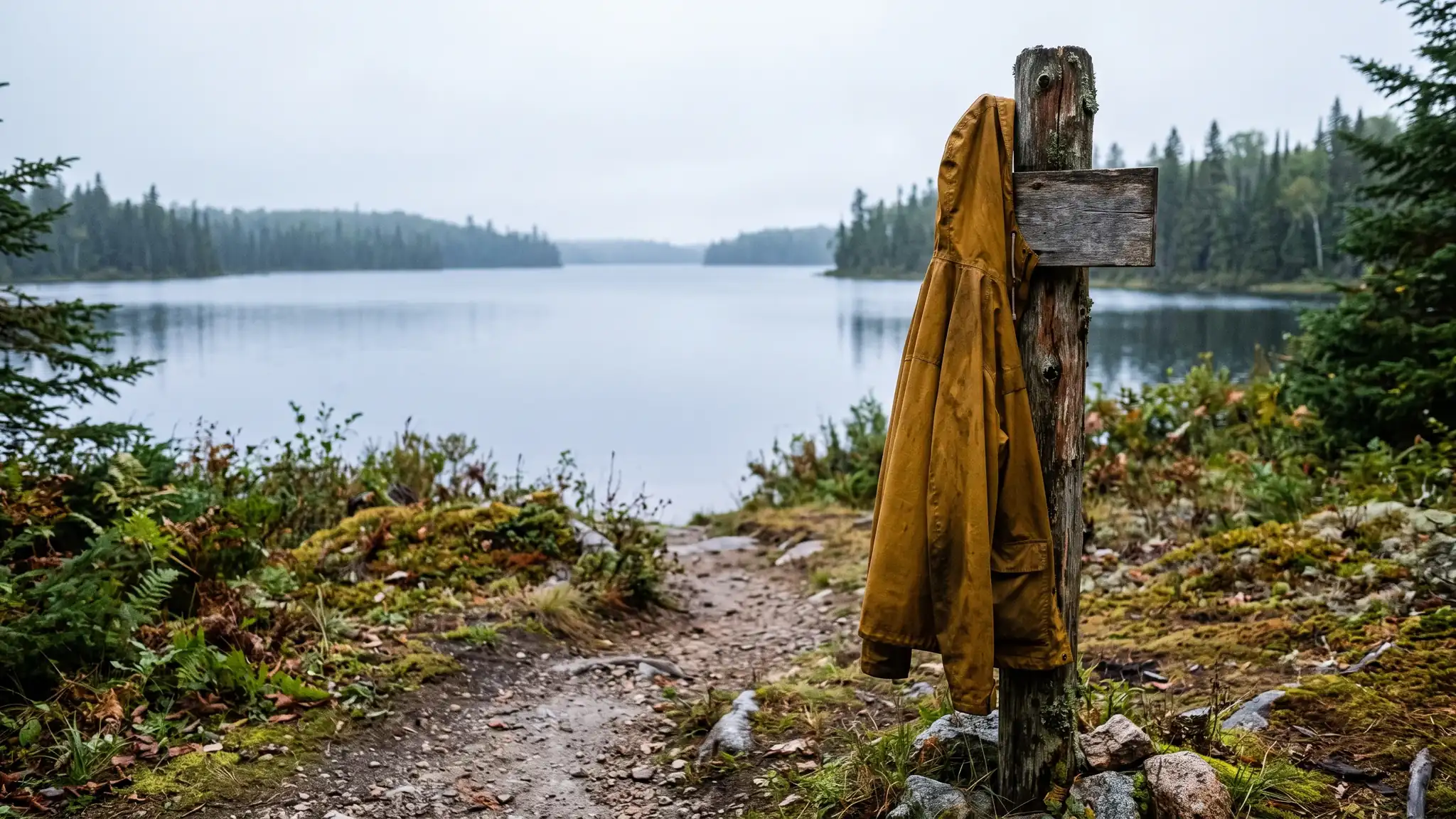
The Men's Rain Jackets We Carry Run From a $99.95 Fishing Shell to a $349.95 Three-Layer
Prices below were read from the live product pages on the day of writing. Sizes and colours change as stock moves, so call before you drive in if you need a specific one.
Best Value Hardshells
The Columbia Men's Watertight II Rain Jacket ($119.95) is the one we point to first for people who want a proper shell without a premium price. Columbia describes it as a rain jacket made to keep you dry even in heavy rain, with Omni-Tech waterproof-breathable fabric, full seam sealing, an attached adjustable storm hood, zippered hand pockets, a chin guard, and a mesh lining. It packs into its own hand pocket. It is listed in Black, College Navy, Night Tide, Stone Green, and Warm Copper, in sizes S to 4X, which makes it one of the better options for bigger frames.
The North Face Men's Antora Jacket ($139.95) is a step up in styling and a little more structured. It lists a seam-sealed DryVent 2L shell with a non-PFC DWR finish, a windproof fabric, a standard fit, a stormflap over the centre zip, and secure-zip hand pockets. It is made with 100% recycled fabrics, and it suits daily wear as well as the trail. If you like a jacket that looks as good in town as it does on a path, this is a safe choice.
The Columbia Men's PFG Storm Jacket in Black ($99.95) is a fully seam-sealed, waterproof-breathable fishing jacket that packs into its own pocket. It is listed in sizes 1X to 3X, which is important to know before you ask for a medium. It is the lowest-priced shell in our men's lineup, and a sensible spare to keep in a tackle bag or truck.
Lightweight Stretch Shells for Active Days
The Outdoor Research Men's Stratoburst Stretch Rain Jacket ($214.95) is a lightweight, breathable shell built from a bluesign approved 2.5-layer Ventia fabric with fully taped seams. Outdoor Research describes it as stretching with the body and suited to cool-weather climbing or hiking. It lists large pit zips, an adjustable hood, a drawcord hem, and a YKK Aquaguard front zip with an internal storm flap. The updated DWR treatment is described as made without releasing harmful toxins during production. For a hiker who wants a jacket that moves well, this is our usual recommendation.
The Premium Three-Layer Shell
The Outdoor Research Men's Foray 3L Jacket ($349.95) is the jacket for people who use their shell hard and often. It is made from recycled AscentShell Dry 3L waterproof stretch fabric, which is a bluesign approved 100% recycled nylon 40D with mechanical stretch. It lists TorsoFlo venting from hem to bicep, a fully adjustable hood with a bonded brim, YKK Aquaguard zippers, an internal storm flap, zip chest and hand pockets, hook-and-loop cuffs, and a PFAS-free Nikwax Direct.Dry durable water repellent. It comes in a range of colours in sizes L to XXXL. It is also the jacket in our lineup with a matching pant, which we cover below.
Men's Rain Jackets at a Glance
| Jacket | Construction | Price | Best for |
|---|---|---|---|
| Columbia PFG Storm | Omni-Tech, fully seam sealed | $99.95 | Spare shell, fishing |
| Columbia Watertight II | Omni-Tech, fully seam sealed | $119.95 | Everyday value, wide size range |
| The North Face Antora | DryVent 2L, seam sealed | $139.95 | Daily wear and trail |
| Outdoor Research Stratoburst | 2.5L Ventia, fully taped | $214.95 | Hiking, active days |
| Outdoor Research Foray 3L | AscentShell Dry 3L, fully taped | $349.95 | Hard, frequent use |

The Women's Rain Jackets Range From $119.95 to $349.95, With Several Cuts Worth Trying On
Women's rain jackets are often cut differently, with more room at the hip and shorter sleeves, and some are cut longer for coverage. Because of that, the sizing section below matters even more for the women's range. We would encourage anyone buying a women's shell to try on two or three before deciding.
Value and Everyday Shells
The Columbia Women's Arcadia II Jacket ($119.95) is waterproof, breathable, and packable. It is built with an Omni-Tech membrane, full seam sealing, and a soft mesh lining, with an attached adjustable storm hood, a drawcord hem, and zippered hand pockets, and it packs into a hand pocket. It is listed in many colours, including Black, Black Cherry, Citron Haze, Everblue, Iceberg, Safari, and Wild Fuchsia, in sizes XS to 3X. Few jackets give you this much range of size and colour at this price.
The North Face Women's Antora Jacket ($139.95) shares the Men's Antora design: a seam-sealed DryVent 2L shell with a non-PFC DWR finish, windproof fabric, a stormflap, a three-piece hood, secure-zip pockets, and a drop-tail hem. The body is 70D recycled nylon ripstop with a recycled polyester mesh lining. The drop-tail hem is a thoughtful detail for anyone who sits on a bench, a saddle, or a boat seat.
Hiking and Active Shells
The North Face Women's Alta Vista Jacket ($199.95) is described as a go-to hike shell. It lists a seam-sealed DryVent 2.5L shell with a non-PFC DWR finish, a regular fit, an adjustable three-piece hood, pit-zip venting, and a vertical secure-zip chest pocket that the jacket stows into.
The Outdoor Research Women's Stratoburst Stretch Rain Jacket ($214.95) uses the same 2.5-layer Ventia fabric as the men's version, with fully taped seams, large pit zips, an adjustable hood, a drawcord hem, and a left pocket that doubles as a stuff sack. It is the lighter and more stretchy of the two active options.
Premium Shells for Long, Wet Days
The Outdoor Research Women's Aspire II Gore-Tex Jacket ($299.95) is described as a GORE-TEX waterproof jacket long hailed as one rain jacket for every activity, and this version has a longer length, a more modern design, and more sizes. It lists TorsoFlo venting that unzips for poncho-style wear over a pack waist strap, a hand pocket that doubles as a stuff sack with a carabiner loop, a fully adjustable hood, and YKK Aquaguard zippers.
The Outdoor Research Women's Aspire 3L Jacket ($349.95) is described as Outdoor Research's best-selling rain jacket. It uses recycled AscentShell Dry 3L waterproof stretch fabric, TorsoFlo venting, and a PFAS-free Nikwax Direct.Dry DWR. It is listed in six colours, from XS to XL. Choose the Aspire II if you want the longer cut and the GORE-TEX name, and the Aspire 3L if you want a stretchier fabric and a more current build.
Women's Rain Jackets at a Glance
| Jacket | Construction | Price | Best for |
|---|---|---|---|
| Columbia Arcadia II | Omni-Tech, fully seam sealed | $119.95 | Value, packable, wide size range |
| The North Face Antora | DryVent 2L, seam sealed | $139.95 | Daily wear and trail |
| The North Face Alta Vista | DryVent 2.5L, seam sealed | $199.95 | Hiking with pit zips |
| Outdoor Research Stratoburst | 2.5L Ventia, fully taped | $214.95 | Light, stretchy, active |
| Outdoor Research Aspire II | GORE-TEX, fully seam taped | $299.95 | Long wet days, longer cut |
| Outdoor Research Aspire 3L | AscentShell Dry 3L, fully taped | $349.95 | Best-selling, hard use |
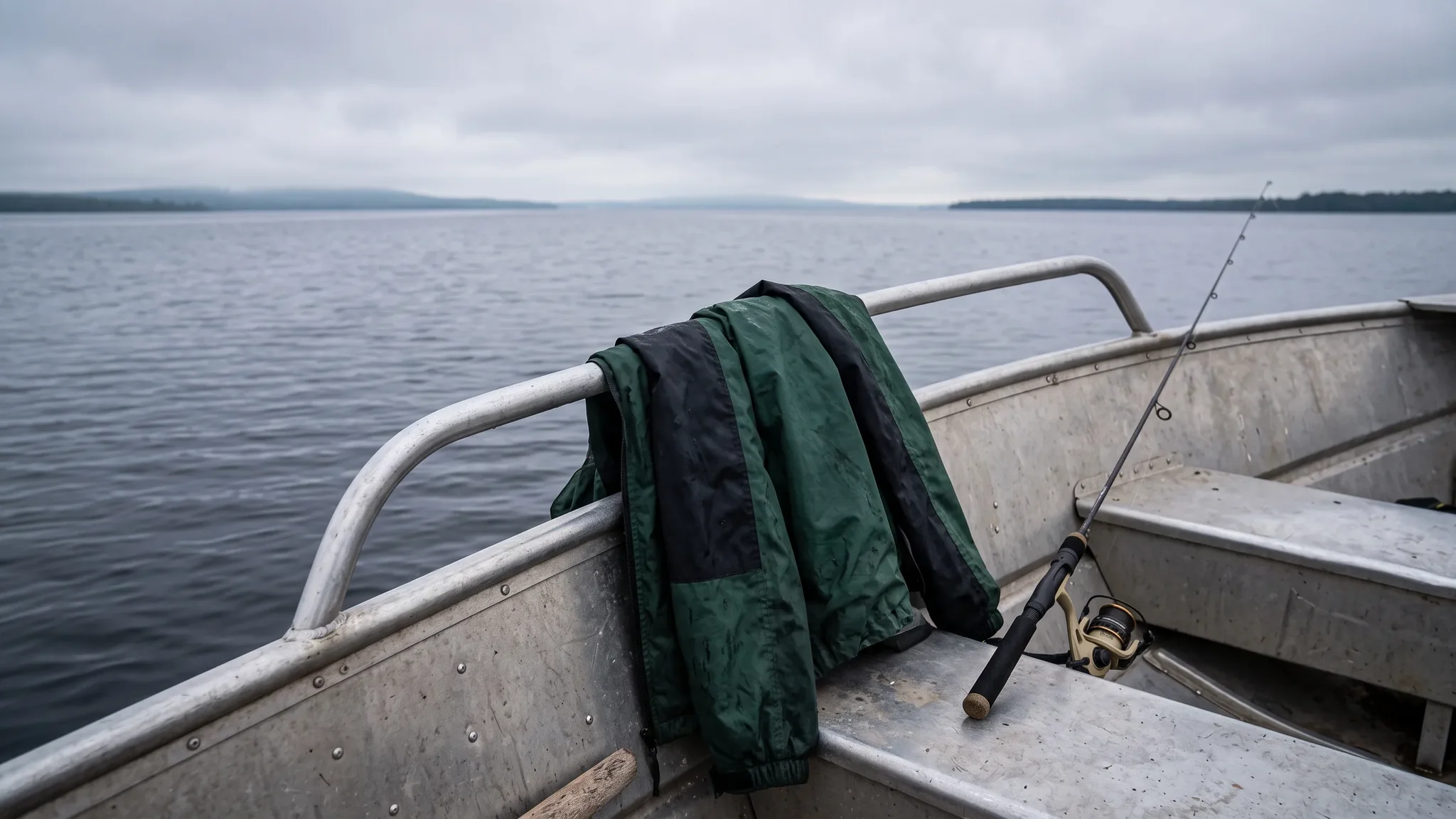
Fishing Rain Jackets Are Built Around the Boat, Not the Trail
If you fish from a boat in Great Lakes weather, you are exposed to spray, wind, and rain at the same time, often for hours without a chance to take shelter. A jacket built for that job looks different from a hiking shell. It usually has a longer cut, a higher collar, a hood that works with a life jacket, and pockets that are placed above the waist of a pair of bibs. Our fishing rain gear department carries two jackets that are clearly built for that purpose.
Rapala Pro Rain Jacket
The Rapala Pro Rain Jacket in Grey/Black ($329.95) is part of Rapala's rain jacket and bib series. It lists a three-layer construction with a nylon ripstop Taslan shell, waterproof and breathable at 8000 mm, with taped sealed seams and premium YKK zippers. It adds reflective logos, a two-way hood with adjustable drawstrings, an outer chest zip pocket with an attached microfibre cloth, two zip-lined hand-warming pockets, two interior pouch pockets, two D-rings, a magnetic flap on the main zipper, and adjustable hook-and-loop cuffs. It is listed in sizes S to XXL. The microfibre cloth is a small detail, but it is the sort of feature that anglers notice when they are wiping a lens or a reel in the rain.
Whitewater Great Lakes Pro Fishing Rain Jacket
The Whitewater Great Lakes Pro Fishing Rain Jacket ($629.95) is the top of our rain jacket range. It is described as made for professional anglers and everyday fishing enthusiasts, and it moves the original Great Lakes Jacket from a two-layer to a three-layer build, with a poly/spandex shell and a smooth polyester lining for easy on and off. It lists a waterproof and windproof breathable laminate at 20k/30k with taped seams, a three-piece hood with multiple adjustments and an extended collar, adjustable cuffs and waist, four AquaGuard water-resistant zippered external pockets, one interior pocket, and two sewn-in D-rings for a kill switch cord and trolling motor fob. That is a real investment, and it will make the most sense to someone who fishes in rough weather often. Call us if you want to try one on before you decide.
How to Choose Between Them
If you fish a few times a season and want something solid, the Rapala is a very capable jacket at roughly half the price of the Whitewater. If you fish tournaments, run a boat in rough water, or simply spend more days on the lake than off it, the extra spend on the Whitewater buys a more heavily featured build. For occasional use on a shoreline or a pier, a hiking shell like the Watertight II at $119.95 will cover most days.
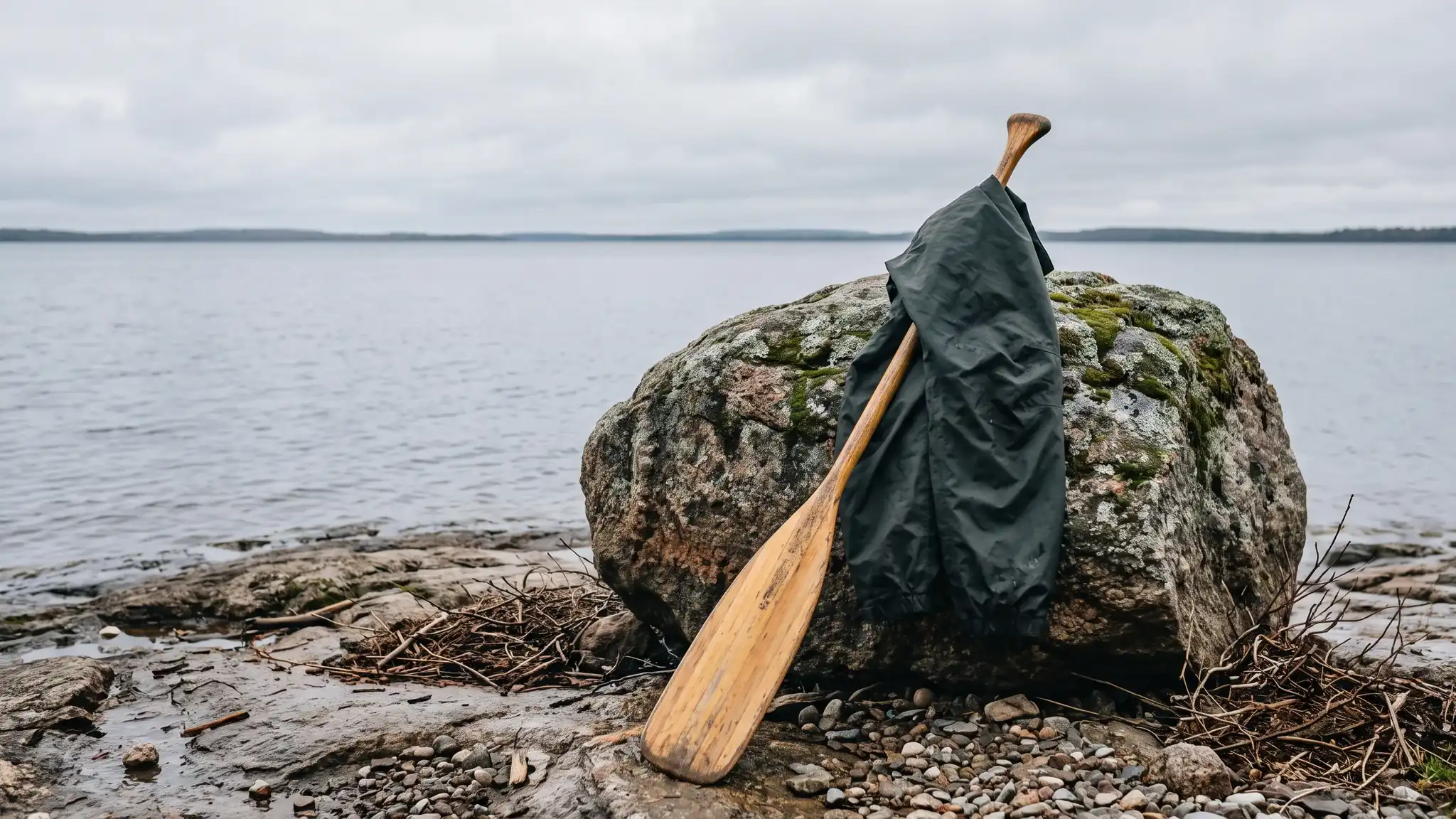
Rain Pants Finish the Job a Jacket Starts, and Wet Legs Spoil a Dry Day
A rain jacket covers your upper body, but rain runs down, and a soaked pair of trousers is cold and heavy within an hour. Rain pants are the most overlooked part of a wet-weather kit, and most customers who add them say the same thing afterwards: they wish they had done it sooner. We carry them in both the men's rain pants and women's rain pants departments.
What to Look For in Rain Pants
The two features that matter most are leg zips and the waist. A zip that runs along the lower leg, or most of the way up the side, lets you pull the pants on over boots without sitting down in the mud. An elastic waist with a drawcord lets you cinch them over bulky layers or loosen them over a thin pair of trousers. Beyond those, look for articulated knees for movement, a gusseted crotch for stepping up, and hook-and-loop leg openings that you can close over a boot.
Rain Pants We Carry
The Columbia Men's Rebel Roamer II Rain Pant ($79.95) is the lowest-priced option on the men's side. The Columbia Men's Hazy Trail Rain Pant ($139.95) is described as a packable shell pant for heavy downpours, with waterproof-breathable Omni-Tech fabric, fully sealed seams, lower leg zips, a drawcord waist, and reflective detail. It packs into a hand pocket and is suited to hiking.
The North Face Men's Antora Rain Pant ($139.95) is described as relaxed fit, with seam-sealed DryVent 2L fabric, a non-PFC DWR finish, an elasticated waistband with an internal drawcord, secure-zip welt hand pockets, articulated knees, a lower-leg zip for easy on and off over boots, and hook-and-loop adjustment at the leg openings. It has a regular 32-inch inseam. It pairs with the Antora Jacket, and The North Face also makes a men's Antora Rain Hoodie ($169.95) if you prefer a pullover style.
The Outdoor Research Men's Stratoburst Stretch Rain Pants ($189.95) and The Outdoor Research Men's Foray 3L Pants ($259.95) complete the matching sets. The Foray 3L Pant is described as the brand's best-selling rain pant. It is made from recycled 3L AscentShell Dry waterproof stretch fabric, and it has three-quarter-length side zips with YKK Aquaguard zippers, articulated knees, a gusseted crotch, and a back pocket that doubles as a stuff sack. Outdoor Research describes it as the first carbon-neutral shell pant in the outdoor industry, and we are passing that along as the brand's claim.
For anglers, The Columbia Men's PFG Storm Bib Pant ($119.95) is the matching piece to the PFG Storm Jacket.
On the women's side, The Columbia Womens Storm Surge II Rain Pant ($79.95) is the value option, and it is also sold in a short length. The North Face Women's Antora Rain Pant ($139.95) matches the Antora jacket, and The Outdoor Research Women's Stratoburst Stretch Rain Pants ($189.95) match the lightweight stretch jacket. The Outdoor Research Women's Aspire 3L Pant in a regular length ($259.95) is also sold in a short length, which is a real advantage for shorter legs, since a pant that is too long will drag in the wet and wear at the hem.
Rain Pants Are Not Winter Pants
A rain pant is a shell. It blocks water and wind, but it adds very little warmth by itself. In cold rain you will want a warm layer underneath, and in deep winter you will want insulated bibs or snow pants instead, which we cover in the men's bibs and pants, women's bibs and pants, and youth bibs and pants sections.
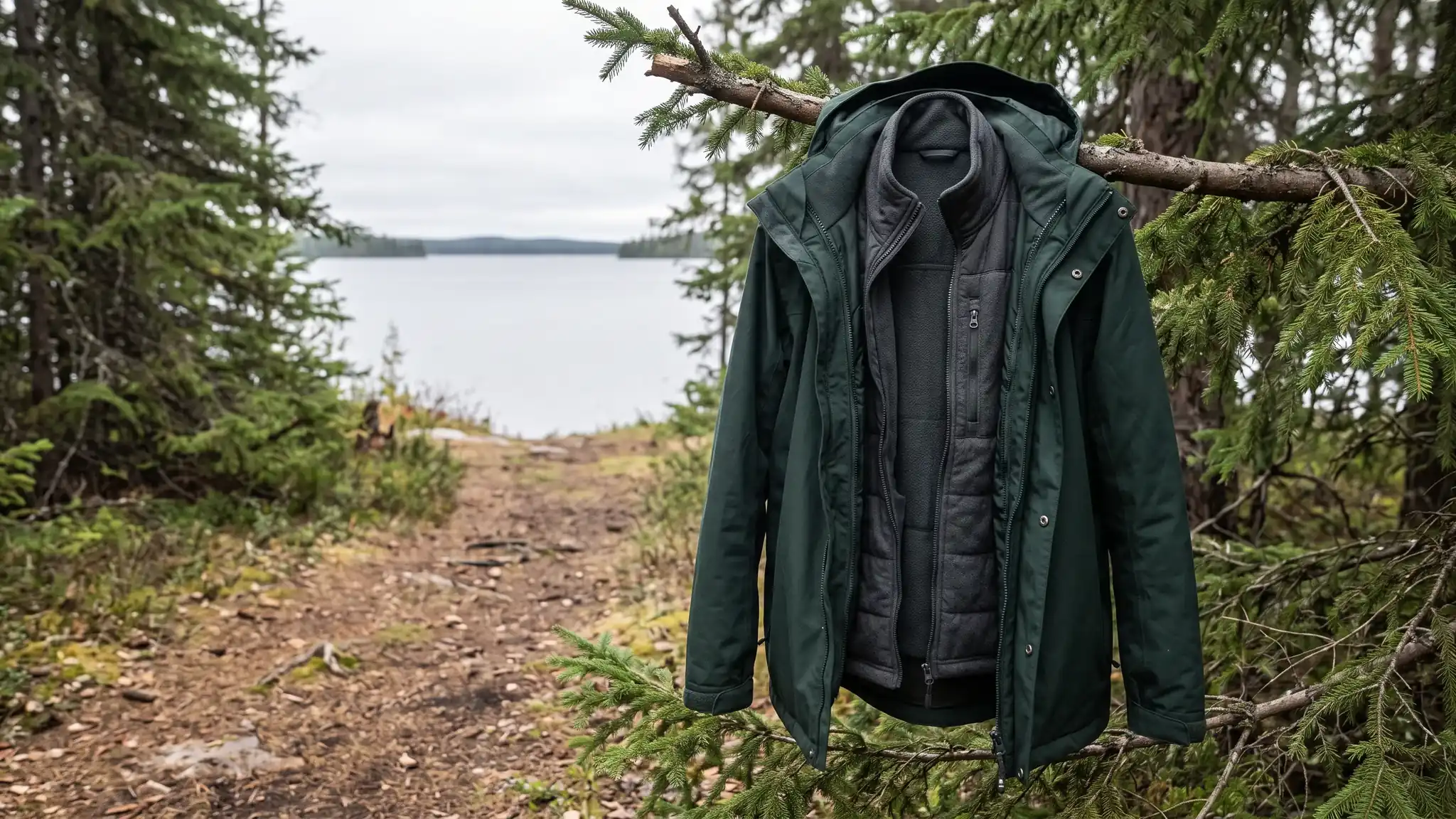
A 3-in-1 Jacket Makes Sense When Cold and Wet Arrive Together
Northern Ontario shoulder seasons are not always kind. A wet October day can be cold enough that a thin shell and a T-shirt will not do. A 3-in-1 jacket answers that with a waterproof outer shell and a zip-in insulated liner that you can wear together, or separately as the weather changes.
The North Face Men's Carto Mono Triclimate Jacket ($399.95) is described as a versatile 3-in-1 that pairs a waterproof DRYVENT Mono shell with a warm HEATSEEKER insulated liner jacket, for wet, cold conditions or for wearing separately as weather permits. It lists synthetic insulation that keeps warmth in damp conditions. The Columbia Men's Whirlibird V Insulated Interchange Jacket ($289.95) uses an Omni-Tech waterproof-breathable shell with critical seam sealing, an Omni-Heat thermal-reflective lining, and Thermarator insulation, which Columbia describes as keeping its warmth when wet. The inner layer zips in or out, so you can wear it as a shell, a liner, or zipped together.
The Trade-Offs of a 3-in-1
A 3-in-1 is a good value if you will use all three modes, and a poor one if you will only ever wear it zipped together. It is also bulkier than a single shell, and the shell by itself is generally not as refined as a dedicated rain jacket. For people who would otherwise buy a rain jacket and a separate insulated jacket, it is often a sensible compromise. For serious hikers and paddlers who care about every gram, a separate shell and a separate insulating layer give more flexibility. You can see more of our insulated options in the men's jackets and vests and women's jackets and vests sections.
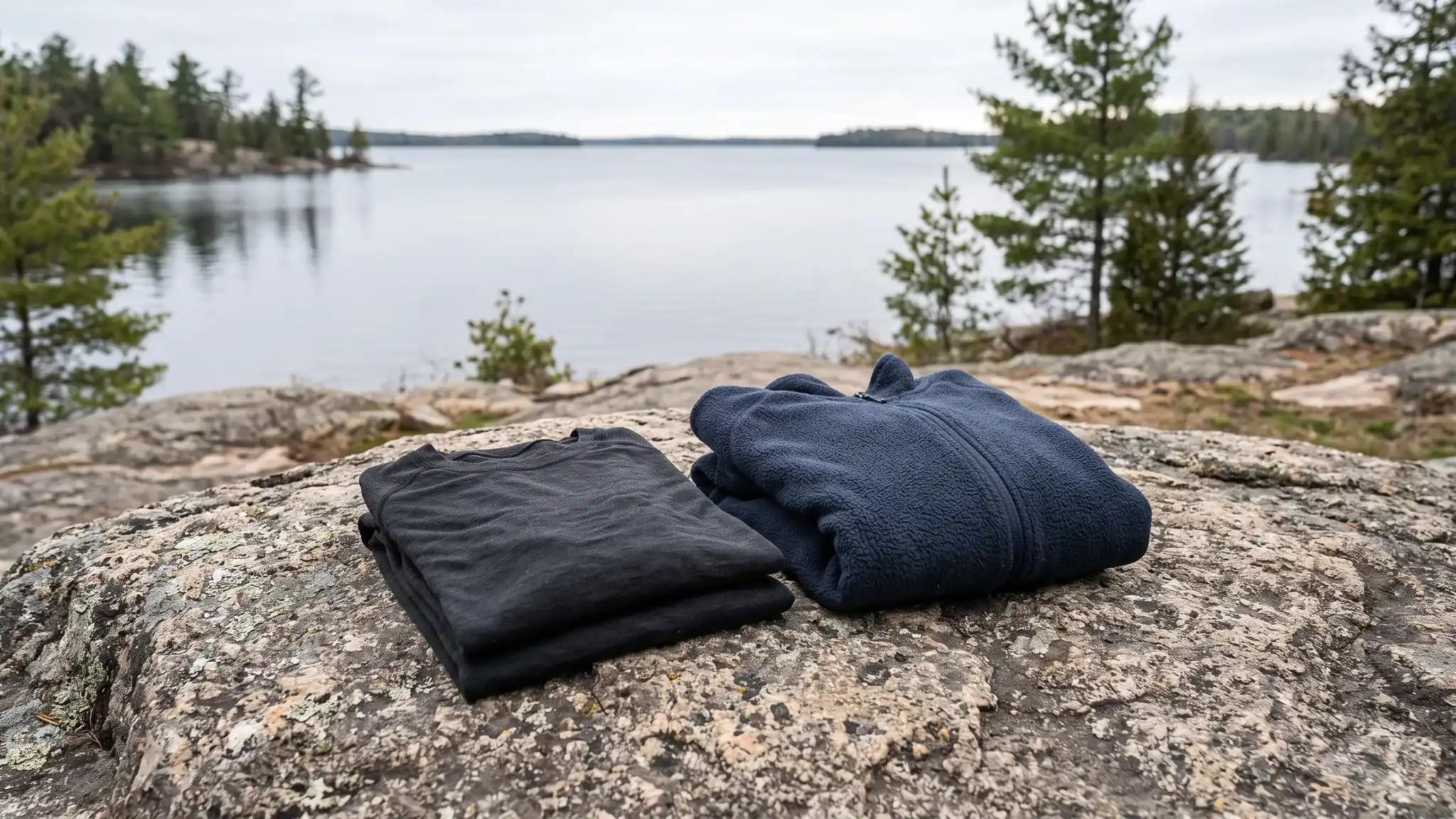
What You Wear Under a Rain Jacket Decides Whether You Stay Warm
A shell is the outer layer of a system, and it works best when the layers below it do their jobs. Health Canada's advice, from its extreme cold page, is to "dress in layers with a wind resistant outer layer." A rain jacket is a wind-resistant outer layer by design, so the rest of the work is in picking what goes under it.
The Base Layer Handles Sweat
Next to the skin, you want a fabric that moves moisture away and does not stay clammy. Our merino wool base layers guide explains why many people choose merino for this job, and our guide on how to choose thermal underwear covers weights and fits. Avoid cotton under a shell in cool, wet weather. Cotton holds water, and Health Canada's point that you lose heat faster when wet applies directly.
The Mid Layer Handles Warmth
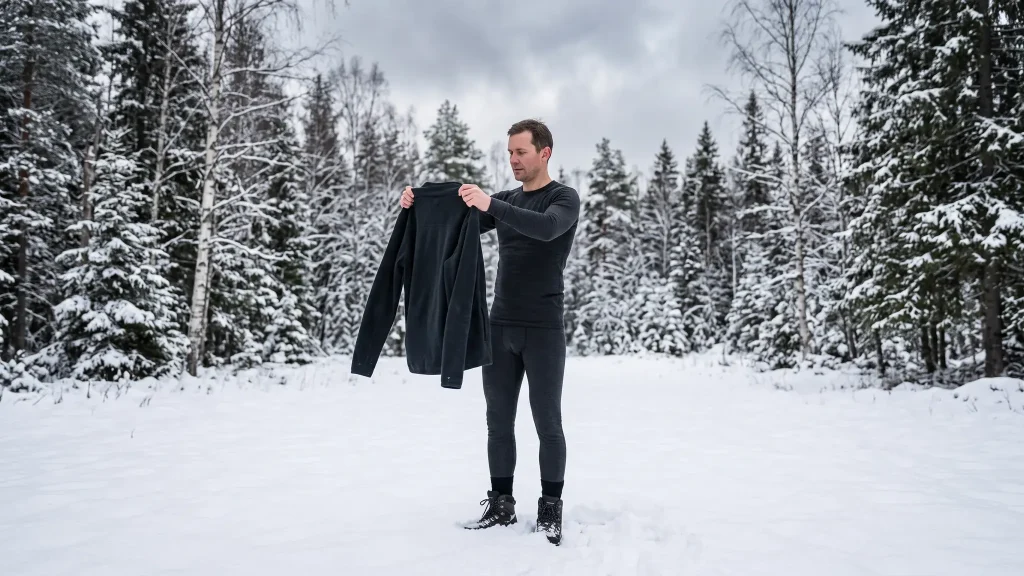
A fleece or a light insulated jacket goes over the base layer in cold weather. This is where you can adjust: add a thicker mid layer for cold, leave it out when it is mild. We keep a selection in our fleece and jackets departments, and the best ones are thin enough to fit under a shell without making the sleeves feel tight.
Your Feet and Hands Need a Plan Too
A rain jacket does nothing for your feet. If you are heading out in wet, cold weather, our winter boots guide and our article on snow boots, insulation, waterproofing, and traction explain how to choose footwear for those conditions. Health Canada also advises that you "wear warm socks, gloves, a hat and scarf in cold weather," and our merino wool socks guide covers the sock side of that.
A Simple Layering Plan for a Cold, Wet Day
- A merino or synthetic base layer against the skin, in a weight that suits the temperature.
- A fleece or light insulated jacket on top, in a size that leaves room for movement.
- A fully seam-taped rain jacket over both, with the hood adjusted and the vents closed until you start to warm up.
- Rain pants over trousers or leggings, with leg zips that let you get them on over boots.
- Warm, dry socks in waterproof footwear, plus a hat and gloves you can swap for dry ones.
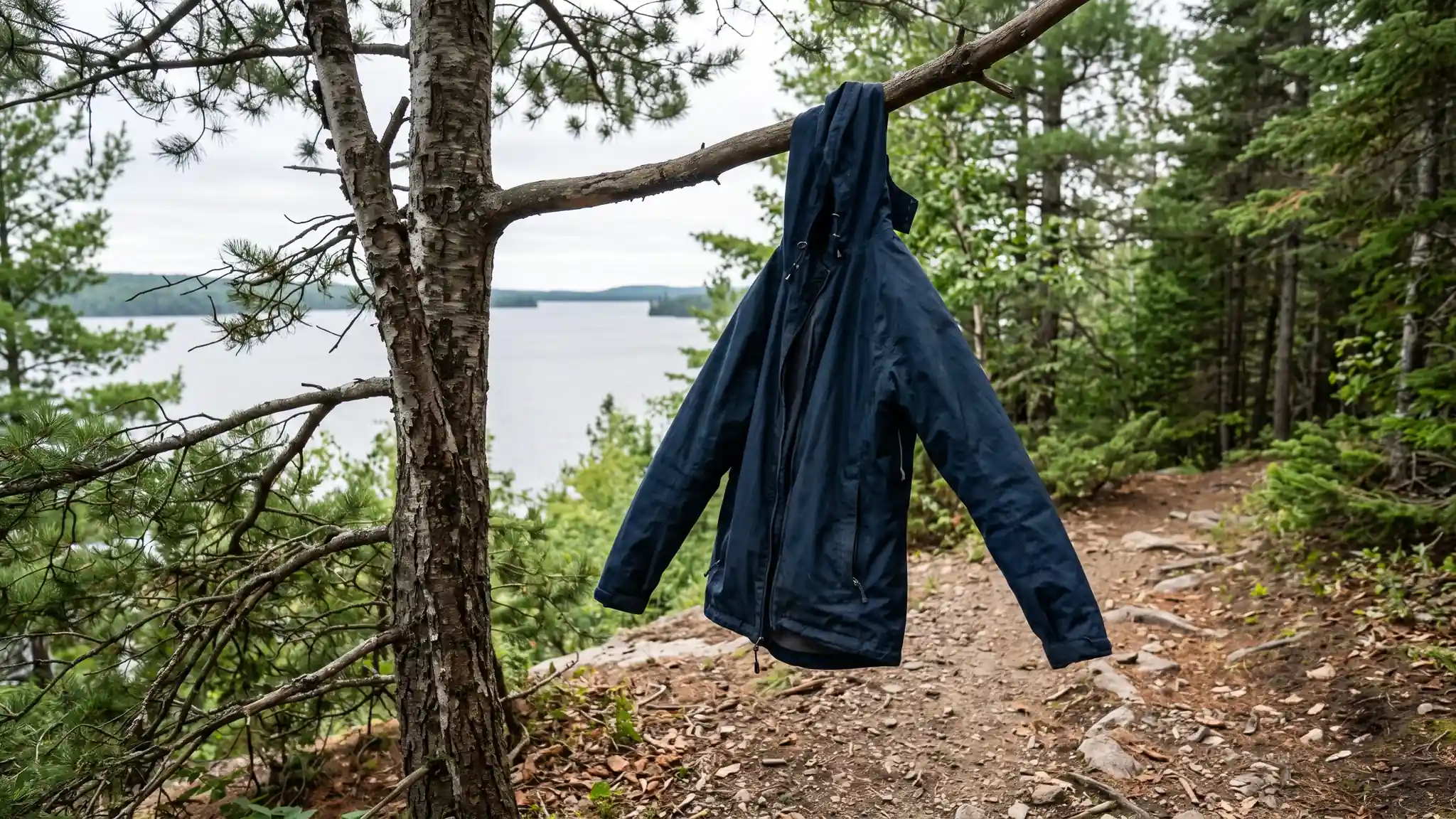
Fit Is Where a Good Rain Jacket Gets Won or Lost
The same jacket can feel perfect or awful depending on how it fits, and a rain jacket is harder to size than most clothing because it sits over other layers and has to move with you. Bring the layers you plan to wear, or at least the thickest mid layer you own, and try the jacket on with them.
The Checks We Run in the Fitting Room
- Raise both arms overhead. The hem should not ride up to expose your waist, and the sleeves should not pull back past your wrists.
- Reach forward as if you were paddling, casting, or holding a pole. The shoulders should not bind across the back.
- Zip the jacket fully and cinch the hood. You should still be able to turn your head and see to the side.
- Check the length. A longer cut gives more coverage when you sit or bend, and a shorter cut is easier under a pack hip belt.
- Put on gloves, if you will wear them, and close the cuffs over them.
Men's and Women's Cuts Are Not the Same
Brands cut men's and women's jackets differently. A women's jacket often has a narrower shoulder and more room through the hip, and it may be sized with different length options. Some of our women's rain pants are sold in both regular and short lengths, which is a good reminder that one size chart does not suit everyone. Try the sizes either side of your usual one before you decide.
Sizes Beyond the Usual Range
Columbia's shells tend to be offered across a wide size range. The Watertight II is listed in sizes S to 4X and the Arcadia II in XS to 3X, and the Men's PFG Storm Jacket is listed in sizes 1X to 3X. The Outdoor Research Foray 3L is listed in sizes L to XXXL, and the Aspire 3L in XS to XL. If you are between sizes or outside the usual range, call us before you order or drive in, so we can check what is on the rack.
Room for Layers Without Bagginess
A jacket that is too tight compresses the insulation beneath it and restricts movement. A jacket that is too loose lets in drafts and flaps in the wind. Aim for enough room that you can wear your thickest mid layer without feeling squeezed, and use the drawcords at the hem and hood to take up the slack when you wear less.
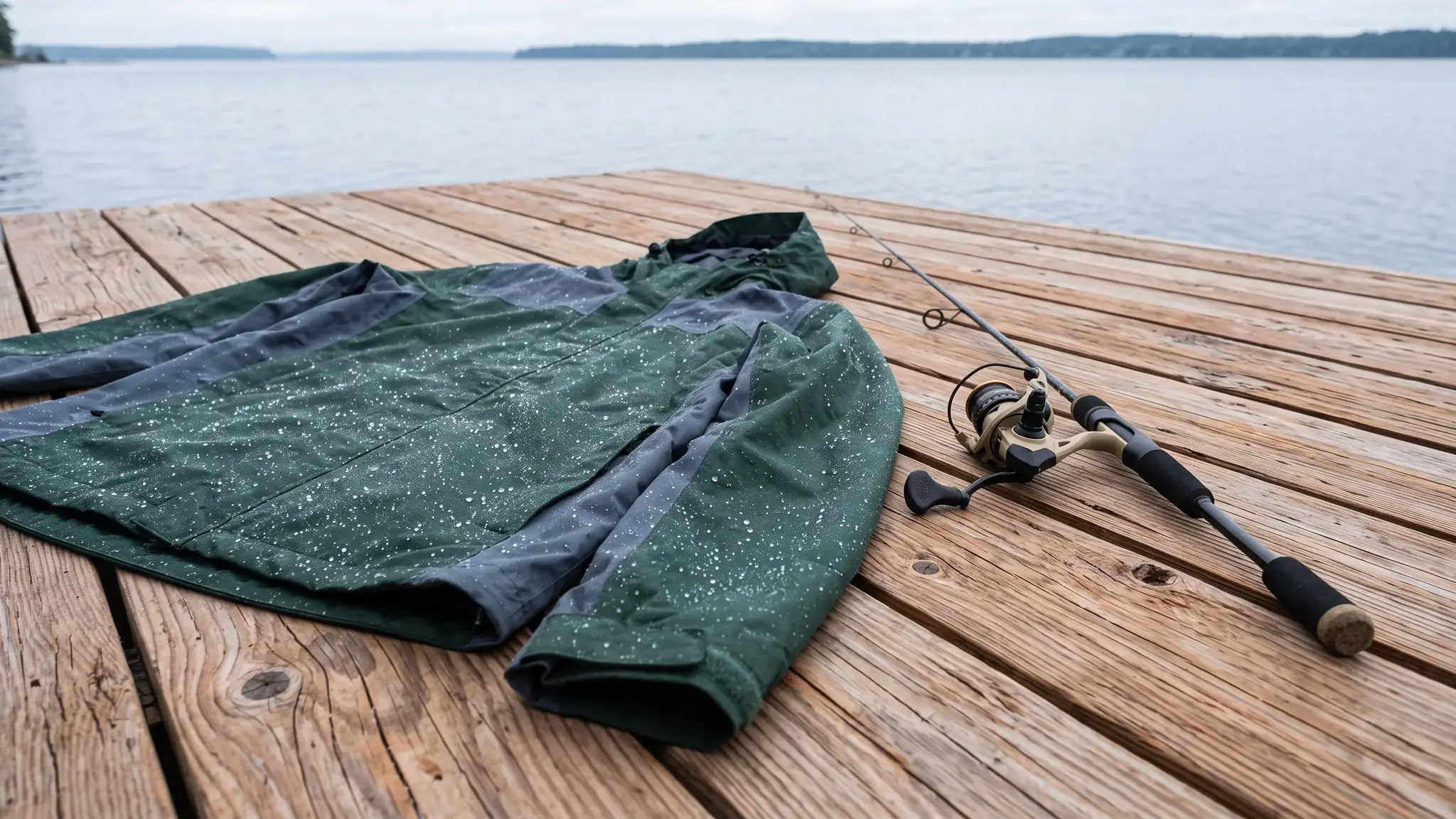
A Rain Jacket Needs Washing and Re-Treating, and Dirt Is the Enemy of Waterproofing
Many people are afraid to wash a rain jacket because they think it will ruin the waterproofing. In most cases the reverse is true. Dirt, body oils, and sunscreen can clog the fabric and make it wet out sooner, and a clean jacket sheds water better. Always check the care label on your specific jacket first, because manufacturers differ and the label is the final word.
Washing
The general approach is a gentle cycle in lukewarm water with a mild cleaner made for technical fabrics. The DWR page warns that "washing the garment with harsh detergents usually accelerates DWR loss; in addition, soaps often leave a residue which attracts water and dirt." Avoid fabric softener, which can leave a film that interferes with the finish. Rinse well so no residue remains.
Reviving the Water Repellency
The most common sign that a jacket needs attention is that water no longer beads on the outside, and the fabric looks dark and damp after a shower. This is the wetting out we described earlier, and it does not always mean the membrane has failed. The DWR page explains that "as the DWR wears off over time, re-treatment is recommended when necessary," and that "in some cases heat treatment can reactivate the factory applied repellent finish." It also says that "some DWR products do not require heat treatment to be activated, and sometimes DWR treatments can be revitalized simply by washing the fabric with a suitable cleaner."
In plain terms, the order of operations is: wash the jacket, check whether water beads again, and only then consider a spray-on or wash-in re-treatment if it does not. Whether to use heat, such as a low tumble dry or a warm iron, depends on the fabric and the label, so check before you try it. Overheating a jacket can damage the seam tape or the shell.
When a Jacket Is Past Saving
If the seam tape is peeling, the laminate is delaminating, or the fabric is cracking, no wash or spray will fix it. The jacket has reached the end of its life as a waterproof shell. At that point it can still serve as a windbreaker, and you should buy a replacement for the wet days. A well-made jacket that you look after will last many seasons, which is the real argument for spending more on a three-layer shell if you use it hard.
Storage and Everyday Care
- Hang the jacket to dry fully after use, rather than leaving it stuffed in a pack or a wet heap in the trunk.
- Do not store it compressed for months in its own pocket. Hang it in a closet if you can.
- Close zips and flaps before washing so the hardware does not snag the fabric.
- Check the seam tape, hem, and zip once a season, and sort out small problems before they get worse.
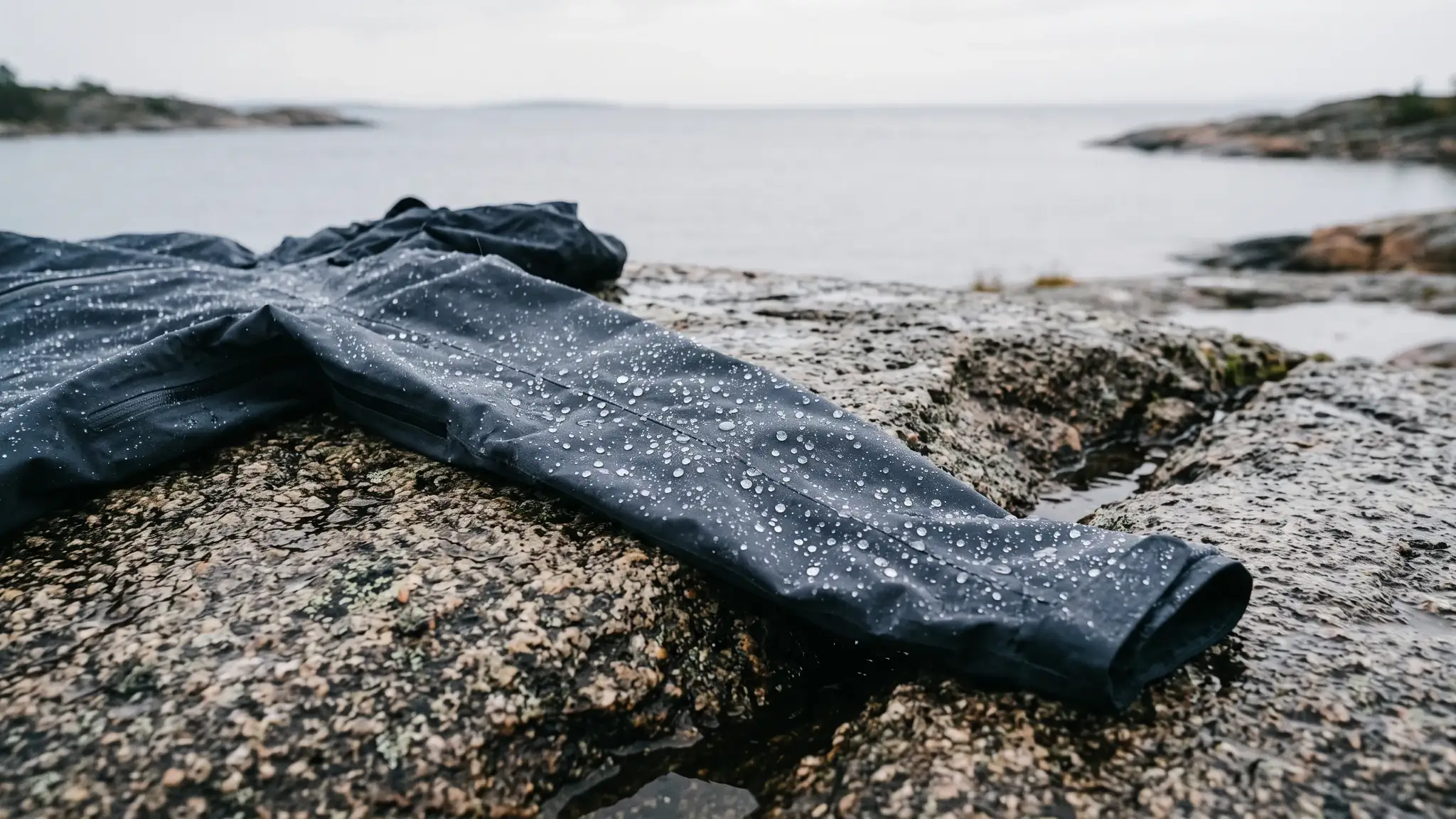
PFAS-Free Water Repellents Are Becoming a Selling Point, and It Pays to Read the Fine Print
Several jackets in our lineup list a "non-PFC DWR" or a "PFAS-free" water repellent. This is a response to concerns about fluorinated chemicals in outdoor clothing. The DWR entry says that "most factory-applied treatments are fluoropolymer based," and that "some researchers have suggested that the use of PFAS in water-repellent clothing is over-engineering, and comparable performance can be achieved using specific silicon- and hydrocarbon-based finishes."
On our racks, the North Face Antora and Alta Vista jackets list a non-PFC DWR finish, and the Outdoor Research Foray 3L and Aspire 3L list a PFAS-free Nikwax Direct.Dry durable water repellent. The Stratoburst jackets list an updated DWR treatment made without releasing harmful toxins during production. We are passing along what the brands say in their product descriptions, and we have no way to test these claims ourselves. If you care about the question, the garment descriptions are the place to start, and we can help you compare them.
One honest observation is that a PFAS-free finish may need refreshing a little more often than the older fluorinated finishes. That is a general point we hear from customers and not something we can quantify, so treat it as a reason to keep up with washing, not a reason to avoid these jackets.
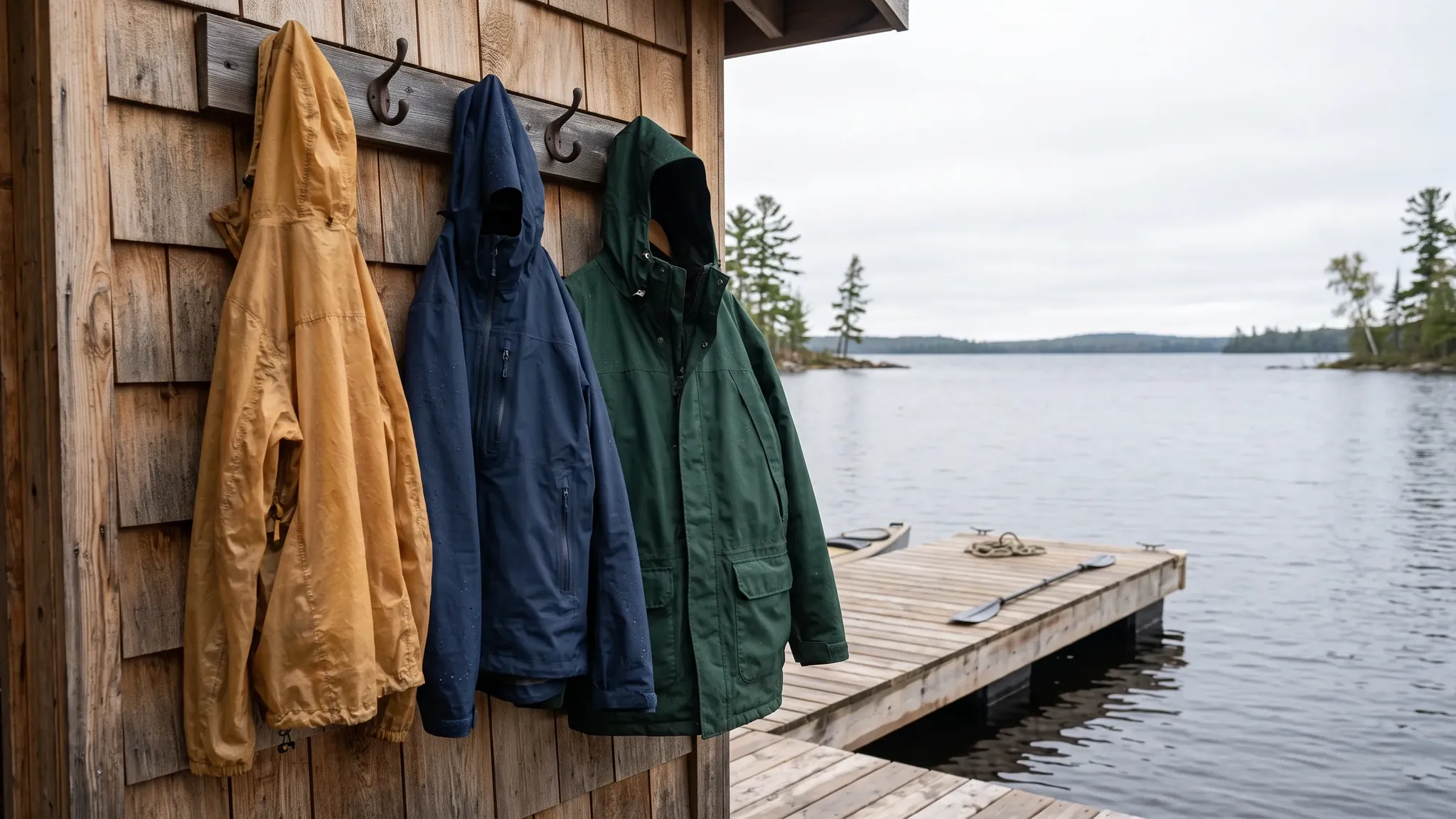
Match the Jacket to the Day: A Quick Guide by Use
If you have read this far and still want a short answer, the table below pairs common uses with the jackets that suit them. It is a starting point and not a rule.
| If you mostly... | Start with | Why |
|---|---|---|
| Want a spare shell for the truck or the pack | Columbia Watertight II or Arcadia II, both $119.95 | Fully seam sealed, packs into its pocket |
| Wear one jacket daily, in town and on the trail | The North Face Antora, $139.95 | Seam-sealed DryVent 2L, secure-zip pockets |
| Hike in warm, humid rain | Outdoor Research Stratoburst or The North Face Alta Vista | Pit zips and lightweight 2.5L fabric |
| Use your shell hard, year-round | Outdoor Research Foray 3L or Aspire 3L, both $349.95 | Three-layer recycled stretch fabric |
| Want the GORE-TEX name | Outdoor Research Women's Aspire II, $299.95 | Longer cut, GORE-TEX waterproof |
| Fish from a boat | Rapala Pro, $329.95, or Whitewater Great Lakes Pro, $629.95 | Boat-ready details and taped seams |
| Need warmth as well as dryness | The North Face Carto Mono Triclimate, $399.95, or Columbia Whirlibird V, $289.95 | Shell plus zip-in insulated liner |
| Stay active in light rain and wind | Columbia Ascender Softshell, $119.95 | Water-and-wind-resistant, stretchy |
Prices are the live prices on the product pages on the day this guide was written and may change. Our men's rainwear and women's rainwear pages always show the current range.
Questions
What does waterproof rating mean?
A waterproof rating, usually given in millimetres, is the height of a column of water the fabric can hold back before water starts to seep through. A 5,000 mm fabric holds back a five-metre column. Ratings test the fabric only, not the zips, hood, or seams, so look for fully taped seams as well as a number.
Hardshell or softshell?
Choose a hardshell when rain is sustained or heavy, because its sealed seams and waterproof fabric stop water. Choose a softshell when you are active in cool, breezy, or lightly damp weather and want stretch and breathability, since it resists water but does not block it. Many people carry a light packable hardshell over a softshell so they are covered either way.
How do I re-waterproof a jacket?
Start by washing it with a mild cleaner made for technical fabrics, because dirt and soap residue make a jacket wet out. If water still does not bead, apply a spray-on or wash-in water repellent, following the product label. Some finishes revive with gentle heat, but check your jacket's care label first, since too much heat can damage seam tape.
Can I wear a rain jacket in winter?
Yes, as the outer layer over warm mid and base layers. A rain jacket blocks wind and wet, but it adds little warmth by itself. In deep cold you will want insulation underneath, or a 3-in-1 jacket with a zip-in liner. Health Canada advises a wind-resistant outer layer over layers you can add or remove.
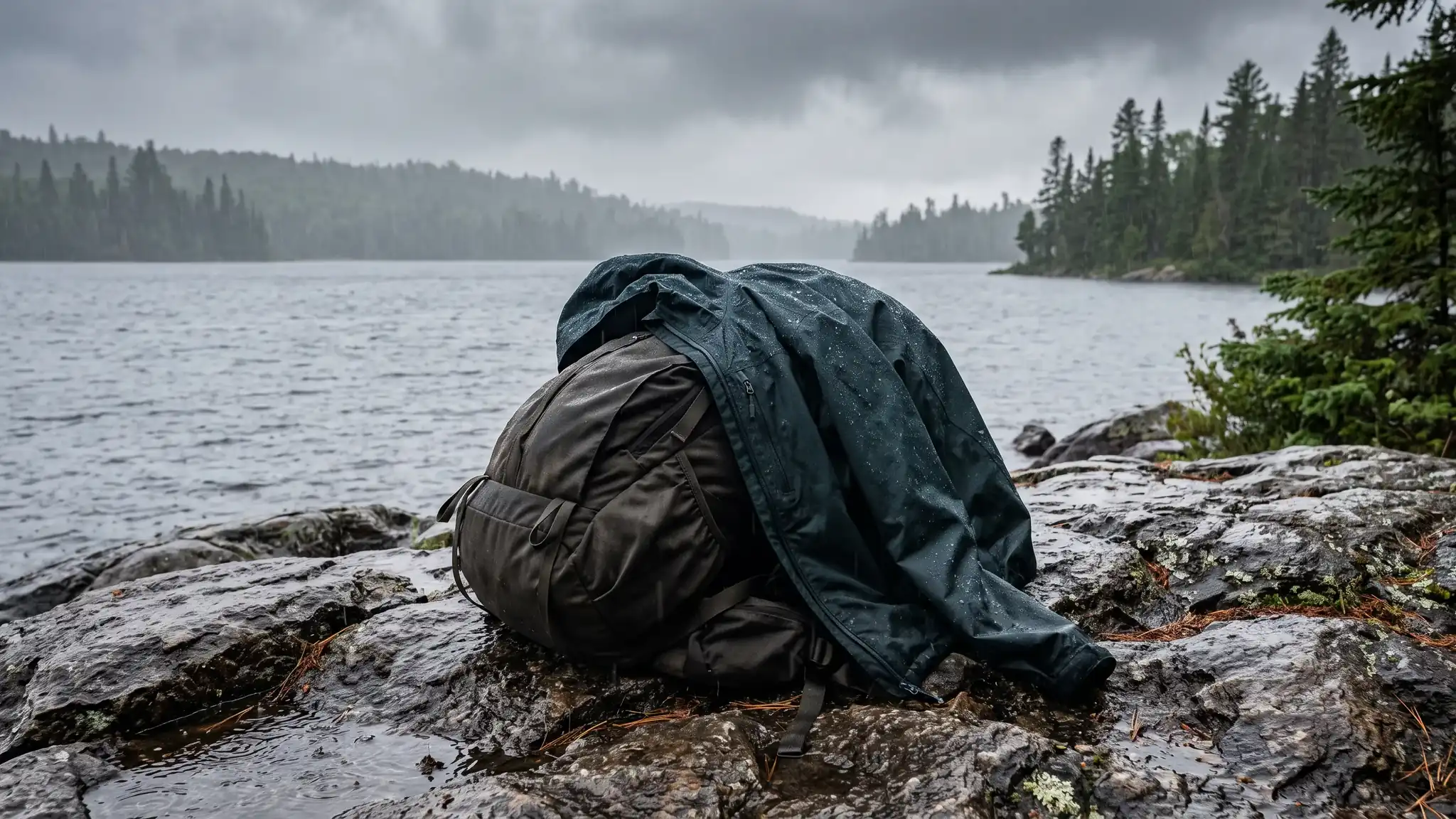
Come In and Try a Rain Jacket on in Sault Ste. Marie
The best way to choose a rain jacket is to hold it, put it on with your layers, and raise your arms. Visit us at 162 Old Garden River Rd, Sault Ste. Marie, or call (705) 253-2361 to check a size or a colour before you come. You can also browse the men's rainwear and women's rainwear departments from home. We will help you match the jacket to the way you actually use it.
Talk to us about it
- 162 Old Garden River Rd, Sault Ste. Marie, ON P6B 5A6
- (705) 253-2361
- Open today 10 a.m. to 6 p.m.
- Send us a message
References
About the author
Steve Meating
Owner
I take care of the entire fishing category and some of our other categories. I also look after our online store.
More from Steve Meating
 English (Canada)
 Français du Canada