

Merino Wool Base Layers: The Complete Guide
Picking a merino wool base layer starts with one question: Is it the right fibre for the kind of cold days you spend outside? We'll explain what merino is and whether it itches, then how to choose a weight, a fit, and a Stanfield's or Darn Tough piece, and finally how to layer and wash it so it lasts.
TL;DR
- What merino is, and why it works against the skin
- Whether merino itches
- The three jobs of a base layer
- Weight and construction: merino, blends, and two-layer knits
- Men's, women's, and socks: the pieces we carry
- Fit, layering, and washing
- Where to try one on in Sault Ste. Marie
Who this article is for
- First-time buyers building a winter layering kit
- Ice anglers, hunters, and snowshoers who sweat and then stand still
- Shoppers with sensitive skin who wonder if merino itches
- Anyone comparing 100% merino with a wool blend or a two-layer knit

Shannon Prosser
Store Manager
A note from the author
We wrote this guide around the base layers and socks we sell at 162 Old Garden River Road, so every product named in it is one you can buy from us. Prices are shown as they were on our store the day this went up. If you have questions about weight or fit, call us or come in and try a piece on.
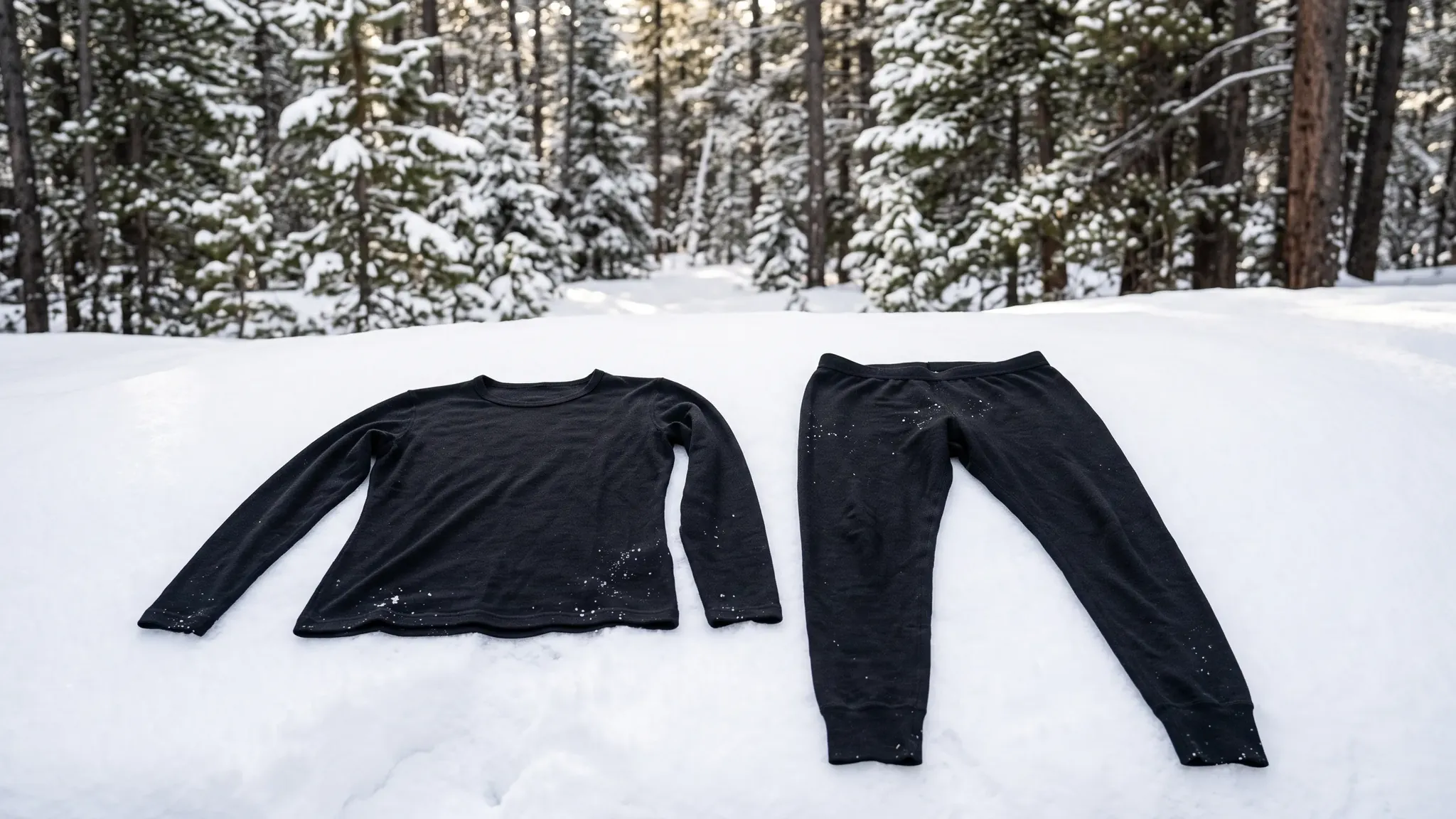
A Merino Wool Base Layer Works Because It Is the First Thing Your Body Meets in the Cold
Every cold-weather outfit is a stack, and the stack only works if the bottom of it behaves. A merino wool base layer is the bottom layer, the one that touches your skin, collects your sweat, and decides whether the layers above it can do their jobs. Get it right and a long day on the ice, the trail, or the water feels manageable. Get it wrong and you spend the afternoon damp, chilled, and tugging at a shirt that has gone clammy against your back.
That is the reason this guide exists. At the store on Old Garden River Road, the question we hear most from people building a winter kit is which base layer to buy first, and the honest answer for most of them is merino wool. It is not the only option, and it is not the cheapest, but it is the one that suits the widest range of northern Ontario days. This guide explains what merino is, why it behaves the way it does, how to pick a weight and a fabric, how the base layers we carry differ, how to size and layer them, and how to wash them so they last.
We will keep the claims plain and tie them to sources wherever a number or a rule comes from outside our own shop. We will also tell you where we think merino is the wrong choice, because there are a few.
What the Government of Canada Says About Layers
Health Canada's extreme cold page is published by the federal department responsible for public health, and it is the plainest summary of cold-weather dressing we know of. It tells people to "dress in layers with a wind resistant outer layer" and explains the reason: "You can remove layers if you get too warm (before you start sweating) or add a layer if you get cold."
The same page says that "synthetic and wool fabrics provide better insulation," and that "if you get wet, change into dry clothing as soon as possible. You lose heat faster when you're wet." Those three ideas, layers you can adjust, fabrics that insulate, and staying dry, are the whole case for a good base layer. Everything else in this guide is detail on how to meet them.
Notice what the advice does not say. It does not say to buy the thickest thing you can find, and it does not say to buy one huge insulated coat. It says to build a system you can adjust while you move. A base layer is the part of that system that you never take off, which makes it the part worth getting right.
How This Guide Is Organised
The first half covers the fibre itself: what merino is, how fine its fibres are, and whether it itches. The second half is practical: weights and constructions, the base layers we stock for men and women, socks and one-piece options, sizing, layering by activity, and washing. A questions section and a list of sources close it out.
Prices in this guide are the ones on our site as we write it. Stock and prices change, so each product link goes to the live page for the current number and the sizes in stock.

Merino Is a Breed of Sheep First and a Fabric Second
The word gets used loosely, so it helps to pin it down. According to Wikipedia's entry on the Merino, an open encyclopedia whose articles cite their published sources, the Merino is a breed or group of breeds of domestic sheep, characterised by very fine and soft wool. The entry traces the breed to Spain, where it was developed over several centuries, and notes that numerous breeds and strains have since developed around the world, including the Australian Merino in Oceania and the American Merino and Delaine Merino in the Americas.
So "merino wool" is not a brand and not a blend. It is wool from a particular type of sheep, selected over a very long time for fine fibre. That fineness is the quality that matters when the wool sits against your skin.
Fineness Is Measured in Microns
Wool fibres are measured by their diameter in microns, a micron being one millionth of a metre. The difference between a fine fibre and a coarse one looks small on paper but is large in how it feels. The Wikipedia entry gives the standard breakdown: Merino wool is generally less than 24 microns in diameter, and the basic Merino types are sorted into grades by fineness.
| Merino grade | Fibre diameter |
|---|---|
| Strong (broad) | 23 to 24.5 microns |
| Medium | 21 to 22.9 microns |
| Fine | 18.6 to 20.9 microns |
| Superfine | 15 to 18.5 microns |
| Ultra-fine | 11.5 to 15 microns |
Source: Wikipedia, "Merino." The lower the number, the finer the fibre.
Two points follow from that table. First, not all merino is equally soft. A garment made from strong or medium merino will feel different on the skin from one made from superfine merino, even though both can honestly carry the word merino on the label. Second, a label that says "100% merino wool" tells you the fibre type but not the grade. If softness matters a great deal to you, as it does for anyone with sensitive skin, try the garment on or ask us about it before you buy.
Why a Fine Fibre Matters Next to Skin
A fine fibre bends. A coarse fibre pushes back. When a stiff fibre presses against your skin, your nerves register it as a prickle, and when thousands of them do it at once the sensation becomes an itch. A fine merino fibre flexes out of the way instead. We will get to the research on that in the next section, but the practical upshot is simple: the finer the wool, the more likely it is to feel good as a base layer.
Where the Wool for a Base Layer Comes From
The Stanfield's merino pieces we carry use yarns from New Zealand, according to the product pages for the men's top and the women's top and leggings, and the garments are made in Canada. That is useful to know because it separates the fibre's origin from where the garment was knit and sewn. Many merino garments on the market are made far from where the wool was grown. A Canadian knit from New Zealand yarn is a combination you can read straight from the label.

Merino Does Not Itch for Most People, and the Reason Is Fibre Diameter
If you grew up with a scratchy wool sweater, you probably distrust wool next to your skin. That distrust is earned, and it is also out of date. The old sweater itched because of the fibres in it, not because wool is inherently itchy.
The Woolmark Company is an organisation that promotes wool and publishes research on it. On its page about whether wool is comfortable for sensitive skin, it states that "sensations of itch and prickle occur when coarse fibres greater than 30-32 microns (µm) press or brush against the skin." That is a threshold. Fibres above it cause trouble, and merino, which is generally under 24 microns as the table above shows, sits well below it.
The same Woolmark page goes further for people with sensitive skin: "Superfine and Ultrafine Merino wool of less than 18.5 microns may be more comfortable for sensitive skin," and "Superfine and Ultrafine Merino wool bend easily when they contact the skin, reducing irritation and prickle sensations." Notice the hedge in the first sentence. It says may be more comfortable, not will be. That is the honest way to put it, and it is how we put it too.
Itch Is Not the Same as an Allergy
The Woolmark page treats the itch as mechanical irritation from coarse fibres pressing on skin, not as an allergic reaction. That distinction matters for how you shop. If you react to a coarse wool sweater, it does not follow that you will react to a fine merino base layer, because the thing that irritated you was the fibre diameter and the construction, not the fact that it was wool.
It also means that a few people will still find even good merino uncomfortable. Skin conditions, a personal sensitivity to lanolin or dyes, and plain preference all play a part. We are not doctors, and we will not tell you merino is right for every skin. What we can tell you is how to test it cheaply, which is the next section.
How to Test a Merino Base Layer Before You Commit
- Try the garment on in the store, over bare skin, and wear it for a few minutes. A fabric that bothers you in the change room will bother you more after an hour of sweat and movement.
- Pay attention to the neckline, the cuffs, and the waistband first. Those are the places where seams and edges rest on skin, and they are where discomfort usually starts.
- Move your arms and bend at the waist. A base layer should stay put when you reach and crouch, not ride up or twist.
- Ask about the return policy before you leave. Our product pages state that returns are accepted within seven days of receiving an order, in its original state and with your receipt.
That last point is worth a word. A base layer you have washed or worn hard is not in its original state, so decide quickly and test it indoors. Wearing it around the house for an hour is a fair trial. Wearing it on a day-long hike and then deciding is not.
Our Take on Sensitive Skin
If you know you are sensitive, start with the finest merino you can find and keep the first trial short. Consider wearing a thin cotton or synthetic layer under the merino on day one if you want a buffer, and then drop it once you are sure. Do not buy three sets on the strength of a hopeful guess.

A Base Layer Has Three Jobs, and Merino Is Good at the First Two
Before comparing fabrics, it helps to be clear about what a base layer is for. We think of it as three jobs, in this order.
- Stay comfortable against the skin. A base layer that itches, bunches, or clings in the wrong places gets taken off, and then it does nothing.
- Handle moisture. You sweat when you work, even in the cold, and that moisture has to go somewhere other than into a layer that stays wet against you.
- Add a little warmth. This is the third job, not the first. The thick insulation comes from the layers above. The base layer holds warm air close and keeps you from being chilled by your own damp.
Merino scores well on the first job, as the fibre-diameter section explained. On the second job it gets a mixed but mostly favourable grade, and the honest version of that story is worth telling.
The Moisture Problem, Stated Plainly
Health Canada's line is the one to remember: "You lose heat faster when you're wet." That is the problem a base layer exists to manage. When you climb a hill in snowshoes, haul an ice shelter across a lake, or carry a canoe across a portage in late fall, you sweat. Then you stop, and the sweat in your clothing cools you. In a cold wind that can turn from uncomfortable to dangerous quickly.
Health Canada's page describes the extreme end of that risk. It explains that hypothermia is a condition in which core body temperature drops dangerously, and it describes the first stage as shivering and numbness. Most days we outfit people for are nowhere near that point, but the same physics applies at every level: damp clothing against skin takes heat away faster than dry clothing does.
Why Cotton Is the Fabric to Avoid
Health Canada points to wool and synthetic fabrics as the better insulators, and it says some synthetics are designed to keep perspiration away from the body. Cotton is conspicuously missing from the list. Our reasoning, which matches common winter-safety advice, is that cotton holds moisture and loses its insulating value once it is wet. We would not wear a cotton T-shirt as a base layer on a cold day outdoors, and we would steer a friend away from it too.
Our own range makes the point in a small way. The Stanfield's Men's Waffle Knit Base Layer Shirt ($39.95) is a 50% cotton, 50% polyester blend, and its product page describes it as made in Canada. It is a sensible low-cost shirt for a cool day around town or a mild day of light work. It is not the shirt we would pick for a long, sweaty day in deep cold, and we would say so to anyone who asked.
What Merino Adds That a Plain Synthetic Does Not
Synthetic base layers are good at moving moisture and drying quickly, and they are often cheaper. Merino's advantage is less about raw speed and more about how it feels and behaves over a long day. Our product listings for the Darn Tough merino socks describe the fibre as breathable, quick drying, and naturally antimicrobial, and the maker describes merino as helping to regulate temperature. We cannot test those claims for you in a lab, and the manufacturer is the source for them, so treat them as the maker's description rather than our own test result.
Odour is the other thing people ask about. We cannot give you a number for how long a merino shirt stays fresh, and we will not invent one. What we can say is that the maker of one of the sock lines we carry describes the fibre as naturally antimicrobial, and that several of the Stanfield's pieces carry their own anti-microbial treatment, as their product pages note.
Where Merino Is Not the Best Answer
- High-output, high-sweat activity in mild weather. A lightweight synthetic can shed moisture faster, and it costs less.
- Heavy abrasion. A fine fibre in a light knit can wear faster than a coarse, dense one under a heavy pack strap or a rough harness. Knit and blend matter here, which is why some of our pieces blend merino with polyester.
- Tight budgets. Full merino costs more than blends and synthetics. If the price makes you hesitate, a two-layer blend, covered below, is a reasonable way in.
Merino, Blends, Cotton, and Synthetics at a Glance
Here is how the main options compare on the points that matter next to the skin. The ratings are our own summary of the sources and product pages above, not laboratory results.
| Fabric | Where it shines | Where it falls short |
|---|---|---|
| 100% merino jersey | Soft against the skin, a natural-fibre feel, works as a casual top too | Costs the most, and needs gentle washing |
| Two-layer merino blend | Lower price, a warm-air gap between layers, anti-microbial treatment on several pieces | Less merino against the skin, and not our first pick for a hard sweat |
| Cotton blend | Inexpensive and comfortable on mild days | Holds moisture, so we avoid it for cold, active days |
| Synthetic | Health Canada notes that some synthetics are designed to keep perspiration away from the body | Not covered by this guide's sources for odour or feel |
Use the table as a starting point for a conversation, not a verdict. Two people can wear the same base layer on the same trail and have different experiences, because bodies, paces, and the rest of the outfit differ. That is why we ask about your plans before we suggest a piece.
It also helps to think about replacement cost rather than just the price tag. A $119.95 merino top that you wear for many winters and many activities can cost less per wear than a cheaper layer you replace or leave at home because it does not suit the day. We cannot promise how long any garment lasts, since that depends on use and care, but the Stanfield's pieces are knit in Canada and the Darn Tough socks carry a lifetime guarantee from the maker, which tells you something about how those brands expect them to hold up.

Weight and Construction Decide How a Merino Base Layer Behaves
People searching for a merino wool base layer often ask first about weight, as in lightweight, midweight, or heavyweight. Weight is real, and it matters, but it is only one of three things that decide how a base layer feels. The other two are the construction of the knit and the blend of fibres.
Weight: How Warm, and How Much Room for Sweat
A heavier, denser knit holds more warm air and feels warmer standing still. A lighter knit breathes better and dries sooner when you are working hard. That trade is the whole story of base layer weights, and it is the reason there is no single best weight.
Our rule of thumb, which is our take rather than a published standard, runs like this:
- If you will mostly be moving: Snowshoeing, cross-country skiing, hiking, or hauling gear, favour a lighter knit so you can shed heat and moisture.
- If you will mostly be still: Ice fishing, hunting from a stand or blind, and watching a game from the sidelines call for a warmer knit, because you generate little heat of your own.
- If you will do both: A midweight is the compromise, and a removable mid layer on top lets you adjust.
Brands do not use one agreed scale for weight, so a "midweight" from one maker is not the same garment as a "midweight" from another. Product descriptions are more useful than the label, and this is one more reason to try pieces on.
Construction: Single-Layer Jersey Versus Two-Layer Knit
The Stanfield's range we carry shows two different approaches side by side.
The single-layer merino jersey. The Stanfield's merino tops and bottoms are described on their product pages as 100% merino wool jersey, a single layer of fine-knit merino worn directly against the skin. The men's top is a long-sleeve crew neck with set-in sleeves and a two-needle hem. The women's leggings add a self-covered waistband and flatlock stitching throughout for comfort next to the skin. A flatlock seam lies flat instead of forming a ridge, which matters when the garment is under a pack strap or a snug mid layer.
The two-layer knit. The Stanfield's two-layer pieces are knit as one fabric with two distinct faces. On the men's top, the product page says the inner layer is a 50% cotton, 50% polyester blend that "absorbs moisture and feels soft against the skin," while the outer layer is 50% merino wool and 50% polyester "for warmth and strength." The page adds that the space between the layers traps warm air from the body. The result is a garment built for warmth and strength at a lower price than the single-layer merino, with less merino in it.
A fair question follows: if the inner layer is cotton and polyester, does the cotton cancel out the advice to avoid cotton? Our answer is that it is a different tool. This is a two-layer garment designed so that the cotton and polyester face sits against the skin and the wool blend faces outward, and it is meant for cold, relatively dry, moderate-effort days. We would pick it for standing, waiting, and working at a steady pace. We would pick the single-layer merino for a day when we expect to sweat hard and get damp.
Blend: What the Percentages Mean
The onesie and the women's two-layer top describe their overall fabric as 50% polyester, 25% cotton, and 25% merino wool. That is a different product from a 100% merino jersey, and it is priced accordingly. Blends add durability and lower cost, and they usually give up some of the softness and the natural-fibre behaviour of pure merino. Neither is wrong. They suit different budgets and different days.
Heavier wool garments are a third category again. The Stanfield's Heritage Fleece Lined Heavy Weight Wool Henley is listed as 80% wool and 20% nylon on the outside with a 100% moisture-management fleece inside. That is not strictly a base layer in the thin, next-to-skin sense, but it is a one-piece warm layer you can wear directly over a light base layer or even on its own. We cover it in the section on warm extras.
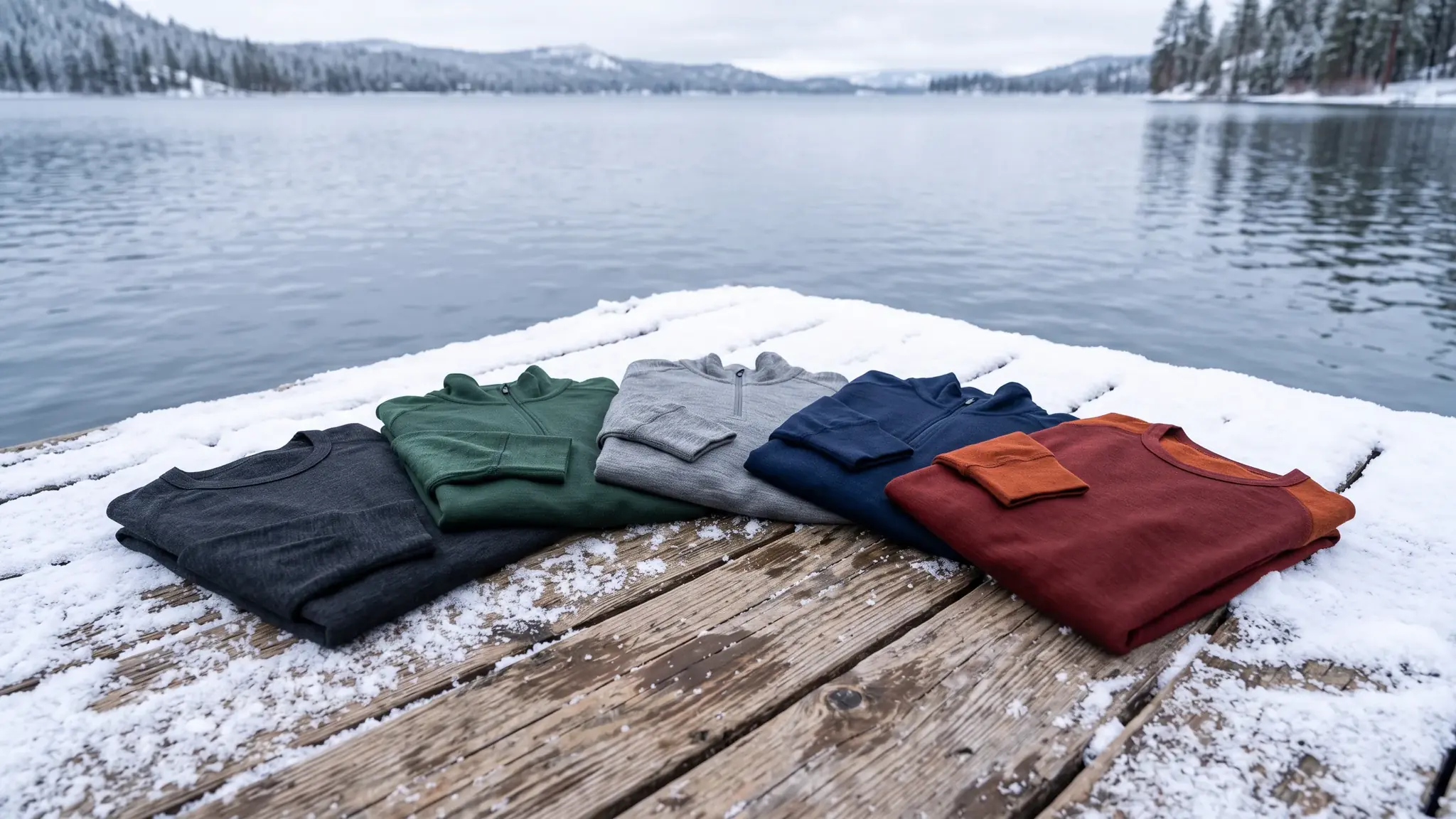
The Stanfield's Merino Base Layers We Carry, Compared
We stock a wide range of base layers, and the Stanfield's line is the one where merino content, construction, and price line up most clearly. All of the pieces below are listed on our site as made in Canada. Prices are current as we write this, and each name links to the live page.
| Piece | Fabric | Price |
|---|---|---|
| Men's Merino Wool Base Layer Top | 100% merino jersey | From $119.95 |
| Men's Merino Base Layer Bottoms | 100% merino jersey | From $119.95 |
| Women's Merino Wool Base Layer Top | 100% merino jersey | From $119.95 |
| Women's Merino Wool Base Layer Leggings | 100% merino jersey | From $119.95 |
| Men's Two Layer Wool Blend Top | Two-layer knit, merino and polyester outer | From $69.95 |
| Men's Two Layer Wool Blend Bottoms | Two-layer knit, merino and polyester outer | From $69.95 |
| Women's Two Layer Wool Blend Top | 50% polyester, 25% cotton, 25% merino | From $69.95 |
| Women's Two Layer Wool Blend Leggings | Cotton, polyester, and merino knit | From $69.95 |
| Men's Two Layer Wool Onesie | 50% polyester, 25% cotton, 25% merino | From $129.95 |
The pattern is easy to read. The single-layer 100% merino pieces cost $119.95 each, and the two-layer blends cost $69.95 each. A two-layer top and bottoms together come to $139.90, while a merino top and bottoms together come to $239.90, which is a useful way to think about the choice if you want a spare set to rotate.
Colour and size availability change, so check the live page. At the time of writing, the product pages list the men's merino top in black in sizes small to 2XL, the women's merino top in black in small to extra large, and the women's leggings in black in small to extra large. Stock varies, and we cannot promise a given size will be on the shelf.
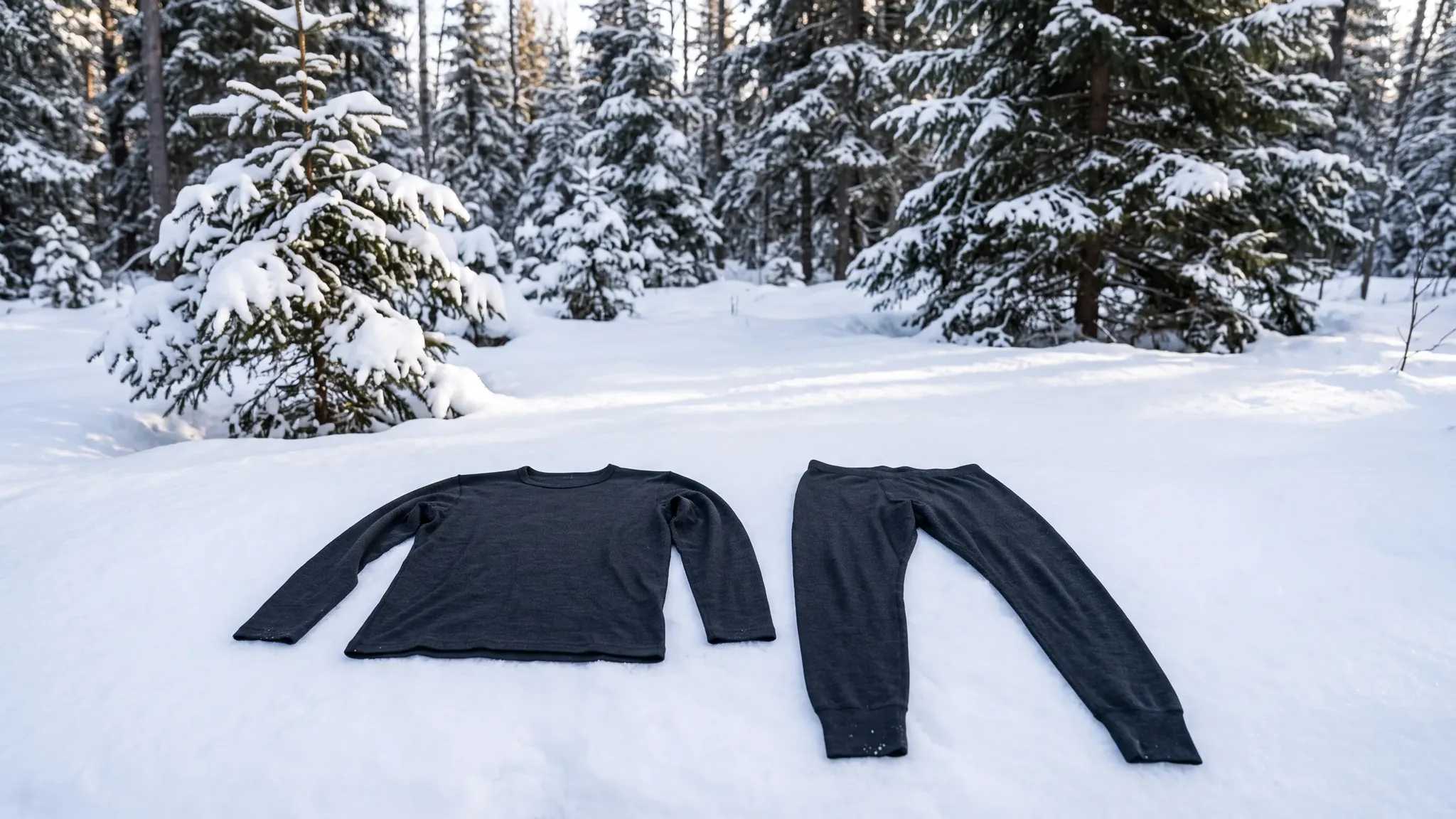
Men's Merino Base Layers: Pick by How Hard You Work and How Long You Stand Still
Men's base layers are the biggest part of our men's base layers and socks aisle, and the choices come down to three questions. How much will you sweat? How much will you stand still? How many days will you wear the same set?
The One to Start With: Merino Top and Bottoms
The Stanfield's Men's Merino Wool Base Layer Top ($119.95) is our straight answer for a first merino piece. Its product page describes a long-sleeve crew neck in 100% merino wool jersey, made with yarns from New Zealand, with full-length set-in sleeves and a two-needle hem on the sleeves and bottom, made in Canada. The page also says it is warm as a base layer or worn as a casual shirt, which is a real advantage: you can put it on for the walk to the shop and not feel as though you are dressed for an expedition.
The men's matching Stanfield's Men's Merino Base Layer Bottoms ($119.95) are 100% merino jersey with a full-length leg. Buy the pair if you expect cold legs, and that includes anyone who sits still on a lake. Legs are easy to overlook, but long periods of standing in snow take a lot of warmth from them.
Our take: If you can only afford one merino piece this winter, buy the top. A chilled torso makes a cold day miserable, while cold legs are easier to cover with a pair of heavier pants. Add the bottoms next season, or when your activity calls for them.
The Budget Route: Two-Layer Top and Bottoms
The Stanfield's Men's Two Layer Wool Blend Top ($69.95) is the entry price for a wool-blend base layer from our shelves. It is a crew neck with set-in sleeves, rib cuffs, and taped neck and shoulder seams, with an anti-microbial treatment, made in Canada. The matching bottoms ($69.95) have a full roomy seat and a plush-back signature elastic waistband, per the product page.
This pair makes the most sense for people who stand around outdoors in the cold and do not sweat heavily, such as someone in a hunting blind, an ice shelter, or a stadium seat. We would also pick it for kids' hockey parents who spend two hours at the rink. The warm-air gap between the two layers is the selling point, and the lower price means you can own two sets and rotate them.
The One-Piece Option: The Onesie
The Stanfield's Men's Two Layer Wool Onesie ($129.95) is a union suit, a single garment that covers torso, arms, and legs. Its product page lists the overall fabric as 50% polyester, 25% cotton, and 25% merino wool, with an anti-microbial treatment, set-in sleeves with rib cuffs, a full button front, and a back trap door with a button closure. It is available in charcoal and red, sizes medium to 2XL.
A union suit removes the gap at the waist where a shirt rides up and cold air gets in. That makes it a comfortable choice for anyone who sits or stands outside for hours, and for anyone who simply dislikes the feeling of a separate top and bottom shifting around. The trap door is exactly what it sounds like, so read the product page before you buy to understand how it works. The honest drawback is that a single garment is harder to adjust than two separate pieces. If you overheat, you cannot take the top off and leave the bottoms on.
The Mid-Layer Cousin: The Heavy Wool Henley
The Stanfield's Men's Heritage Fleece Lined Heavy Weight Wool Henley ($189.95) is the most expensive wool top in this guide and not a base layer in the thin sense. Its product page describes a heavy-weight rib knit, 80% wool and 20% nylon on the outside, lined inside with 100% moisture-management fleece, so you do not need an extra garment under it. It has a henley neck with military insert shoulders and a three-button placket, and it comes in alpine green, black, grey, and purple leaf.
The page also carries a shrinkage note worth repeating: "This garment shrinks due to its fibres. Sizing allows for it, so buy your normal size and follow the washing instructions." We mention it here because it is a good example of why you should read the care label on every wool piece before the first wash. Not every wool garment is treated the same way.
Think of the henley as a warm top for cold, still days and for wearing as a standalone layer. For hard-working days, layer a thinner merino top beneath a fleece or an insulated jacket instead.
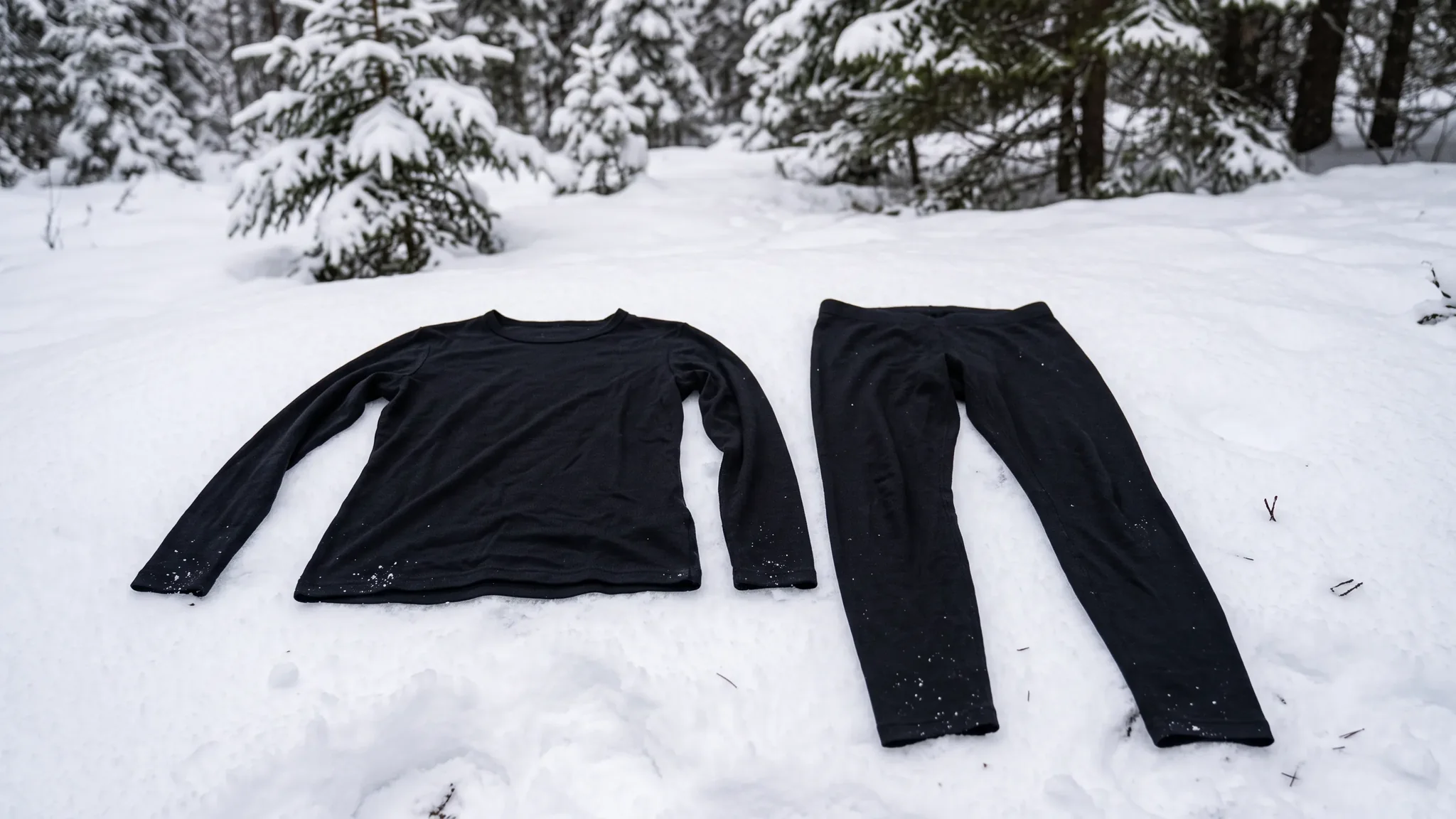
Women's Merino Base Layers: The Same Fabrics, in Women's Sizing
The women's base layers and socks aisle follows the same logic as the men's. The Stanfield's range gives you a pure merino option and a two-layer blend option, in a similar price split.
Pure Merino Top and Leggings
The Stanfield's Women's Merino Wool Base Layer Top ($119.95) is a crew neck knit from 100% merino wool jersey, made with New Zealand yarn and finished in Canada. Its page says to wear it as a warm base layer or as a casual top, in black, sizes small to extra large.
The Stanfield's Women's Merino Wool Base Layer Leggings ($119.95) are also 100% merino jersey, with a self-covered waistband, a two-needle hemmed finish, and flatlock stitching throughout for comfort next to the skin. The page says they work as a warm base layer or as casual leggings with your favourite top. That dual use is practical: a pair of leggings you can wear under snow pants on Saturday and under a long sweater on Monday earns its price more easily than a piece that only suits one situation.
The Two-Layer Blend for Colder, Calmer Days
The Stanfield's Women's Two Layer Wool Blend Base Layer Top ($69.95) has a soft inner layer of blended cotton and polyester against the skin and an outer layer of a cotton and merino blend that helps maintain warmth and durability. Air trapped between the two layers creates an additional insulating barrier, and the page calls it a good choice for moderate to very cold weather. It is black, in sizes small to extra large.
The Stanfield's Women's Two Layer Wool Blend Leggings ($69.95) are described as a cotton, polyester, and merino knit made in Canada. As with the men's pieces, we would reach for these for standing and slow-moving days and for the merino leggings when the pace picks up.
Our Take for Women
Buy the merino top first if you run warm or move a lot, and buy the leggings first if your legs are what gets cold on a lake or in a duck blind. If the budget is tight, a two-layer top at $69.95 gets you a decent next-to-skin layer, and you can add merino leggings later. Our women's range is smaller than the men's, so check sizes on the live pages before you plan around a particular piece.

Merino Socks Are the Most Underrated Piece of the System
If we could only convince customers of one thing, it would be that socks matter as much as any other base layer. Feet sweat, they sit in boots that hold in moisture, and cold feet end a day outdoors faster than almost anything else. Health Canada's extreme cold page tells people to wear warm socks, gloves, a hat, and a scarf in cold weather, and it names wool as an insulating fabric.
Darn Tough is the merino sock brand we carry in the widest range, and its socks are described as made in Vermont with a lifetime guarantee. A few examples show the range, with each price taken from the product page.
| Sock | What the page says | Price |
|---|---|---|
| Darn Tough Men's Hike / Trek Boot Cushion Sock (1403M) | Medium weight, crew height, cushioned foot, 67% merino wool, 29% nylon, 4% Lycra spandex | From $39.95 |
| Darn Tough Women's Hike/Trek Micro Crew Cushion Sock (1903W) | Micro crew length, true seamless, 67% merino wool, 29% nylon, 4% Lycra spandex | From $36.95 |
| Darn Tough Men's Heady Yeti Over-the-Calf Midweight Ski / Snowboard Sock (M8043) | Over-the-calf, about 17 inches from heel to cuff, terry loop cushion underfoot | From $38.95 |
| Darn Tough Men's Over-the-Calf Midweight Hunting Socks (2116M) | Over-the-calf with segmented shin padding | From $44.95 |
| Socksmith Compass Merino Wool Men's Sock, size 10 to 13 | Merino crew sock with arch support, a padded insole, and mesh ventilation | From $29.95 |
What the Fibre Blend Tells You
Notice that the Darn Tough socks are not 100% merino. The product pages for the 1403M and the 1903W list 67% merino wool, 29% nylon, and 4% Lycra spandex. That is normal for a good merino sock. Nylon adds strength where socks wear out fastest, and spandex helps the sock keep its shape and hug the foot. A pure merino sock would be softer and also much more likely to stretch out and thin at the heel.
The same product pages describe a fine-gauge knit that keeps the sock breathable, quick drying, and naturally antimicrobial. Those are the maker's words, and they are consistent with the general reasons people choose merino socks for boots.
Choosing a Sock for the Activity
- Winter hiking and snowshoeing: A medium-weight cushioned crew, like the 1403M or the women's 1903W, suits most boots and most days.
- Skiing and boarding: The Heady Yeti is described as a midweight over-the-calf ski and ride sock. A sock that reaches over the calf stays put under a tall, stiff boot.
- Hunting: The 2116M's segmented shin padding is aimed at tall boots and long hours of walking and sitting.
- Everyday cold: The Socksmith Compass has arch support and mesh ventilation, per its page, and it costs less than the technical socks.
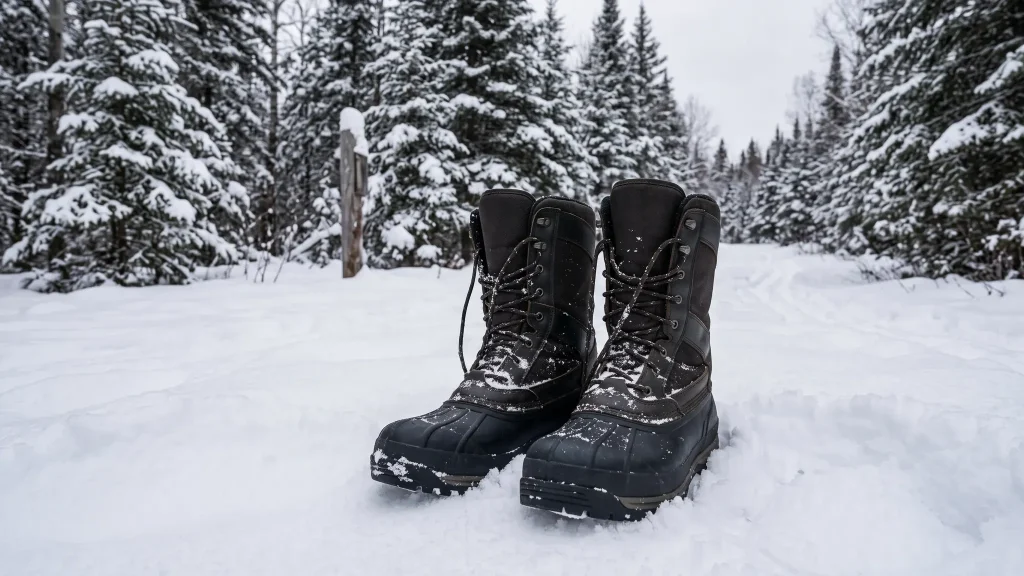
Boots and socks work together, so choose them in the same visit. Our men's winter boots and women's winter boots are listed on the site, and if you bring your own socks to try boots on, you get a much more honest fit than with the thin store socks.

Fit Decides Whether a Merino Base Layer Works at All
A base layer can be made of the best fibre in the world and still fail if it does not fit. The fabric needs to sit close to the skin so it can pick up moisture, and it needs enough room that you can move without it pulling or twisting. That balance is what people mean by a snug fit, and it is easy to get wrong in either direction.
Too Loose and Too Tight Both Cost You
A loose base layer leaves a gap between fabric and skin. Moisture cannot move into the fabric across a gap, and the warm air you are trying to hold simply circulates. A base layer that is too tight is just as bad: it restricts movement, presses on seams, and can feel cold at the points where it is stretched thin.
The right fit is close to the body without squeezing. You should be able to lift your arms overhead, bend over to tie a boot, and sit down without the garment riding up or cutting in. If you can pinch a handful of loose fabric at the stomach or thighs, it is probably too big.
Check the Points That Move
- Sleeve length: Cuffs should reach the wrist bone, so a glove or mitt can overlap them without leaving bare skin.
- Torso length: The hem should stay tucked or in place when you reach up. A short shirt leaves your lower back exposed when you crouch.
- Neckline: A crew neck should sit snug without pressing on the throat, since a gap at the neck lets heat out.
- Leg length: Bottoms should end at the ankle and stay there, not bunch above your sock.
- Waistband: It should hold without digging in. The women's merino leggings use a self-covered waistband for this reason, per the product page.
What to Do Between Sizes
If you sit between two sizes, the right move depends on the fabric. A 100% merino jersey is a stretchy knit that fits close, and many people size to their usual size and enjoy the contact. A two-layer knit has two faces and a bit less give, so the smaller of two sizes can feel restrictive in the arms. Try both when you can. The sizes stocked vary, so bring your measurements if you plan to order online, and check the Size and fit tab on each product page.
The one wool garment in this guide where sizing needs a different rule is the Heritage henley. Its page says the garment shrinks due to its fibres and that sizing allows for it, so you buy your normal size. Do not size up to compensate. The maker has already done that math for you.
Plan for Growing Kids Separately
Kids grow, and a base layer that fits in October may be short in the sleeves by February. This guide covers adult sizing, so ask us in the store what is currently on the shelf for younger kids. Whatever you choose, resist buying a size up in the hope they will grow into it, because a baggy base layer does not do its job.

Layering by Activity: How a Merino Base Layer Fits Into a Full Outfit
Health Canada's advice is to dress in layers with a wind-resistant outer layer, and to remove or add layers as you warm up or cool down. Here is how that looks for the activities our customers actually do around Sault Ste. Marie. Each example is a starting point, not a prescription.
Ice Fishing: Plan for Standing Still
Ice fishing is a low-output activity. You drill a few holes, haul some gear, and then sit or stand for hours in the wind. That makes it the clearest case for a warmer base layer. Many anglers choose a two-layer top and bottoms or a full merino top, add a fleece or insulated mid layer, and finish with a wind-resistant shell or insulated bibs.
The one moment of high output is the walk out and the drilling. Our guide on how to choose an ice auger explains the gear that makes holes, and if you will be cranking an auger by hand, you will sweat. Open your jacket during the drilling and zip it up when you stop. That is exactly what Health Canada means when it says to remove layers before you start sweating.
Snowshoeing and Winter Hiking: Plan for Sweat
These are the opposite case. You generate heat constantly, and your main problem is overheating, then chilling when you stop for lunch. A lighter merino top is the better base here, and the layer above it should come off easily. Carry a dry spare layer in your pack for rest stops, because Health Canada's advice is to change into dry clothing as soon as you can when you get wet. Our snowshoe selection pairs naturally with a merino top and a pair of cushioned merino socks.
Hunting: Quiet, Long, and Cold
Hunters walk in and then sit, often before dawn. That combination is hard on clothing, because you sweat on the walk and then cool off in the blind. A merino base layer handles that swing better than cotton does, and many hunters like that wool is quiet compared with some stiff synthetic fabrics. We have not measured that, so treat it as common feedback rather than a test result. Over-the-calf merino socks, such as the Darn Tough 2116M hunting sock, round out the base.
Paddling in the Shoulder Seasons
Late-season paddling brings the risk of wet clothing and cold water. A merino base layer under a paddling jacket is a sensible start, but water safety is a separate subject from clothing. Wear a lifejacket and follow the boating rules for your waters. A base layer does not replace either of those.
Everyday and Work in the Cold
For commuting, outdoor work, and long days at the rink, a merino or two-layer top under a regular shirt and jacket does the job. This is where the casual-wear point from the product pages pays off, because the merino top can be worn alone indoors once you take your jacket off.
A Simple Outfit Table
| Activity | Effort | Base layer approach |
|---|---|---|
| Ice fishing | Low, with short bursts | Warmer knit, such as a two-layer blend or merino with a mid layer |
| Snowshoeing, winter hiking | High and steady | Lighter merino top, easy-off outer layers, dry spare in the pack |
| Hunting | Walk in, then still | Merino top and bottoms, over-the-calf merino socks |
| Everyday cold | Low to moderate | Merino or two-layer top under normal clothes |
This table is our own rule of thumb. Your body, your pace, and the day's weather will move you along it, and a layer you can adjust always beats a layer you have to guess about.

Washing Merino so It Lasts: Follow the Label First
Merino has a reputation for being delicate, and it is overstated for modern garments. The reputation comes from untreated wool shrinking and felting in hot, agitated washes. Many merino garments today are made to be machine washable, and the label tells you which kind you have. Always read it first.
What Woolmark Says
Woolmark's guide to washing wool gives the general rules. For machine washing, "Wool garments should be washed on the wool setting (usually gentle action at 40°C)." For hand-wash-only items, it advises clean, lukewarm water at approximately 30°C, with final rinses in cold water. It recommends a neutral, mild detergent, preferably one Woolmark recommends.
On drying, Woolmark says: "It is recommended that garments are flat dried after washing." And on shrinkage, it says that if a garment's care claim indicates machine washability, "it means it can safely be machine washed in a washing machine multiple times, without shrinkage taking place." That sentence depends on the word if. The care label decides it, not the fibre alone.
A Simple Routine
- Read the care label before the first wash. Follow it over anything in this guide.
- Wash on the wool or delicate setting, in cool or lukewarm water, with a mild detergent.
- Turn the garment inside out, which protects the surface from rubbing in the drum.
- Skip fabric softener. We do not have a published source for this, and we offer it as our own habit, because softener can coat fibres and leave them less breathable.
- Dry flat, away from direct heat and sunlight. Do not hang a wet garment by the shoulders, since the weight can stretch it.
How Often to Wash
Merino is often worn more than once between washes, and that is one of its attractions. The maker of the Darn Tough socks describes the fibre as naturally antimicrobial, and the anti-microbial treatment on several Stanfield's pieces is designed for the same purpose. Still, after a hard, sweaty day, wash it. Sweat and body oils break fibres down over time, and a clean garment wicks and insulates better than a dirty one. Let your nose and your activity decide.
The Wool and Heat Warning
Heat plus agitation is what shrinks wool. A hot wash followed by a hot dryer is the quick way to turn a $119.95 merino top into a garment for a child. Check the label before you use a dryer. When the label allows a tumble dry, use the gentlest setting. When it does not say, flat dry.
The Stanfield's Heritage henley states that its fibres shrink and that sizing allows for it, so follow its washing instructions exactly. That is the right instinct for every wool garment: wash as the label says, and when you are not sure, wash gently and dry flat.
Small Repairs and Storage
Treat small holes quickly. A moth hole or a snag grows when you ignore it. Store wool clean, since stains and body oils attract pests, and keep it in a breathable bag or drawer through the summer. A cedar block is a common habit. We cannot cite a test of it, so take it as general household practice, not product advice.

How to Choose: A Short Buying Checklist
- Start with your activity. Decide whether you will mostly move or mostly stand, because that sets the weight and the construction.
- Pick the fabric tier. Full merino jersey at $119.95 for the best next-to-skin feel and the longest day. A two-layer blend at $69.95 for warmth and value on calmer days.
- Buy the top first unless you know your legs are the weak point.
- Add merino socks. They are the highest-impact upgrade per dollar for most people.
- Check the fit points. Sleeves to the wrist, hem that stays put, and a neckline that does not gap.
- Read the care label before the first wash, and wash gently.
- Plan the layers above. A mid layer you can remove and a wind-resistant shell finish the system, and our men's base layer tops and women's base layer tops sit alongside them in the store.
Common Mistakes We See
- Wearing cotton underneath. A cotton T-shirt under a merino top defeats the purpose, since the cotton holds moisture against the skin.
- Buying too thick. A heavy base layer for a hard-working day leaves you soaked in sweat and cold at the first stop.
- Skipping the socks. A great shirt does not save a day spent with damp, cold feet.
- Washing hot. The most common way a good merino piece gets ruined.
- Sizing for a baggy fit. A base layer must touch the skin to work.
Where to Shop and How to Get Help
Browse the full men's base layer and sock selection and the women's base layer and sock selection online, or come to the store and try pieces on. Orders of $150 or more ship free, and a smaller order ships for a flat $20, and you can order online and collect it at the store, per our product pages. Returns are accepted within seven days of receiving the order, in its original state and with your receipt.
Those shipping and return terms are the ones posted on the product pages today. If they matter to your decision, check the page you are buying from before you check out.
Questions
What weight of merino do I need?
It depends on how hard you work. For snowshoeing or hiking, choose a lighter merino so sweat can escape. For ice fishing or sitting in a blind, choose a warmer knit, such as a two-layer blend, and add a mid layer. Brands do not share one weight scale, so read the fabric details on the product page, or ask us to compare pieces side by side.
Does merino itch?
For most people, fine merino does not. Woolmark says itch and prickle come when coarse fibres over 30 to 32 microns press on the skin, and merino is generally under 24 microns. Woolmark adds that superfine merino under 18.5 microns may be more comfortable for sensitive skin. Try a piece on first, and keep the first wear short.
How do I wash it without shrinking?
Read the care label first. If the garment is machine washable, Woolmark advises the wool setting, usually a gentle cycle at 40°C, with a mild detergent, then drying it flat. For hand-wash items, use lukewarm water around 30°C. Avoid hot water and the dryer unless the label allows them, because heat and agitation are what shrink wool.
Is a merino blend worth it compared with 100% merino?
A blend costs less and is built for strength, and our two-layer Stanfield's pieces run $69.95 against $119.95 for the pure merino jersey. Pure merino has the softest feel and the most merino against the skin. We suggest a blend for standing and slow-moving days and pure merino for long, active ones.
Should I wear merino or cotton underneath in winter?
Choose merino. Health Canada names wool and synthetic fabrics as the better insulators and warns that you lose heat faster when you are wet. Cotton holds moisture, so we would not wear it against the skin on a cold day outdoors. A merino or blend base layer is the safer choice.

Come in and Try a Merino Base Layer on at Great Lakes Outfitters
We would rather you leave with the right layer than the most expensive one. Come by the store at 162 Old Garden River Rd, Sault Ste. Marie, or call us at (705) 253-2361, and tell us what you will be doing in it. We will help you choose a weight, check the fit, and pair it with socks.
Talk to us about it
- 162 Old Garden River Rd, Sault Ste. Marie, ON P6B 5A6
- (705) 253-2361
- Open today 10 a.m. to 6 p.m.
- Send us a message
References
About the author
Shannon Prosser
Store Manager
I have been here three years. Before that, I worked for Moore's Clothing and Charm Diamond. I manage the store. Come to me for clothing and footwear: Outdoor Research, The North Face, Columbia, Kuhl, and all of our footwear.
More from Shannon Prosser


 English (Canada)
 Français du Canada