

Women's Snowshoes: What to Look for in Fit and Frame
Choosing women's snowshoes starts with one question: How much snowshoe does it take to hold you up, and how should it fit your stride? We'll walk you through size by weight, how women's models differ, the frame, crampons, and bindings, and which of the models we carry suits which kind of walker.
TL;DR
- Sizing by your weight
- How women's snowshoes differ from men's
- Frame, crampons, and weight
- Bindings and boot fit
- Which women's snowshoe suits which walker
- Poles, gaiters, and sharing the trail
- Trying them on in Sault Ste. Marie
Who this article is for
- Women buying their first pair of snowshoes
- Casual walkers who head out a few times a winter
- Keen snowshoers stepping up to a lighter, more capable pair
- Anyone unsure whether a women's model or a general-purpose pair is the better fit
Mario Gionet
Sales
A note from the author
We wrote this guide around the snowshoes, poles, and gaiters we sell at 162 Old Garden River Road. Every product named here is one you can buy from us, priced as it was on our store the day this went up. If you have questions about size or fit, call us or come in and try a pair on with your boots.
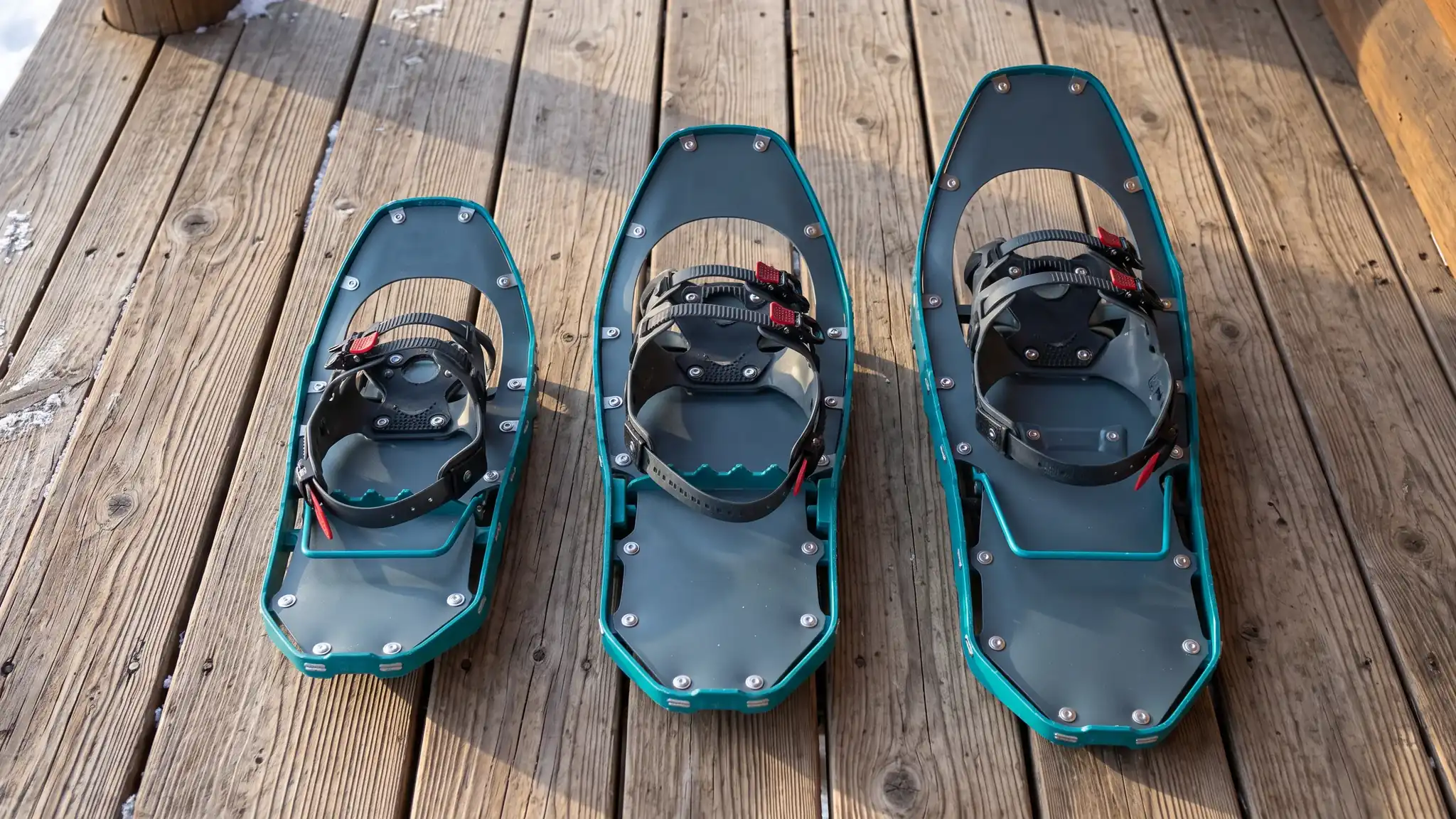
Start With Your Weight, Because That Is What Sets the Size
Most of what separates one pair of snowshoes from another comes down to how much snowshoe it takes to hold you up. A shoe that is too short sinks in soft snow and wears you out. A shoe that is too long is clumsy on a narrow trail and heavier than it needs to be. That is why our women's models are sold by size, and each size carries a stated weight range for the person wearing it.
Read that range carefully. On the pages for our two GV women's models, the weights are given as user weights off trail, which means for walking in unpacked snow, not on a beaten path. If you will be breaking trail, count your clothing and a daypack with water, a thermos, and a spare layer as part of your weight. This is our advice rather than a rule from the maker, and when you land close to the top of a range, we'd go up a size.
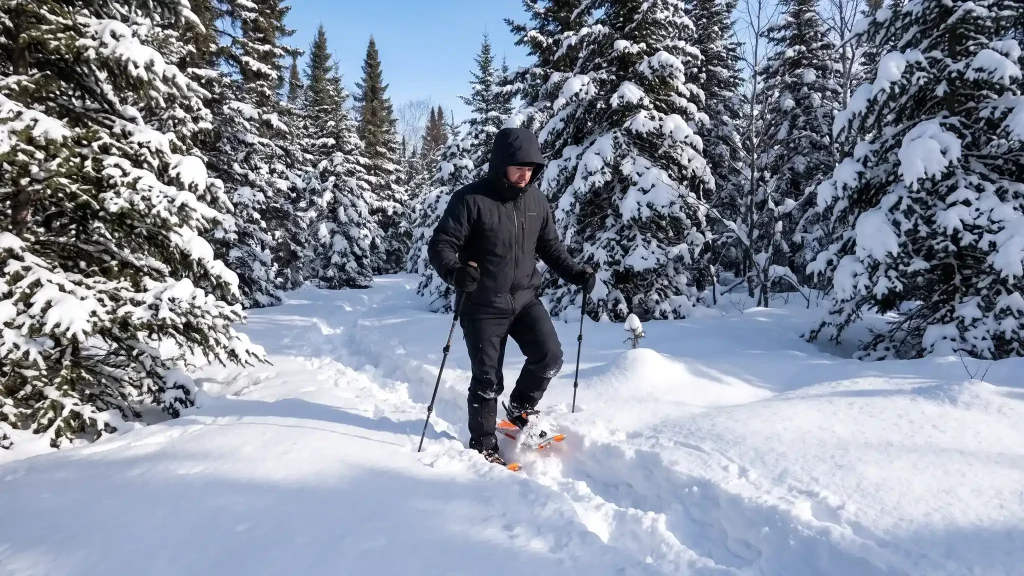
The size also decides how the snowshoe feels in your stride. A longer, wider frame gives more flotation in deep snow, and a shorter one turns more easily between trees. Our take: On packed trails and in the forest, a smaller frame is usually plenty, and deep, unbroken snow is where length matters.

Are Women's Snowshoes Really Different From the Men's?
Yes, though the difference is in the fit rather than the purpose. A women's model is aimed at a narrower gait and a lighter user, and that shows up in the frame, in the size range, and in the binding. We sell women's models from two makers, and they show the idea in different ways.
The MSR Women's Lightning Explore Snowshoe describes its frame as low-profile and designed for a narrow gait, which keeps the shoes from bumping into each other as you walk. It comes in 22 and 25 inch sizes. The GV women's models are listed with weight ranges starting at 60 lb (27 kg), a lighter range than you will find on a general-purpose adult snowshoe.
Not every snowshoe needs a women's label, and we say so plainly. Our Chinook Trekker Backcountry 25 inch snowshoes are not sold as a women's model. We carry them as a simple, lower-cost pair for packed snow and moderate terrain. If you are unsure which route to take, bring in your boots and we'll set you up with both.
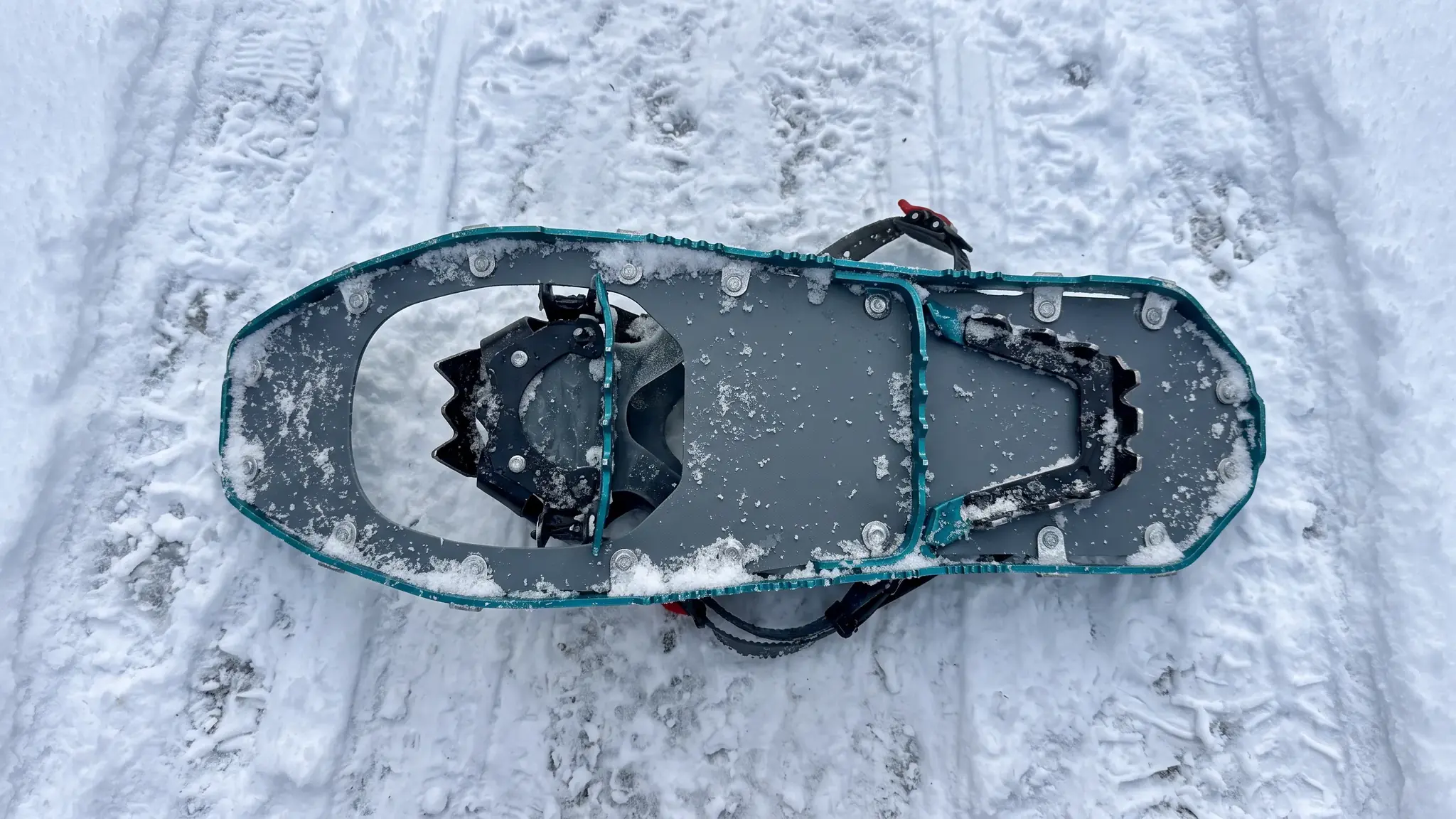
Frame and Traction: What to Look for Beyond the Size
Once the size is settled, the frame and the crampons decide how the snowshoe behaves on a hill or on ice. Three things are worth checking on any pair.
The Frame
A light aluminum frame keeps your legs from tiring over a long outing. The Chinook Trekker Backcountry 30 inch ($149.95) and the 25 inch ($139.95) use a light aluminum frame with an ergonomic design, and a carry bag comes in the box. The MSR Lightning Explore uses edge-to-edge 360° Traction frames, which grip along the whole outline of the shoe rather than only underfoot.
The Crampons
Crampons are the metal teeth under your foot. On the Chinook Trekker models, the heavy-duty aluminum crampons rotate freely, so they bite into the snow and then let the tail drop to shed it, and heel crampons add traction on mild downhill slopes. The MSR uses Pivot crampons, and its Ergo Televators reduce fatigue and add traction on steeper climbs. A televator is the heel lift you flip up under your heel on a slope.
The Weight
Our GV women's pages list the weight of each size. The women's GV Active Winter model runs from 3.20 lb (1.45 kg) per snowshoe in the 8 x 21 inch size to 4.65 lb (2.1 kg) in the 9 x 29 inch size. The GV Active AeroLite Women's Snowshoe runs from 3.72 lb (1.69 kg) to 4.78 lb (2.17 kg). Over a few hours, a few hundred grams per foot adds up.
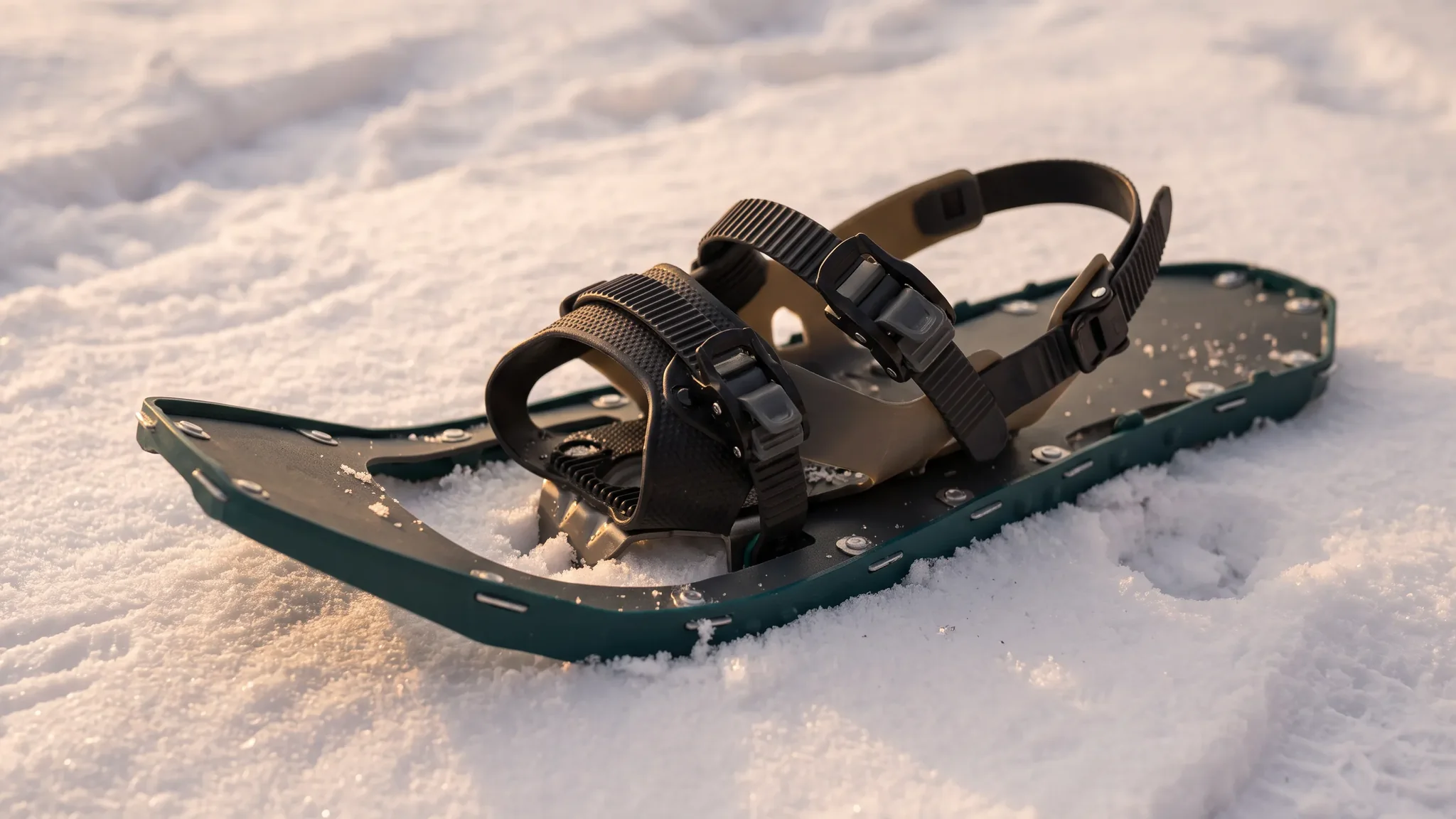
The Binding Is Where Fit Becomes Comfort
The binding is the part that holds your boot to the snowshoe, and it is where most of the discomfort on a first outing comes from. Look for padding under the straps, a way to adjust the straps with gloves on, and a cradle that your boot steps into easily.
The MSR Women's Lightning Explore uses the women's HyperLink binding: An easy-entry cradle, EVA foam cushions, a two-strap ratchet, and macro-adjustment straps. The two GV women's models also have ratchet bindings. A ratchet works like the strap on a ski boot, so you tighten it with clicks instead of pulling and tying a knot with cold fingers.
The Chinook Trekker models use a different idea: A one-step pull and release binding made for quick transitions. We'd pick that for a person who stops and starts often, and the ratchets for someone planning longer days.
Can I Wear My Hiking Boots?
The honest answer is that it depends on the boot, because the binding has to be tightened around it. The right test is the pair you will actually wear in the snow. Bring that exact pair when you try the shoes on, wearing the socks you'll have on that day, so the straps are set for the real thing.
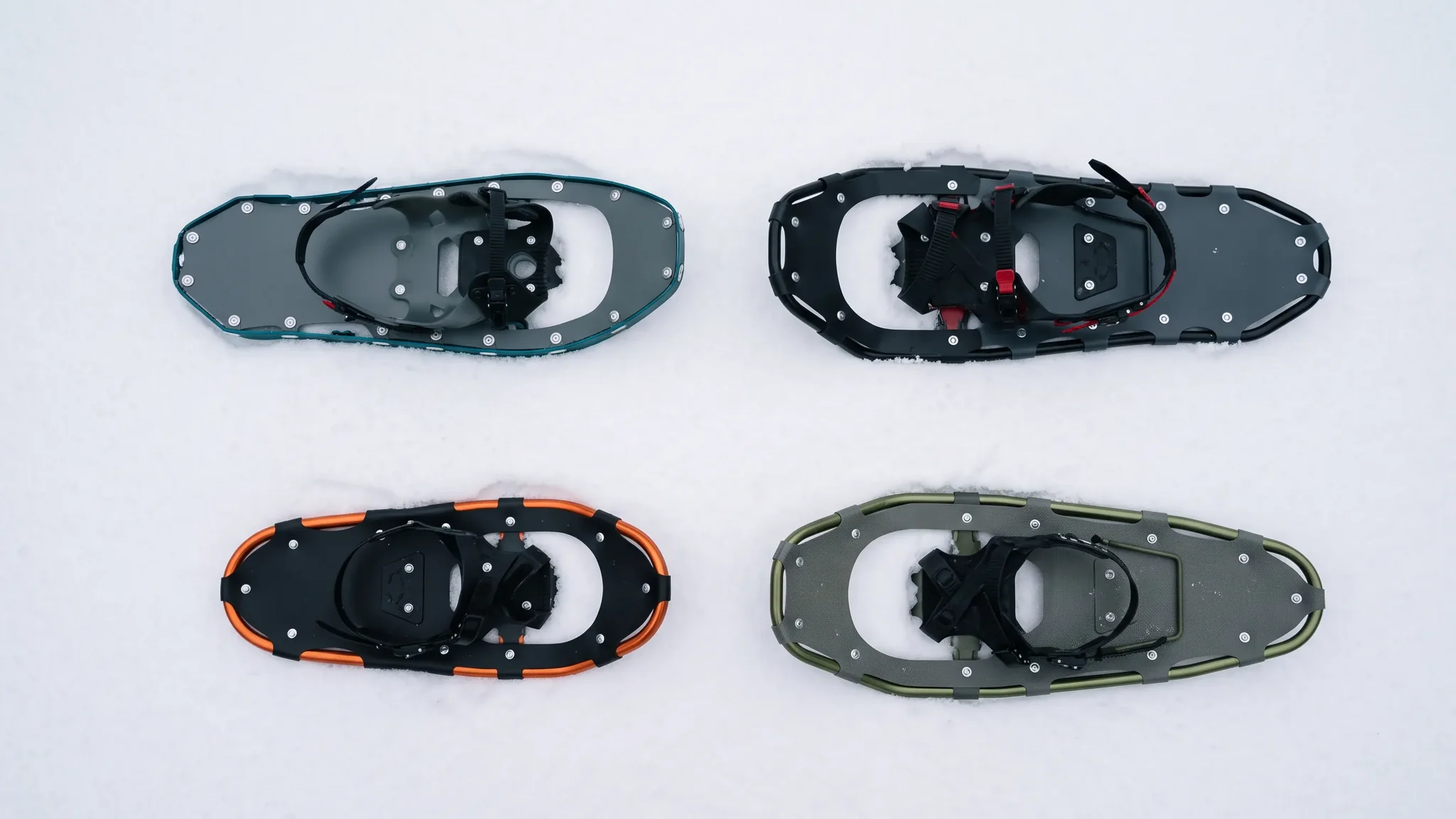
Our Take: Which Women's Snowshoe Suits Which Walker
The price runs from about $140 to about $460 across the models in this guide, and what you spend should follow how often you'll go.
For casual outings, start with the GV Active Winter. At $199.95, it is made, in the words of its listing, for leisure hiking and casual users, and it comes in four sizes, from 8 x 21 to 9 x 29 inches. If you only go out a few times a winter, this is where we'd begin.
For people who plan to go further, the GV Active AeroLite is the step up. It is $284.95 and is designed for the advanced recreational user who wants a very lightweight, durable snowshoe. It comes in 8 x 24, 8 x 27, and 9 x 29 inch sizes. The 8 x 24 size covers 60 to 140 lb (27 to 63 kg) off trail.
For rolling terrain, steeper climbs, and all-day comfort, look at the MSR Lightning Explore. It is $459.95 and comes in 22 and 25 inch sizes. For heavier loads or deeper snow, MSR sells the MSR Lightning Tails ($104.95), which add 5 inches (13 cm) of flotation without tools. They work with all Lightning snowshoe models and lengths.
For a simple pair on a budget, the Chinook Trekker is the one. It is $139.95 in the 25 inch size and $149.95 in the 30 inch size, and the carry bag is included.
One note: Stock and sizes change through the season. Each product page shows what is available now, and if your size is not listed, call us and we'll check.
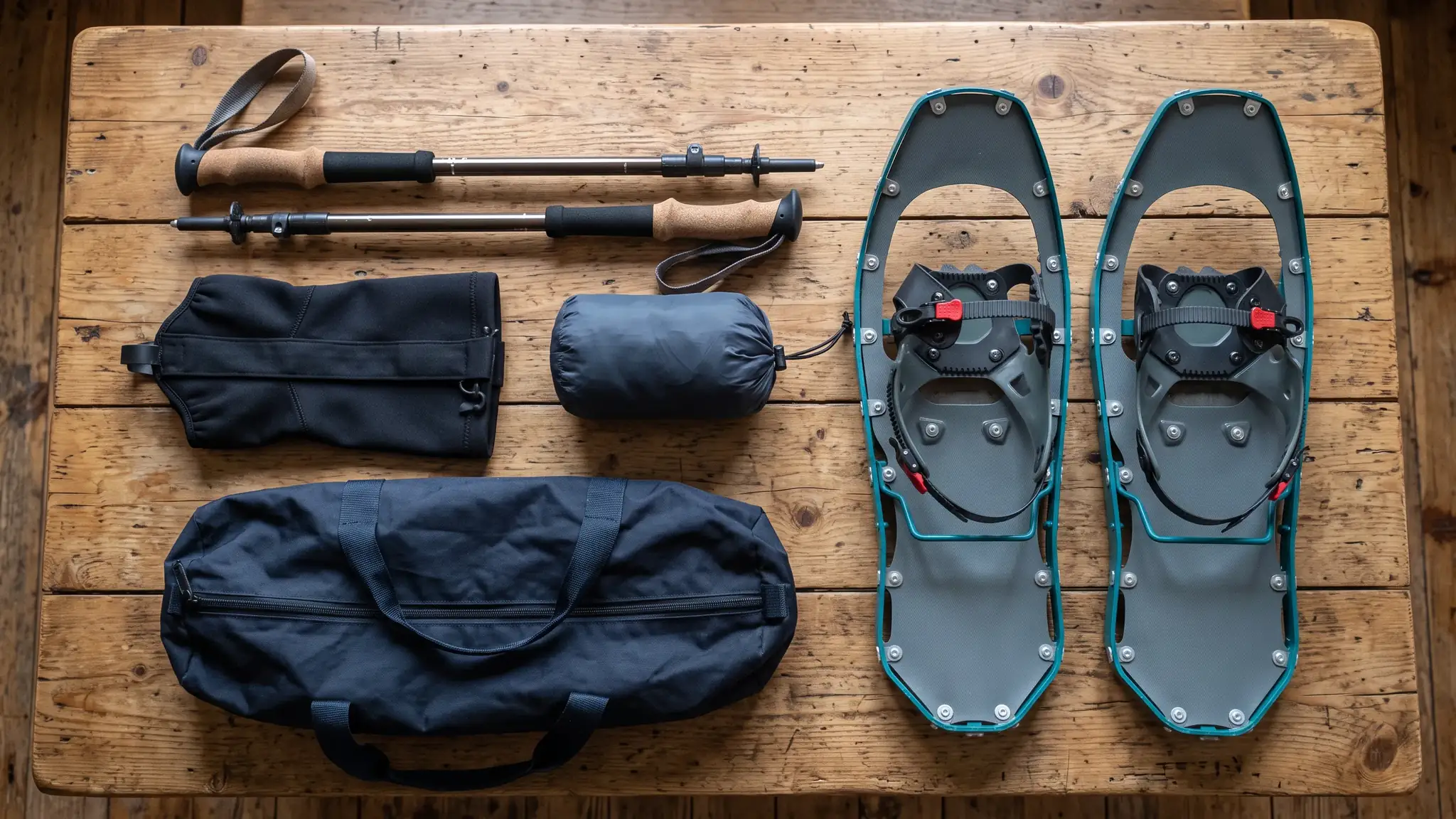
Poles, Gaiters, and the Small Things That Make a Day Easier
Parks Canada, the federal agency that runs the national parks, lists a pair of hiking poles on its snowshoeing page for Banff National Park and says that "when trails are icy, hiking poles can make snowshoeing much much more safe and enjoyable." Its packing list also includes a trail guide and map, a full water bottle or thermos, high energy food, a first aid kit and repair kit, a headlamp with spare batteries, a toque or winter hat, gloves, and extra warm clothing in case of an emergency.
That list is written for a mountain park, and you can trim it for a short walk. But the poles and the extra layer apply to a trail near the Sault just as well.
Poles
The Leki Makalu FX TA ($269.95) has a cork grip, a folding aluminum shaft, and adjusts from 110 to 130 cm. It comes with an extra basket for snowy terrain, which stops the pole from sinking in. If you want a shorter pole to suit a smaller frame, the Leki Khumbu Lite Compact ($179.95) adjusts from 90 to 125 cm and weighs 235 g.
Gaiters
Gaiters cover the gap between your boot and your pant leg, so snow does not pack in around your ankle. The Outdoor Research Women's Crocodiles Expedition Gore-Tex Gaiters ($109.95) are waterproof and breathable, and the maker built them for deep snow, wet brush, and long days in winter boots.
Carrying and Caring for Your Snowshoes
The MSR Snowshoe Bag ($59.95) is a zippered bag for snowshoes up to 25 inches, with hand and shoulder straps and a ventilation panel. The MSR Snowshoe Carry Pack ($64.95) is a 19 litre pack that carries your snowshoes and poles and doubles as a daypack. For the strap clips on MSR snowshoes, the MSR Standard Strap Keeper ($12.95) is a pack of 8 replacements, so a lost clip does not end your day.
Share the Trail the Way the Trail Was Set Up
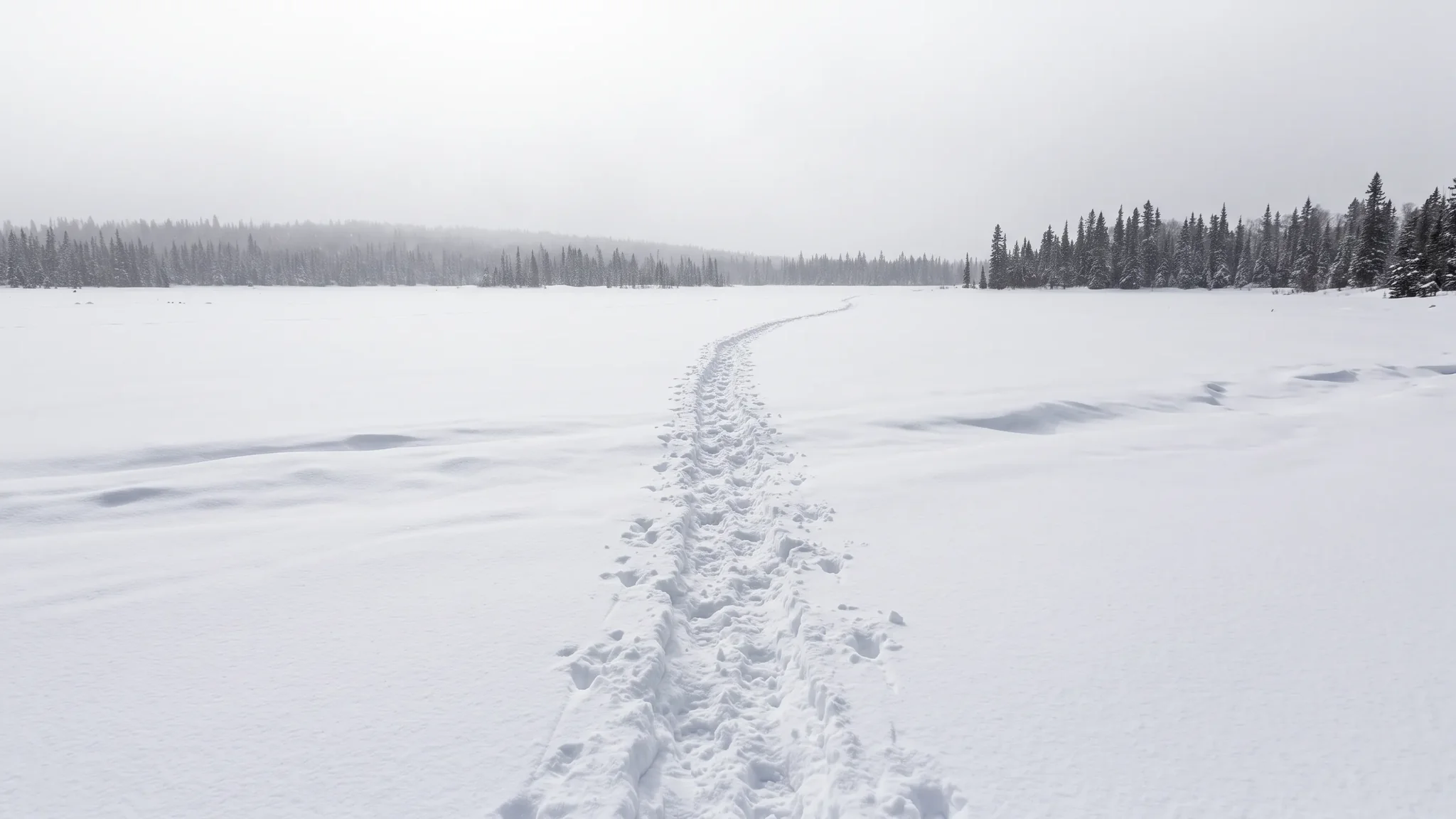
Parks Canada also spells out a courtesy for shared trails: The track-set portion of the trail is for classic skiing only, and the flat, groomed lane is for other users. When climbing, it asks you to yield to descending skiers and fat bikers, and to keep dogs on a leash. If a trail has set tracks, stay out of them, and your snowshoes will leave them clean for the skiers.
Questions
Are women's snowshoes really different?
They are built for a lighter user and a narrower gait. The MSR Women's Lightning Explore has a low-profile frame designed for a narrow gait and a women's binding, and our GV women's models list weight ranges starting at 60 lb (27 kg). That said, the right pair depends on your weight and your boots first, so we check those before the label.
What size for a lighter frame?
Start from your weight, including clothing and a pack. On the GV Active Winter, an 8 x 21 inch snowshoe covers 60 to 120 lb (27 to 54 kg) off trail, an 8 x 24 covers up to 140 lb (63 kg), an 8 x 27 up to 150 lb (68 kg), and a 9 x 29 covers 80 to 170 lb (36 to 77 kg). If you fall near the top of a range, we'd go up a size.
Can I wear my hiking boots?
It depends on the boot. The binding straps adjust around what you bring, so the real test is the pair you will wear in the snow. Bring those boots and your winter socks to the store, and we'll help you check the fit in the binding before you buy.
Do I need poles?
You can snowshoe without them, but Parks Canada recommends hiking poles, and says they make snowshoeing much safer and more enjoyable on icy trails. They also help with balance on a slope.

Try Women's Snowshoes on at Our Store in Sault Ste. Marie
The quickest way to settle on a size is to stand in the shoes with your boots on. Visit Great Lakes Outfitters at 162 Old Garden River Rd, Sault Ste. Marie, ON P6B 5A6, or call us at (705) 253-2361. Browse the whole range in our snowshoes category first if you would like to see what is in stock.
Talk to us about it
- 162 Old Garden River Rd, Sault Ste. Marie, ON P6B 5A6
- (705) 253-2361
- Open today 10 a.m. to 6 p.m.
- Send us a message
References
About the author
Mario Gionet
Sales
I work in sales at Great Lakes Outfitters. I have been here four years, and before that I was in school.
More from Mario Gionet
 English (Canada)
 Français du Canada