

Kayaks in Canada: The Complete Buyer's Guide
Picking a kayak in Canada starts with one question: Where will this boat spend most of its time? We'll walk you through the safety rules, sit-on-top versus sit-in, and the hull shapes that decide how a kayak behaves, then the recreational, fishing, and touring models, and the paddle, life jacket, and gear that go with them.
TL;DR
- Where you paddle and what the rules require
- Sit-on-top or sit-in, and hull shape
- Recreational, fishing, and touring kayaks
- Fit, paddles, and life jackets
- Gear, transport, and winter storage
- Budget, common mistakes, and which kayak fits which paddler
- Trying kayaks at our store in Sault Ste. Marie
Who this article is for
- First-time buyers choosing their first kayak
- Anglers looking for a stable fishing platform
- Paddlers moving up to longer touring water
- Families and smaller paddlers who need a boat they can lift and fit

Alan Lukala
Sales Representative
A note from the author
We wrote this guide around the kayaks, paddles, life jackets, and gear we sell at 162 Old Garden River Road in Sault Ste. Marie. Every product named here is one you can buy from us, priced as it was on our store the day this went up. If a question is left over, call us or come in and sit in a few boats.
Choose the Water You Paddle Most, and the Kayak Follows
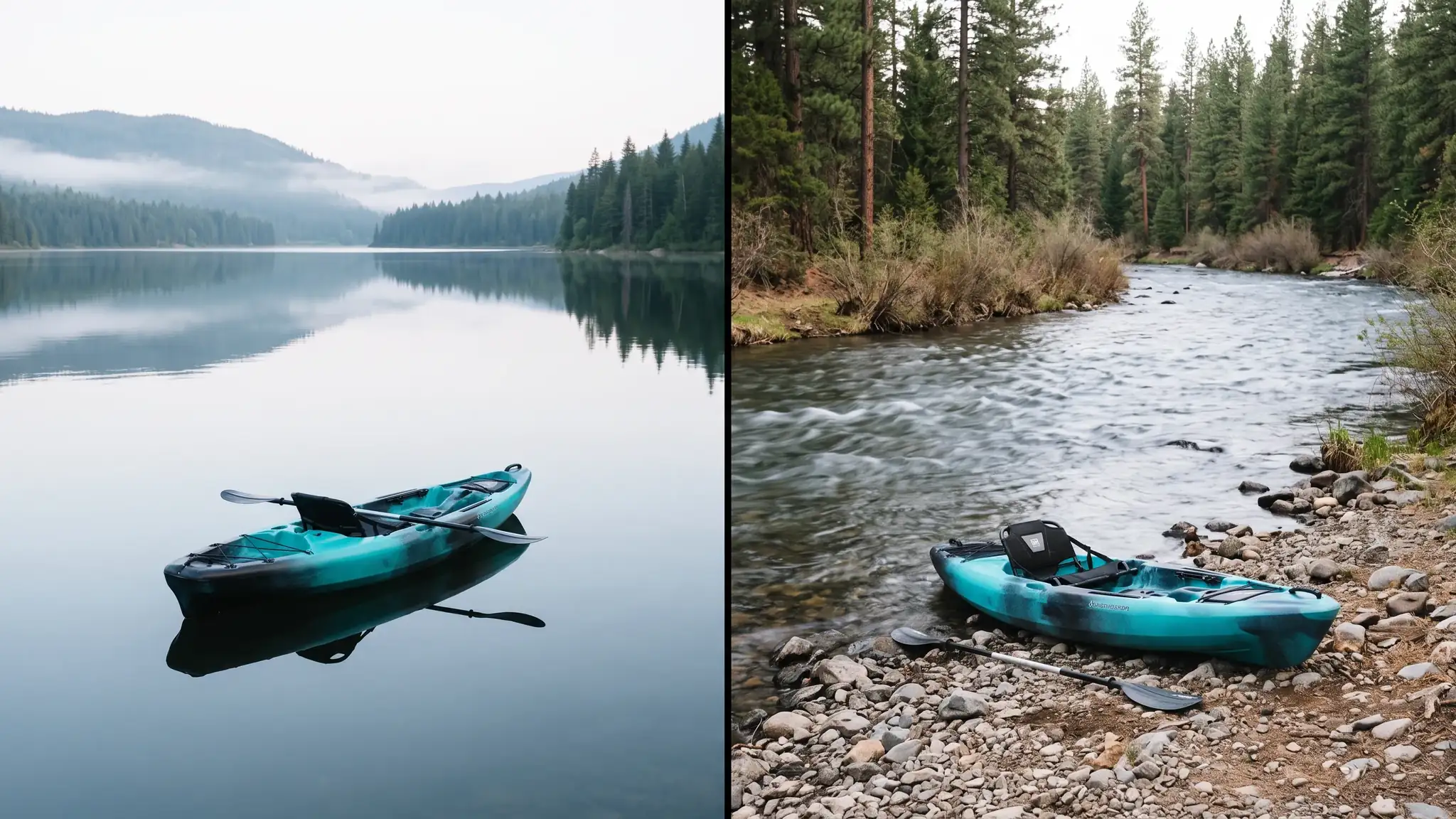
Most people who search for a kayak in Canada start with a model name or a price. We'd start with a different question: Where will this boat spend most of its time? A kayak that is perfect for a quiet bay is a poor fit for a long day on open water, and a boat built for open water feels heavy and slow on a pond. Everything else in this guide, from sit-in or sit-on-top to the paddle you pick, follows from that one answer.
We run Great Lakes Outfitters in Sault Ste. Marie, so we see this choice made by people who paddle the St. Marys River, the inland lakes north of town, small rivers, and the edges of Lake Superior and Lake Huron. Our selection is built around that range of water. In the kayak section of our shop you'll find touring kayaks, recreational kayaks, sit-on-top kayaks, and fishing kayaks, along with the paddles, life jackets, racks, and storage that go with them.
This guide is written for someone choosing a first kayak or replacing one. It covers the law and the safety gear first, because those aren't optional. Then it works through the kinds of kayak, with real models and the prices on our site today, followed by paddles, life jackets, extras, getting the boat home, and storing it through a northern winter.
Four Questions That Narrow the Field Fast
Before you read about individual boats, answer these four questions. They remove most of the options on their own.
- What water will you paddle? Small lakes and slow rivers call for a stable, easy boat. Big lakes and longer trips call for a longer, narrower one.
- What will you do from the boat? Paddling for exercise, fishing, photography, and camping all want different storage and different seats.
- How will you move and store it? A 36 lb boat and a 64 lb boat feel very different at the end of a long driveway, and a 17 ft boat needs more room than a 10 ft one.
- What is the whole budget? The kayak is only part of the cost. A paddle, a life jacket, and a way to carry the boat add up, and we cover each one below.
If you can answer three of the four, you already know which section of this guide to spend the most time in.

Know the Safety Rules Before You Buy a Kayak in Canada
Every kayak sold in Canada comes with some legal duties for the person paddling it. They are short, and they're worth knowing before you spend money, because they decide part of your shopping list.
What Federal Rules Say About Life Jackets
The Small Vessel Regulations are the federal rules that set out the safety equipment for pleasure craft in Canada, and they're published on the Justice Canada laws website, which is the Government of Canada's official source for federal legislation. For a human-powered boat such as a kayak, the regulations state that the craft "shall carry on board a personal flotation device or lifejacket that is of an appropriate size for each person on board." That is the first item on your list, and it's the one most people think of.
The same regulations list a buoyant heaving line of not less than 15 m in length among the life-saving equipment for these craft, and a sound-signalling device. The regulations also include an exception: when every person on board is wearing a personal flotation device of the right size, the equipment you still need to carry is a sound-signalling device, plus a watertight flashlight if you paddle after sunset or before sunrise. A whistle is the usual way to meet the sound-signalling requirement. We'd read the current regulation yourself before a trip, since rules can be amended, and we'd treat this section as a summary and not a legal opinion.
Ontario Parks says the same thing in plain language. In its blog post "Water safety 101", Ontario Parks, the provincial agency that manages Ontario's provincial parks, writes that small vessels like canoes and kayaks "are required by law to have mandatory safety equipment," including a personal flotation device or life jacket per person, appropriately sized for the individual.
Why the Wearing Matters More Than the Carrying
Carrying a life jacket under a bungee cord is not the same as wearing it. The same Ontario Parks post says that wearing your PFD or lifejacket "will not only keep you afloat, but also provide much needed warmth until help arrives," and that sudden immersion in cold water "can affect your ability to function, including your ability to swim."
The Lifesaving Society is the Ontario branch of the Royal Life Saving Society Canada, a registered charity that works on drowning prevention through water safety education and training. On its cold water page the Society notes that water in Canadian lakes and rivers is usually below 20 degrees Celsius and that hypothermia sets in within an hour. It also explains the 1-10-1 principle: You have one minute to control your breathing, ten minutes to get yourself out of the water before you lose the ability to move your body effectively, and, with a lifejacket on and in the right conditions, up to an hour before hypothermia sets in. The Society adds that after as little as five minutes, cold water begins to rob you of your ability to move your limbs.
For anyone paddling in Northern Ontario, that last point is the practical one. A kayak can tip on a calm day, and the water is cold even in summer. A life jacket you're wearing is the only one that works when you need it, so we'd build the cost of a comfortable one into the budget from the start. We cover fit and models in a later section.
A Short Pre-Trip Check
These are the items the sources above point to, in the order we'd check them before leaving the shore:
- A life jacket that fits each person, worn and fastened.
- A buoyant heaving line of at least 15 m.
- A whistle or other sound-signalling device.
- A watertight flashlight if there's any chance you'll still be out after sunset.
- Someone ashore who knows where you're going and when you expect to be back.
The last item is our own advice and not a regulation. It costs nothing, and it's the one that matters most if the others fail.

Sit-On-Top or Sit-In: Pick by How You'll Use the Boat, Not by Habit
This is the first real fork in the road, and it comes up with nearly every first-time buyer. Neither design is better. Each is better at something, and the right choice depends on the water, the weather, and how you feel about getting wet.
How a Sit-On-Top Works
A sit-on-top kayak has an open deck with no cockpit to climb into. You sit on a moulded seat or a framed seat on top of the hull, and water that comes aboard drains out through scupper holes. That makes a sit-on-top easy to get on and off, simple to re-board after a swim, and comfortable in warm weather. It is also the usual choice for fishing, because the open deck gives you room to move, to stand on some models, and to mount accessories.
The trade-off is that you sit higher and you're more exposed. On a cool day or in a breeze, you'll get wet from spray and drips, and there's no cockpit to fit a spray skirt to. Our sit-on-top boats are listed in the sit-on-top kayak section.
How a Sit-In Works
A sit-in kayak has an enclosed cockpit. Your legs sit inside the hull, and you can add a spray skirt, a fabric cover that seals the gap between you and the cockpit rim and keeps waves and splash out. A sit-in boat keeps you drier and a little warmer, because your lower body sits below the deck and out of the wind. Most touring and recreational kayaks are sit-ins, and they tend to track better on open water.
The trade-off is the cockpit. You'll need to get in and out gracefully, and a capsize in a sit-in means you either exit the boat or roll it back up. That is a skill worth learning before you paddle big water, and we cover how to learn it near the end of this guide.
Side by Side
| Question | Sit-on-top | Sit-in |
|---|---|---|
| Getting on and off | Easy, no cockpit | Takes practice |
| Staying dry | Expect some splash | Drier, especially with a spray skirt |
| Warm-weather comfort | Excellent | Can feel closed in |
| Cool-weather comfort | Colder and wetter | Better protected |
| Fishing and standing | Usually the better platform | Limited |
| Dry storage | Open storage and a few small hatches | Sealed hatches on many models |
| Open-water tracking | Varies by model | Often better on longer boats |
Our take: If you'll mostly paddle calm water in July and August, or fish, start with a sit-on-top. If you want to paddle in spring and fall, cover distance, or carry gear for a night out, start with a sit-in. If you can't decide, come in and sit in both. The cockpit feels either natural or cramped within a minute, and that feeling is worth more than a spec sheet.
Length, Width, and Hull Shape Decide How a Kayak Behaves
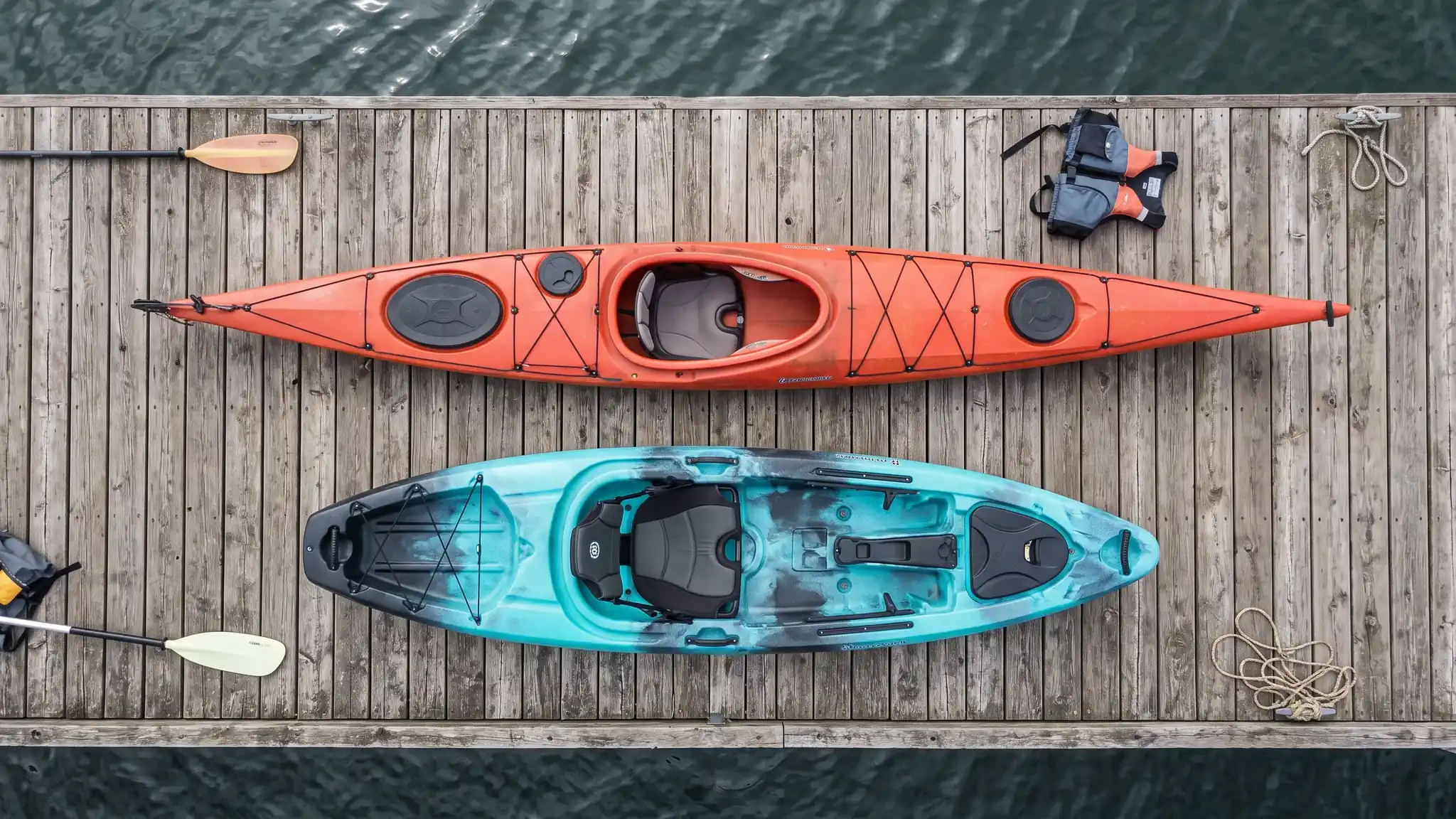
Every kayak spec sheet lists length, width, weight, and capacity. These numbers aren't decoration. They tell you how the boat will feel, and learning to read them takes ten minutes.
Length: Shorter Turns, Longer Travels
A shorter kayak, around 9 to 10 ft, turns quickly and is easy to carry and store. It's a good fit for ponds, small lakes, and slow rivers. A longer kayak, 12 ft and up, glides farther with each stroke and holds a straighter line, which matters on bigger lakes and in wind. The Delta 17, at 17 ft, is built to cover distance.
Width: Stability Against Speed
A wider kayak feels steadier when you sit still, which is called initial stability. A narrower kayak is faster and more efficient, but it can feel tippy at first. For comparison, the Perception Pescador Pro 12.0 is 32.5 in wide and made for a steady fishing platform, while the Delta 17 touring kayak is 22.5 in wide and built to travel. Neither number is good or bad. They're two answers to two different questions.
Hull Shape and Secondary Stability
Beyond width, the shape of the hull matters. A flat or tunnel-style hull feels very stable at rest, which is why many fishing kayaks use one. A hull with a V-shaped or chined bottom feels a little livelier at rest but holds firm once you lean it on its side, and that quality is called secondary stability. The listing for the Pelican Sprint 120XR, for example, says its deep V-chine hull gives better secondary stability for choppier conditions. When a maker mentions a V-hull, a chine, or secondary stability, they're telling you the boat is built to be leaned and steered in less than perfectly flat water.
Rocker and Tracking Aids
Rocker is the upward curve of the hull from the middle to the bow and stern. More rocker makes a boat turn more easily, and less rocker makes it track straighter. Some boats add a skeg, a small fin that drops from the hull to help the kayak hold a line in wind. The Dagger Axis models carry a height-adjustable drop skeg, and the Paluski Spirit has a drop-down skeg too. Touring boats such as the Wilderness Systems Tsunami 145 come with a rudder, which you steer with foot pedals.
Weight and Capacity
Two weight numbers matter. The first is the boat's own weight, which you'll lift onto a roof or carry to the water. The second is the maximum capacity, which is the combined weight of you and your gear that the boat is rated to carry. Leave yourself room under that limit, because a boat loaded to its limit sits low and handles poorly. We go through the numbers for real models in the sections that follow.
Recreational Kayaks Are the Easiest Way Onto Calm Water
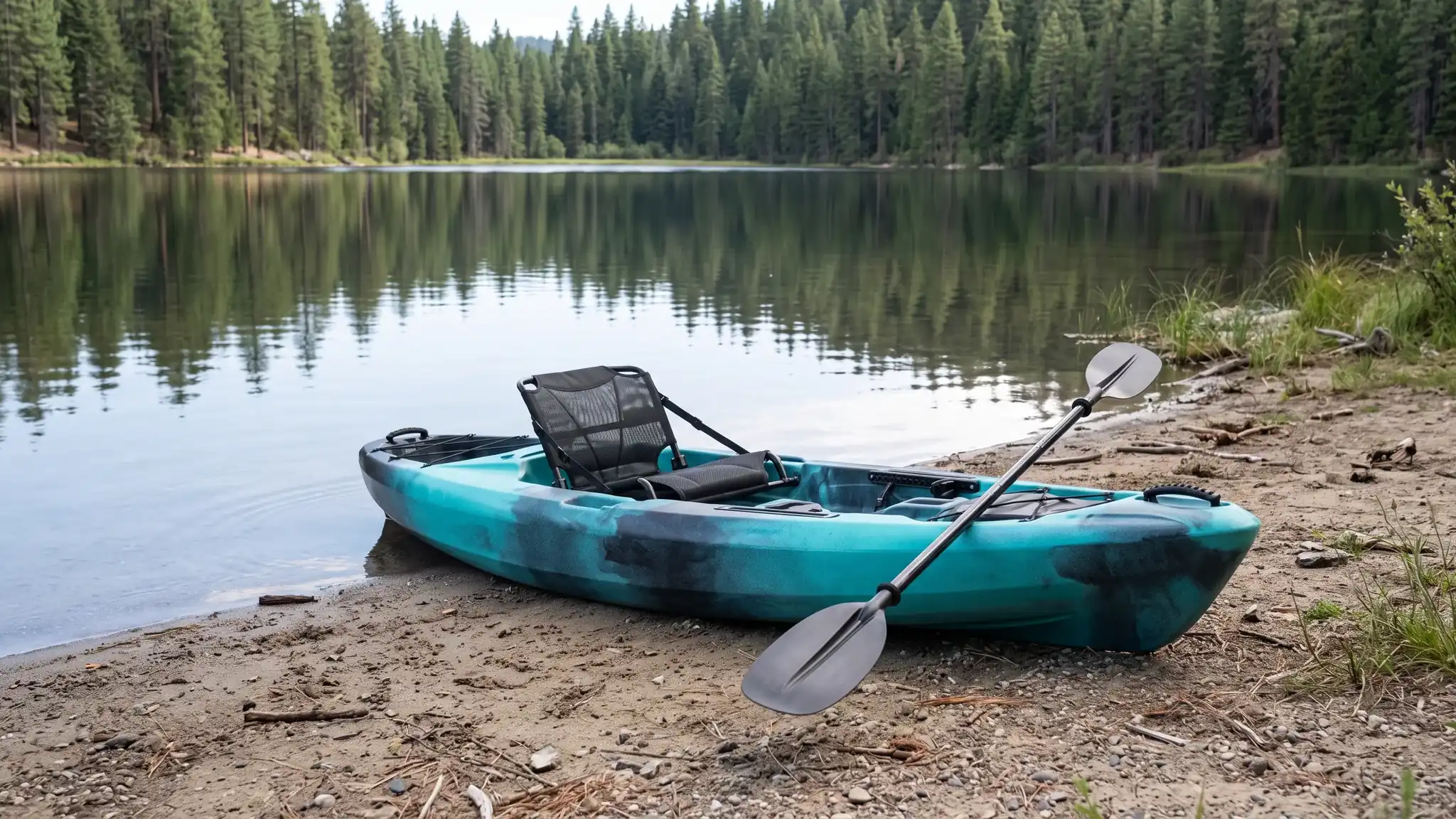
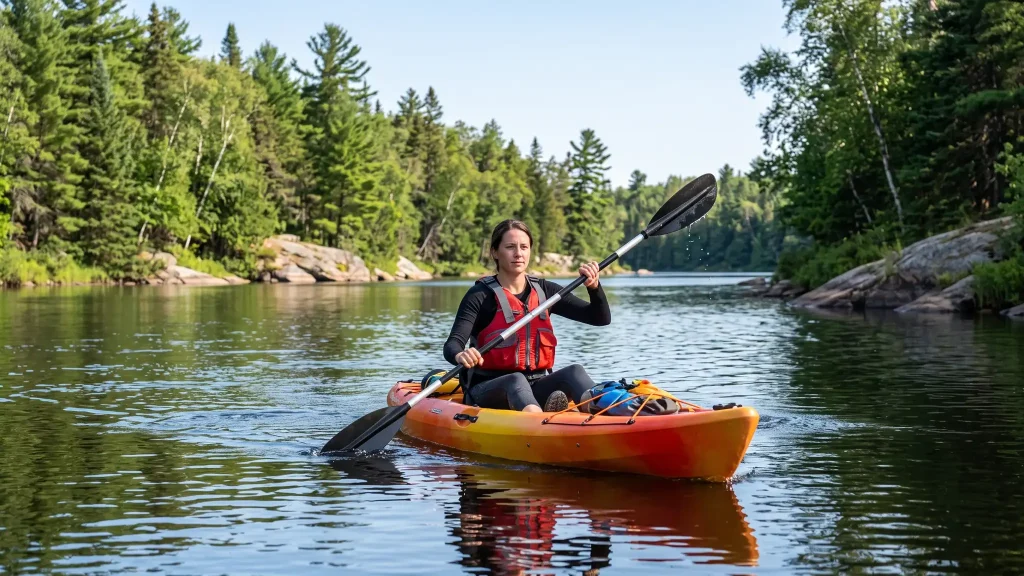
A recreational kayak is a sit-in boat built for lakes, ponds, and slow rivers. It's usually shorter and wider than a touring boat, with a roomy cockpit that is easy to enter and exit. If your plan is a few hours on a quiet lake with a picnic, this is the family to start with. Here are the models we carry, from the least to the most expensive.
Entry-Level Sit-Ins
The Pelican Argo 100X Sit-In Kayak is $579.95. Its listing gives the length as 120 in (about 10 ft), the width as 28 in, the weight as 36 lb, and the maximum capacity as 275 lb, for a single paddler. It has an adjustable Ergoform seat and storage compartments at the front, back, and around the paddler, and it's described as a stable, relaxing ride on lakes, slow-moving rivers, and calm water. At 36 lb it is one of the lighter full-size boats we sell, which matters if you'll be lifting it onto a car alone.
For younger paddlers, the Pelican Argo 80X Sit-In Junior Kayak is $399.95, and the Pelican Solo Sit-On Kayak Junior comes with a paddle for $229.95. If a child is going to paddle with you, ask us about the right size before you buy, because a boat that is too big for a child is harder to control and not safer.
A Step Up in Outfitting
The Pelican Sprint 120XR costs $1,099.95. It's a sit-in built for day touring: a deep V-chine hull for better secondary stability in choppier conditions, a 10 cm day hatch, a bottle holder in the cockpit table, and a rear quick-lock hatch for the rest of your gear. It sits between a basic recreational boat and a true touring kayak.
The Wilderness Systems Pungo is the name many paddlers recognise in this class, and we carry three sizes. All three share the same approach: a hull built, in the maker's words, for reassuring stability without giving up performance, the Phase 3 AirPro seating system, a removable DryTec dry box on the dashboard, and SlideTrax rails for a phone, rod, or other accessories.
- The Pungo 105 is $1,495.95, 10 ft 6 in long, with a 300 lb capacity. It's the compact one, for smaller water and easier storage.
- The Pungo 120 is $1,649.95, 12 ft 2 in long and 29 in wide, weighing 49 lb, with a 325 lb capacity and a cockpit 57 in long.
- The Pungo 125 is $1,649.95, 12 ft 6 in long and 29.5 in wide, weighing 53 lb, with a 375 lb capacity.
Our take: The Pungo 120 is the one to look at first if you want a boat for lakes and slow rivers. It's the lightest of the three at 49 lb, and its capacity leaves room for a day's gear. Go to the 125 if you're a larger paddler or you carry a lot, and to the 105 if storage space is the limit. Because fit varies from person to person, come sit in them before you decide.
Sit-On-Top Kayaks Keep It Simple, Warm, and Open
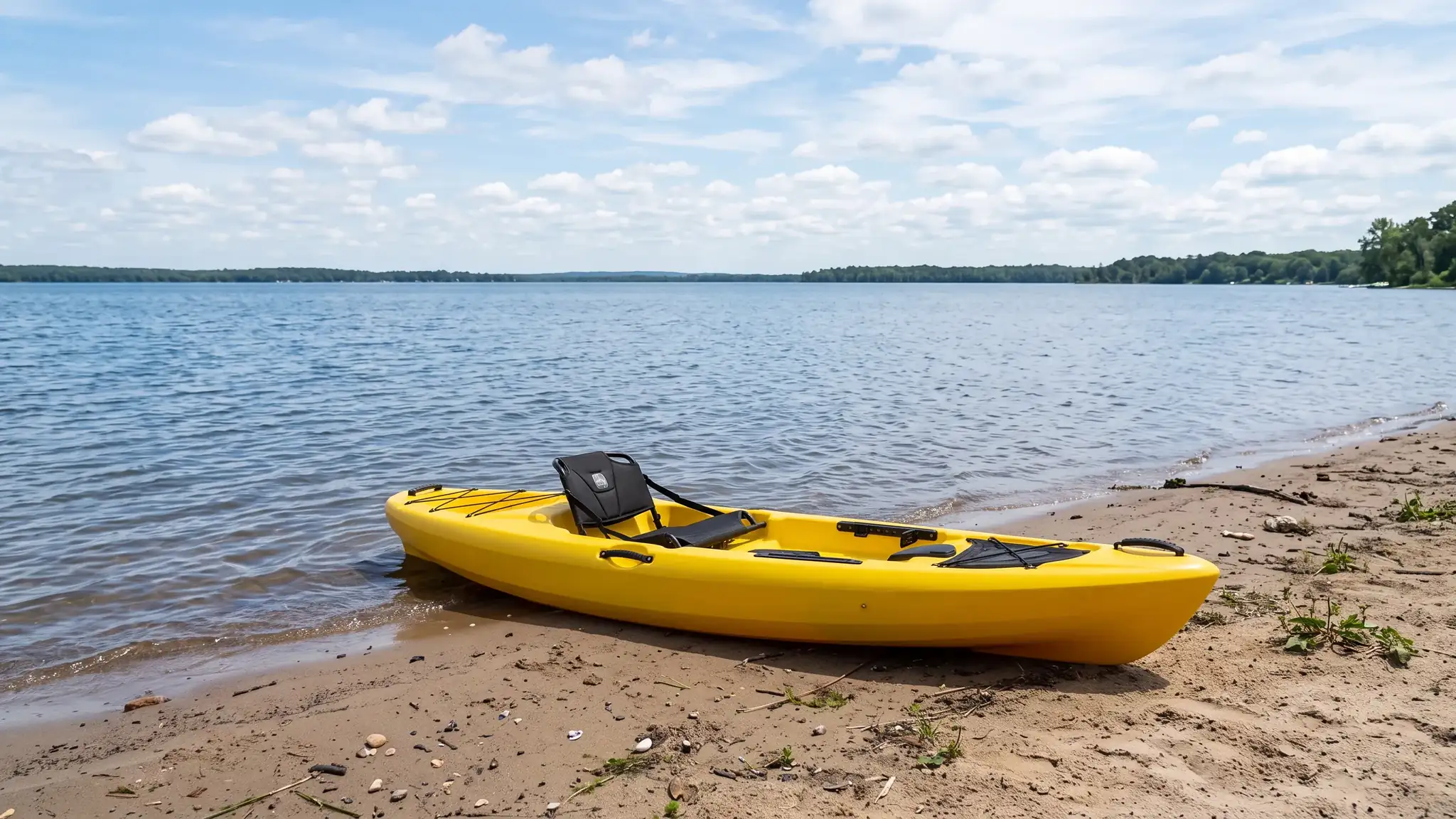
A sit-on-top is the easiest kayak to enjoy on a summer day. There is no cockpit to enter, you can slide off for a swim and climb back on, and storage is open and bungeed to the deck. We stock several, and they run from beginner boats to roomy platforms for anglers.
Beginner-Friendly Boats
The Pelican Sentinel 80X Sit-On Kayak is $399.95 and is described as a beginner-friendly sit-on-top designed for the smaller paddler. It's 100 in long and 29.5 in wide, weighs 32 lb, and has a twin-arched multichine hull, an adjustable padded backrest, molded footrests, a bungee storage platform, and a bottle holder. At 32 lb it is one of the lighter full-size kayaks on our site, which makes it a good match for a smaller paddler who has to lift it alone.
The Perception Tribe 095 is $969.95. It's 9 ft 5 in long, with a framed adjustable seatback, a padded seat, molded footrests, and front and rear bungee storage. Perception calls it lightweight and stackable, with plenty of carry handles, and says it does well in light surf, lazy rivers, and flat water.
Its bigger sibling, the Perception Tribe 115, is $1,089.95. It's 11 ft 5 in long and 30.25 in wide, weighs 52 lb, and carries up to 350 lb. The listing calls it Perception's best-selling sit-on-top, and it uses the same new high-back frame seatback with infinitely adjustable recline. Both Tribe models have a centre hatch for keys and a wallet, though the maker recommends a sealed dry bag for anything that must stay dry.
What Scuppers Mean for You
Scuppers are the holes that run through a sit-on-top so water drains out instead of pooling on the deck. They're why a sit-on-top doesn't sink when it fills with water, and they're also why you may feel a little water at your seat. On the Tribe models, scupper plugs are sold separately, so ask us if you plan to paddle in cooler weather and want fewer drips.
Our take: For a first sit-on-top, choose between the Sentinel 80X for price and low weight and the Tribe 115 for a better seat and more room. The Tribe 095 makes sense if you have little storage space and want the shortest boat of the group.
A Fishing Kayak Is a Stable Platform First and a Boat Second
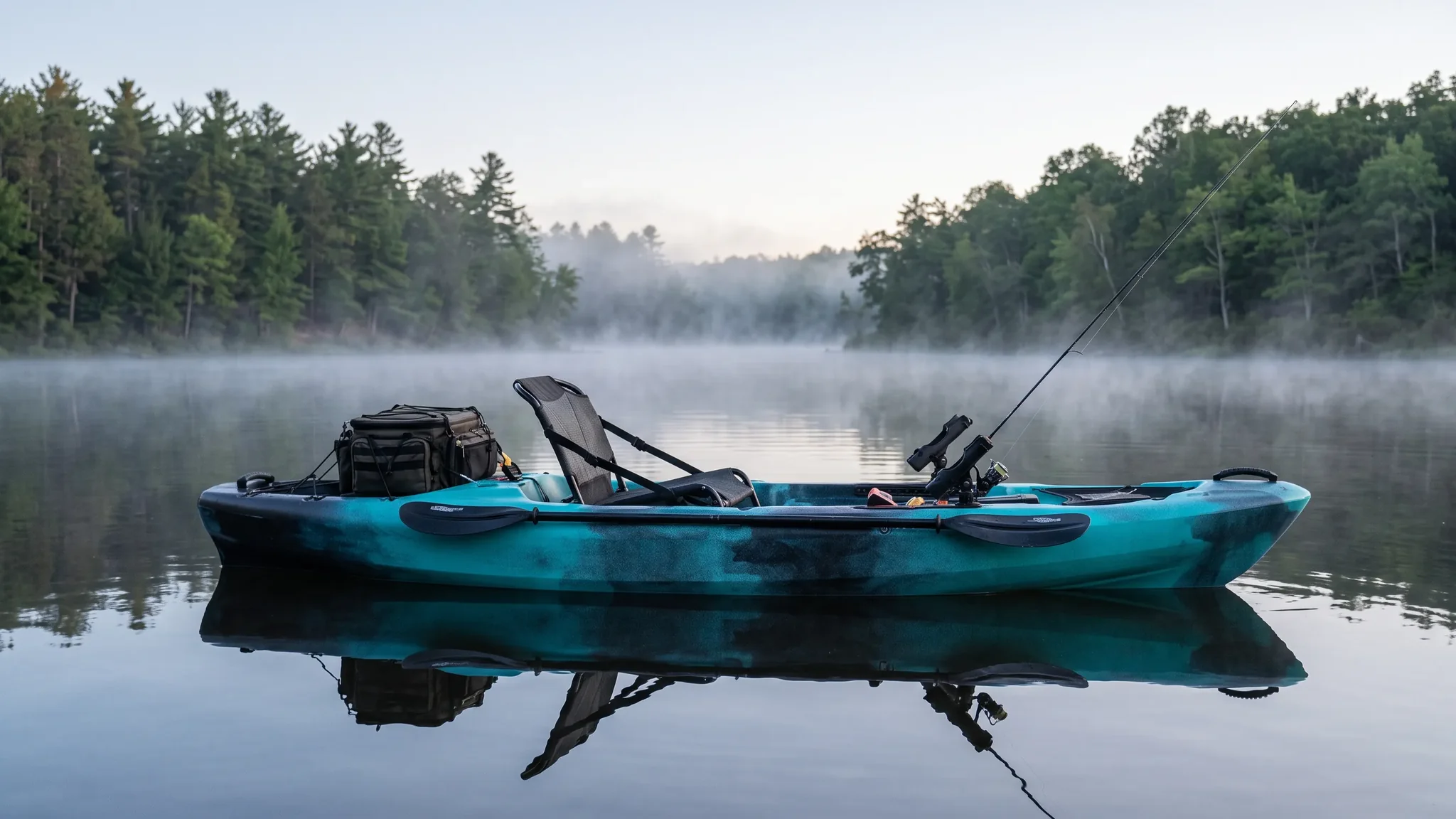
Fishing from a kayak asks for things a paddling boat doesn't: a steady deck, a seat that works for hours, rod storage, and places to bolt on gear. Our fishing kayak section is mostly sit-on-top boats for that reason. Here is how they sort by size and price.
Lighter Boats for Small Water
The Pelican Sentinel 100X Angler is $749.95. It's 9.6 ft long and 44.6 lb with a 275 lb capacity, and the listing calls it a lightweight sit-on-top for anglers who want to reach narrower spots. It has a centre console with moulded compartments, two recessed rod holders, an ExoPak removable storage compartment with two vertical rod holders, an adjustable Ergolounge seat, and a smartphone holder. The open cockpit carries essential equipment and allows a safe standing position, according to the listing.
The Pelican Catch Mode110 is $1,199.95. It's 10 ft 8 in long on a tunnel hull, with a wide flat deck, ERGOBOOST seating, an anti-slip deck carpet, and a 375 lb capacity. The listing calls it a very stable fishing kayak with great manoeuvrability.
The Perception Pescador Pro 10.0 is $1,249.95. It's 10 ft 6 in long and 32 in wide, weighs 57 lb, and carries up to 325 lb. The removable, adjustable camp chair seat is the feature people talk about, and it comes with a 5-year warranty. The listing says the shorter length and lighter weight make it easier to manoeuvre and transport for quiet waters.
Bigger Platforms for Lakes and Gear
The Perception Pescador Pro 12.0 is $1,479.95. It is 12 ft long and 32.5 in wide, weighs 64 lb, and carries 375 lb. The listing says the longer length stays manoeuvrable while adding speed, cargo space, and stability, and it's aimed at lakes, ponds, and flat-water rivers.
The Perception Outlaw 115 is $1,299.95. It has an expansive standing platform, an elevated frame seat that folds and is removable, so the deck stays fully walkable with the seat stowed. It also has two double-barrel rod holders and space for a 35 L cooler.
The Wilderness Systems Tarpon 120 is $1,649.95. It's 147 in long and 31 in wide, weighs 64.5 lb, and carries 350 lb. It has a Phase 3 AirPro seat with three-point adjustment, a DryTec case, a locking bow hatch, a removable centre dry box, and a large rear tank well.
The Wilderness Systems Recon 120 is $1,899.95. It has an open deck for standing, casting, and hooksets, a StowPro storage system with a large gasketed hatch, and dual rod troughs that hold up to three 7 ft 6 in rods per side. It is capable of taking the Helix PD pedal drive, which is purchased separately, so you can paddle, pedal, or add a motor.
Our take: Pick the smallest fishing kayak that carries your gear and suits your water. A heavier boat has more room, but you'll feel those extra pounds at the launch and on the roof of the car. If your fishing is a quiet bay a short drive from home, the Sentinel 100X Angler or the Pescador Pro 10.0 are enough boat. If you fish bigger lakes and carry more, look at the Pescador Pro 12.0 or the Tarpon 120.
Touring Kayaks Reward You on Longer Water and Longer Days
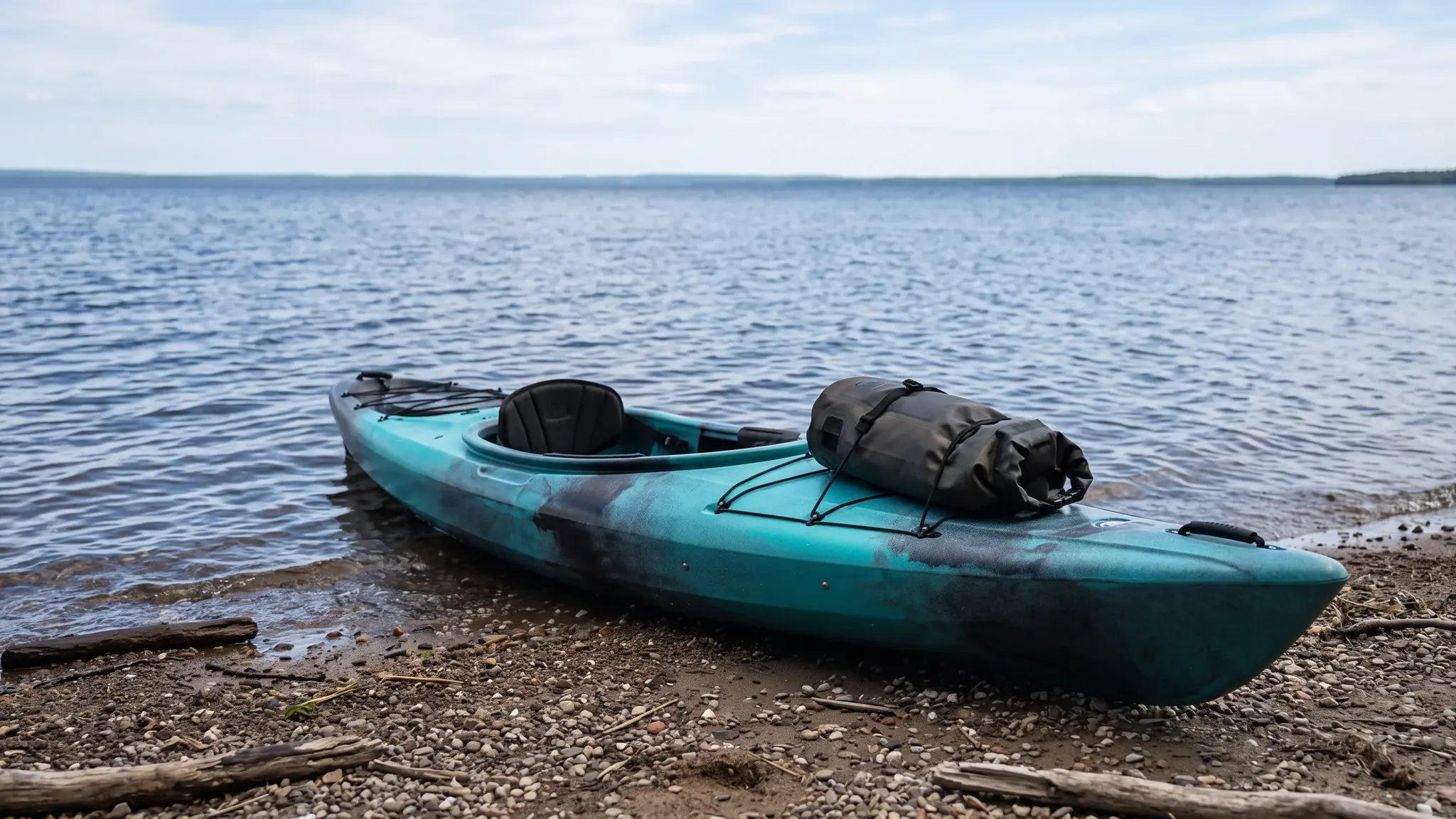
A touring kayak is a sit-in built to go farther with less effort. It's longer and narrower than a recreational boat, it has sealed hatches for dry storage, and many have a skeg or a rudder to help you hold a line in wind. If you picture an afternoon on Lake Superior's shore or a weekend on a chain of inland lakes, this is the family. Our touring kayak section has the widest range of lengths and prices.
Canadian-Made Touring Boats
The Paluski Spirit is $999.95. The listing calls it a Canadian-made touring kayak built for daily touring, stable and easy to manoeuvre in moving water. It has a drop-down skeg, a comfortable seat, storage behind the seat and on top of the kayak, and a laminated polyethylene hull that the listing calls very durable. Paluski states a lifetime warranty on its boats.
The Paluski Riptide is $1,349.95. At 14 ft 2 in, it is the one the listing calls Paluski's most versatile touring kayak, suitable for small rivers or the Great Lakes. It has bow and stern hatches for waterproof storage. The listing also notes that Paluski has built canoes, kayaks, and paddles since 1980 and that its boats are 100% Canadian-made. Both Paluski kayaks are pick-up in store only, which means you'll see the boat before you take it home.
Multi-Water and Crossover Boats
Between recreational and touring sits a group of boats that handle more than one kind of water. The Dagger Axis 10.5 is $1,449.95. It is 10 ft 6 in long and 28.5 in wide, weighs 50 lb, and carries 300 lb. The Dagger Axis 12.0 is $1,649.95, at 12 ft long and 27.5 in wide, weighing 55 lb, with a 350 lb capacity and a roomier cockpit. Both have a height-adjustable drop skeg for straight tracking and defined chines for manoeuvrability in more challenging conditions. Our listing describes the 12.0 as an all-water kayak for lakes, reservoirs, intercoastal waterways, and ponds, and the 10.5 as suited to relaxed day trips and at home on a running river.
The Dagger Katana 9.7 is $2,199.95. It's a crossover kayak made to handle rapids and calm water alike, 9 ft 7 in long and 25.75 in wide, weighing 50 lb, with a stern hatch and bulkhead, a TruTrak drop skeg, and Contour Ergo outfitting. The listing suggests it suits paddlers from 100 to 210 lb.
Longer Day-Touring Boats
The Delta 12s is $1,745.00. It's a lightweight touring kayak for medium to smaller framed paddlers: 12 ft long and 24 in wide at 38 lb, with a 220 lb capacity, Press Lock hatches, a day hatch, and the Contour II seat system. At 38 lb it is easy to lift, but check the capacity against your weight and gear.
The Wilderness Systems Tsunami 125 is $1,899.95. It's 12 ft 9 in long and 26 in wide, weighs 51 lb, and carries 300 lb. The listing describes a spacious cockpit, a deeper hull that suits day trips, flared sidewalls for confidence and stability, and two removable deck storage bags. For a longer boat, the Tsunami 145 with rudder is $2,449.95 at 14 ft 6 in.
Full-Length Touring Boats
The Delta 17 with rudder is $2,945.00. It's 17 ft long and 22.5 in wide, weighs 50 lb, and carries 410 lb. The listing describes it as made for paddlers who want to cruise on lakes, paddle extended trips, or have fun in ocean swells, with a v-shaped hull, Press-Lock hatches, a front deck Day-Pod, and storage that includes 26 gal in the bow and 42 gal in the stern.
That stern and bow volume is what makes a boat like this a trip kayak. It's the one to look at if you want to camp from the boat, and it's more kayak than most first-time buyers need.
Our take: If you're not sure you need a touring kayak, you probably want a recreational boat or a multi-water one first. A long, narrow touring boat rewards a paddler who has already spent time in a kayak. The Axis 12.0 is a sensible bridge, because it gives you tracking help and room to grow without the length of a full touring hull.

Compare the Models Side by Side Before You Commit
Here is one table with the boats from the sections above, in order of price within each type. Every figure comes from the product page on our site, and where a page doesn't list a number we've left it out. Prices are current as we write this, and a product page is the place to confirm the price and what's in stock.
| Kayak | Type | Length | Weight | Capacity | Price |
|---|---|---|---|---|---|
| Pelican Sentinel 80X | Sit-on-top | 100 in | 32 lb | Not listed | From $399.95 |
| Pelican Argo 100X | Sit-in recreational | 120 in | 36 lb | 275 lb | From $579.95 |
| Pelican Sentinel 100X Angler | Sit-on-top fishing | 9.6 ft | 44.6 lb | 275 lb | From $749.95 |
| Perception Tribe 095 | Sit-on-top | 9 ft 5 in | Not listed | Not listed | From $969.95 |
| Perception Tribe 115 | Sit-on-top | 11 ft 5 in | 52 lb | 350 lb | From $1,089.95 |
| Pelican Sprint 120XR | Sit-in day touring | Not listed | Not listed | Not listed | From $1,099.95 |
| Pelican Catch Mode110 | Sit-on-top fishing | 10 ft 8 in | Not listed | 375 lb | From $1,199.95 |
| Perception Pescador Pro 10.0 | Sit-on-top fishing | 10 ft 6 in | 57 lb | 325 lb | From $1,249.95 |
| Dagger Axis 10.5 | Multi-water sit-in | 10 ft 6 in | 50 lb | 300 lb | From $1,449.95 |
| Perception Pescador Pro 12.0 | Sit-on-top fishing | 12 ft | 64 lb | 375 lb | From $1,479.95 |
| Wilderness Systems Pungo 105 | Sit-in recreational | 10 ft 6 in | Not listed | 300 lb | From $1,495.95 |
| Wilderness Systems Pungo 120 | Sit-in recreational | 12 ft 2 in | 49 lb | 325 lb | From $1,649.95 |
| Dagger Axis 12.0 | Multi-water sit-in | 12 ft | 55 lb | 350 lb | From $1,649.95 |
| Delta 12s | Touring | 12 ft | 38 lb | 220 lb | From $1,745.00 |
| Wilderness Systems Tsunami 125 | Touring | 12 ft 9 in | 51 lb | 300 lb | From $1,899.95 |
| Delta 17 with rudder | Touring | 17 ft | 50 lb | 410 lb | From $2,945.00 |
Two patterns stand out. First, price follows outfitting more than size: A fishing kayak with a good seat and rod storage costs more than a bare boat of the same length. Second, weight doesn't track length neatly. The 17 ft Delta 17 is 50 lb, lighter than the 12 ft Pescador Pro 12.0, which is a reason to look at weight and not just length when you plan to lift the boat yourself.
Fit the Kayak to the Person, Then to the Gear
A kayak that doesn't fit you will feel wrong no matter how good the specs are. Three checks keep you out of trouble.
Capacity Is About Everything Aboard
Maximum capacity is the total weight the boat is rated to carry, and that includes you, your clothing, the paddle, the life jacket, and every piece of gear. A paddler close to the limit on a day paddle has no margin for a cooler or a dry bag. Add up what you'll carry and pick a boat with room to spare. The Delta 12s, for example, lists 220 lb, which suits the smaller paddlers the maker has in mind, but it's the wrong boat if you plan to load it heavily.
Cockpit and Seat
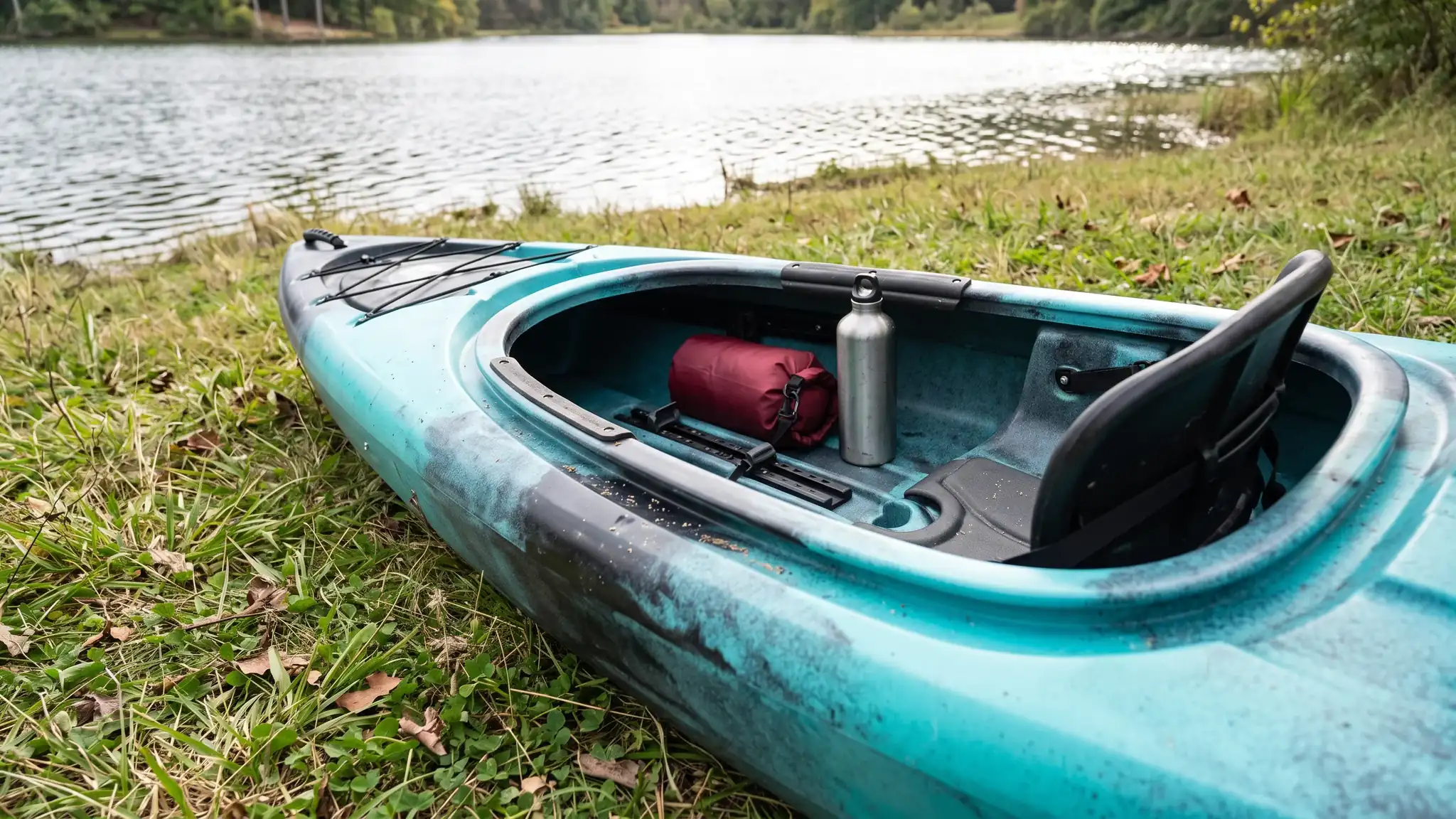
For a sit-in, check the cockpit size. The Tsunami 125 lists a cockpit of 35.75 in by 20 in, and the Pungo 120 lists 57 in by 22 in, which is a very different feel. A bigger cockpit is easier to enter and exit. A snugger one lets you control the boat with your hips and knees. For a sit-on-top, the seat matters more, because you're on it for hours. Framed, padded, and adjustable seats cost a little more and pay you back at the end of a long afternoon.
Weight You Can Handle Alone
Be honest about this one. If you'll often launch alone, weigh the boat against the car and your own back. A lighter boat, a cart, or a roof rack with lift assist can each fix the problem, and we cover those later.
Our take: Sit in the boat before you buy it. A spec sheet can't tell you whether your knees fit under the deck. In the store we can set a few boats side by side, and you can adjust the footrests and seat and see which one feels like it was made for you.

A Paddle Matters as Much as the Hull
A paddle is the engine of a kayak, and a poor one makes any boat feel slow and tiring. The main things to compare are length, weight, and blade shape.
Length and Stroke Style
Paddle length depends on your height and on the width of your boat. As an example, our listing for the Pelican Poseidon says its 230 cm length suits recreational paddlers between 5 ft 0 in and 6 ft 0 in in kayaks between 28 in and 32 in wide. Wider boats need a longer paddle, because your hands sit farther from the water. Ask us if you're between sizes.
The other choice is stroke style. A low-angle stroke holds the paddle shallow and relaxed, and the Poseidon listing says it reduces shoulder fatigue and helps you cover greater distances with less effort. A high-angle stroke is steeper, which gives more power and control for heavily loaded boats. The Aqua Bound Manta Ray Hybrid is listed for high-angle paddling, with a carbon shaft, a fibreglass and nylon blade, and an adjustable length.
What a Heavier Paddle Costs You
You lift a paddle thousands of times in a day, so its weight adds up. The Aqua Bound StingRay Fiberglass weighs 33.5 oz and is the maker's most popular blade style for flatwater. It is $194.95. The Grey Owl Tempest is a laminated wood touring paddle with a 14 in carbon fibre ferrule, listed at about 34 oz in the 230 cm length, for $294.95. At the top of our range, the Aqua Bound Tango Carbon is $614.95.
The Pelican Poseidon is $59.95 and is the value pick. It has a two-piece aluminum push-button shaft, fibreglass reinforced polypropylene blades, a push-button feathering adjustment from 0 to 65 degrees, and drip rings to keep your hands dry. Young paddlers can start on a Pelican Junior paddle, $19.95 in 152 cm or $29.95 in 183 cm. See all of them in the paddles section.
Our take: Put paddle weight on your shopping list next to the boat. You'll feel the difference in your shoulders at the end of the day, and it's one of the few upgrades that improves every outing. If money is tight, start with a value paddle like the Poseidon and upgrade once you know your stroke.

A Life Jacket You'll Actually Wear Beats One That Sits in the Bag
We said earlier that wearing the jacket is the point. The way to make that happen is to choose one that is comfortable in a kayak seat. Paddling life jackets often differ from general boating ones: The foam may sit higher so it stays clear of the seat back, the arm openings are cut for a paddle stroke, and there are pockets for a whistle and small gear. Whatever you buy, check the label for Canadian approval and the size range, because a jacket that is the wrong size is the wrong jacket.
Foam Vests for Everyday Paddling
The Mustang Survival Universal Fit PFD is $69.95 and is an entry-level adult option. The NRS Vapor PFD is $129.95. It's a low-profile jacket certified by Underwriters Laboratories Canada (ULC), with six-panel soft foam, padded shoulder straps, reflective accents, side-buckle entry with adjustments at the sides, shoulders, and waist, and a large front zippered pocket. It comes in sizes XS/M, S/M, L/XL, and XXL.
The Mustang Survival Java is $159.95. It's a front-entry foam vest made to fit longer torsos, with a contoured foam chassis, six points of adjustment, neoprene padded shoulders, and two zippered cargo pockets. Our listing notes a Harmonized Level 70 approval, which is both USCG and Transport Canada approved. If the shoulders or torso length of a standard vest never feel right, try this one.
Jackets for Anglers
The NRS Chinook Fishing PFD is $199.95. It's a medium-profile jacket approved by UL Canada, with PlushFit foam, a high back that clears a kayak seat, a mesh lower back for ventilation, two large zippered pockets for tackle boxes, a tool pocket for pliers or line cutters, a rod holder, and a strobe attachment point. NRS calls it the world's best-selling life jacket for kayak anglers.
Inflatable Jackets
The Mustang Survival Elite 120 Inflatable PFD is $349.95. It's an automatic inflatable with 120N buoyancy and a Hammar MA1 hydrostatic inflator, and it is slimmer than a foam vest until it inflates. An inflatable asks more of you than a foam vest, because it has an inflator and cylinder that need checking. Talk to us about whether it suits your kind of paddling before you choose it over foam.
Our take: For a first kayak, buy the foam vest that fits best and try it on in the store with your arms moving as if you were paddling. Raise your arms, reach forward, and twist. If the jacket rides up to your ears or digs under your arms, try the next one.
Gear That Makes the Boat Safer and More Useful
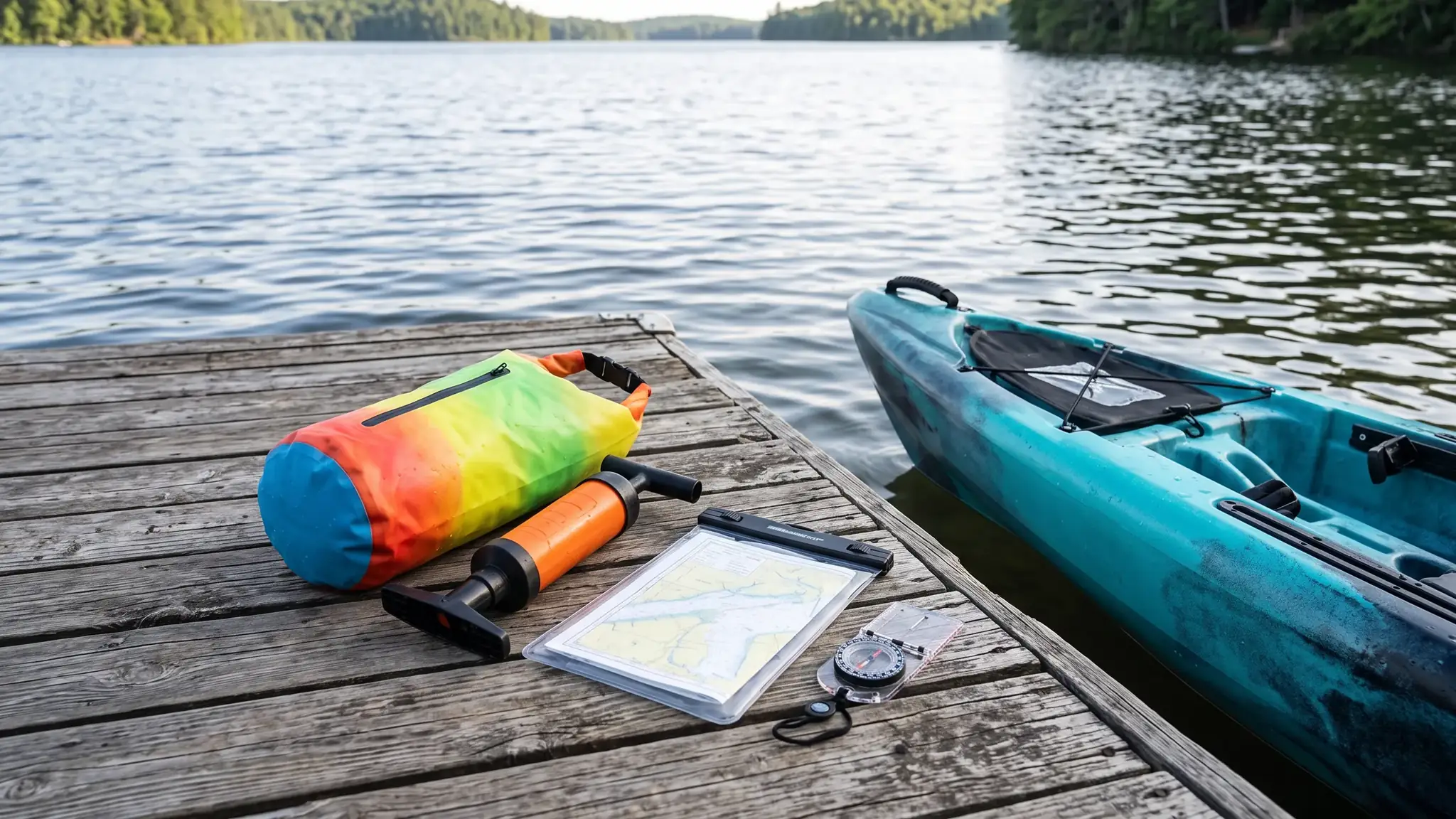
A kayak is the biggest purchase, but a few small items change how it behaves. We'd consider these in roughly this order.
Spray Skirts Keep a Sit-In Dry
A spray skirt seals the cockpit around your waist. It keeps spray, waves, and rain out of the boat, and it adds warmth in the cool shoulder seasons. The Seals Splash Deck is $66.95, in medium-weight coated nylon with double-stitched seams, a zippered mesh pocket, a tensioned deck stay, and a bungee cord rim attachment. The Seals Adventurer is $112.95, suited to calmer water, with removable suspenders and an adjustable waistband. Sizing depends on your cockpit, so bring the boat's model name with you.
Dry Bags Keep Your Phone and Lunch Usable
Even with a sealed hatch, the small items you want close, like keys, a phone, and a jacket, belong in a dry bag. The Chinook Paddler DLX Dry Bag is a 40 L bag for $27.95. The NRS Tuff Sack line runs from a 10 L bag at $41.95 to a 25 L bag at $59.95. Pick a size for the items you carry, and keep one small bag within reach for the things you'll need mid-paddle.
Rescue Gear for Sit-In Paddlers
The NRS Kayak Bilge Pump is $27.95. It's a 53 cm floating pump that empties 30 L per minute and sprays water over the side with no hose needed. The NRS Sea Kayak Paddle Float is $79.95, a dual air chamber outrigger that slips over a paddle blade to stabilise the boat for an unassisted re-entry. Both are only useful if you've practised with them, so try each once in shallow, warm water with a friend nearby.

Get the Kayak to the Water Without Hurting Yourself or the Boat
Carrying a kayak is where many first-time owners get frustrated. The boat is long, awkward, and heavier than it looks. A few products make it easy.
On a Vehicle
The Malone J-Pro 2 Kayak Carrier is $199.95. It's a J-style rooftop carrier with replaceable foam pads, universal mounting hardware, and 11 ft load straps for most rack styles, rated to 75 lb. J-style means the kayak sits on its side, which leaves room for a second boat or other cargo on the roof.
For a heavy boat, the Thule Hullavator Pro at $1,099.95 is a roof rack with gas-assist struts that lift about 90% of the kayak's weight, up to 19 kg, and let you load from the side at waist level. The listing gives a maximum kayak weight of 35 kg. It is a big spend, and it makes sense for someone who loads a heavy fishing kayak alone every week.
From the Car to the Shore
The Pelican SUP/Canoe/Kayak Transport Cart is $119.95. It has a corrosion-resistant metal frame, large inflatable wheels for varied terrain, and a 110 lb carrying capacity. Check your boat's weight plus any gear you'll roll on it against that rating.

Plan Where the Kayak Lives Between Trips, Including the Winter
A kayak is happiest when it isn't left to sag or bake. Our winters add a challenge, because a boat stored badly for five months can come out warped or damaged. We'd treat the questions below as practical advice, and your boat's maker may have its own care guidance that you should follow first.
Keep the Hull Supported and Off the Ground
The simplest storage is a pair of wall cradles or straps that hold the boat off the floor. The Malone YakSwing Folding Kayak Wall Storage Cradles are $99.95 and hold sit-inside and sit-on-top kayaks, with padded steel arms, a cable lock ring, and a 150 lb load capacity. They fold back against the wall when you don't need them. The Pelican Kayak Storage Strap kit is $44.95, with two adjustable straps rated to 100 lb each, for hanging one or two kayaks or paddleboards, up to 200 lb in total.
Shelter It From Sun and Snow
Indoors is best, such as a garage, a shed, or a basement. If the boat has to stay outside, we'd store it under cover and keep snow from piling up on it, because a heavy load or a point of pressure can leave a dent in a plastic hull. Rinse and dry the boat first, take the paddle and the life jacket inside, and open any hatches so air can move through.
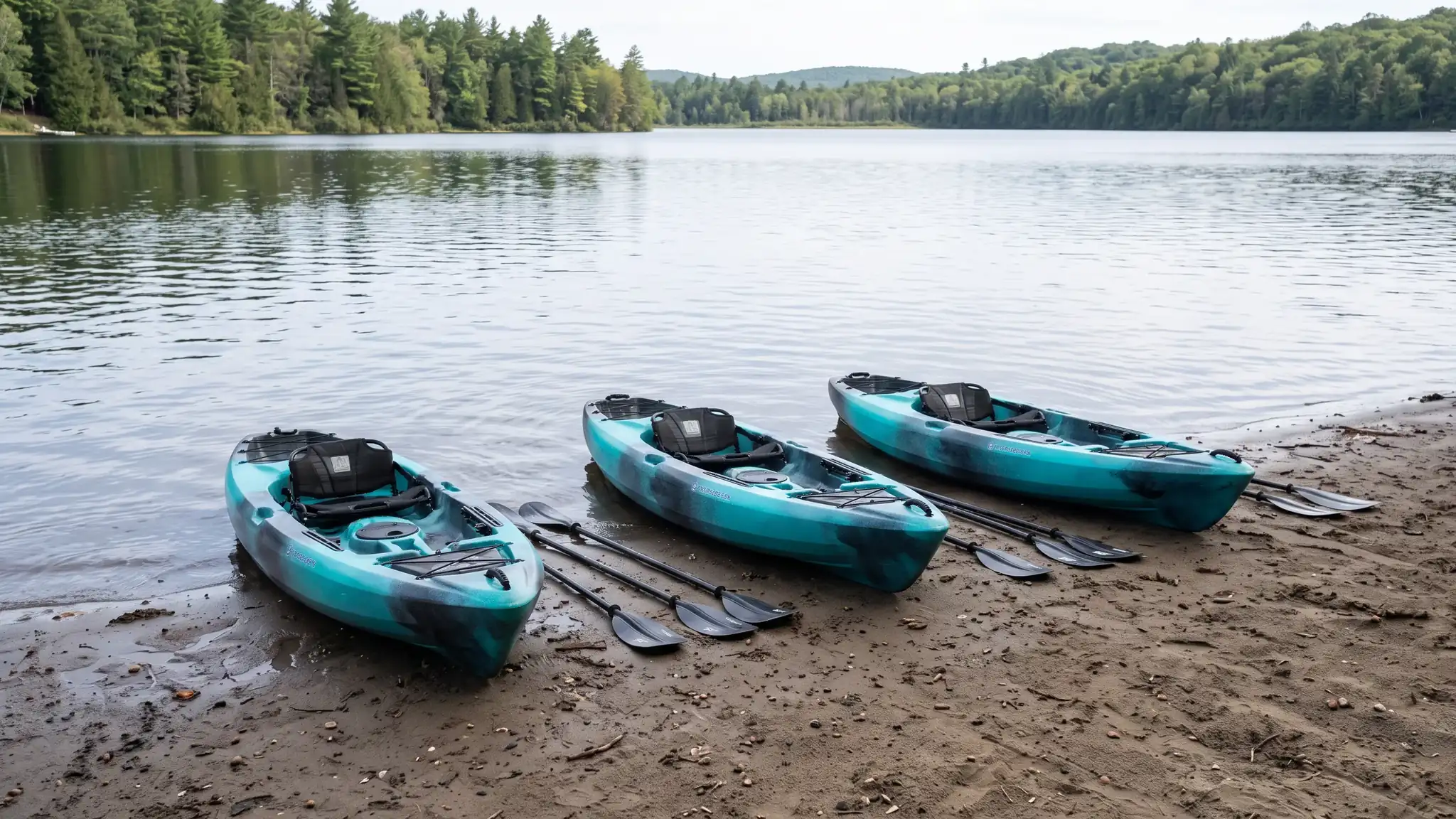
Learn the Basics From Someone Who Teaches Them
Buying a kayak is the first step, and learning to use it well is the second. Paddle Canada describes itself as "a community of trusted leaders that inspires connections to Canadians and nature through paddling," and it provides instruction and certification across canoeing, sea kayaking, river kayaking, stand up paddleboarding, and camping skills. Its sea kayaking programs progress "from a Basic Kayak Skills course in calm sheltered conditions" to "advanced skills for open coastal touring." The organization says it works through approximately 2,500 instructors across Canada.
If you're new, a Basic Kayak Skills course is the sensible first step, and it's the right place to practise a capsize and a re-entry in calm water with an instructor beside you. Do that before you take a new boat to open water.

Read the Materials and Warranty Line on a Listing
Two boats of the same length can differ a lot in how they're made, and the product page tells you how. Plastic kayaks are the usual choice for lakes and rivers, because the hull shrugs off scrapes on rocks, docks, and shorelines. The listings name the material, and the names are worth understanding.
Plastic Hulls and What the Names Mean
The Pelican Sentinel 80X listing says it's made from Ram-X, which it describes as an impact-resistant material that keeps the boat lightweight and built to last. The Paluski Spirit and Riptide use laminated polyethylene, and the listings call that construction very durable and virtually indestructible. These are the makers' own descriptions, and any plastic hull can still be gouged or dented by hard use, so treat them as a sign of toughness and not a promise.
Warranties and Where a Boat Is Made
Warranty terms vary by maker and by model, so read the line on each page. The Perception Pescador Pro listings give a 5-year warranty and say the boats are designed, moulded, and hand-assembled in the USA. The Paluski listings state a lifetime warranty, and say the boats are Canadian-made. The Pelican Argo 100X listing gives a lifetime limited warranty from the manufacturer and notes that the item is final sale. Where a listing is clear about a warranty, we've said so in this guide, and where it isn't, ask us before you buy.
Colours and One-Of-A-Kind Boats
Some plastic kayaks are made with colours that blend in the mould, so no two boats look the same. The Paluski listings say placement can't be controlled and that every boat is unique, and the Pelican Argo 100X listing says colours may vary slightly. If you are set on a particular look, tell us before you order.
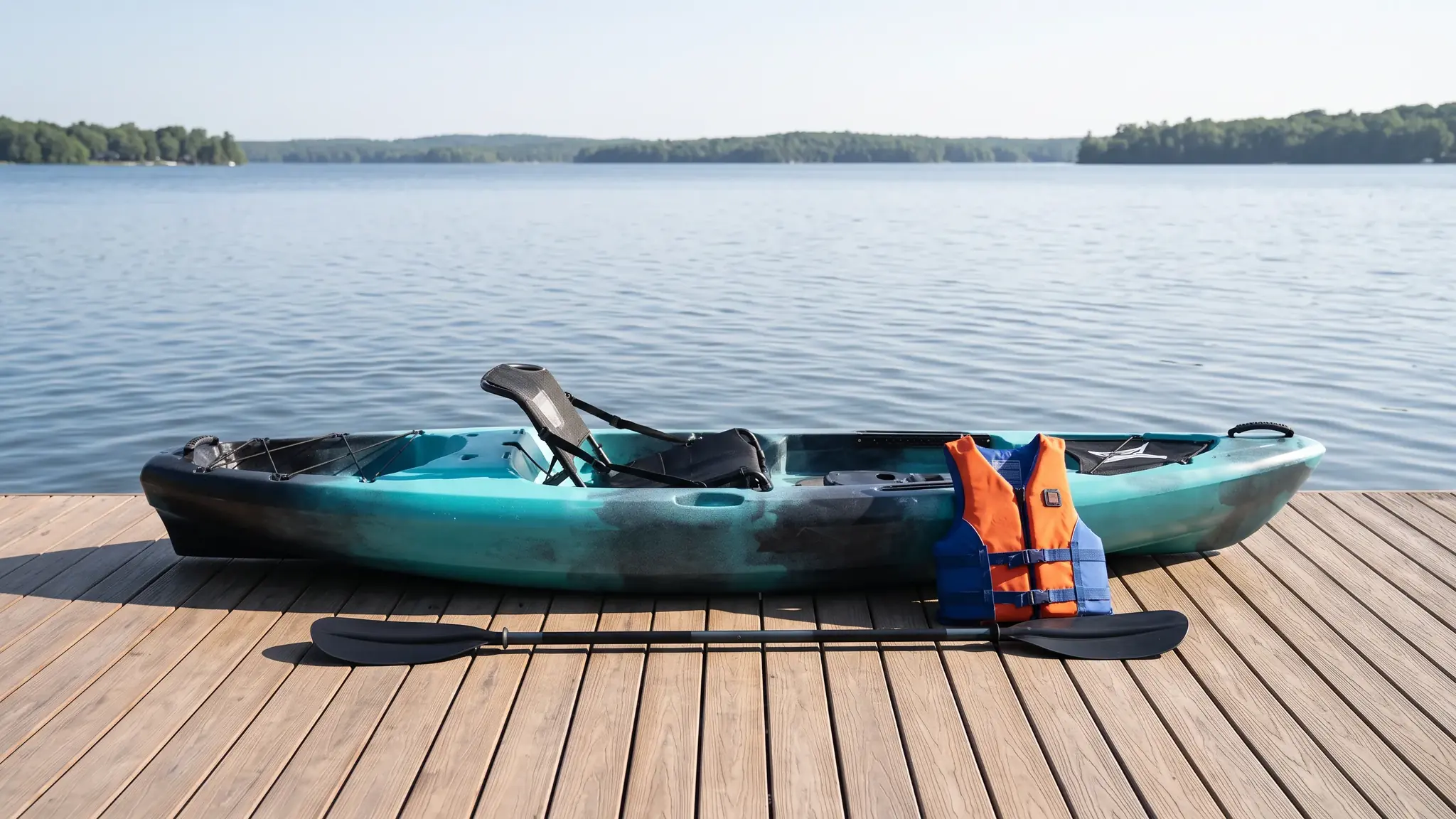
Budget the Whole Kit, Not Just the Boat
A kayak purchase is a package. Here are four examples built only from products on our site, with the prices adding up to a realistic first-season total. They don't include taxes, shipping, or a whistle and heaving line.
| Plan | What's in it | Total before tax |
|---|---|---|
| Easy start on calm water | Pelican Sentinel 80X ($399.95), Pelican Poseidon paddle ($59.95), Mustang Survival Universal Fit PFD ($69.95) | From $529.85 |
| Lake kayak with lasting gear | Wilderness Systems Pungo 120 ($1,649.95), Aqua Bound StingRay paddle ($194.95), NRS Vapor PFD ($129.95), Pelican transport cart ($119.95) | From $2,094.80 |
| Angler set-up | Perception Pescador Pro 10.0 ($1,249.95), Pelican Poseidon paddle ($59.95), NRS Chinook Fishing PFD ($199.95), Pelican transport cart ($119.95) | From $1,629.80 |
| Long-distance touring | Delta 17 with rudder ($2,945.00), Grey Owl Tempest paddle ($294.95), Mustang Survival Java PFD ($159.95) | From $3,399.90 |
The totals show where the money goes. The boat is the largest line in each plan, but a good paddle and a jacket that fits add up to a real share. It's better to buy a slightly smaller boat and a better jacket and paddle than the other way round.
Several of our kayaks list shipping as available by quote, and the Paluski boats are pick-up in store only, so ask us before you buy if the boat has to travel.
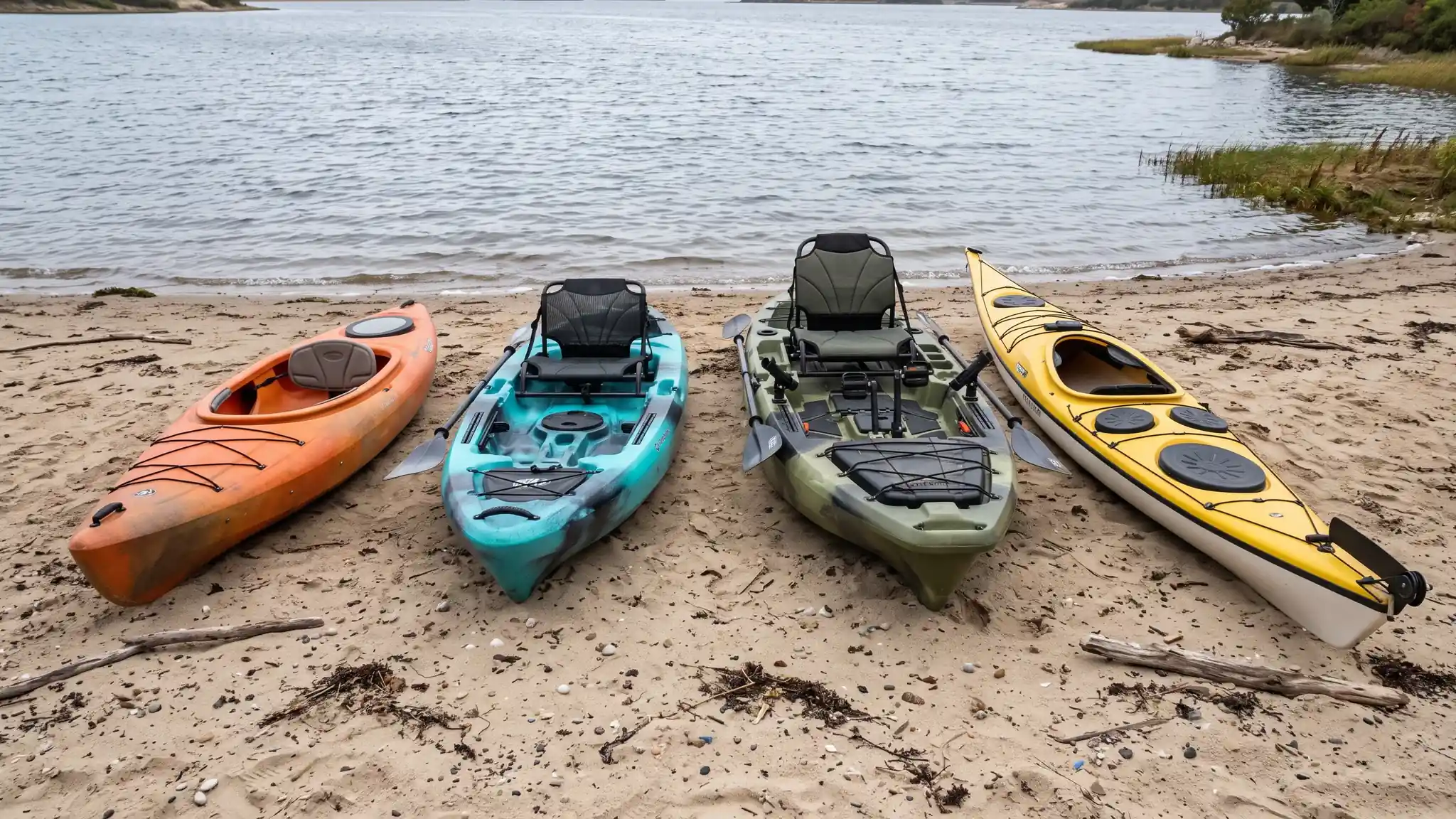
Which Kayak Fits Which Paddler
If the sections above gave you too many choices, this short guide matches the most common situations to the boats we've covered. It's a starting point for a conversation in the store and not a verdict, because fit and comfort still matter more than any list.
You Want a Calm-Lake Kayak for Summer Afternoons
Start with a stable, easy boat. The Pungo 120 ($1,649.95) and the Pelican Argo 100X ($579.95) are sit-ins for calm water, and the Tribe 115 ($1,089.95) is the open, easy-access choice. Pick the sit-in if you want shelter from wind and spray, and the sit-on-top if you want to jump in for a swim.
You Want to Fish
Choose a stable sit-on-top with a seat you can sit on all day. The Sentinel 100X Angler ($749.95) keeps the cost down, the Pescador Pro 10.0 ($1,249.95) is a strong middle choice, and the Recon 120 ($1,899.95) is for anglers who may add a pedal drive later.
You Want to Cover Distance on Bigger Water
Look at the sit-in boats with hatches and tracking help: the Axis 12.0 (at $1,649.95), the Tsunami 125 (at $1,899.95), the Paluski Riptide ($1,349.95), or, for trips, the Delta 17 ($2,945.00). Take a lesson first, and wear your life jacket every time.
You Are a Smaller Paddler
Weight and fit matter most. The Sentinel 80X ($399.95) is described as designed for the smaller paddler, the Delta 12s ($1,745.00) is for medium to smaller framed paddlers, and the Katana 9.7 ($2,199.95) suits paddlers from 100 to 210 lb, according to the listing.
You Are Short on Storage Space
Choose a shorter boat: the Tribe 095 ($969.95) at 9 ft 5 in, the Pungo 105 ($1,495.95) at 10 ft 6 in, or the Axis 10.5 ($1,449.95) at the same length. Pair the boat with a wall cradle and it takes up very little floor.
You Are Buying for a Tandem or a Family
This guide covers solo kayaks and the junior boats above. If you want a two-person boat or you're outfitting a family, call us with the number of paddlers and the water you'll use, and we'll point you to what we have.
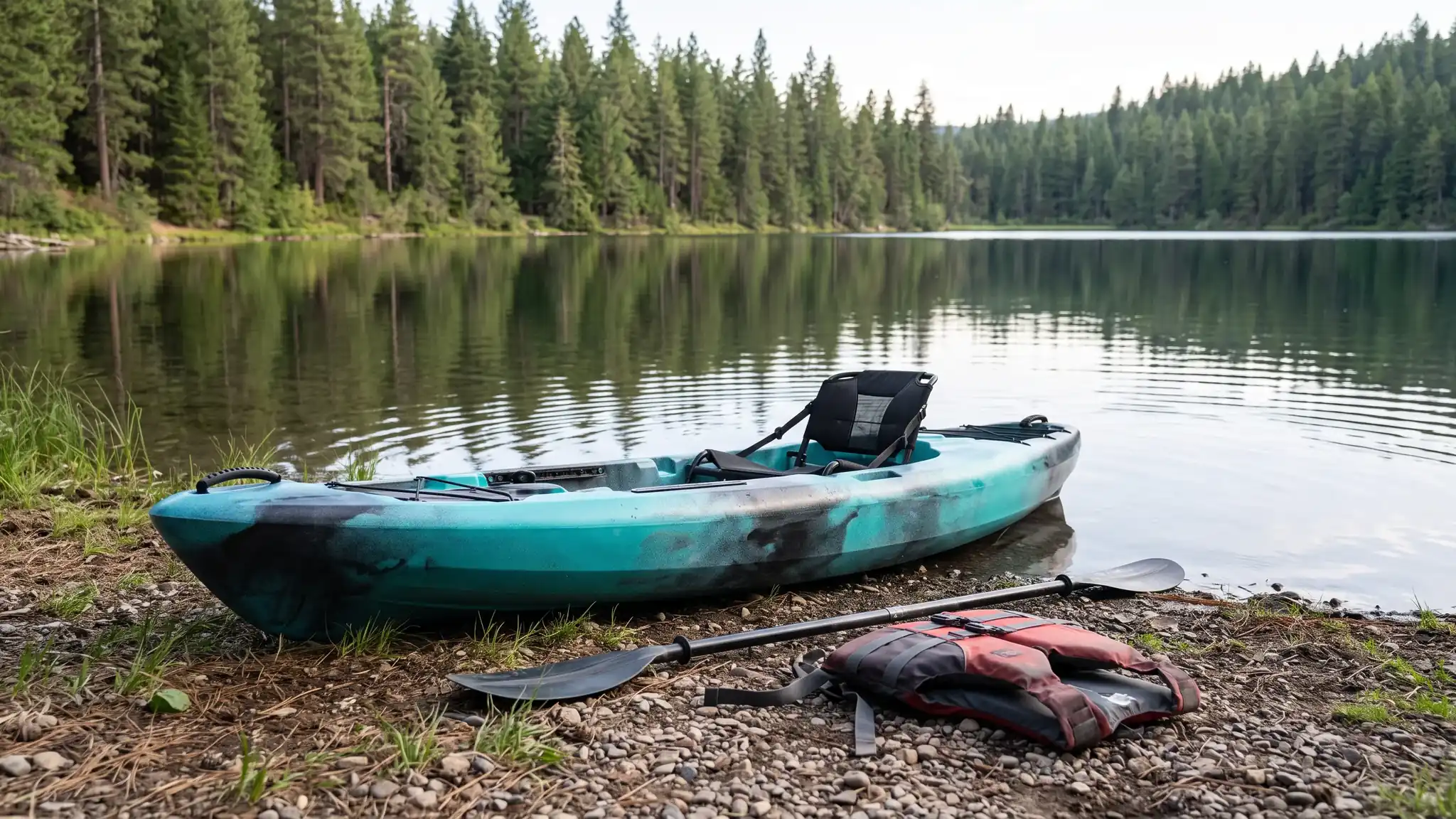
Seven Mistakes That Cost First-Time Buyers Money
These are the common ones. All of them are avoidable.
- Buying the longest boat on offer. Length helps on open water and hurts everywhere else, in the car, on the lift, and in the garage.
- Ignoring the weight. A 64 lb boat is a different proposition from a 36 lb one when you launch alone.
- Treating the life jacket as an afterthought. The federal regulations require one that fits each person on board, and the Lifesaving Society's cold water guidance explains why wearing it matters.
- Buying without sitting in it. Cockpits and seats feel very different from one boat to the next.
- Forgetting how it travels. Plan the roof rack, the straps, or the cart at the same time as the kayak.
- Forgetting where it lives. Decide on a spot for winter before the boat arrives.
- Skipping instruction. A short course on capsizes and re-entry is cheaper than learning them by accident.
Questions
What kayak suits Northern Ontario lakes?
For most inland lakes and slow rivers, a stable recreational or multi-water kayak of about 10 to 12 ft is a good start, such as the Pungo 120 or Axis 12.0. For larger water, consider a longer sit-in with hatches and a skeg or rudder. Water here is cold even in summer, so wear your life jacket and consider a lesson.
Sit-in or sit-on-top?
Choose a sit-on-top if you mostly paddle in warm weather, want easy on-and-off access, or plan to fish. Choose a sit-in if you want more protection from wind and spray, paddle in spring or fall, or want to cover distance and carry gear in sealed hatches. A spray skirt only works on a sit-in. If you're unsure, sit in both in our store.
How do I store a kayak in winter?
Rinse and dry it, then store it off the ground and supported so the hull doesn't take a point load, ideally indoors or at least under cover and away from piled snow. Wall cradles or hanging straps work well. Bring the paddle and life jacket inside, and check your maker's care guidance for anything specific to your boat.

Come Try Kayaks at Our Store in Sault Ste. Marie
The best way to choose a kayak is to sit in a few and talk it through. Visit Great Lakes Outfitters at 162 Old Garden River Rd, Sault Ste. Marie, ON P6B 5A6, or call us at (705) 253-2361. Tell us where you paddle, how you'll carry the boat, and what you're comfortable lifting, and we'll narrow the choices with you. Browse the full kayak range online first if you want to arrive with a short list.
Talk to us about it
- 162 Old Garden River Rd, Sault Ste. Marie, ON P6B 5A6
- (705) 253-2361
- Open today 10 a.m. to 6 p.m.
- Send us a message
References
About the author
Alan Lukala
Sales Representative
I am a sales representative at Great Lakes Outfitters. I have been here four years. Before that, I was a computer technician, a museum archivist, and an instructor in nature education.
More from Alan Lukala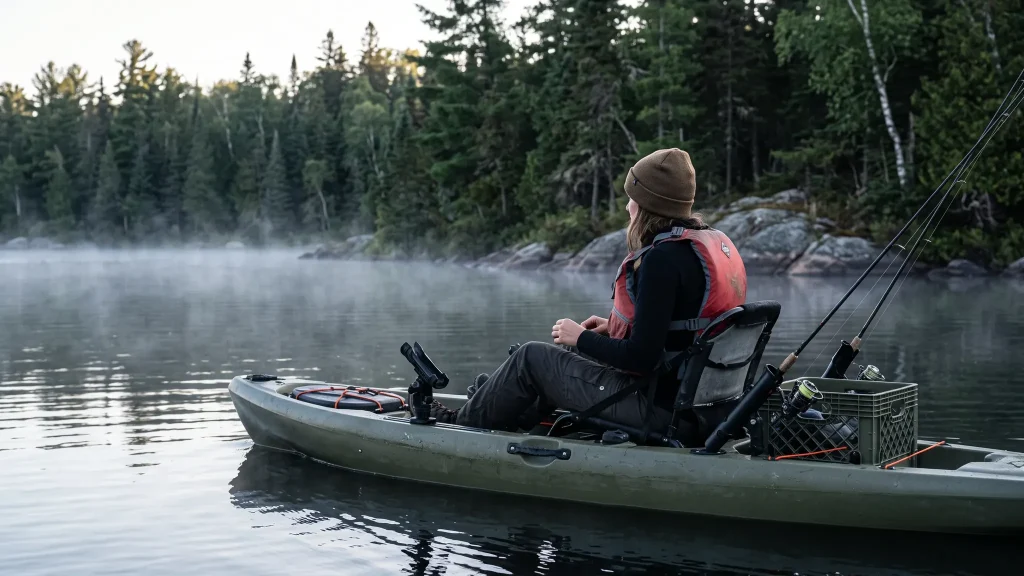


 English (Canada)
 Français du Canada