

Sit-On-Top Kayaks: A Buyer's Checklist
Choosing a sit-on-top kayak starts with one question: Where will you paddle, and who will be in the boat? This checklist walks you through capacity, seat comfort, and scupper holes, then the sit-on-top models we carry for every budget, and the safety gear Canadian paddlers need before the first trip.
TL;DR
- Where, how often, and who will paddle
- Capacity, length, and weight on the spec sheet
- Seat comfort for long days on the water
- Scupper holes and drain plugs
- The sit-on-top models we carry, from first boat to fishing platform
- Safety equipment for the water
- Visiting our store in Sault Ste. Marie
Who this article is for
- First-time paddlers buying their first sit-on-top kayak
- Parents shopping for a junior kayak
- Anglers comparing fishing kayaks
- Buyers deciding between a sit-on-top and a sit-in kayak

Alan Lukala
Sales Representative
A note from the author
We wrote this checklist around the kayaks and gear we sell at 162 Old Garden River Road, so every product named here is one you can buy from us. Prices are shown as they were on our store the day this went up. If you have questions, call us or come in and try a kayak for yourself.
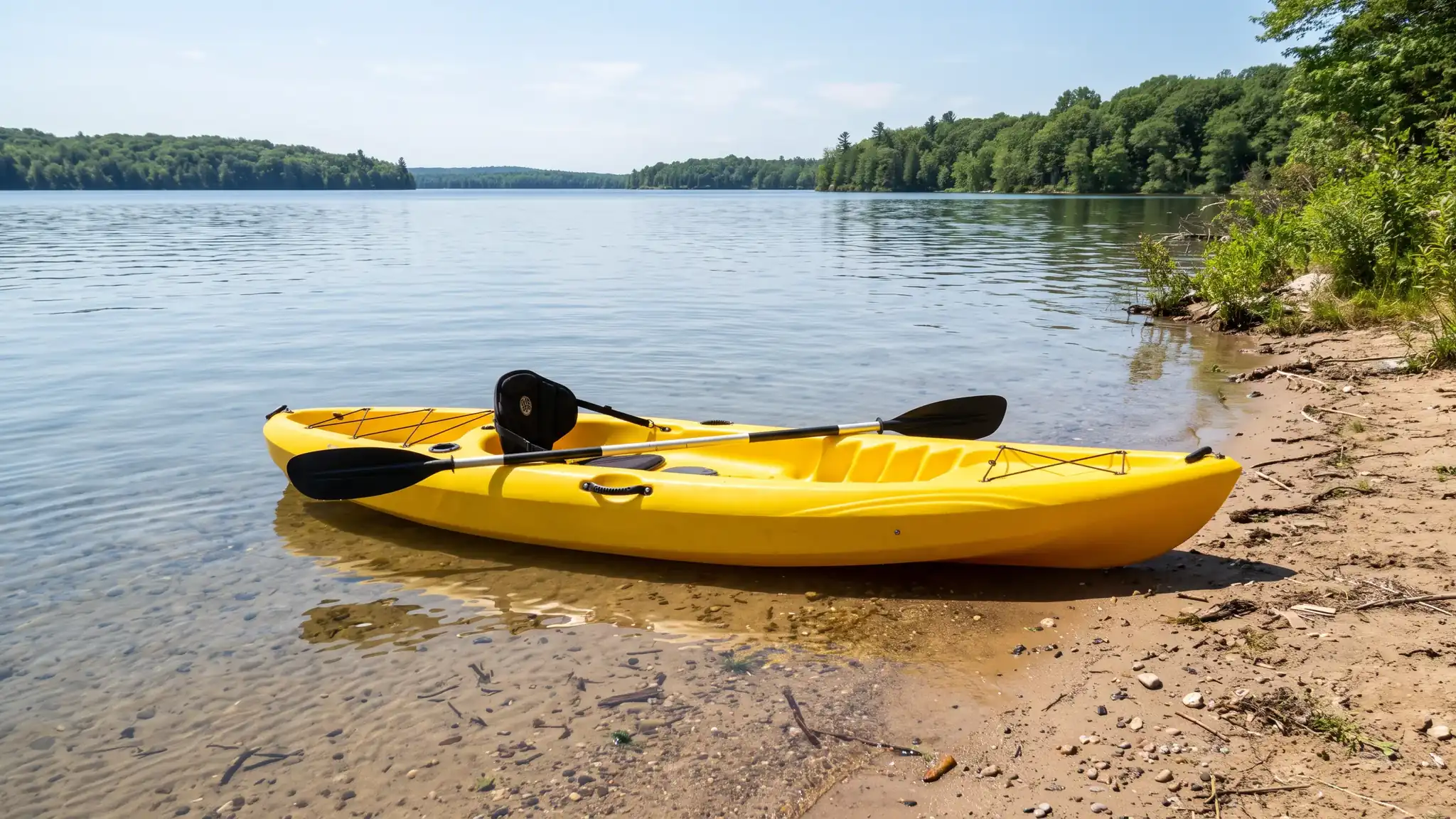
A Sit-On-Top Kayak Is the Easiest Kayak to Get On, Off, and Back Onto
A sit-on-top kayak has no enclosed cockpit. You sit on the deck, in a moulded seat or on a padded backrest, with your legs out in front of you and your feet on moulded footrests. Water that lands on the deck drains away through scupper holes, the open channels that run through the hull, so the boat empties itself instead of filling up. If you tip, you are beside the boat rather than trapped in it, and you can climb back on.
That is why a sit-on-top is a common first kayak. They suit warm-weather paddling on lakes and slow rivers, fishing, and families who want one boat that many people can use. They are not the best choice for every trip, and this checklist is meant to help you decide honestly. It walks through the questions to answer before you buy, then the models we carry in each price range.
One point before the checklist: Kayaks ship by quote. Our kayak pages tell you to call (705) 253-2361 for a price to your door, or to pick the boat up at our shop on Old Garden River Road. If you are driving over, plan how the kayak will travel home before you pay for it.

Start the Checklist With Where, How Often, and Who Will Paddle
Most buying mistakes happen because the kayak was chosen first and the water second. Answer these four questions in order, and the shortlist gets smaller on its own.
- Where will you paddle? Flat lakes, bays, and slow rivers suit nearly every sit-on-top. Perception describes the Tribe series as performing well in light surf, lazy rivers, and flat water, which is a fair description of what this kind of boat does best. Open water with big waves or fast current calls for more experience and a different boat.
- Who will paddle? A junior, a smaller adult, and a larger adult need different hulls. Every kayak has a maximum capacity, and it counts you plus your gear, not just you.
- What will you do from the boat? Casual paddling, fishing, and day trips with gear each push you toward different seats, storage, and mounts.
- How will you carry and store it? A 48 lb kayak and a 57 lb kayak feel very different on a driveway, and a 10 ft boat is easier to get into a garage than a 12 ft one.
If you can answer those four, you already know more than most first-time buyers. The next sections cover what to look for in the boat itself.
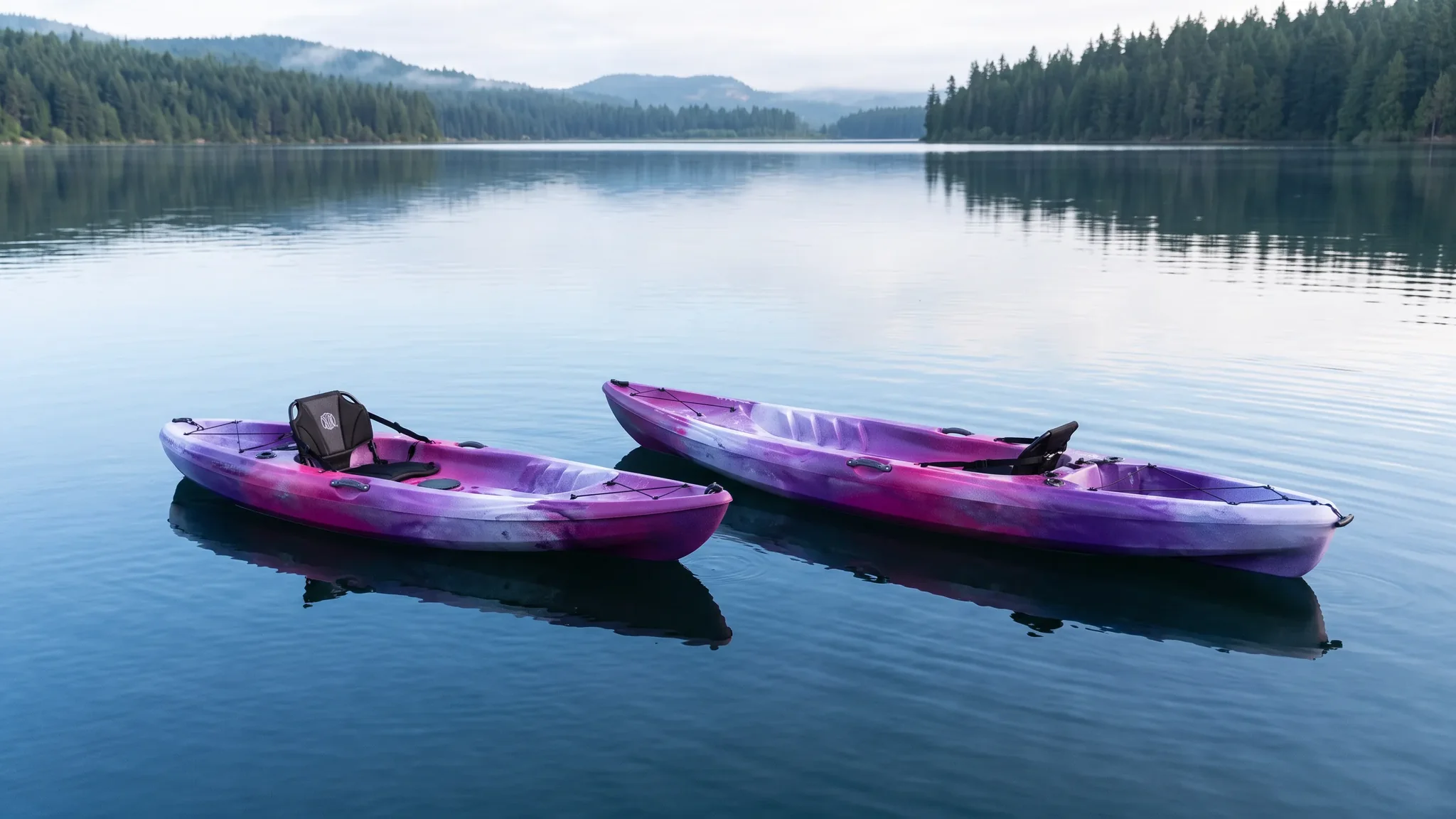
Check the Capacity, Length, and Weight on the Spec Sheet Before Anything Else
Three numbers on the product page tell you most of what you need to know.
Capacity
Capacity is the total weight the kayak is rated to carry, including the paddler, a paddle, a lifejacket, a cooler, and a tackle box. The kayaks below range from a 100 lb junior boat to models rated for 300 lb, 325 lb, and 350 lb. Stay well under the rating if you can. A boat that is loaded to its limit sits lower in the water and is less forgiving.
Length and Width
Length affects how the boat tracks and how it fits on a roof rack, in a truck bed, or in a garage. Width affects how stable it feels. Among the kayaks we carry, the Pelican Sentinel 80X is 100 inches long and 29.5 inches wide, the Sentinel 100X is 30 inches wide, and the Perception Tribe 095 is 31.5 inches wide. A wider hull usually feels steadier when you step on, which helps a nervous first-timer.
Weight
The weight on the page is the empty boat. You will lift it more often than you paddle it far, onto a roof, down to the shore, and into storage. The Pelican Solo junior boat weighs 20 lb and the Sentinel 80X weighs 32 lb. The Tribe 095 is 48.5 lb, the Tribe 115 is 52 lb, and the fishing kayaks below run about 57 lb. Rigid side handles and toggle handles at each end make any of them easier to move, and most of the models here have both.
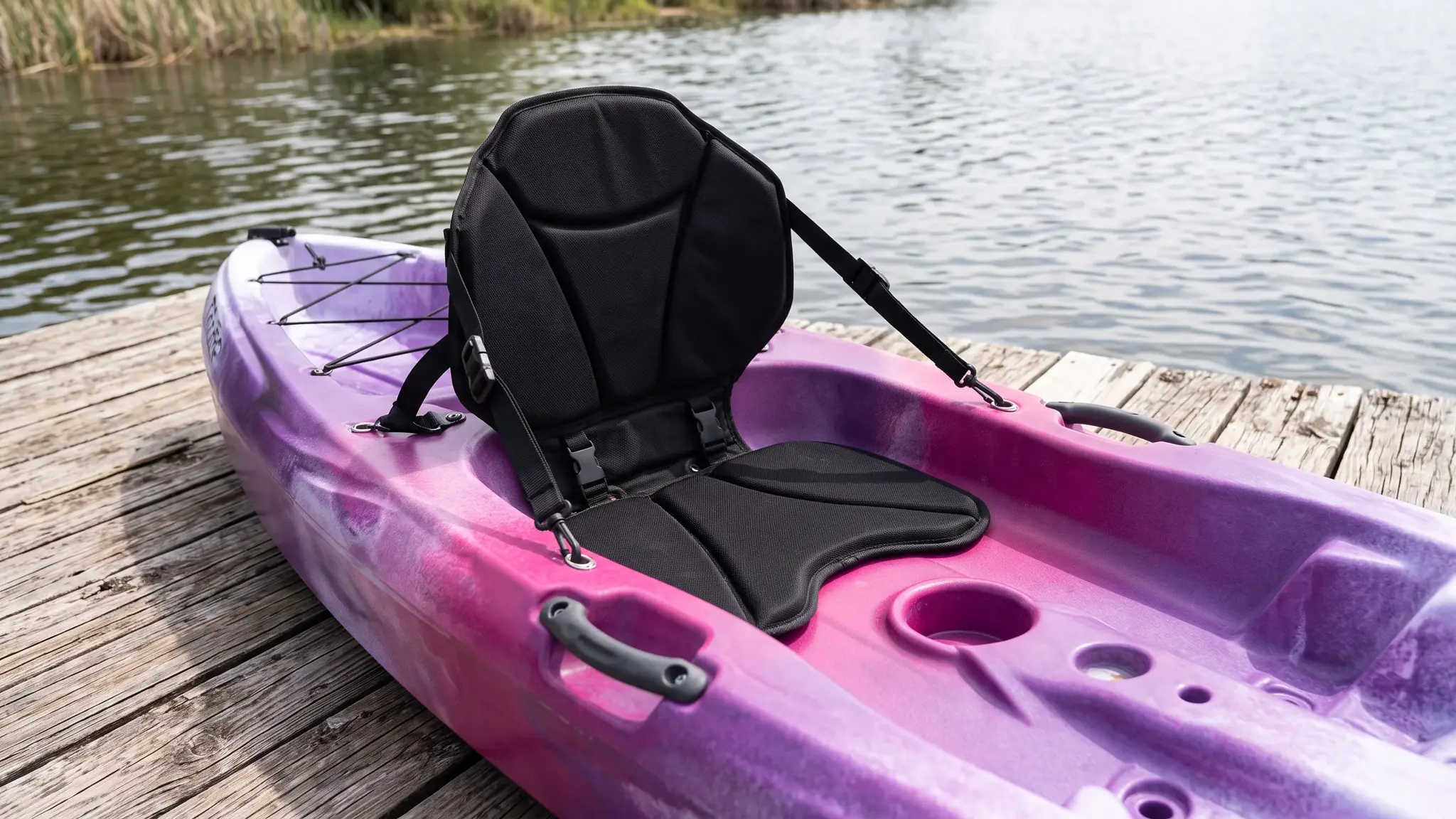
Seat Comfort Decides How Long You Will Stay on the Water
A kayak you can only tolerate for forty minutes does not get used. Look for a seat with an adjustable backrest, a padded base, and footrests that suit more than one leg length. The seat is also the first thing to compare in person, so sit in the boat if you can.
The step up from the entry boats is mostly seating. The Perception Tribe series has a framed seatback with infinitely adjustable recline positions, a padded seat, and moulded footrests sized for different paddlers. The Wilderness Systems Tarpon 105 uses a Phase 3 AirPro seating system with three-point adjustability. The Perception Pescador Pro 10.0 has a removable, adjustable camp chair seat, which sits you higher and is easy on the back for long fishing days.
If the seat on a boat you like is not quite right, a separate cushion can help. The Pelican Adjustable Padded Seat ($57.95) is a water-repellent seat that adjusts to the kayak you already own.
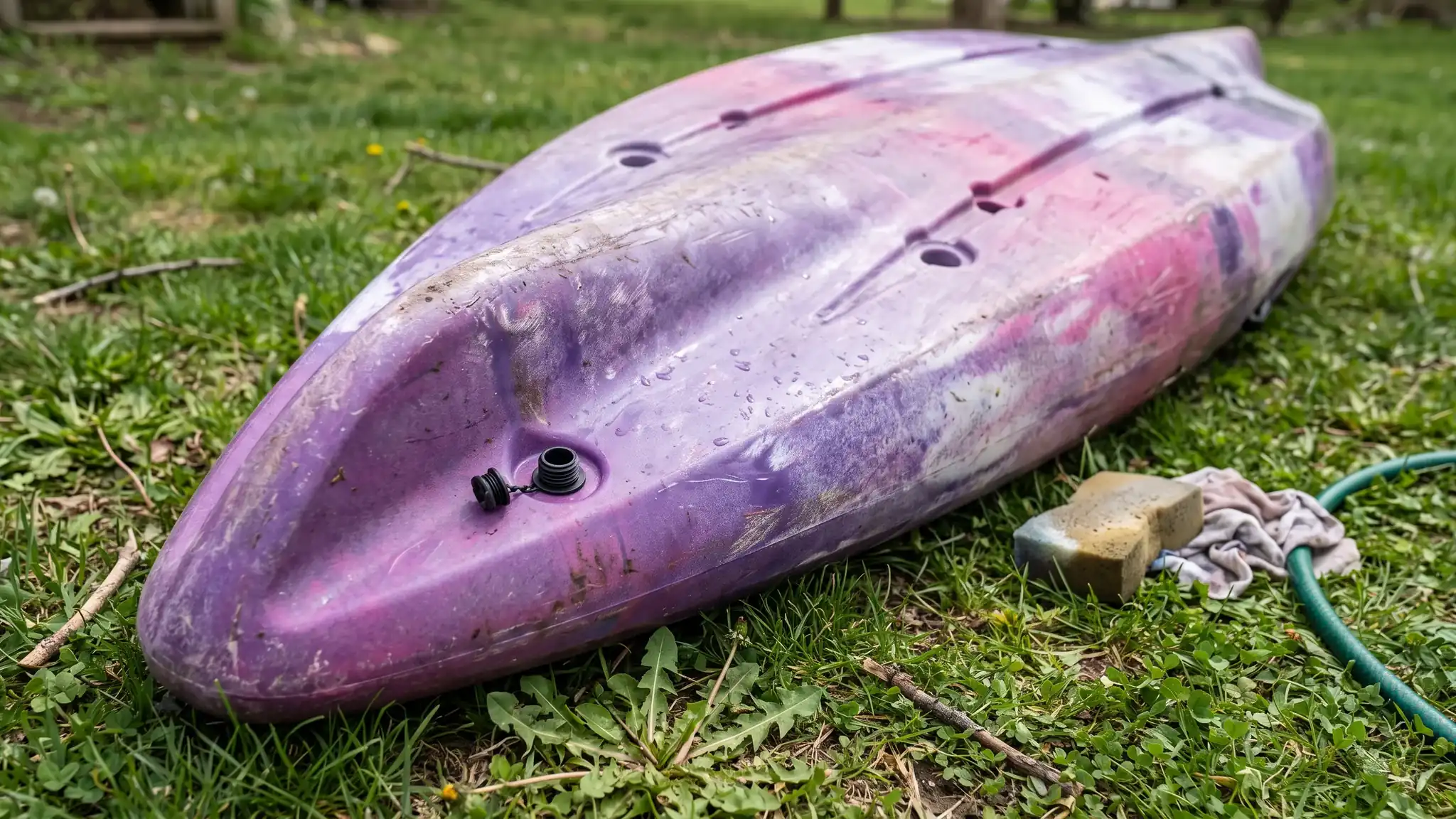
Know What the Scupper Holes and Drain Plugs Do Before You Take It Out
Scupper holes and drain plugs confuse a lot of first-time buyers, so here is how they work.
Scupper holes are the drain channels through the deck. On a sit-on-top they let water that splashes aboard run straight out, which is why these boats are called self-bailing. The Pelican Solo page describes it exactly that way: self-bailing with scupper holes. The same design is why you may sit in a little water, and why a dry bag is a better place for a phone or keys than your pocket. The Perception Tribe models also have a small centre hatch for keys or a wallet, and the Perception page itself suggests using a sealed dry bag for anything that must stay dry.
Scupper plugs block those holes when you want a drier ride, for example when the boat is heavily loaded and sitting low. The Pelican Scupper Plugs, Set of 4, Medium ($19.95) are flexible EVA plugs for scuppers between 3.8 and 4.4 cm. They are sold separately from the Perception Tribe kayaks, so add them to your list if you want them. The Pelican Scupper Plugs, Small ($14.95) are a pack of four that come with a 12 in. rope. Check the hole size on your boat against the listing first.
The drain plug is a separate fitting that lets you empty any water out of the hull after paddling or storage. The Pelican Sentinel 80X lists a drain plug in its features. If you lose one, the Pelican Drain Plug 11/16" ($12.95) has a crossbar so you can drain the kayak without taking the plug out and risking losing it. Match the size to your boat before you buy.
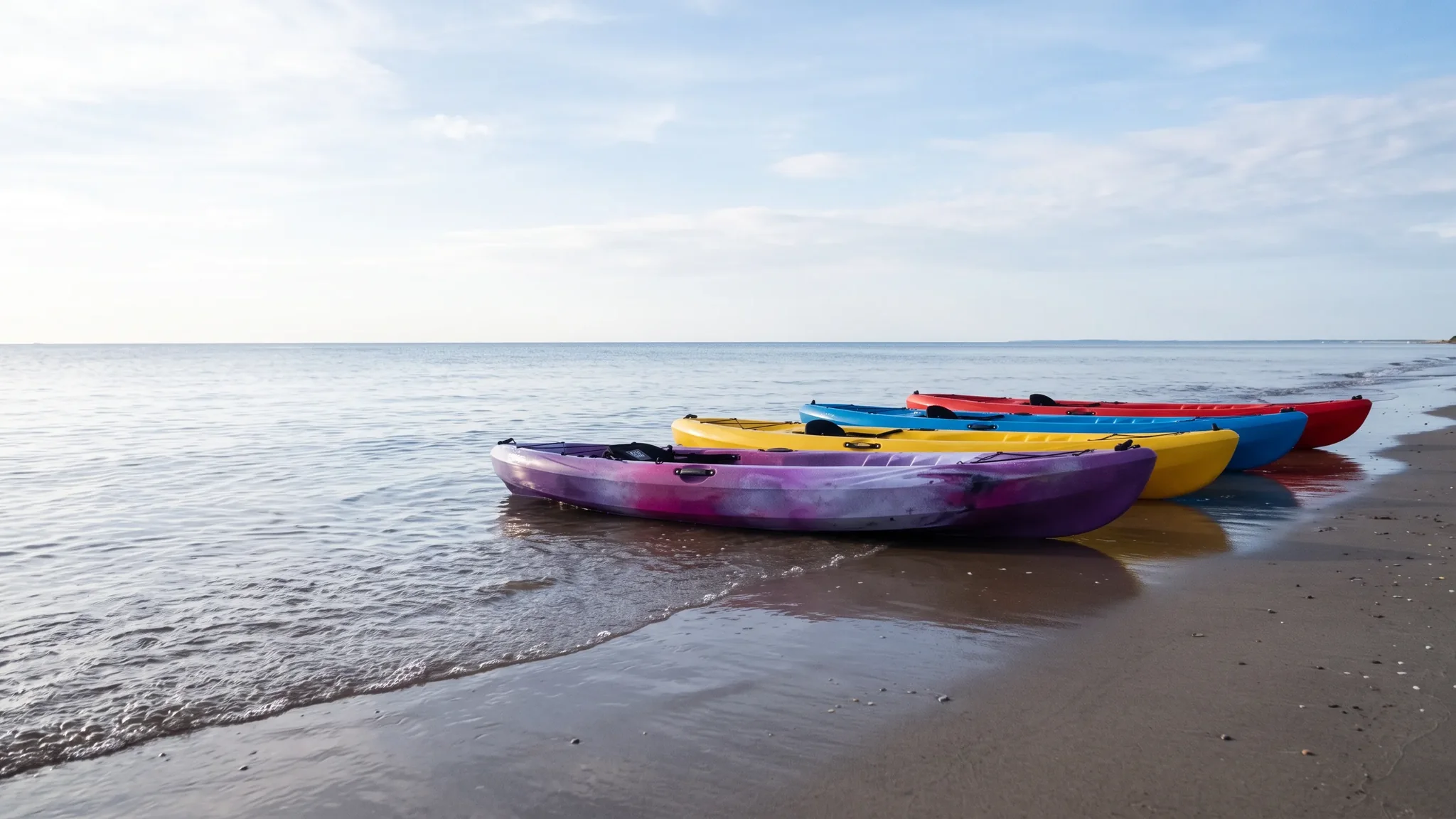
The Sit-On-Top Models We Carry, From a First Boat to a Fishing Platform
Here are the sit-on-top kayaks on our shelves, grouped by what they are for. Prices are what the product pages list today, and a quick call to the store confirms what is in stock.
For Young Paddlers: Pelican Solo Junior
The Pelican Solo Junior is 6 ft long and 24 inches wide, weighs 20 lb, and carries up to 100 lb. It has a twin tunnel hull, a moulded seat and footrests, a bottle holder, a safety flag, and a kid paddle in the package. It is $229.95. It is the right size for a child who is learning, with a parent close by, and the wrong size for anyone heavier than its rating.
For a First Adult Kayak on a Budget: Pelican Sentinel 80X
The Pelican Sentinel 80X is a beginner-friendly kayak described as designed for the smaller paddler. It has a twin-arched multichine hull for stability, an adjustable padded backrest, a storage platform with bungee cords, and a bottle holder. It is 100 inches long, 29.5 inches wide, and 32 lb, in Pelican's impact-resistant Ram-X material, at $399.95. Our take: It is the lightest adult-sized boat here, which counts for a lot if you will carry it alone. Check the weight limit on the page against your own gear weight before choosing it.
For a Roomier Recreational Boat: Pelican Sentinel 100X
The Pelican Sentinel 100X is a 10 ft sit-on-top with an adjustable ERGOFORM backrest and seat cushion, moulded footrests, a rear tank with bungee cords, and a dual-position bottle holder. It holds 300 lb, and extra flotation in the hull meets or surpasses ABYC standards. It is $579.95. It is a sensible choice for most adults who want an easy lake kayak without a large budget.
For the Best All-Round Comfort: Perception Tribe 095 and Tribe 115
The Perception Tribe 095 is 9 ft 5 in long, 31.5 inches wide, and 48.5 lb, with a 300 lb capacity. It is $969.95. The Perception Tribe 115 is 11 ft 5 in long, 30.25 inches wide, and 52 lb, with a 350 lb capacity, at $1,089.95. Both have the framed adjustable seatback, a padded seat, moulded footrests, open storage with bungee lashing at each end, a centre hatch, and a recess for adding accessory mounts without drilling. Perception calls the Tribe 115 its best-selling sit-on-top. We'd choose the 095 for a smaller space or a smaller paddler, and the 115 for a larger paddler or more gear.
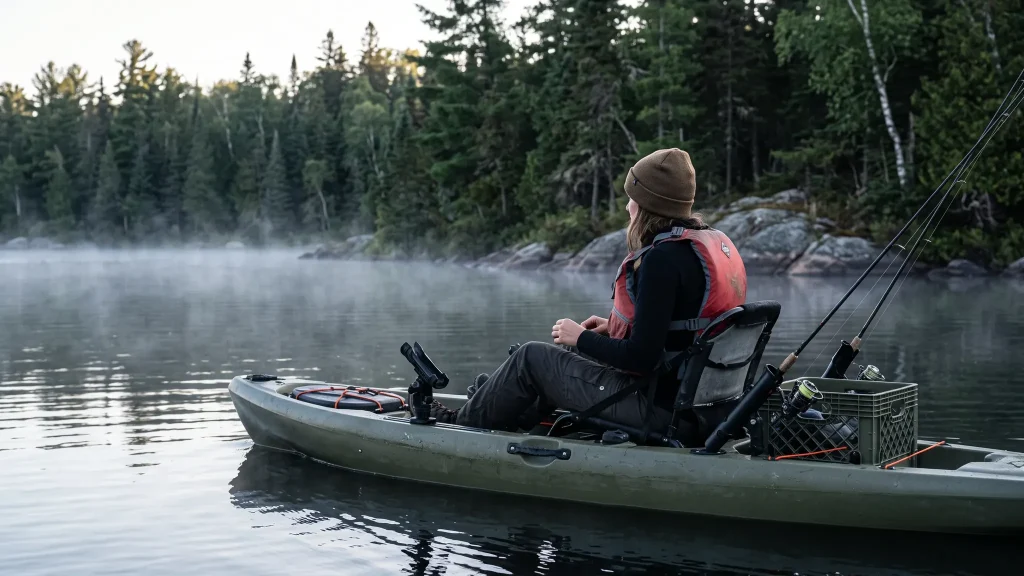
For Fishing: Perception Pescador Pro 10.0 and Wilderness Systems Tarpon 105
The Perception Pescador Pro 10.0 is a 10 ft 6 in fishing sit-on-top that weighs 57 lb and carries 325 lb. It has the removable camp chair seat, generous storage, accessory mount options, and a 5-year warranty. It is $1,249.95. The Wilderness Systems Tarpon 105 is also 10 ft 6 in, at 57.5 lb with a 325 lb capacity. It adds the AirPro seat, an integrated DryTec Case for valuables, a magnetic bottle holder, and configurable deck rigging. It is $1,499.95. Pick the Pescador if you want a simple, stable fishing platform. Pick the Tarpon if dry storage and a more adjustable seat are worth the extra money.
You can compare these and the rest of the range on our kayak page. Sit-in models also appear there, and the next section explains the difference.
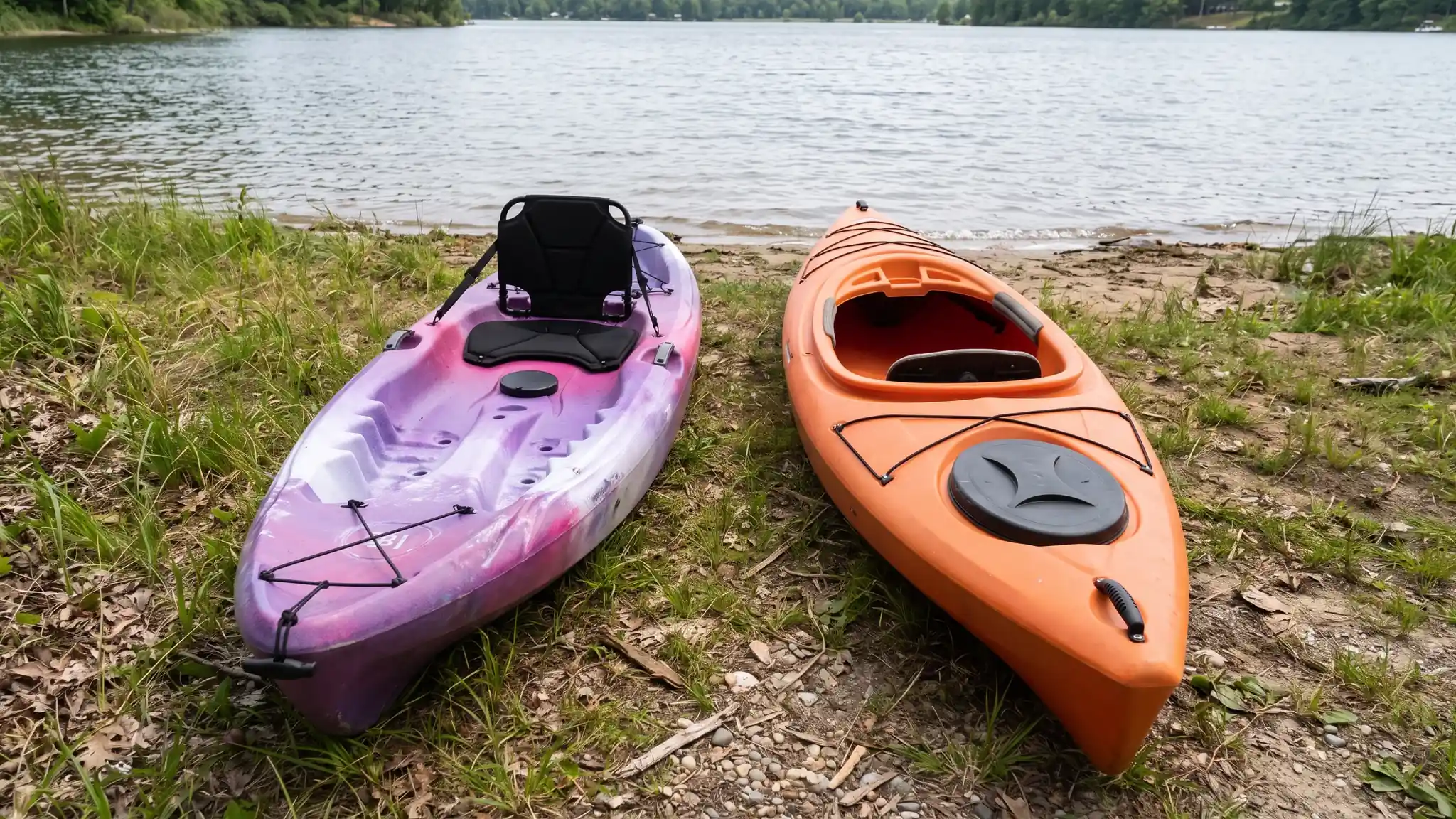
A Sit-In Kayak Is Drier and Faster, but a Sit-On-Top Is Easier to Live With
People often compare the two types before buying, so here is a straight comparison.
- Getting on and off: A sit-on-top is easier, because there is no cockpit to slide into. A sit-in asks you to fold your legs under the deck.
- Staying dry: A sit-in keeps you drier and, with a spray skirt fitted to the cockpit, keeps water out. Our shelves carry spray skirts such as the Seals Sprayskirts Splash Deck and the Seals Sprayskirt Adventurer for that reason, and they are for sit-in kayaks. A sit-on-top gets you wetter, which is welcome on a hot day and a drawback in spring or fall.
- After a flip: In a sit-on-top you are beside the boat and climb back on. A sit-in that fills with water is harder to recover.
- Storage: A sit-in has covered storage in the hull. A sit-on-top has open deck space and, on some boats, a hatch, so bags need to be strapped down or kept in dry bags.
- Cold weather: A sit-in with a skirt gives you more shelter. A sit-on-top leaves you exposed to splash and wind.
Our take: If you want to paddle warm-weather lakes, fish, or share a boat with family, a sit-on-top is the easier choice. If you paddle cold water often or want to cover more distance, ask us about a sit-in before you decide.
Plan for the Water Before You Plan for the Kayak: Safety Equipment You Need
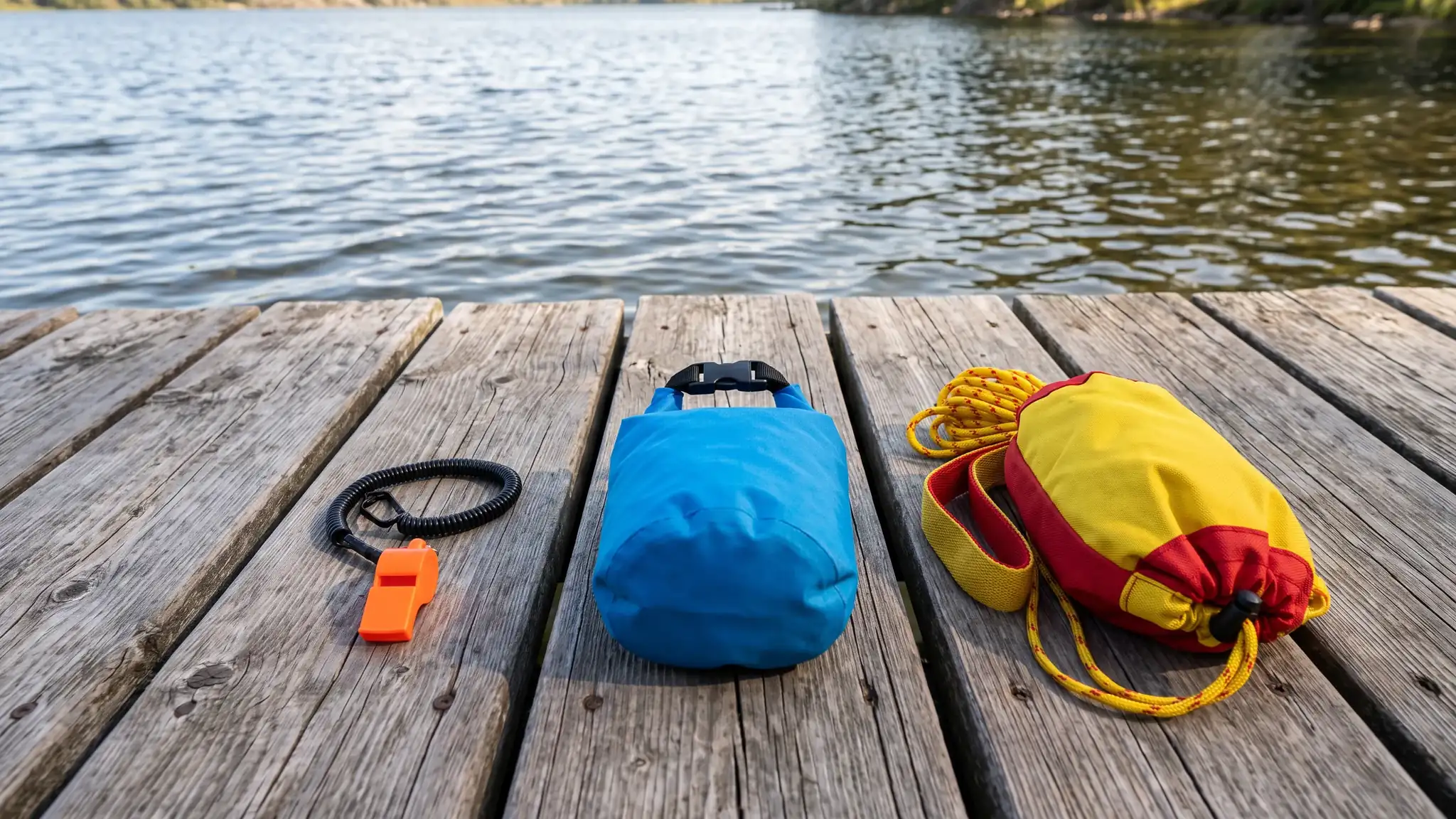
A kayak is one purchase. The safety gear is a second purchase, and in Canada part of it is required. Transport Canada's Safe Boating Guide (TP 511E) is the federal guide to the safety rules for pleasure craft, including kayaks. Its table of minimum equipment lists sealed-hull and sit-on-top kayaks and says each needs one lifejacket or PFD for each person on board, a reboarding device where a person must climb more than 0.5 m to get back on, and a buoyant heaving line of at least 15 m. It also adds a sound-signalling device. If everyone on board is wearing a lifejacket or PFD of the appropriate size, you are only required to carry a sound-signalling device, plus a watertight flashlight if the boat is used after sunset, before sunrise, or in low visibility.
The guide's stronger message is about wearing it, not carrying it. Transport Canada says that about 90% of the people who drown while boating weren't wearing a lifejacket or PFD, and that conditions such as wind, waves, cold water, and injuries can make it very hard to find and put one on after you are in the water. Its summary is to always wear your lifejacket or PFD when on or near the water.
For a paddler, that means a vest-style PFD with room to move your arms. The Mustang Survival APF Adult Foam Vest ($109.95) is a one-size adult vest with nine adjustment points. The Mustang Survival Java Foam Vest ($159.95) is a front-entry vest with a ripstop nylon shell. Try them on with the shirt you will paddle in, and ask us to adjust the fit.
The NRS Sea Kayak Paddle Float ($79.95) is a dual air chamber float with a buckle-on paddle pocket and reflective tape, used to make an emergency re-entry more stable. Ask us how it works, and practise with it in calm, shallow water before you rely on it.
Lastly, a boat that stays where you left it is worth planning for. The Harmony Gear Kayak Security Cable ($69.95) is a 55-inch cable made for sit-on-top kayaks, with a keyless four-digit combination lock.
Questions
Are sit-on-top kayaks safe in cold water?
They can be used in cold water, but they offer no shelter from it. A sit-on-top leaves you exposed to splash and wind, and a fall in cold water is a serious risk. The Lifesaving Society's 1-10-1 rule says you have 1 minute to control your breathing and 10 minutes to get out before you lose the ability to move effectively. Transport Canada advises a PFD with thermal protection in water under 15°C, and we'd add that spring and fall paddling needs more thought than July.
How do I get back on after a flip?
On a sit-on-top you are beside the boat, so you climb back on from the water. Stay calm, keep hold of the kayak and paddle, and practise in shallow, calm water with a lifejacket on before you head out. A paddle float helps make re-entry steadier. We're glad to talk through your options in the store.
What are the drain plugs for?
A drain plug lets you empty water out of the hull after paddling or storage. It is separate from the scupper holes, which drain the deck while you paddle. Scupper plugs block those deck holes for a drier ride when the boat is heavily loaded. Check the plug size for your model before you buy, because the sizes differ.

Come Try the Kayaks at Our Store in Sault Ste. Marie
The best way to pick a kayak is to sit in it, lift it, and ask questions. Visit Great Lakes Outfitters at 162 Old Garden River Rd, Sault Ste. Marie, ON P6B 5A6, or call us at (705) 253-2361. Tell us where you plan to paddle and who will be in the boat, and we'll point you to the right one.
Talk to us about it
- 162 Old Garden River Rd, Sault Ste. Marie, ON P6B 5A6
- (705) 253-2361
- Open today 12 p.m. to 5 p.m.
- Send us a message
References
About the author
Alan Lukala
Sales Representative
I am a sales representative at Great Lakes Outfitters. I have been here four years. Before that, I was a computer technician, a museum archivist, and an instructor in nature education.
More from Alan Lukala



 English (Canada)
 Français du Canada