

Men's Winter Boots: Warmth Ratings, Soles, and Fit
Choosing men's winter boots at our store starts with one question: how cold will your feet be, and how much will you be moving? We'll walk you through what a warmth rating really tells you, leather versus rubber, soles, socks, and fit, then which boot suits which kind of Northern Ontario winter.
TL;DR
- Reading a warmth rating
- Why insulation and a dry foot go together
- Leather or rubber lowers, and removable inner boots
- Soles for grip and warmth
- Socks and how a winter boot should fit
- Which boot for which kind of winter
- Where to try them on in Sault Ste. Marie
Who this article is for
- Men buying winter boots for Northern Ontario cold
- Hunters and snowshoers who stay on the move all day
- Anglers and workers who spend hours standing in the cold
- First-time buyers unsure how to read a warmth rating or check fit
Shannon Prosser
Store Manager
A note from the author
We wrote this guide around the boots and socks we sell at 162 Old Garden River Road, so every product named here is one you can buy from us. Prices are as they were on our store the day this went up. If you have questions about warmth, soles, or fit, call us or come in and we'll help you try a pair on.
A Warmth Rating Is a Starting Point, and Your Foot Decides the Rest
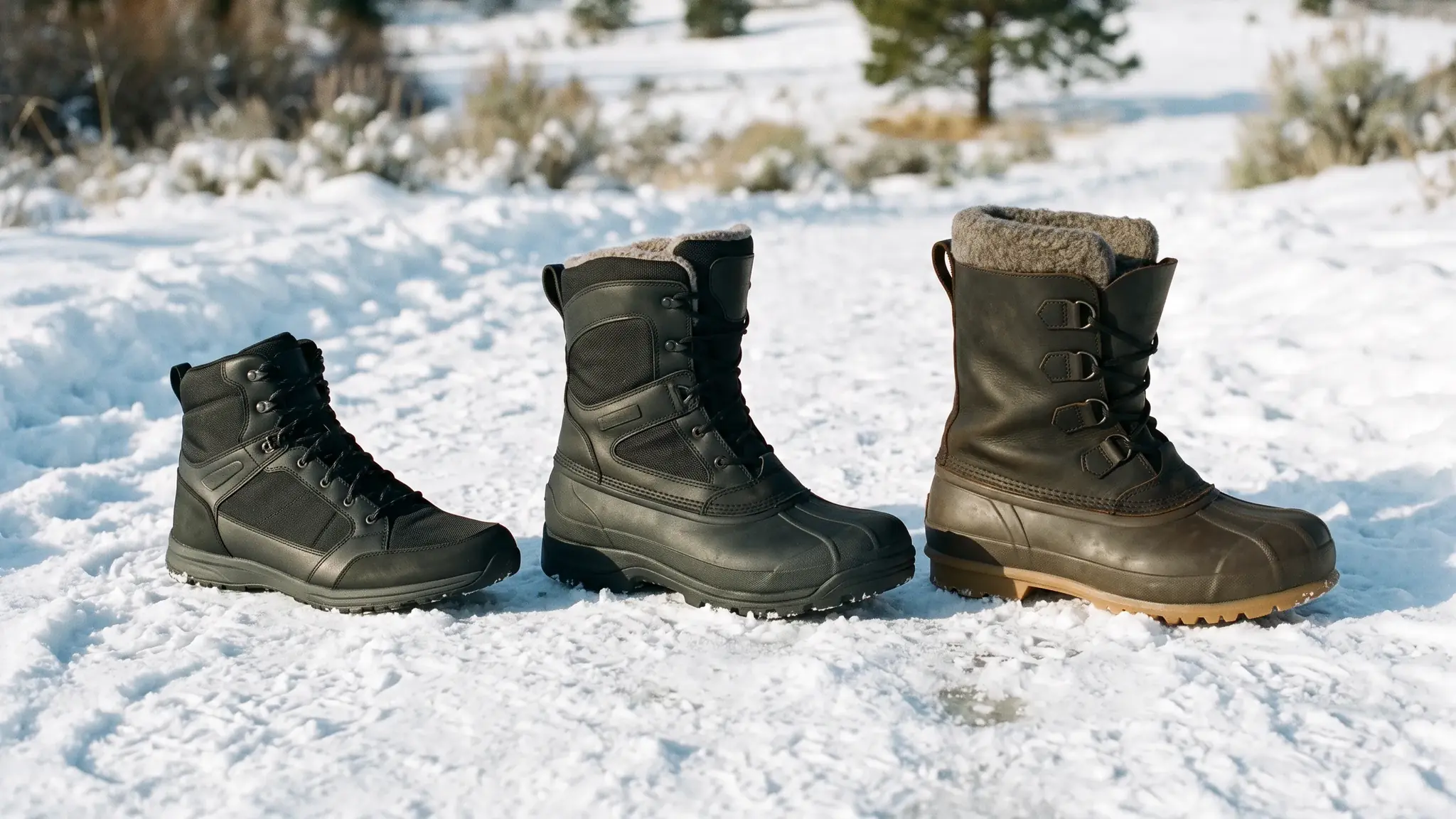
Every pair of men's winter boots we sell comes with a number or a phrase about how cold it will handle, and it's tempting to buy on that number alone. We'd treat it as a starting point rather than a promise. The rating is the maker's own figure, and the same boot feels very different on a man who stands still at a bus stop than on one who walks a trapline all afternoon.
Here is what the listings on our shelves say. The Baffin Men's Meltwater Boot ($129.95) is rated from 10°C to -20°C. The Baffin Men's Summit Boot ($269.95) is rated to -25°C and below. The Salomon Men's Toundra Pro ($279.95) is described as warm to -40°C. Baffin describes the Men's Impact Boot ($289.95) as its highest level of cold comfort and says it has been tested at both the North and South Poles.
Notice that the Impact is built for "extended time in extreme cold, snow and ice where activity is low to moderate." That one phrase explains most of what a rating hides. A boot for standing around needs far more insulation than a boot for walking, because your feet make less heat when you aren't moving.
Before you shop, answer three questions. How cold does it really get where you'll be wearing them? How much of the day will you be moving? And will the boots spend their time in deep snow, on packed streets, or on ice? Those answers narrow a wall of boots down to two or three in about a minute.

Cold Feet Are a Design Problem, Which Is Why Insulation and Moisture Matter Together
The Canadian Centre for Occupational Health and Safety (CCOHS) publishes plain-language guidance on workplace health and safety, including a series on cold environments. It notes that hands and feet tend to get cold more quickly than the torso, in part because they lose heat more rapidly (a higher surface area compared with their volume) and are more likely to be touching colder surfaces. Your feet are starting the day at a disadvantage, and the boot has to make up for it.
The control measures page in the same CCOHS series gives wind chill guidance for working outside. At a wind chill of -10 to -27 it rates the risk as moderate and recommends insulated, waterproof footwear. At -28 to -39 it calls the risk high, with exposed skin able to freeze in 10 to 30 minutes, and it still calls for insulated, waterproof footwear along with covering exposed skin. At -40 to -47 it rates the risk as very high. Those are wind chill figures, not air temperatures, and a Northern Ontario winter has plenty of days in the first two bands.
Two things have to work together. Insulation holds heat in, and a waterproof layer keeps the insulation dry. The Summit's listing, for example, pairs a removable inner boot with a waterproof B-Tek Dry base, and the Toundra Pro uses a full waterproof bootie construction. Dry insulation keeps its value, and wet insulation doesn't.

Leather or Rubber Lowers: Each One Wins in a Different Place
The lower half of the boot decides how it handles snow, slush, and sweat. There are two main answers, and neither is better everywhere.
CCOHS says, in its control measures page, that for heavy work in the cold, felt-lined, rubber-bottomed, leather-topped boots with removable felt insoles are best suited, because leather is porous and lets perspiration evaporate. It adds that if the work involves standing in water or slush, waterproof boots are needed, but those also stop perspiration from escaping, so the insulation and socks get wet faster and the risk of frostbite goes up. That is an honest account of the trade, and it matches what we tell customers at the counter.
Leather Uppers: Breathable and Easy to Wear Every Day
If you're in and out of the truck, on and off job sites, or heading to dinner in your boots, leather looks right and breathes better. The Keen Anchorage Boot III WP ($199.95) has a waterproof, full-grain leather upper with 200 grams of KEEN.Warm insulation and a KEEN.Dry waterproof, breathable membrane. The listing says the nubuck looks good with jeans or slacks. That makes it the pick for a man who wants one boot for work and for town and doesn't need extreme-cold insulation.
The Baffin Men's Bruce Mid Hiking Boot ($249.95) is a leather and nylon mid-height boot with a waterproof, breathable membrane and a snowshoe ledge on the heel. It suits the man who wants a hiker he can use into winter, though we'd call it a cool-weather boot rather than a deep-cold one. Its listing doesn't give a temperature rating, so we won't guess at one.
Rubber Lowers: Fully Sealed for Wet Snow and Slush
A moulded rubber lower is hard to beat when the ground is wet. The Baffin Men's Titan Boot ($219.95) is a winter hunting boot with a fully moulded Polar Rubber upper, a nylon snow collar, and B-Tek Dry waterproofing, and the listing calls it lightweight and made in Canada. The Meltwater is a tall, pull-on boot with a rubber exterior and 7 mm neoprene insulation, which is a simple, waterproof choice for chores, a barn, or slushy driveways.
Our take is simple. If your day is mostly dry cold and a lot of walking, leather gives you a boot you can wear for hours. If it's wet snow, slush, or standing in one spot, rubber keeps water out more reliably, and you'll want to manage moisture with socks and a spare pair, which we cover below.
Removable Inner Boots Make Drying Overnight Possible
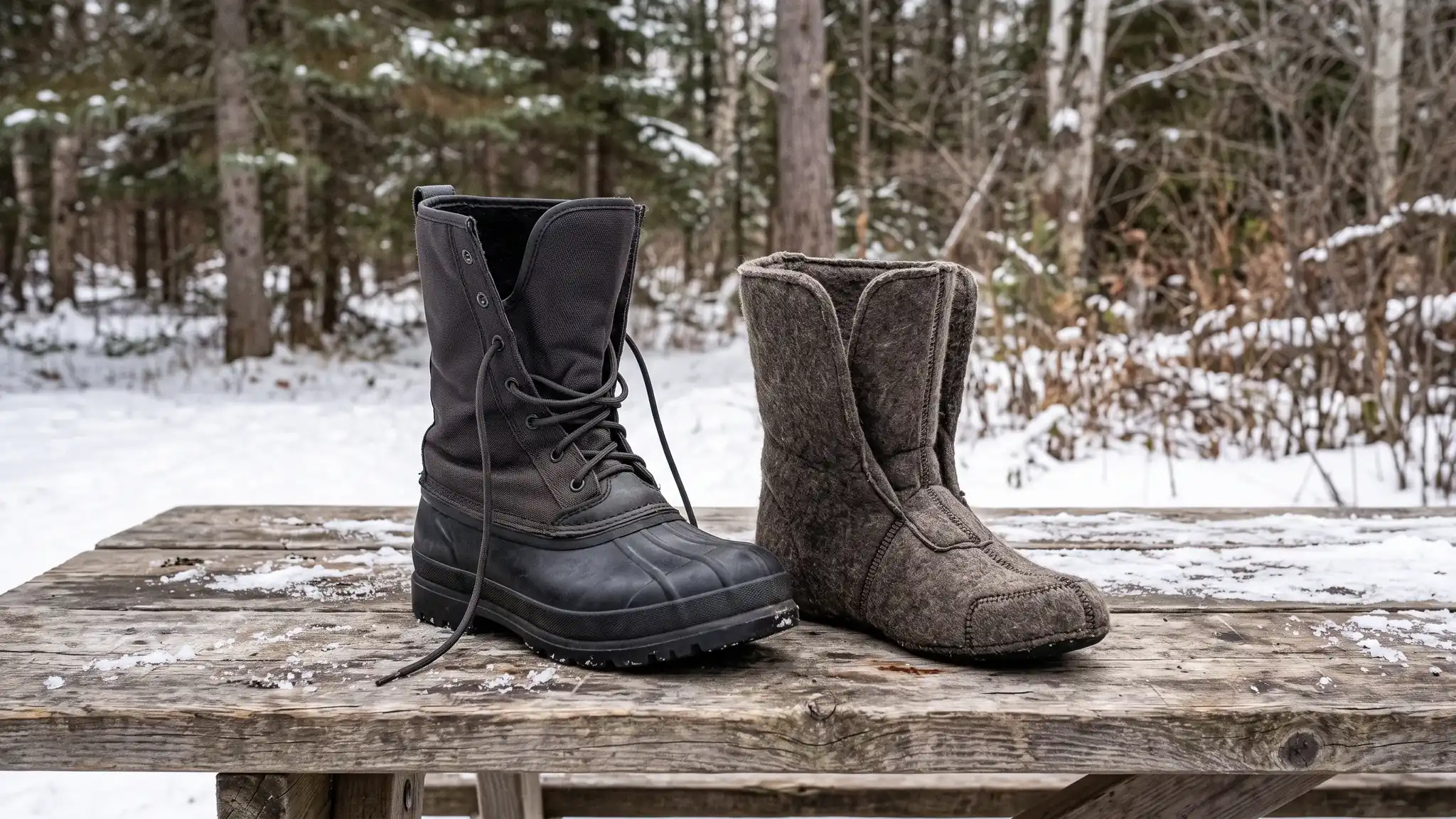
Several of the warmest boots we carry have a removable inner boot, sometimes called a liner. The Impact, the Summit, and the Titan all list one. The Impact's is a Comfort-Fit multi-layer inner boot with Thermaplush lining, while the Summit has an Active-Fit inner boot that the listing says moulds to body heat.
The practical benefit is drying. Feet sweat inside a sealed boot, and by evening the lining is damp. With a removable inner boot you can pull the liner out, let it dry overnight, and start the next day with dry insulation, which is much harder to do with a sewn-in lining. If you're out for several days in a row, that feature alone can justify the higher price.
The trade is a little more bulk and a few more parts. Most men find that is a fair deal once they've put a damp pair back on in the morning.

Soles Decide Whether You Stay Upright and Whether Your Feet Stay Warm
A sole does two jobs in winter. It grips snow and ice, and it keeps the cold of the ground away from your foot. The names differ by brand, so read what each listing says it is for.
- The Toundra Pro has a Contagrip W sole for snow and ice traction.
- The Summit and the Impact use Polar Rubber outsoles, which Baffin built for cold-weather grip. The Summit's listing also says it is snowshoe compatible and slip resistant.
- The Bruce Mid uses IceBite grip, which the listing says gives better slip resistance on ice than conventional rubber.
- The Anchorage has 4 mm multi-directional lugs and KEEN.Freeze rubber for snow and ice grip.
Three details are worth checking in your hands. First, bend the boot. A sole that folds easily at the ball of the foot is comfortable for walking, while a very stiff one is steadier for snowshoes. Second, look at the lugs. Deep, widely spaced lugs shed snow, and shallow ones clog. Third, check the midsole. The Impact has an EVA midsole and a double aluminum insole to trap and hold heat, which is why it feels different underfoot from a basic work boot.
For ice specifically, no boot is a guarantee. If you walk icy driveways or shorelines every morning, ask us in the store what we have to add traction, and have a look at our full footwear department while you're here.
Socks Do as Much of the Warming as the Boots Do
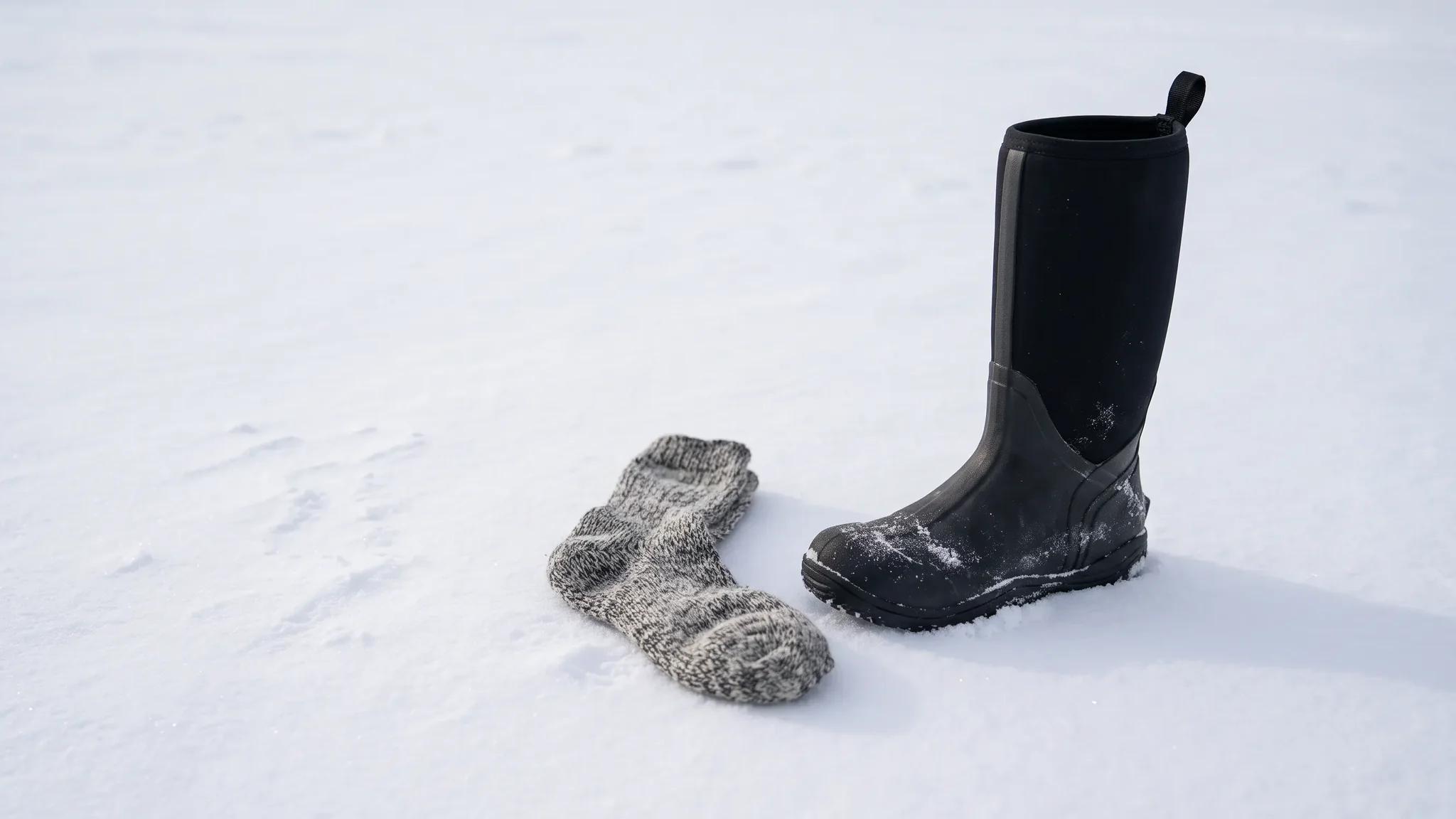
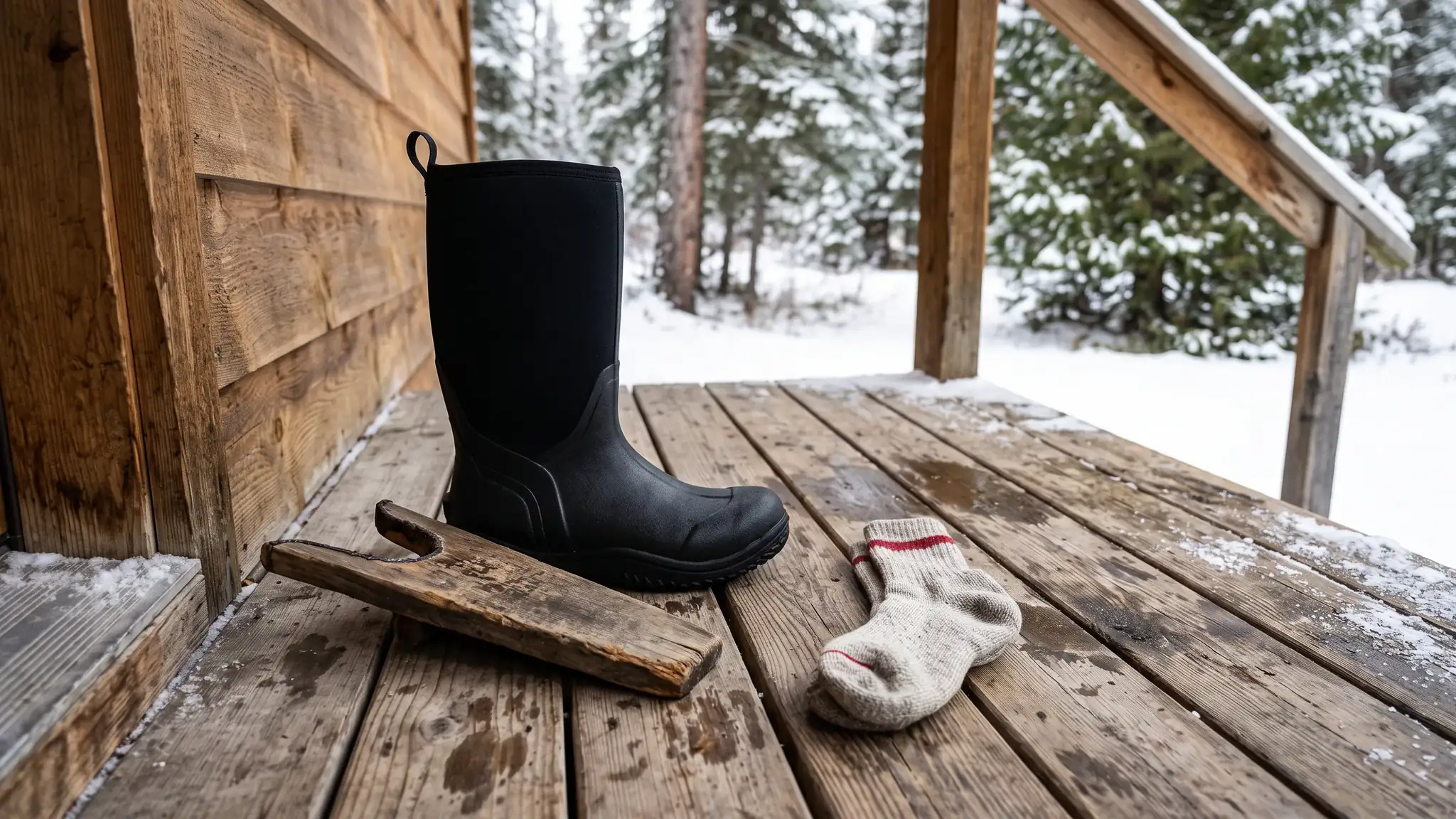
CCOHS has a short section on socks that we'd pass on to every customer. It says to wear the right thickness of sock for your boots. If the socks are too thick, the boots become tight, the socks are compressed and lose much of their insulating value, and the squeezing slows blood flow to the feet. If the socks are too thin, the boots fit loosely and can cause blisters. It also suggests liner socks of polypropylene to wick sweat, and spare socks so you can change during the day.
That advice is why we ask you to try boots on with the socks you plan to wear. For deep cold, the Darn Tough Men's Hunter Over-the-Calf Sock ($48.95) is a heavyweight, extra-cushion sock in 77% merino wool, and it's made for brutally cold days. For milder days and mid-weight boots, the Darn Tough Men's Hike / Trek Boot Cushion Sock ($39.95) is a medium-weight crew sock in merino wool. Both carry Darn Tough's lifetime guarantee, according to their listings.
CCOHS also says cotton is not recommended for clothing in the cold, because it gets damp quickly and loses its insulating properties, while wool and synthetic fibres keep their warmth when wet. Leave the cotton socks in the drawer.
How a Winter Boot Should Fit When You Try It On
Fit is where most good boots go wrong at home. Here is the order we'd work through in the store.
- Wear the socks you'll actually use, as CCOHS advises.
- Try boots on late in the day, when feet are at their largest.
- Stand up, laced or buckled the way you'd wear them, and wiggle your toes. They should move without hitting the front.
- Walk up and down a few steps. Your heel should stay put, with little lift.
- Check the top of the boot at the calf and the ankle for pressure points.
Leave a little room for air and for your toes to move. A boot that squeezes your foot also slows blood flow, which is the same problem CCOHS describes with socks that are too thick.
Sizing varies by model. The Titan lists sizes 5 to 14, the Meltwater 8 to 14, and the Toundra Pro 9 to 12 (and availability varies), so the size you want isn't always on the shelf. If you wear a half size, tell us. Between a boot with a removable liner and a boot with a sewn-in one, the fit also changes, because you can take the liner out and check how your foot sits in the shell.
Which Boot for Which Kind of Winter
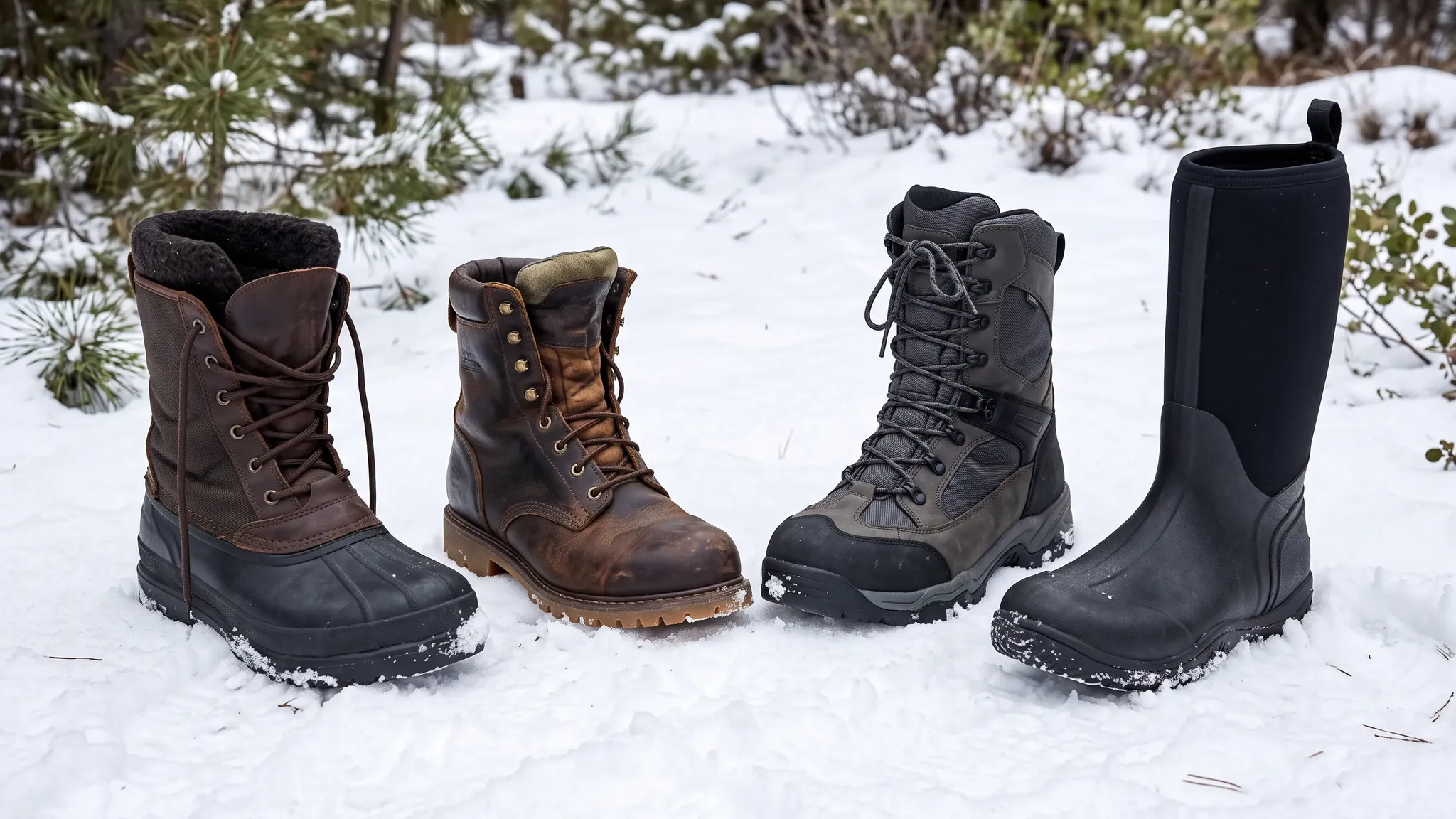
Here is how we'd sort the boots above for a man shopping for Northern Ontario.
- Daily wear, town and work, moderate cold: The Keen Anchorage Boot III WP ($199.95).
- Wet work, chores, and slush: The Baffin Men's Meltwater Boot ($129.95), or the Titan ($219.95) if you want more insulation.
- Cold days on the move, hunting, and snowshoeing: The Baffin Men's Summit Boot ($269.95).
- Serious cold with plenty of standing: The Salomon Men's Toundra Pro ($279.95) or the Baffin Men's Impact Boot ($289.95).
- A winter hiker for packed trails: The Baffin Men's Bruce Mid Hiking Boot ($249.95).
If you're between two, pick the warmer boot and buy a thinner sock. It's easier to cool a warm boot down than to warm up a cold one.
Questions
Leather or rubber lowers: Which is better?
Neither wins everywhere. Leather breathes, so sweat can escape, which suits long days of walking in dry cold. Rubber seals out wet snow and slush, which suits chores and standing water, though it traps moisture inside. CCOHS makes this same trade-off. Choose by your day: leather for walking and dry cold, rubber for wet conditions.
What does a warmth rating mean?
It is the maker's estimate of the lowest temperature the boot is meant for, usually when you're active. It isn't a guarantee. Your activity level, socks, fit, and moisture all change how warm your feet feel. We'd pick a boot rated colder than the weather you expect, especially if you'll spend long periods standing still.
How should the fit feel?
Snug at the heel and midfoot, with room to wiggle your toes. Try boots on with the socks you plan to wear, as CCOHS advises, because socks that are too thick make boots tight and cut circulation, while thin ones let your foot slide and cause blisters. If the boot squeezes anywhere, try a half size up.

Try on Men's Winter Boots at Our Store in Sault Ste. Marie
The best way to buy a winter boot is to put it on with the right sock and walk around in it. Visit Great Lakes Outfitters at 162 Old Garden River Rd, Sault Ste. Marie, ON P6B 5A6, or call us at (705) 253-2361, and bring the socks you plan to wear so we can help you find the right fit.
Talk to us about it
- 162 Old Garden River Rd, Sault Ste. Marie, ON P6B 5A6
- (705) 253-2361
- Open today 10 a.m. to 6 p.m.
- Send us a message
References
About the author
Shannon Prosser
Store Manager
I have been here three years. Before that, I worked for Moore's Clothing and Charm Diamond. I manage the store. Come to me for clothing and footwear: Outdoor Research, The North Face, Columbia, Kuhl, and all of our footwear.
More from Shannon Prosser


 English (Canada)
 Français du Canada